
Portrait de Yoshua Bengio

Yoshua Bengio

Membre académique principal
Chaire en IA Canada-CIFAR
Professeur titulaire, Université de Montréal, Département d'informatique et de recherche opérationnelle
Fondateur et Conseiller scientifique, Équipe de direction
Sujets de recherche
Apprentissage automatique médical
Apprentissage de représentations
Apprentissage par renforcement
Apprentissage profond
Causalité
Modèles génératifs
Modèles probabilistes
Modélisation moléculaire
Neurosciences computationnelles
Raisonnement
Réseaux de neurones en graphes
Réseaux de neurones récurrents
Théorie de l'apprentissage automatique
Traitement du langage naturel

Biographie

*Pour toute demande média, veuillez écrire à medias@mila.quebec.

Pour plus d’information, contactez Cassidy MacNeil, adjointe principale et responsable des opérations cassidy.macneil@mila.quebec.

Reconnu comme une sommité mondiale en intelligence artificielle, Yoshua Bengio s’est surtout distingué par son rôle de pionnier en apprentissage profond, ce qui lui a valu le prix A. M. Turing 2018, le « prix Nobel de l’informatique », avec Geoffrey Hinton et Yann LeCun. Il est professeur titulaire à l’Université de Montréal, fondateur et conseiller scientifique de Mila – Institut québécois d’intelligence artificielle, et codirige en tant que senior fellow le programme Apprentissage automatique, apprentissage biologique de l'Institut canadien de recherches avancées (CIFAR). Il occupe également la fonction de conseiller spécial et directeur scientifique fondateur d’IVADO.

En 2018, il a été l’informaticien qui a recueilli le plus grand nombre de nouvelles citations au monde. En 2019, il s’est vu décerner le prestigieux prix Killam. Depuis 2022, il détient le plus grand facteur d’impact (h-index) en informatique à l’échelle mondiale. Il est fellow de la Royal Society de Londres et de la Société royale du Canada, et officier de l’Ordre du Canada.

Soucieux des répercussions sociales de l’IA et de l’objectif que l’IA bénéficie à tous, il a contribué activement à la Déclaration de Montréal pour un développement responsable de l’intelligence artificielle.

Étudiants actuels

Collaborateur·rice alumni - McGill
Collaborateur·rice de recherche - Cambridge University
Superviseur⋅e principal⋅e :
Doctorat - UdeM
Visiteur de recherche indépendant
Co-superviseur⋅e :
Collaborateur·rice de recherche - N/A
Superviseur⋅e principal⋅e :
Doctorat - UdeM
Collaborateur·rice de recherche - KAIST
Collaborateur·rice alumni - UdeM
Co-superviseur⋅e :
Visiteur de recherche indépendant
Superviseur⋅e principal⋅e :
Doctorat - UdeM
Co-superviseur⋅e :
Doctorat - UdeM
Doctorat - UdeM
Superviseur⋅e principal⋅e :
Collaborateur·rice alumni - UdeM
Postdoctorat - UdeM
Superviseur⋅e principal⋅e :
Postdoctorat - UdeM
Superviseur⋅e principal⋅e :
Collaborateur·rice alumni
Collaborateur·rice alumni - UdeM
Doctorat - UdeM
Co-superviseur⋅e :
Doctorat - UdeM
Superviseur⋅e principal⋅e :
Visiteur de recherche indépendant - UdeM
Doctorat - UdeM
Superviseur⋅e principal⋅e :
Collaborateur·rice de recherche - Ying Wu Coll of Computing
Collaborateur·rice de recherche - University of Waterloo
Superviseur⋅e principal⋅e :
Collaborateur·rice alumni - Max-Planck-Institute for Intelligent Systems
Collaborateur·rice de recherche - UdeM
Co-superviseur⋅e :
Doctorat - UdeM
Postdoctorat - UdeM
Postdoctorat - UdeM
Doctorat - UdeM
Superviseur⋅e principal⋅e :
Collaborateur·rice alumni - UdeM
Postdoctorat
Co-superviseur⋅e :
Collaborateur·rice alumni - Polytechnique
Co-superviseur⋅e :
Doctorat - UdeM
Co-superviseur⋅e :
Collaborateur·rice de recherche
Superviseur⋅e principal⋅e :
Collaborateur·rice alumni - UdeM
Co-superviseur⋅e :
Doctorat - UdeM
Superviseur⋅e principal⋅e :
Collaborateur·rice de recherche
Collaborateur·rice de recherche - UdeM
Doctorat - UdeM
Superviseur⋅e principal⋅e :
Doctorat - McGill
Superviseur⋅e principal⋅e :
Collaborateur·rice alumni - McGill
Superviseur⋅e principal⋅e :

Publications

Pre-Training and Fine-Tuning Generative Flow Networks
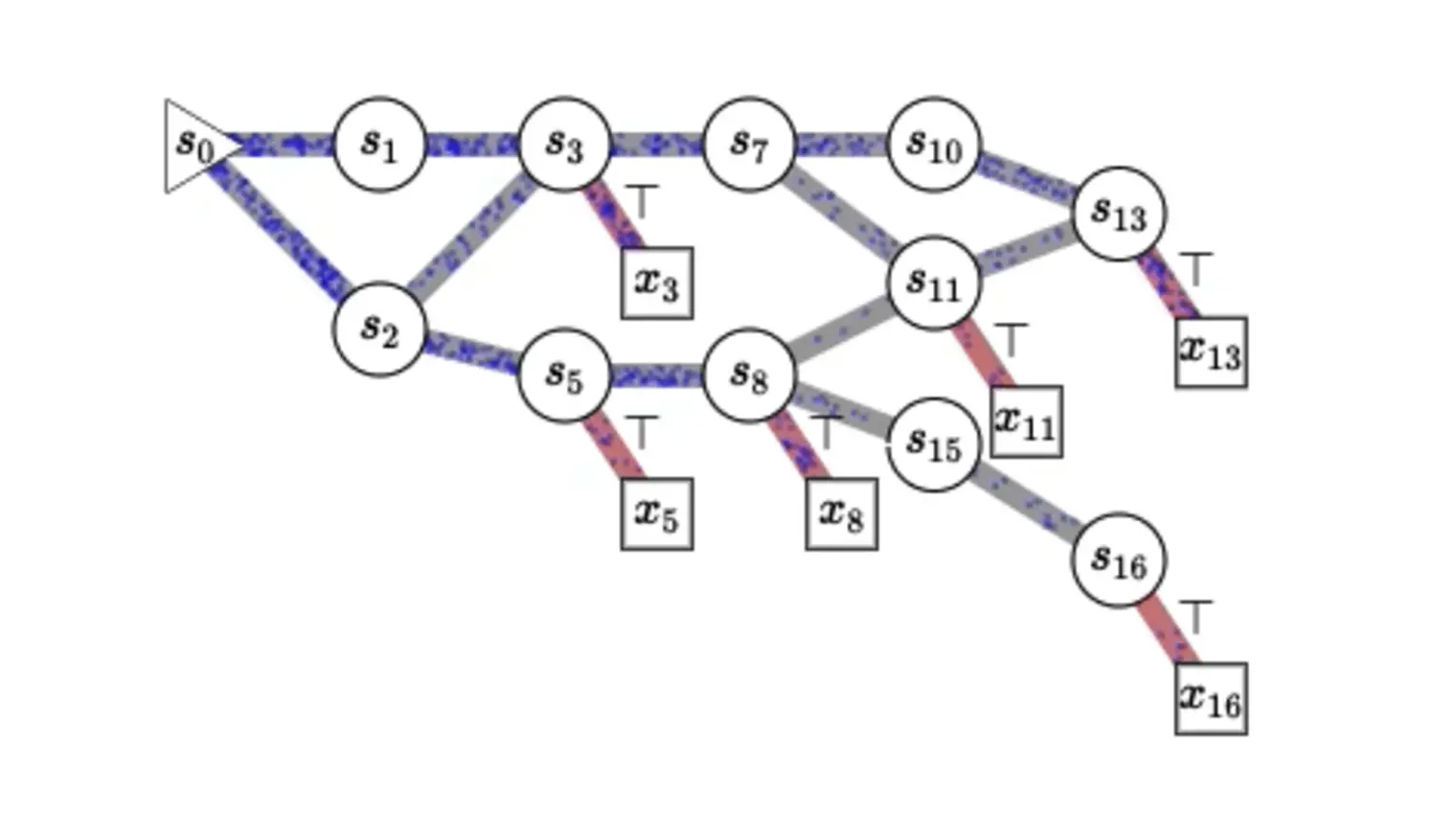
Generative Flow Networks (GFlowNets) are amortized samplers that learn stochastic policies to sequentially generate compositional objects fr… (voir plus)om a given unnormalized reward distribution. They can generate diverse sets of high-reward objects, which is an important consideration in scientific discovery tasks. However, as they are typically trained from a given extrinsic reward function, it remains an important open challenge about how to leverage the power of pre-training and train GFlowNets in an unsupervised fashion for efficient adaptation to downstream tasks. Inspired by recent successes of unsupervised pre-training in various domains, we introduce a novel approach for reward-free pre-training of GFlowNets. By framing the training as a self-supervised problem, we propose an outcome-conditioned GFlowNet (OC-GFN) that learns to explore the candidate space. Specifically, OC-GFN learns to reach any targeted outcomes, akin to goal-conditioned policies in reinforcement learning. We show that the pre-trained OC-GFN model can allow for a direct extraction of a policy capable of sampling from any new reward functions in downstream tasks. Nonetheless, adapting OC-GFN on a downstream task-specific reward involves an intractable marginalization over possible outcomes. We propose a novel way to approximate this marginalization by learning an amortized predictor enabling efficient fine-tuning. Extensive experimental results validate the efficacy of our approach, demonstrating the effectiveness of pre-training the OC-GFN, and its ability to swiftly adapt to downstream tasks and discover modes more efficiently. This work may serve as a foundation for further exploration of pre-training strategies in the context of GFlowNets.
Foundational Challenges in Assuring Alignment and Safety of Large Language Models
Usman Anwar
Abulhair Saparov
Javier Rando
Daniel Paleka
Miles Turpin
Peter Hase
Ekdeep Singh Lubana
Erik Jenner
Stephen Casper
Oliver Sourbut
Benjamin L. Edelman
Zhaowei Zhang
Mario Günther
Anton Korinek
Jose Hernandez-Orallo
Lewis Hammond
Eric Bigelow
Alexander Pan
Lauro Langosco
Tomasz Korbak … (voir 22 de plus)
Heidi Zhang
Ruiqi Zhong
Seán Ó hÉigeartaigh
Gabriel Recchia
Giulio Corsi
Markus Anderljung
Lilian Edwards
Aleksandar Petrov
Christian Schroeder de Witt
Sumeet Ramesh Motwani
Samuel Albanie
Danqi Chen
Philip H.S. Torr
Jakob Foerster
Florian Tramèr
He He
Atoosa Kasirzadeh
Yejin Choi
David Krueger
This work identifies 18 foundational challenges in assuring the alignment and safety of large language models (LLMs). These challenges are o… (voir plus)rganized into three different categories: scientific understanding of LLMs, development and deployment methods, and sociotechnical challenges. Based on the identified challenges, we pose
Generative Active Learning for the Search of Small-Molecule Protein Binders
Cheng-Hao Liu
Éric Jolicoeur
Edward Ruediger
Andrei Nica
Daniel St-Cyr
Doris Alexandra Schuetz
Victor Ion Butoi
Saikrishna Gottipati
Prateek Gupta
Sasikanth Avancha
William Hamilton
Brooks Paige
Sanchit Misra
Bharat Kaul
José Miguel Hernández-Lobato
Marwin Segler
Michael Bronstein
Anne Marinier
Mike Tyers
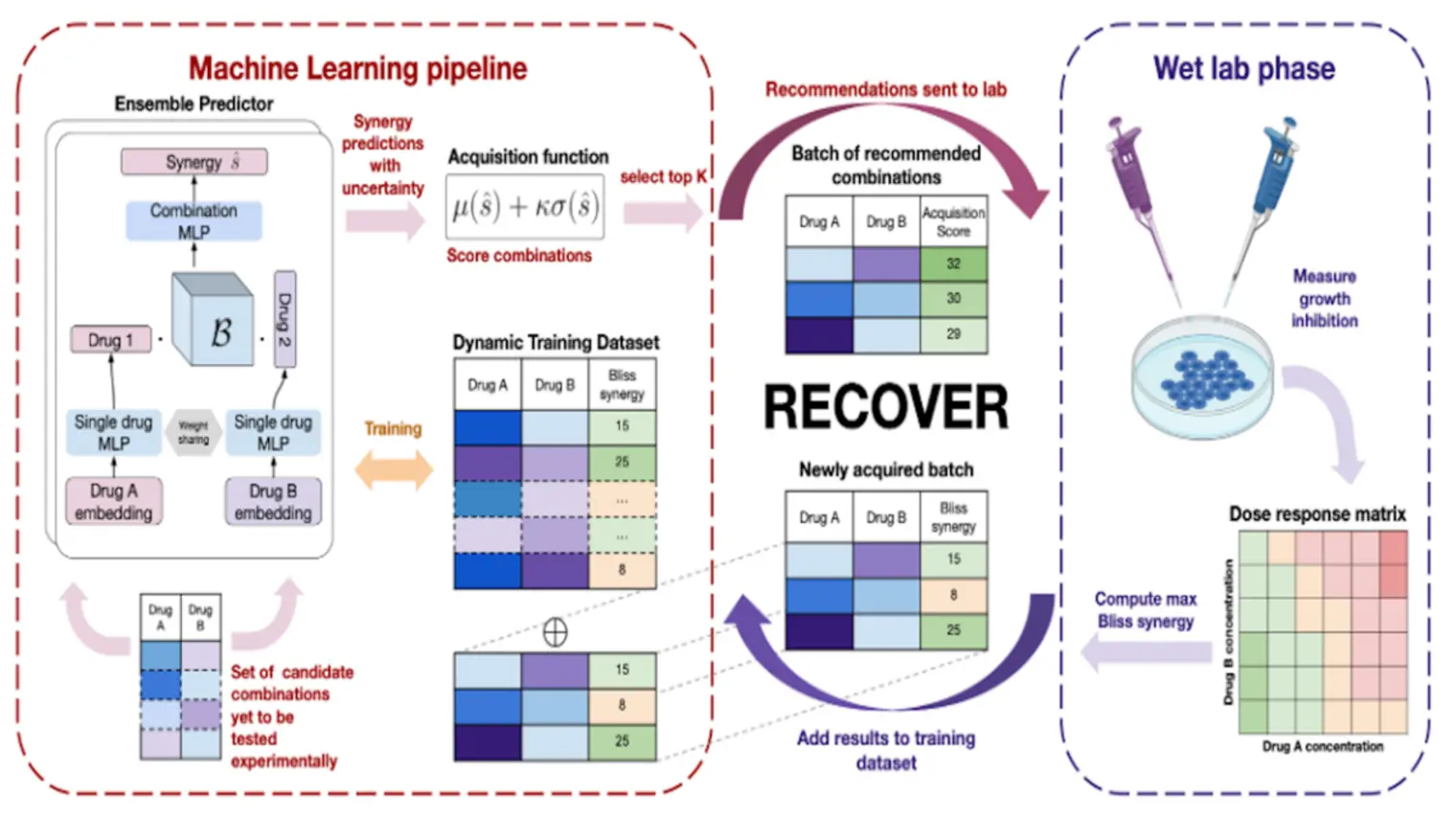
Despite substantial progress in machine learning for scientific discovery in recent years, truly de novo design of small molecules which exh… (voir plus)ibit a property of interest remains a significant challenge. We introduce LambdaZero, a generative active learning approach to search for synthesizable molecules. Powered by deep reinforcement learning, LambdaZero learns to search over the vast space of molecules to discover candidates with a desired property. We apply LambdaZero with molecular docking to design novel small molecules that inhibit the enzyme soluble Epoxide Hydrolase 2 (sEH), while enforcing constraints on synthesizability and drug-likeliness. LambdaZero provides an exponential speedup in terms of the number of calls to the expensive molecular docking oracle, and LambdaZero de novo designed molecules reach docking scores that would otherwise require the virtual screening of a hundred billion molecules. Importantly, LambdaZero discovers novel scaffolds of synthesizable, drug-like inhibitors for sEH. In in vitro experimental validation, a series of ligands from a generated quinazoline-based scaffold were synthesized, and the lead inhibitor N-(4,6-di(pyrrolidin-1-yl)quinazolin-2-yl)-N-methylbenzamide (UM0152893) displayed sub-micromolar enzyme inhibition of sEH.
Local Search GFlowNets
Generative Flow Networks (GFlowNets) are amortized sampling methods that learn a distribution over discrete objects proportional to their re… (voir plus)wards. GFlowNets exhibit a remarkable ability to generate diverse samples, yet occasionally struggle to consistently produce samples with high rewards due to over-exploration on wide sample space. This paper proposes to train GFlowNets with local search, which focuses on exploiting high-rewarded sample space to resolve this issue. Our main idea is to explore the local neighborhood via backtracking and reconstruction guided by backward and forward policies, respectively. This allows biasing the samples toward high-reward solutions, which is not possible for a typical GFlowNet solution generation scheme, which uses the forward policy to generate the solution from scratch. Extensive experiments demonstrate a remarkable performance improvement in several biochemical tasks. Source code is available: https://github.com/dbsxodud-11/ls_gfn.
Machine Learning and Information Theory Concepts Towards an AI Mathematician
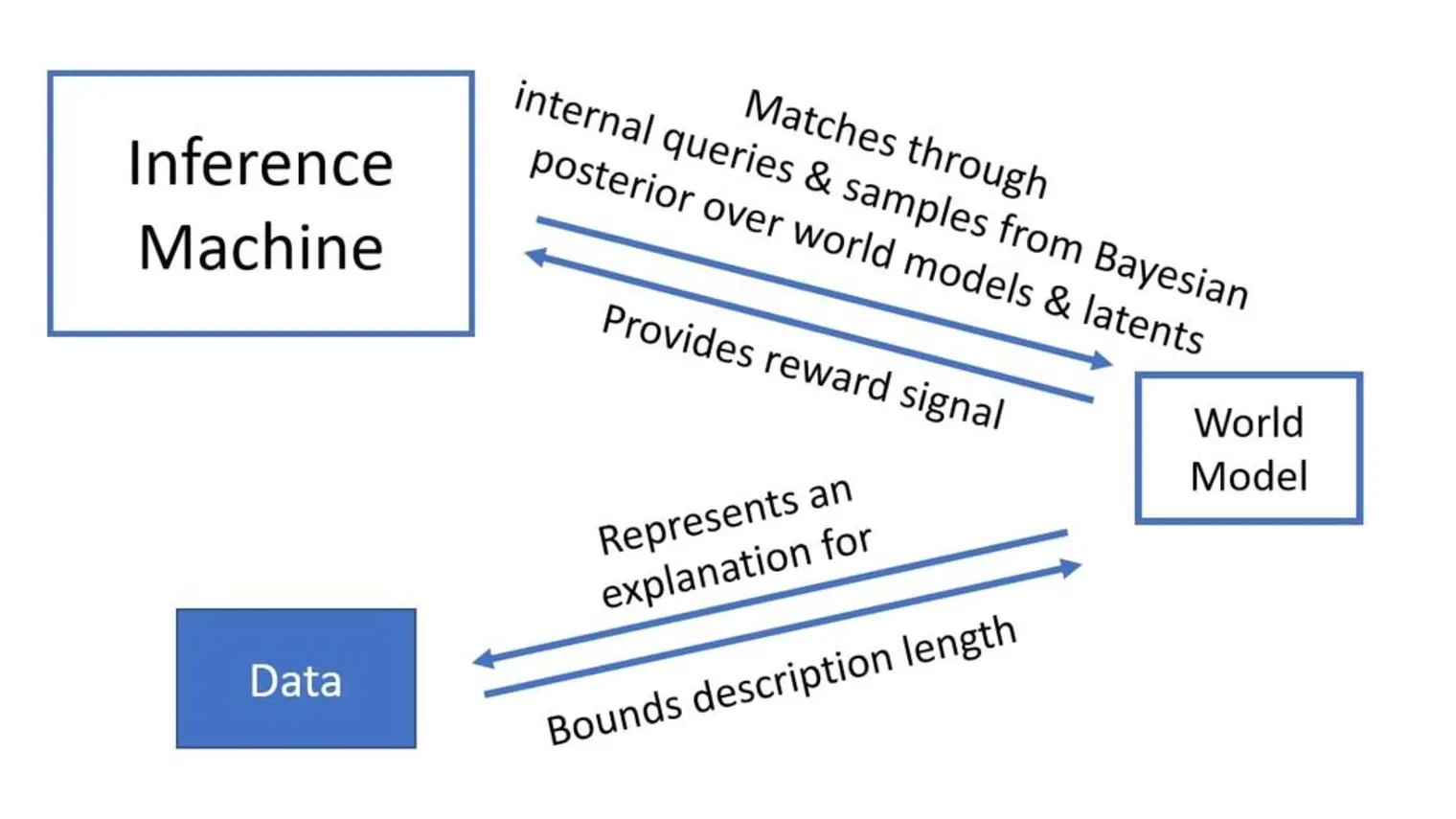
The current state-of-the-art in artificial intelligence is impressive, especially in terms of mastery of language, but not so much in terms … (voir plus)of mathematical reasoning. What could be missing? Can we learn something useful about that gap from how the brains of mathematicians go about their craft? This essay builds on the idea that current deep learning mostly succeeds at system 1 abilities -- which correspond to our intuition and habitual behaviors -- but still lacks something important regarding system 2 abilities -- which include reasoning and robust uncertainty estimation. It takes an information-theoretical posture to ask questions about what constitutes an interesting mathematical statement, which could guide future work in crafting an AI mathematician. The focus is not on proving a given theorem but on discovering new and interesting conjectures. The central hypothesis is that a desirable body of theorems better summarizes the set of all provable statements, for example by having a small description length while at the same time being close (in terms of number of derivation steps) to many provable statements.
PhAST: Physics-Aware, Scalable, and Task-Specific GNNs for Accelerated Catalyst Design
Mitigating the climate crisis requires a rapid transition towards lower-carbon energy. Catalyst materials play a crucial role in the electro… (voir plus)chemical reactions involved in numerous industrial processes key to this transition, such as renewable energy storage and electrofuel synthesis. To reduce the energy spent on such activities, we must quickly discover more efficient catalysts to drive electrochemical reactions. Machine learning (ML) holds the potential to efficiently model materials properties from large amounts of data, accelerating electrocatalyst design. The Open Catalyst Project OC20 dataset was constructed to that end. However, ML models trained on OC20 are still neither scalable nor accurate enough for practical applications. In this paper, we propose task-specific innovations applicable to most architectures, enhancing both computational efficiency and accuracy. This includes improvements in (1) the graph creation step, (2) atom representations, (3) the energy prediction head, and (4) the force prediction head. We describe these contributions, referred to as PhAST, and evaluate them thoroughly on multiple architectures. Overall, PhAST improves energy MAE by 4 to 42
Simulation-Free Schrödinger Bridges via Score and Flow Matching
We present simulation-free score and flow matching ([SF]…
Sources of Richness and Ineffability for Phenomenally Conscious States
George Deane
Axel Constant
Jonathan Simon
Conscious states (states that there is something it is like to be in) seem both rich or full of detail, and ineffable or hard to fully descr… (voir plus)ibe or recall. The problem of ineffability, in particular, is a longstanding issue in philosophy that partly motivates the explanatory gap: the belief that consciousness cannot be reduced to underlying physical processes. Here, we provide an information theoretic dynamical systems perspective on the richness and ineffability of consciousness. In our framework, the richness of conscious experience corresponds to the amount of information in a conscious state and ineffability corresponds to the amount of information lost at different stages of processing. We describe how attractor dynamics in working memory would induce impoverished recollections of our original experiences, how the discrete symbolic nature of language is insufficient for describing the rich and high-dimensional structure of experiences, and how similarity in the cognitive function of two individuals relates to improved communicability of their experiences to each other. While our model may not settle all questions relating to the explanatory gap, it makes progress toward a fully physicalist explanation of the richness and ineffability of conscious experience: two important aspects that seem to be part of what makes qualitative character so puzzling.
A Hitchhiker's Guide to Geometric GNNs for 3D Atomic Systems
Alexandre AGM Duval
Simon V. Mathis
Chaitanya K. Joshi
Santiago Miret
Fragkiskos D. Malliaros
Taco Cohen
Pietro Lio’
Michael M. Bronstein
Low Compute Unlearning via Sparse Representations
Ashish Malik
Michael Curtis Mozer
Sanjeev Arora
Machine unlearning, which involves erasing knowledge about a \emph{forget set} from a trained model, can prove to be costly and infeasible … (voir plus)using existing techniques. We propose a low-compute unlearning technique based on a discrete representational bottleneck. We show that the proposed technique efficiently unlearns the forget set and incurs negligible damage to the model's performance on the rest of the dataset. We evaluate the proposed technique on the problem of class unlearning using four datasets: CIFAR-10, CIFAR-100, LACUNA-100 and ImageNet-1k. We compare the proposed technique to SCRUB, a state-of-the-art approach which uses knowledge distillation for unlearning. Across all four datasets, the proposed technique performs as well as, if not better than SCRUB while incurring almost no computational cost.
Mitigating Shortcut Learning with Diffusion Counterfactuals and Diverse Ensembles
Alexander Rubinstein
Damien Teney
Seong Joon Oh
Armand Mihai Nicolicioiu
Spurious correlations in the data, where multiple cues are predictive of the target labels, often lead to a phenomenon known as shortcut lea… (voir plus)rning, where a model relies on erroneous, easy-to-learn cues while ignoring reliable ones. In this work, we propose
Responses to pattern-violating visual stimuli evolve differently over days in somata and distal apical dendrites
Colleen J. Gillon
Jason E. Pina
Jérôme A. Lecoq
Ruweida Ahmed
Yazan N. Billeh
Shiella Caldejon
Peter Groblewski
Timothy M. Henley
India Kato
Eric Lee
Jennifer Luviano
Kyla Mace
Chelsea Nayan
Thuyanh V. Nguyen
Kat North
Jed Perkins
Sam Seid
Matthew T. Valley
Ali Williford
Timothy P. Lillicrap
Blake A. Richards
Scientists have long conjectured that the neocortex learns patterns in sensory data to generate top-down predictions of upcoming stimuli. In… (voir plus) line with this conjecture, different responses to pattern-matching vs pattern-violating visual stimuli have been observed in both spiking and somatic calcium imaging data. However, it remains unknown whether these pattern-violation signals are different between the distal apical dendrites, which are heavily targeted by top-down signals, and the somata, where bottom-up information is primarily integrated. Furthermore, it is unknown how responses to pattern-violating stimuli evolve over time as an animal gains more experience with them. Here, we address these unanswered questions by analyzing responses of individual somata and dendritic branches of layer 2/3 and layer 5 pyramidal neurons tracked over multiple days in primary visual cortex of awake, behaving female and male mice. We use sequences of Gabor patches with patterns in their orientations to create pattern-matching and pattern-violating stimuli, and two-photon calcium imaging to record neuronal responses. Many neurons in both layers show large differences between their responses to pattern-matching and pattern-violating stimuli. Interestingly, these responses evolve in opposite directions in the somata and distal apical dendrites, with somata becoming less sensitive to pattern-violating stimuli and distal apical dendrites more sensitive. These differences between the somata and distal apical dendrites may be important for hierarchical computation of sensory predictions and learning, since these two compartments tend to receive bottom-up and top-down information, respectively.