


Portrait de Yoshua Bengio

Yoshua Bengio

Membre académique principal
Chaire en IA Canada-CIFAR
Professeur titulaire, Université de Montréal, Département d'informatique et de recherche opérationnelle
Fondateur et Conseiller scientifique, Équipe de direction
Sujets de recherche
Apprentissage automatique médical
Apprentissage de représentations
Apprentissage par renforcement
Apprentissage profond
Causalité
Modèles génératifs
Modèles probabilistes
Modélisation moléculaire
Neurosciences computationnelles
Raisonnement
Réseaux de neurones en graphes
Réseaux de neurones récurrents
Théorie de l'apprentissage automatique
Traitement du langage naturel

Biographie

*Pour toute demande média, veuillez écrire à medias@mila.quebec.

Pour plus d’information, contactez Cassidy MacNeil, adjointe principale et responsable des opérations cassidy.macneil@mila.quebec.

Reconnu comme une sommité mondiale en intelligence artificielle, Yoshua Bengio s’est surtout distingué par son rôle de pionnier en apprentissage profond, ce qui lui a valu le prix A. M. Turing 2018, le « prix Nobel de l’informatique », avec Geoffrey Hinton et Yann LeCun. Il est professeur titulaire à l’Université de Montréal, fondateur et conseiller scientifique de Mila – Institut québécois d’intelligence artificielle, et codirige en tant que senior fellow le programme Apprentissage automatique, apprentissage biologique de l'Institut canadien de recherches avancées (CIFAR). Il occupe également la fonction de conseiller spécial et directeur scientifique fondateur d’IVADO.

En 2018, il a été l’informaticien qui a recueilli le plus grand nombre de nouvelles citations au monde. En 2019, il s’est vu décerner le prestigieux prix Killam. Depuis 2022, il détient le plus grand facteur d’impact (h-index) en informatique à l’échelle mondiale. Il est fellow de la Royal Society de Londres et de la Société royale du Canada, et officier de l’Ordre du Canada.

Soucieux des répercussions sociales de l’IA et de l’objectif que l’IA bénéficie à tous, il a contribué activement à la Déclaration de Montréal pour un développement responsable de l’intelligence artificielle.

Publications

Active Attacks: Red-teaming LLMs via Adaptive Environments
Pierre-Luc St-Charles
Jinkyoo Park
Graph Dreamer: Temporal Graph World Models for Sample-Efficient and Generalisable Reinforcement Learning
Catalyst GFlowNet for electrocatalyst design: A hydrogen evolution reaction case study
Efficient and inexpensive energy storage is essential for accelerating the adoption of renewable energy and ensuring a stable supply, despit… (voir plus)e fluctuations in sources such as wind and solar. Electrocatalysts play a key role in hydrogen energy storage (HES), allowing the energy to be stored as hydrogen. However, the development of affordable and high-performance catalysts for this process remains a significant challenge. We introduce Catalyst GFlowNet, a generative model that leverages machine learning-based predictors of formation and adsorption energy to design crystal surfaces that act as efficient catalysts. We demonstrate the performance of the model through a proof-of-concept application to the hydrogen evolution reaction, a key reaction in HES, for which we successfully identified platinum as the most efficient known catalyst. In future work, we aim to extend this approach to the oxygen evolution reaction, where current optimal catalysts are expensive metal oxides, and open the search space to discover new materials. This generative modeling framework offers a promising pathway for accelerating the search for novel and efficient catalysts.
Bringing SAM to new heights: Leveraging elevation data for tree crown segmentation from drone imagery
Information on trees at the individual level is crucial for monitoring forest ecosystems and planning forest management. Current monitoring … (voir plus)methods involve ground measurements, requiring extensive cost, time and labor. Advances in drone remote sensing and computer vision offer great potential for mapping individual trees from aerial imagery at broad-scale. Large pre-trained vision models, such as the Segment Anything Model (SAM), represent a particularly compelling choice given limited labeled data. In this work, we compare methods leveraging SAM for the task of automatic tree crown instance segmentation in high resolution drone imagery in three use cases: 1) boreal plantations, 2) temperate forests and 3) tropical forests. We also study the integration of elevation data into models, in the form of Digital Surface Model (DSM) information, which can readily be obtained at no additional cost from RGB drone imagery. We present BalSAM, a model leveraging SAM and DSM information, which shows potential over other methods, particularly in the context of plantations. We find that methods using SAM out-of-the-box do not outperform a custom Mask R-CNN, even with well-designed prompts. However, efficiently tuning SAM end-to-end and integrating DSM information are both promising avenues for tree crown instance segmentation models.
Fast Monte Carlo Tree Diffusion: 100× Speedup via Parallel and Sparse Planning
Jaesik Yoon
Hyeonseo Cho
Diffusion models have recently emerged as a powerful approach for trajectory planning. However, their inherently non-sequential nature limit… (voir plus)s their effectiveness in long-horizon reasoning tasks at test time. The recently proposed Monte Carlo Tree Diffusion (MCTD) offers a promising solution by combining diffusion with tree-based search, achieving state-of-the-art performance on complex planning problems. Despite its strengths, our analysis shows that MCTD incurs substantial computational overhead due to the sequential nature of tree search and the cost of iterative denoising. To address this, we propose Fast-MCTD, a more efficient variant that preserves the strengths of MCTD while significantly improving its speed and scalability. Fast-MCTD integrates two techniques: Parallel MCTD, which enables parallel rollouts via delayed tree updates and redundancy-aware selection; and Sparse MCTD, which reduces rollout length through trajectory coarsening. Experiments show that Fast-MCTD achieves up to 100× speedup over standard MCTD while maintaining or improving planning performance. Remarkably, it even outperforms Diffuser in inference speed on some tasks, despite Diffuser requiring no search and yielding weaker solutions. These results position Fast-MCTD as a practical and scalable solution for diffusion-based inference-time reasoning.
Trajectory Balance with Asynchrony: Decoupling Exploration and Learning for Fast, Scalable LLM Post-Training
Brian Bartoldson
James Diffenderfer
Tal Ben-Nun
Johan Obando-Ceron
Bhavya Kailkhura
Reinforcement learning (RL) is a critical component of large language model (LLM) post-training. However, on-policy algorithms used for post… (voir plus)-training are not naturally robust to a diversified content of experience replay buffers, which asynchronous off-policy actors can efficiently populate in parallel to training. We propose efficiently learning on such off-policy data via Trajectory Balance with Asynchrony (TBA), an approach to asynchronous RL for LLMs that leverages the principled off-policy TB objective. On math, preference-tuning, and automated red-teaming tasks, we post-train models ranging from Pythia 410M to Qwen 2.5 7B, finding TBA offers speed and performance boosts over strong baselines like Online DPO and Dr. GRPO. Beyond TBA's performance benefits (high accuracy even as asynchrony grows) and speedups (
Illusions of AI consciousness
The belief that AI is conscious is not without risk
Relative Trajectory Balance is equivalent to Trust-PCL
Superintelligent Agents Pose Catastrophic Risks: Can Scientist AI Offer a Safer Path?
Michael Cohen
Joumana Ghosn
Adam Oberman
Jesse Richardson
Oliver Richardson
Marc-Antoine Rondeau
Pierre-Luc St-Charles
David Williams-King
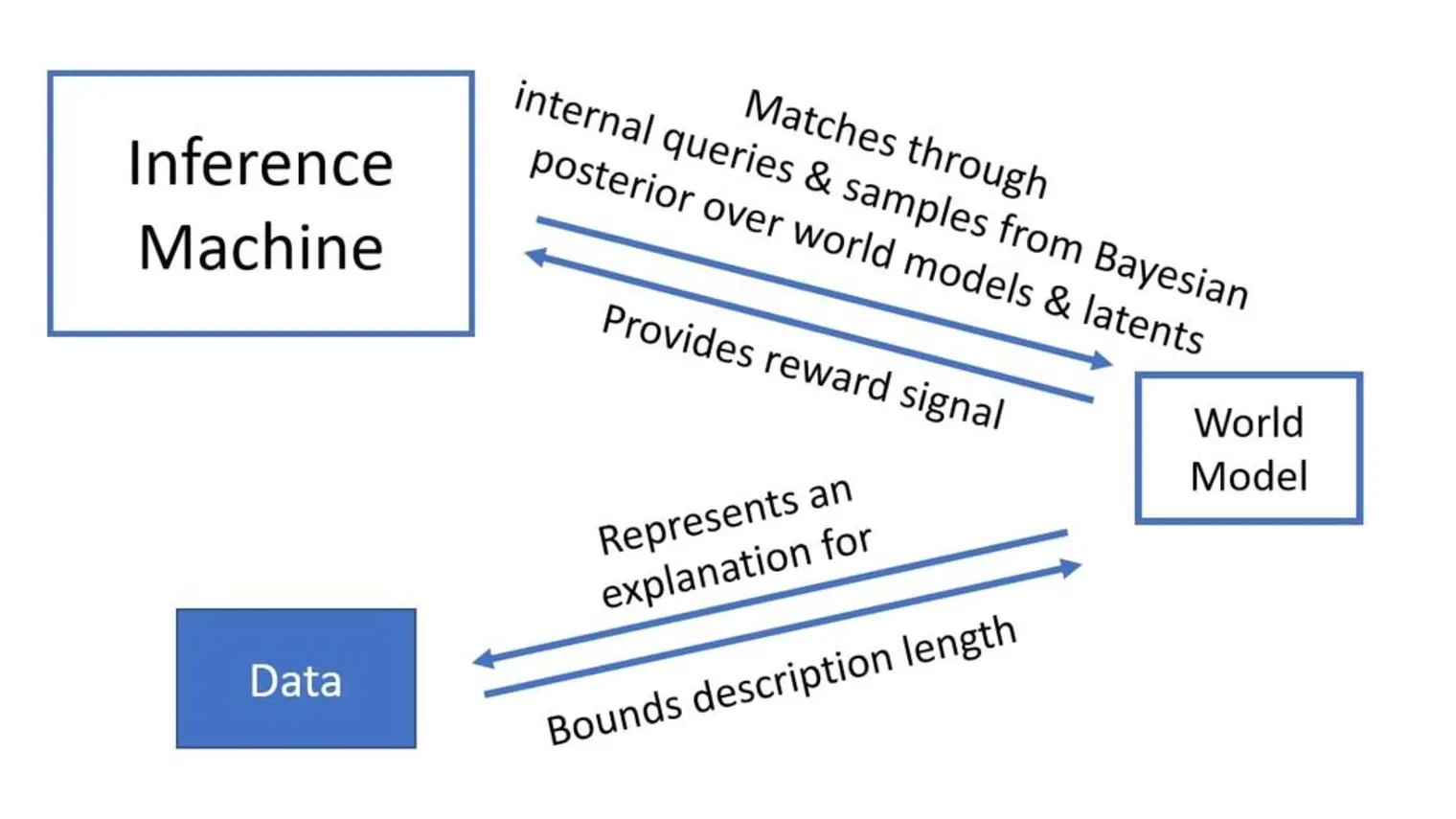
The leading AI companies are increasingly focused on building generalist AI agents -- systems that can autonomously plan, act, and pursue go… (voir plus)als across almost all tasks that humans can perform. Despite how useful these systems might be, unchecked AI agency poses significant risks to public safety and security, ranging from misuse by malicious actors to a potentially irreversible loss of human control. We discuss how these risks arise from current AI training methods. Indeed, various scenarios and experiments have demonstrated the possibility of AI agents engaging in deception or pursuing goals that were not specified by human operators and that conflict with human interests, such as self-preservation. Following the precautionary principle, we see a strong need for safer, yet still useful, alternatives to the current agency-driven trajectory. Accordingly, we propose as a core building block for further advances the development of a non-agentic AI system that is trustworthy and safe by design, which we call Scientist AI. This system is designed to explain the world from observations, as opposed to taking actions in it to imitate or please humans. It comprises a world model that generates theories to explain data and a question-answering inference machine. Both components operate with an explicit notion of uncertainty to mitigate the risks of overconfident predictions. In light of these considerations, a Scientist AI could be used to assist human researchers in accelerating scientific progress, including in AI safety. In particular, our system can be employed as a guardrail against AI agents that might be created despite the risks involved. Ultimately, focusing on non-agentic AI may enable the benefits of AI innovation while avoiding the risks associated with the current trajectory. We hope these arguments will motivate researchers, developers, and policymakers to favor this safer path.
In Which Areas of Technical AI Safety Could Geopolitical Rivals Cooperate?
BEN BUCKNALL
SAAD SIDDIQUI
Robert Trager
LARA THURNHERR
CONOR MCGURK
BEN HARACK
International cooperation is common in AI research, including between geopolitical rivals. While many experts advocate for greater internati… (voir plus)onal cooperation on AI safety to address shared global risks, some view cooperation on AI with suspicion, arguing that it can pose unacceptable risks to national security. However, the extent to which cooperation on AI safety poses such risks, as well as provides benefits, depends on the specific area of cooperation. In this paper, we consider technical factors that impact the risks of international cooperation on AI safety research, focusing on the degree to which such cooperation can advance dangerous capabilities, result in the sharing of sensitive information, or provide opportunities for harm. We begin by why nations historically cooperate on strategic technologies and analyse current US-China cooperation in AI as a case study. We further argue that existing frameworks for managing associated risks can be supplemented with consideration of key risks specific to cooperation on technical AI safety research. Through our analysis, we find that research into AI verification mechanisms and shared protocols may be suitable areas for such cooperation. Through this analysis we aim to help researchers and governments identify and mitigate the risks of international cooperation on AI safety research, so that the benefits of cooperation can be fully realised.
RL, but don't do anything I wouldn't do
Michael K. Cohen
Marcus Hutter
Stuart Russell
In reinforcement learning (RL), if the agent's reward differs from the designers' true utility, even only rarely, the state distribution res… (voir plus)ulting from the agent's policy can be very bad, in theory and in practice. When RL policies would devolve into undesired behavior, a common countermeasure is KL regularization to a trusted policy ("Don't do anything I wouldn't do"). All current cutting-edge language models are RL agents that are KL-regularized to a "base policy" that is purely predictive. Unfortunately, we demonstrate that when this base policy is a Bayesian predictive model of a trusted policy, the KL constraint is no longer reliable for controlling the behavior of an advanced RL agent. We demonstrate this theoretically using algorithmic information theory, and while systems today are too weak to exhibit this theorized failure precisely, we RL-finetune a language model and find evidence that our formal results are plausibly relevant in practice. We also propose a theoretical alternative that avoids this problem by replacing the "Don't do anything I wouldn't do" principle with "Don't do anything I mightn't do".
Discrete Feynman-Kac Correctors
Viktor Ohanesian
Artem Gazizov
Alán Aspuru-Guzik
Roberto Bondesan
Kirill Neklyudov
Discrete diffusion models have recently emerged as a promising alternative to the autoregressive approach for generating discrete sequences.… (voir plus) Sample generation via gradual denoising or demasking processes allows them to capture hierarchical non-sequential interdependencies in the data. These custom processes, however, do not assume a flexible control over the distribution of generated samples. We propose Discrete Feynman-Kac Correctors, a framework that allows for controlling the generated distribution of discrete masked diffusion models at inference time. We derive Sequential Monte Carlo (SMC) algorithms that, given a trained discrete diffusion model, control the temperature of the sampled distribution (i.e. perform annealing), sample from the product of marginals of several diffusion processes (e.g. differently conditioned processes), and sample from the product of the marginal with an external reward function, producing likely samples from the target distribution that also have high reward. Notably, our framework does not require any training of additional models or fine-tuning of the original model. We illustrate the utility of our framework in several applications including: efficient sampling from the annealed Boltzmann distribution of the Ising model, improving the performance of language models for code generation and amortized learning, as well as reward-tilted protein sequence generation.