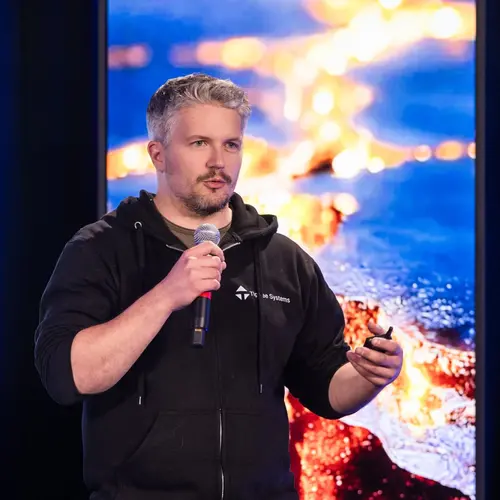


Portrait de Yoshua Bengio

Yoshua Bengio

Membre académique principal
Chaire en IA Canada-CIFAR
Professeur titulaire, Université de Montréal, Département d'informatique et de recherche opérationnelle
Sujets de recherche
Apprentissage automatique médical
Apprentissage de représentations
Apprentissage par renforcement
Apprentissage profond
Causalité
Modèles génératifs
Modèles probabilistes
Modélisation moléculaire
Neurosciences computationnelles
Raisonnement
Réseaux de neurones en graphes
Réseaux de neurones récurrents
Théorie de l'apprentissage automatique
Traitement du langage naturel

Biographie

*Pour toute demande média, veuillez écrire à medias@mila.quebec.

Pour plus d’information, contactez Cassidy MacNeil, adjointe principale et responsable des opérations cassidy.macneil@mila.quebec.

Reconnu comme une sommité mondiale en intelligence artificielle, Yoshua Bengio s’est surtout distingué par son rôle de pionnier en apprentissage profond, ce qui lui a valu le prix A. M. Turing 2018, le « prix Nobel de l’informatique », avec Geoffrey Hinton et Yann LeCun. Il est professeur titulaire à l’Université de Montréal, fondateur et conseiller scientifique de Mila – Institut québécois d’intelligence artificielle, et codirige en tant que senior fellow le programme Apprentissage automatique, apprentissage biologique de l'Institut canadien de recherches avancées (CIFAR). Il occupe également la fonction de conseiller spécial et directeur scientifique fondateur d’IVADO.

En 2018, il a été l’informaticien qui a recueilli le plus grand nombre de nouvelles citations au monde. En 2019, il s’est vu décerner le prestigieux prix Killam. Depuis 2022, il détient le plus grand facteur d’impact (h-index) en informatique à l’échelle mondiale. Il est fellow de la Royal Society de Londres et de la Société royale du Canada, et officier de l’Ordre du Canada.

Soucieux des répercussions sociales de l’IA et de l’objectif que l’IA bénéficie à tous, il a contribué activement à la Déclaration de Montréal pour un développement responsable de l’intelligence artificielle.

Étudiants actuels

Collaborateur·rice alumni - McGill
Collaborateur·rice de recherche - Cambridge University
Superviseur⋅e principal⋅e :
Doctorat - UdeM
Collaborateur·rice de recherche - N/A
Superviseur⋅e principal⋅e :
Doctorat - UdeM
Collaborateur·rice de recherche - KAIST
Visiteur de recherche indépendant
Superviseur⋅e principal⋅e :
Doctorat - UdeM
Co-superviseur⋅e :
Doctorat - UdeM
Doctorat - UdeM
Superviseur⋅e principal⋅e :
Collaborateur·rice alumni - UdeM
Postdoctorat - UdeM
Superviseur⋅e principal⋅e :
Collaborateur·rice de recherche - UdeM
Postdoctorat - UdeM
Superviseur⋅e principal⋅e :
Collaborateur·rice alumni
Collaborateur·rice de recherche - s.o.
Doctorat - UdeM
Co-superviseur⋅e :
Doctorat - UdeM
Superviseur⋅e principal⋅e :
Visiteur de recherche indépendant - UdeM
Doctorat - UdeM
Superviseur⋅e principal⋅e :
Collaborateur·rice de recherche - Ying Wu Coll of Computing
Collaborateur·rice de recherche - University of Waterloo
Superviseur⋅e principal⋅e :
Doctorat - UdeM
Postdoctorat - UdeM
Postdoctorat - UdeM
Doctorat - UdeM
Superviseur⋅e principal⋅e :
Postdoctorat
Co-superviseur⋅e :
Collaborateur·rice alumni - UdeM
Co-superviseur⋅e :
Collaborateur·rice de recherche
Superviseur⋅e principal⋅e :
Collaborateur·rice alumni - UdeM
Co-superviseur⋅e :
Doctorat - UdeM
Superviseur⋅e principal⋅e :
Collaborateur·rice de recherche - UdeM
Collaborateur·rice de recherche
Collaborateur·rice de recherche - UdeM
Doctorat - McGill
Superviseur⋅e principal⋅e :
Collaborateur·rice alumni - McGill
Superviseur⋅e principal⋅e :

Publications

Discrete Feynman-Kac Correctors
Viktor Ohanesian
Artem Gazizov
Alán Aspuru-Guzik
Roberto Bondesan
Kirill Neklyudov
Discrete diffusion models have recently emerged as a promising alternative to the autoregressive approach for generating discrete sequences.… (voir plus) Sample generation via gradual denoising or demasking processes allows them to capture hierarchical non-sequential interdependencies in the data. These custom processes, however, do not assume a flexible control over the distribution of generated samples. We propose Discrete Feynman-Kac Correctors, a framework that allows for controlling the generated distribution of discrete masked diffusion models at inference time. We derive Sequential Monte Carlo (SMC) algorithms that, given a trained discrete diffusion model, control the temperature of the sampled distribution (i.e. perform annealing), sample from the product of marginals of several diffusion processes (e.g. differently conditioned processes), and sample from the product of the marginal with an external reward function, producing likely samples from the target distribution that also have high reward. Notably, our framework does not require any training of additional models or fine-tuning of the original model. We illustrate the utility of our framework in several applications including: efficient sampling from the annealed Boltzmann distribution of the Ising model, improving the performance of language models for code generation and amortized learning, as well as reward-tilted protein sequence generation.
AI Epistemic Risks: Emerging Mechanisms & Evidence
Mick Yang
Stephen Casper
Jonathan Stray
Jasmine Li
Cameron Jones
Anna Gausen
Natasha Jacques
Brian Christian
Bálint Gyevnár
Hannah Rose Kirk
ZHONGHAO HE
Dan Zhao (285025)
Siao Si Looi
J. Levy
Kobi Hackenburg
Elizabeth Seger
Matt Kowal
Michelle Malonza
Luke Hewitt
Hause Lin … (voir 10 de plus)
Maarten Sap
Dylan Hadfield-Menell
Thomas Costello
David Rand
Atoosa Kasirzadeh
Gordon Pennycook
In-Context Reinforcement Learning through Bayesian Fusion of Context and Value Prior
In-context reinforcement learning (ICRL) promises fast adaptation to unseen environments without parameter updates, but current methods eith… (voir plus)er cannot improve beyond the training distribution or require near-optimal data, limiting practical adoption. We introduce SPICE, a Bayesian ICRL method that learns a prior over Q-values via deep ensemble and updates this prior at test-time using in-context information through Bayesian updates. To recover from poor priors resulting from training on sub-optimal data, our online inference follows an Upper-Confidence Bound rule that favours exploration and adaptation. We prove that SPICE achieves regret-optimal behaviour in both stochastic bandits and finite-horizon MDPs, even when pretrained only on suboptimal trajectories. We validate these findings empirically across bandit and control benchmarks. SPICE achieves near-optimal decisions on unseen tasks, substantially reduces regret compared to prior ICRL and meta-RL approaches while rapidly adapting to unseen tasks and remaining robust under distribution shift.
Integrating Generative and Experimental Platforms for Biomolecular Design
Soojung Yang
Sidney Lisanza
Jacob Gershon
Lauren Hong
Pranam Chatterjee
Biomolecular design, through artificial engineering of proteins, ligands, nucleic acids, and cells, holds immense promise in addressing pres… (voir plus)sing medical, industrial, and environmental challenges. While generative machine learning has shown significant potential in this area, a disconnect exists with experimental biology: many ML research efforts prioritize static benchmark performance, potentially sidelining impactful biological applications. This workshop seeks to bridge this gap by bringing computationalists and experimentalists together, catalyzing a deeper interdisciplinary discourse. Together, we will explore the strengths and challenges of generative ML in biology, experimental integration of generative ML, and biological problems ready for ML. To attract high-quality and diverse research, we partnered with Nature Biotechnology for a special collection, and we created dedicated tracks for in-silico ML research and hybrid ML-experimental biology research. Our lineup features emerging leaders as speakers and renowned scientists as panelists, encapsulating a spectrum from high-throughput experimentation and computational biology to generative ML. To catalyze new collaborations, we will host a seed-grant competition for pairs of experimentalists and computationalists proposing fresh joint projects. To connect dry and wet lab practice, a wet-lab challenge sponsored by Adaptyv Bio will empirically evaluate protein design models. With a diverse organizing team and backed by industry sponsors, we dedicate the workshop to pushing the boundaries of ML's role in biology. This will be the third edition of this workshop following the previous versions of it we organized at ICLR 2024 and 2025.
The Silent Thought: Modeling Internal Cognition in Full-Duplex Spoken Dialogue Models via Latent Reasoning
Donghang Wu
Yuxin Li
Hexin Liu
Eng Siong Chng
During conversational interactions, humans subconsciously engage in concurrent thinking while listening to a speaker. Although this internal… (voir plus) cognitive processing may not always manifest as explicit linguistic structures, it is instrumental in formulating high-quality responses. Inspired by this cognitive phenomenon, we propose a novel **F**ull-duplex **LA**tent and **I**nternal **R**easoning method named FLAIR that conducts *latent* thinking simultaneously with speech perception. Unlike conventional "thinking" mechanisms in NLP, which require post-hoc generation, our approach aligns seamlessly with spoken dialogue systems: during the user’s speaking phase, it recursively feeds the latent embedding output from the previous step into the next step, enabling continuous reasoning that strictly adheres to causality without introducing additional latency. To enable this latent reasoning, we design an Evidence Lower Bound-based objective that supports efficient supervised finetuning via teacher forcing, circumventing the need for explicit reasoning annotations. Experiments demonstrate the effectiveness of this think-while-listening design, which achieves competitive results on a range of speech benchmarks. Furthermore, FLAIR robustly handles conversational dynamics and attains competitive performance on full-duplex interaction metrics.
A Comedy of Estimators: On KL Regularization in RL Training of LLMs
The reasoning performance of large language models (LLMs) can be substantially improved by training them with reinforcement learning (RL). T… (voir plus)he RL objective for LLM training involves a regularization term, which is the reverse Kullback-Leibler (KL) divergence between the trained policy and the reference policy. Since computing the KL divergence exactly is intractable, various estimators are used in practice to estimate it from on-policy samples. Despite its wide adoption, including in several open-source libraries, there is no systematic study analyzing the numerous ways of incorporating KL estimators in the objective and their effect on the downstream performance of RL-trained models. Recent works show that prevailing practices for incorporating KL regularization do not provide correct gradients for stated objectives, creating a discrepancy between the objective and its implementation. In this paper, we further analyze these practices and study the gradients of several estimators configurations, revealing how design choices shape gradient bias. We substantiate these findings with empirical observations by RL fine-tuning \texttt{Qwen2.5-7B}, \texttt{Llama-3.1-8B-Instruct} and \texttt{Qwen3-4B-Instruct-2507} with different configurations and evaluating their performance on both in- and out-of-distribution tasks. Through our analysis, we observe that, in on-policy settings: (1) estimator configurations with biased gradients can result in training instabilities; and (2) using estimator configurations resulting in unbiased gradients leads to better performance on in-domain as well as out-of-domain tasks. We also investigate the performance resulting from different KL configurations in off-policy settings and observe that KL regularization can help stabilize off-policy RL training resulting from asynchronous setups.
Hidden sampling biases inflate performance in gene regulatory network inference
Florin Ratajczak
Eva Hoermanseder
Jason Hartford
Pascal Falter-Braun
Matthias Heinig
Antonio Scialdone
Accurate reconstruction of gene regulatory networks (GRNs) from single-cell transcriptomic data remains a major methodological challenge. Re… (voir plus)cent machine learning approaches, particularly graph neural networks and graph autoencoders, have reported improved performance, yet these gains do not consistently translate to realistic biological settings. Here, we show that a key reason for that is the way negative regulatory interactions are sampled for supervised training and evaluation. We find that widely used sampling strategies introduce node-degree biases that allow models to exploit trivial graph-structural cues rather than biological signals. Across multiple benchmarks, simple degree-based heuristics match or exceed state-of-the-art graph neural network models under these biased evaluation protocols. We further introduce a degree-aware sampling approach that eliminates these artifacts and provides more reliable assessments of GRN inference methods. Our results call for standardized, bias-aware benchmarking practices to ensure meaningful progress in supervised GRN inference from single-cell RNA-seq data.
A Message from AI Research Leaders: Join Us in Supporting OpenReview
Andrew Y. Ng
Ruslan Salakhutdinov
Fernando Pereira
Sliding Window Recurrences for Sequence Models
Garyk Brixi
Taiji Suzuki
Michael Poli
Multi-hybrid architectures are poised to take over language modeling due to better quality and performance. We introduce a hierarchical deco… (voir plus)mposition framework for linear recurrences that allows us to develop algorithms aligned with GPU memory hierarchies, yielding Sliding Window Recurrences. We focus specifically on truncating recurrences to hardware-aligned windows which are naturally jagged, limiting costly inter-warp communication. Using SWR, we develop Phalanx layers that serve as drop-in replacements for windowed attention or linear recurrences. In 1B parameter multi-hybrid models, Phalanx achieves over 10-40% speedup across 4K to 32K context length over optimized Transformers while matching perplexity.
FALCON: Few-step Accurate Likelihoods for Continuous Flows
International AI Safety Report Second Key Update: Technical Safeguards and Risk Management
Stephen Clare
Carina Prunkl
Maksym Andriushchenko
BEN BUCKNALL
Philip Fox
Nestor Maslej
Conor McGlynn
Malcolm Murray
Stephen Casper
Jessica Newman
Daniel Privitera
Daron Acemoglu
Thomas G. Dietterich
Fredrik Heintz
Geoffrey Hinton
Nick Jennings
Susan Leavy … (voir 17 de plus)
Teresa Ludermir
Vidushi Marda
Helen Margetts
John McDermid
Jane Munga
Arvind Narayanan
Alondra Nelson
Clara Neppel
Sarvapali D. (Gopal) Ramchurn
Stuart Russell
Marietje Schaake
Bernhard Schölkopf
Alvaro Soto
Lee Tiedrich
Andrew Yao
Ya-Qin Zhang
This is the Second Key Update to the 2025 International AI Safety Report. The First Key Update (1) discussed developments in the capabilitie… (voir plus)s of general-purpose AI models and systems and associated risks. This Key Update covers how various actors, including researchers, companies, and governments, are approaching risk management and technical mitigations for AI. The past year has seen important developments in AI risk management, including better techniques for training safer models and monitoring their outputs. While this represents tangible progress, significant gaps remain. It is often uncertain how effective current measures are at preventing harms, and effectiveness varies across time and applications. There are many opportunities to further strengthen existing safeguard techniques and to develop new ones. This Key Update provides a concise overview of critical developments in risk management practices and technical risk mitigation since the publication of the 2025 AI Safety Report in January. It highlights where progress is being made and where gaps remain. Above all, it aims to support policymakers, researchers, and the public in navigating a rapidly changing environment, helping them to make informed and timely decisions about the governance of general-purpose AI. Professor Yoshua BengioUniversité de Montréal / LawZero /Mila – Quebec AI Institute & Chair
Adsorption energies are necessary but not sufficient to identify good catalysts
Alexander Davis
Alexandre AGM Duval
Oleksandr Voznyy
Alex Hern'andez-Garcia