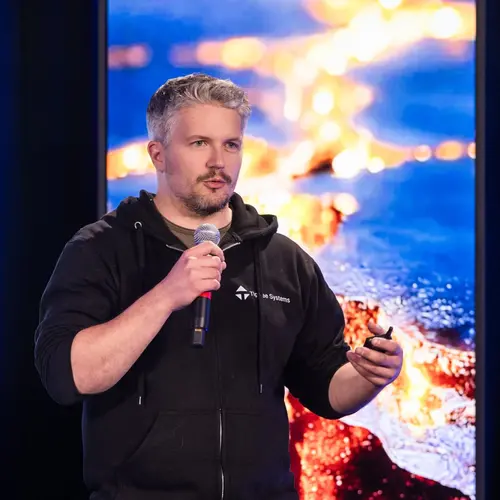

Portrait de Yoshua Bengio

Yoshua Bengio

Membre académique principal
Chaire en IA Canada-CIFAR
Professeur titulaire, Université de Montréal, Département d'informatique et de recherche opérationnelle
Fondateur et Conseiller scientifique, Équipe de direction
Sujets de recherche
Apprentissage automatique médical
Apprentissage de représentations
Apprentissage par renforcement
Apprentissage profond
Causalité
Modèles génératifs
Modèles probabilistes
Modélisation moléculaire
Neurosciences computationnelles
Raisonnement
Réseaux de neurones en graphes
Réseaux de neurones récurrents
Théorie de l'apprentissage automatique
Traitement du langage naturel

Biographie

*Pour toute demande média, veuillez écrire à medias@mila.quebec.

Pour plus d’information, contactez Cassidy MacNeil, adjointe principale et responsable des opérations cassidy.macneil@mila.quebec.

Reconnu comme une sommité mondiale en intelligence artificielle, Yoshua Bengio s’est surtout distingué par son rôle de pionnier en apprentissage profond, ce qui lui a valu le prix A. M. Turing 2018, le « prix Nobel de l’informatique », avec Geoffrey Hinton et Yann LeCun. Il est professeur titulaire à l’Université de Montréal, fondateur et conseiller scientifique de Mila – Institut québécois d’intelligence artificielle, et codirige en tant que senior fellow le programme Apprentissage automatique, apprentissage biologique de l'Institut canadien de recherches avancées (CIFAR). Il occupe également la fonction de conseiller spécial et directeur scientifique fondateur d’IVADO.

En 2018, il a été l’informaticien qui a recueilli le plus grand nombre de nouvelles citations au monde. En 2019, il s’est vu décerner le prestigieux prix Killam. Depuis 2022, il détient le plus grand facteur d’impact (h-index) en informatique à l’échelle mondiale. Il est fellow de la Royal Society de Londres et de la Société royale du Canada, et officier de l’Ordre du Canada.

Soucieux des répercussions sociales de l’IA et de l’objectif que l’IA bénéficie à tous, il a contribué activement à la Déclaration de Montréal pour un développement responsable de l’intelligence artificielle.

Étudiants actuels

Collaborateur·rice alumni - McGill
Collaborateur·rice de recherche - Cambridge University
Superviseur⋅e principal⋅e :
Doctorat - UdeM
Visiteur de recherche indépendant
Co-superviseur⋅e :
Collaborateur·rice de recherche - N/A
Superviseur⋅e principal⋅e :
Doctorat - UdeM
Collaborateur·rice de recherche - KAIST
Collaborateur·rice alumni - UdeM
Co-superviseur⋅e :
Visiteur de recherche indépendant
Superviseur⋅e principal⋅e :
Doctorat - UdeM
Co-superviseur⋅e :
Doctorat - UdeM
Doctorat - UdeM
Superviseur⋅e principal⋅e :
Collaborateur·rice alumni - UdeM
Postdoctorat - UdeM
Superviseur⋅e principal⋅e :
Postdoctorat - UdeM
Superviseur⋅e principal⋅e :
Collaborateur·rice alumni
Collaborateur·rice alumni - UdeM
Doctorat - UdeM
Co-superviseur⋅e :
Doctorat - UdeM
Superviseur⋅e principal⋅e :
Visiteur de recherche indépendant - UdeM
Doctorat - UdeM
Superviseur⋅e principal⋅e :
Collaborateur·rice de recherche - Ying Wu Coll of Computing
Collaborateur·rice de recherche - University of Waterloo
Superviseur⋅e principal⋅e :
Collaborateur·rice alumni - Max-Planck-Institute for Intelligent Systems
Collaborateur·rice de recherche - UdeM
Co-superviseur⋅e :
Doctorat - UdeM
Postdoctorat - UdeM
Postdoctorat - UdeM
Doctorat - UdeM
Superviseur⋅e principal⋅e :
Collaborateur·rice alumni - UdeM
Postdoctorat
Co-superviseur⋅e :
Collaborateur·rice alumni - Polytechnique
Co-superviseur⋅e :
Doctorat - UdeM
Co-superviseur⋅e :
Collaborateur·rice de recherche
Superviseur⋅e principal⋅e :
Collaborateur·rice alumni - UdeM
Co-superviseur⋅e :
Doctorat - UdeM
Superviseur⋅e principal⋅e :
Collaborateur·rice de recherche
Collaborateur·rice de recherche - UdeM
Doctorat - UdeM
Superviseur⋅e principal⋅e :
Doctorat - McGill
Superviseur⋅e principal⋅e :
Collaborateur·rice alumni - McGill
Superviseur⋅e principal⋅e :

Publications

Dendritic cortical microcircuits approximate the backpropagation algorithm
João Sacramento
Rui Ponte Costa
Walter Senn
Deep learning has seen remarkable developments over the last years, many of them inspired by neuroscience. However, the main learning mechan… (voir plus)ism behind these advances - error backpropagation - appears to be at odds with neurobiology. Here, we introduce a multilayer neuronal network model with simplified dendritic compartments in which error-driven synaptic plasticity adapts the network towards a global desired output. In contrast to previous work our model does not require separate phases and synaptic learning is driven by local dendritic prediction errors continuously in time. Such errors originate at apical dendrites and occur due to a mismatch between predictive input from lateral interneurons and activity from actual top-down feedback. Through the use of simple dendritic compartments and different cell-types our model can represent both error and normal activity within a pyramidal neuron. We demonstrate the learning capabilities of the model in regression and classification tasks, and show analytically that it approximates the error backpropagation algorithm. Moreover, our framework is consistent with recent observations of learning between brain areas and the architecture of cortical microcircuits. Overall, we introduce a novel view of learning on dendritic cortical circuits and on how the brain may solve the long-standing synaptic credit assignment problem.
Disentangling the independently controllable factors of variation by interacting with the world
Valentin Thomas
Philippe Beaudoin
William Fedus
It has been postulated that a good representation is one that disentangles the underlying explanatory factors of variation. However, it rema… (voir plus)ins an open question what kind of training framework could potentially achieve that. Whereas most previous work focuses on the static setting (e.g., with images), we postulate that some of the causal factors could be discovered if the learner is allowed to interact with its environment. The agent can experiment with different actions and observe their effects. More specifically, we hypothesize that some of these factors correspond to aspects of the environment which are independently controllable, i.e., that there exists a policy and a learnable feature for each such aspect of the environment, such that this policy can yield changes in that feature with minimal changes to other features that explain the statistical variations in the observed data. We propose a specific objective function to find such factors, and verify experimentally that it can indeed disentangle independently controllable aspects of the environment without any extrinsic reward signal.
FigureQA: An Annotated Figure Dataset for Visual Reasoning
Adam Atkinson
Ákos Kádár
Adam Trischler
We introduce FigureQA, a visual reasoning corpus of over one million question-answer pairs grounded in over 100,000 images. The images are s… (voir plus)ynthetic, scientific-style figures from five classes: line plots, dot-line plots, vertical and horizontal bar graphs, and pie charts. We formulate our reasoning task by generating questions from 15 templates; questions concern various relationships between plot elements and examine characteristics like the maximum, the minimum, area-under-the-curve, smoothness, and intersection. To resolve, such questions often require reference to multiple plot elements and synthesis of information distributed spatially throughout a figure. To facilitate the training of machine learning systems, the corpus also includes side data that can be used to formulate auxiliary objectives. In particular, we provide the numerical data used to generate each figure as well as bounding-box annotations for all plot elements. We study the proposed visual reasoning task by training several models, including the recently proposed Relation Network as a strong baseline. Preliminary results indicate that the task poses a significant machine learning challenge. We envision FigureQA as a first step towards developing models that can intuitively recognize patterns from visual representations of data.
Fraternal Dropout
Recurrent neural networks (RNNs) are important class of architectures among neural networks useful for language modeling and sequential pred… (voir plus)iction. However, optimizing RNNs is known to be harder compared to feed-forward neural networks. A number of techniques have been proposed in literature to address this problem. In this paper we propose a simple technique called fraternal dropout that takes advantage of dropout to achieve this goal. Specifically, we propose to train two identical copies of an RNN (that share parameters) with different dropout masks while minimizing the difference between their (pre-softmax) predictions. In this way our regularization encourages the representations of RNNs to be invariant to dropout mask, thus being robust. We show that our regularization term is upper bounded by the expectation-linear dropout objective which has been shown to address the gap due to the difference between the train and inference phases of dropout. We evaluate our model and achieve state-of-the-art results in sequence modeling tasks on two benchmark datasets - Penn Treebank and Wikitext-2. We also show that our approach leads to performance improvement by a significant margin in image captioning (Microsoft COCO) and semi-supervised (CIFAR-10) tasks.
Image-to-image translation for cross-domain disentanglement
Abel Gonzalez-Garcia
Joost van de Weijer
Deep image translation methods have recently shown excellent results, outputting high-quality images covering multiple modes of the data dis… (voir plus)tribution. There has also been increased interest in disentangling the internal representations learned by deep methods to further improve their performance and achieve a finer control. In this paper, we bridge these two objectives and introduce the concept of cross-domain disentanglement. We aim to separate the internal representation into three parts. The shared part contains information for both domains. The exclusive parts, on the other hand, contain only factors of variation that are particular to each domain. We achieve this through bidirectional image translation based on Generative Adversarial Networks and cross-domain autoencoders, a novel network component. Our model offers multiple advantages. We can output diverse samples covering multiple modes of the distributions of both domains, perform domain-specific image transfer and interpolation, and cross-domain retrieval without the need of labeled data, only paired images. We compare our model to the state-of-the-art in multi-modal image translation and achieve better results for translation on challenging datasets as well as for cross-domain retrieval on realistic datasets.
LATTER M INIMA WITH SGD
Stanisław Jastrzębski
Amos Storkey
Learning General Purpose Distributed Sentence Representations via Large Scale Multi-task Learning
Adam Trischler
Christopher Pal
A lot of the recent success in natural language processing (NLP) has been driven by distributed vector representations of words trained on l… (voir plus)arge amounts of text in an unsupervised manner. These representations are typically used as general purpose features for words across a range of NLP problems. However, extending this success to learning representations of sequences of words, such as sentences, remains an open problem. Recent work has explored unsupervised as well as supervised learning techniques with different training objectives to learn general purpose fixed-length sentence representations. In this work, we present a simple, effective multi-task learning framework for sentence representations that combines the inductive biases of diverse training objectives in a single model. We train this model on several data sources with multiple training objectives on over 100 million sentences. Extensive experiments demonstrate that sharing a single recurrent sentence encoder across weakly related tasks leads to consistent improvements over previous methods. We present substantial improvements in the context of transfer learning and low-resource settings using our learned general-purpose representations.
Light Gated Recurrent Units for Speech Recognition
A field that has directly benefited from the recent advances in deep learning is automatic speech recognition (ASR). Despite the great achie… (voir plus)vements of the past decades, however, a natural and robust human–machine speech interaction still appears to be out of reach, especially in challenging environments characterized by significant noise and reverberation. To improve robustness, modern speech recognizers often employ acoustic models based on recurrent neural networks (RNNs) that are naturally able to exploit large time contexts and long-term speech modulations. It is thus of great interest to continue the study of proper techniques for improving the effectiveness of RNNs in processing speech signals. In this paper, we revise one of the most popular RNN models, namely, gated recurrent units (GRUs), and propose a simplified architecture that turned out to be very effective for ASR. The contribution of this work is twofold: First, we analyze the role played by the reset gate, showing that a significant redundancy with the update gate occurs. As a result, we propose to remove the former from the GRU design, leading to a more efficient and compact single-gate model. Second, we propose to replace hyperbolic tangent with rectified linear unit activations. This variation couples well with batch normalization and could help the model learn long-term dependencies without numerical issues. Results show that the proposed architecture, called light GRU, not only reduces the per-epoch training time by more than 30% over a standard GRU, but also consistently improves the recognition accuracy across different tasks, input features, noisy conditions, as well as across different ASR paradigms, ranging from standard DNN-HMM speech recognizers to end-to-end connectionist temporal classification models.
MetaGAN: An Adversarial Approach to Few-Shot Learning
Tong Che
Zoubin Ghahramani
Yangqiu Song
In this paper, we propose a conceptually simple and general framework called MetaGAN for few-shot learning problems. Most state-of-the-art f… (voir plus)ew-shot classification models can be integrated with MetaGAN in a principled and straightforward way. By introducing an adversarial generator conditioned on tasks, we augment vanilla few-shot classification models with the ability to discriminate between real and fake data. We argue that this GAN-based approach can help few-shot classifiers to learn sharper decision boundary, which could generalize better. We show that with our MetaGAN framework, we can extend supervised few-shot learning models to naturally cope with unlabeled data. Different from previous work in semi-supervised few-shot learning, our algorithms can deal with semi-supervision at both sample-level and task-level. We give theoretical justifications of the strength of MetaGAN, and validate the effectiveness of MetaGAN on challenging few-shot image classification benchmarks.
Residual Connections Encourage Iterative Inference
Stanisław Jastrzębski
Tong Che
Residual networks (Resnets) have become a prominent architecture in deep learning. However, a comprehensive understanding of Resnets is stil… (voir plus)l a topic of ongoing research. A recent view argues that Resnets perform iterative refinement of features. We attempt to further expose properties of this aspect. To this end, we study Resnets both analytically and empirically. We formalize the notion of iterative refinement in Resnets by showing that residual connections naturally encourage features of residual blocks to move along the negative gradient of loss as we go from one block to the next. In addition, our empirical analysis suggests that Resnets are able to perform both representation learning and iterative refinement. In general, a Resnet block tends to concentrate representation learning behavior in the first few layers while higher layers perform iterative refinement of features. Finally we observe that sharing residual layers naively leads to representation explosion and counterintuitively, overfitting, and we show that simple existing strategies can help alleviating this problem.
Sparse Attentive Backtracking: Temporal Credit Assignment Through Reminding
Learning long-term dependencies in extended temporal sequences requires credit assignment to events far back in the past. The most common me… (voir plus)thod for training recurrent neural networks, back-propagation through time (BPTT), requires credit information to be propagated backwards through every single step of the forward computation, potentially over thousands or millions of time steps. This becomes computationally expensive or even infeasible when used with long sequences. Importantly, biological brains are unlikely to perform such detailed reverse replay over very long sequences of internal states (consider days, months, or years.) However, humans are often reminded of past memories or mental states which are associated with the current mental state. We consider the hypothesis that such memory associations between past and present could be used for credit assignment through arbitrarily long sequences, propagating the credit assigned to the current state to the associated past state. Based on this principle, we study a novel algorithm which only back-propagates through a few of these temporal skip connections, realized by a learned attention mechanism that associates current states with relevant past states. We demonstrate in experiments that our method matches or outperforms regular BPTT and truncated BPTT in tasks involving particularly long-term dependencies, but without requiring the biologically implausible backward replay through the whole history of states. Additionally, we demonstrate that the proposed method transfers to longer sequences significantly better than LSTMs trained with BPTT and LSTMs trained with full self-attention.
Twin Networks: Matching the Future for Sequence Generation
Nan Rosemary Ke
Adam Trischler
Christopher Pal
We propose a simple technique for encouraging generative RNNs to plan ahead. We train a "backward" recurrent network to generate a given seq… (voir plus)uence in reverse order, and we encourage states of the forward model to predict cotemporal states of the backward model. The backward network is used only during training, and plays no role during sampling or inference. We hypothesize that our approach eases modeling of long-term dependencies by implicitly forcing the forward states to hold information about the longer-term future (as contained in the backward states). We show empirically that our approach achieves 9% relative improvement for a speech recognition task, and achieves significant improvement on a COCO caption generation task.