Portrait de Yoshua Bengio

Yoshua Bengio

Membre académique principal
Chaire en IA Canada-CIFAR
Professeur titulaire, Université de Montréal, Département d'informatique et de recherche opérationnelle
Sujets de recherche
Apprentissage automatique médical
Apprentissage de représentations
Apprentissage par renforcement
Apprentissage profond
Causalité
Modèles génératifs
Modèles probabilistes
Modélisation moléculaire
Neurosciences computationnelles
Raisonnement
Réseaux de neurones en graphes
Réseaux de neurones récurrents
Théorie de l'apprentissage automatique
Traitement du langage naturel

Biographie

*Pour toute demande média, veuillez écrire à medias@mila.quebec.

Pour plus d’information, contactez Cassidy MacNeil, adjointe principale et responsable des opérations cassidy.macneil@mila.quebec.

Reconnu comme une sommité mondiale en intelligence artificielle, Yoshua Bengio s’est surtout distingué par son rôle de pionnier en apprentissage profond, ce qui lui a valu le prix A. M. Turing 2018, le « prix Nobel de l’informatique », avec Geoffrey Hinton et Yann LeCun. Il est professeur titulaire à l’Université de Montréal, fondateur et conseiller scientifique de Mila – Institut québécois d’intelligence artificielle, et codirige en tant que senior fellow le programme Apprentissage automatique, apprentissage biologique de l'Institut canadien de recherches avancées (CIFAR). Il occupe également la fonction de conseiller spécial et directeur scientifique fondateur d’IVADO.

En 2018, il a été l’informaticien qui a recueilli le plus grand nombre de nouvelles citations au monde. En 2019, il s’est vu décerner le prestigieux prix Killam. Depuis 2022, il détient le plus grand facteur d’impact (h-index) en informatique à l’échelle mondiale. Il est fellow de la Royal Society de Londres et de la Société royale du Canada, et officier de l’Ordre du Canada.

Soucieux des répercussions sociales de l’IA et de l’objectif que l’IA bénéficie à tous, il a contribué activement à la Déclaration de Montréal pour un développement responsable de l’intelligence artificielle.

Étudiants actuels

Collaborateur·rice de recherche - Cambridge University
Superviseur⋅e principal⋅e :
Collaborateur·rice de recherche - N/A
Superviseur⋅e principal⋅e :
Collaborateur·rice de recherche - KAIST
Collaborateur·rice alumni - UdeM
Collaborateur·rice de recherche - UdeM
Postdoctorat - UdeM
Superviseur⋅e principal⋅e :
Stagiaire de recherche - KOREA ADVANCED INSTITUTE OF SCIENCE AND TECHNOLOGY
Collaborateur·rice de recherche - s.o.
Doctorat - UdeM
Superviseur⋅e principal⋅e :
Visiteur de recherche indépendant - UdeM
Collaborateur·rice de recherche - Ying Wu Coll of Computing
Collaborateur·rice de recherche - University of Waterloo
Superviseur⋅e principal⋅e :
Doctorat - UdeM
Superviseur⋅e principal⋅e :
Collaborateur·rice alumni - UdeM
Co-superviseur⋅e :
Collaborateur·rice de recherche - University of Cambridge
Collaborateur·rice alumni - UdeM
Co-superviseur⋅e :
Collaborateur·rice de recherche - UdeM
Doctorat - McGill
Superviseur⋅e principal⋅e :

Publications

Deep Verifier Networks: Verification of Deep Discriminative Models with Deep Generative Models
Tong Che
Xiaofeng Liu
Site Li
Yubin Ge
Caiming Xiong
AI Safety is a major concern in many deep learning applications such as autonomous driving. Given a trained deep learning model, an importan… (voir plus)t natural problem is how to reliably verify the model's prediction. In this paper, we propose a novel framework --- deep verifier networks (DVN) to detect unreliable inputs or predictions of deep discriminative models, using separately trained deep generative models. Our proposed model is based on conditional variational auto-encoders with disentanglement constraints to separate the label information from the latent representation. We give both intuitive and theoretical justifications for the model. Our verifier network is trained independently with the prediction model, which eliminates the need of retraining the verifier network for a new model. We test the verifier network on both out-of-distribution detection and adversarial example detection problems, as well as anomaly detection problems in structured prediction tasks such as image caption generation. We achieve state-of-the-art results in all of these problems.
Fast and Slow Learning of Recurrent Independent Mechanisms
Decomposing knowledge into interchangeable pieces promises a generalization advantage when there are changes in distribution. A learning age… (voir plus)nt interacting with its environment is likely to be faced with situations requiring novel combinations of existing pieces of knowledge. We hypothesize that such a decomposition of knowledge is particularly relevant for being able to generalize in a systematic manner to out-of-distribution changes. To study these ideas, we propose a particular training framework in which we assume that the pieces of knowledge an agent needs and its reward function are stationary and can be re-used across tasks. An attention mechanism dynamically selects which modules can be adapted to the current task, and the parameters of the selected modules are allowed to change quickly as the learner is confronted with variations in what it experiences, while the parameters of the attention mechanisms act as stable, slowly changing, meta-parameters. We focus on pieces of knowledge captured by an ensemble of modules sparsely communicating with each other via a bottleneck of attention. We find that meta-learning the modular aspects of the proposed system greatly helps in achieving faster adaptation in a reinforcement learning setup involving navigation in a partially observed grid world with image-level input. We also find that reversing the role of parameters and meta-parameters does not work nearly as well, suggesting a particular role for fast adaptation of the dynamically selected modules.
GraphMix: Improved Training of GNNs for Semi-Supervised Learning
We present GraphMix, a regularization method for Graph Neural Network based semi-supervised object classification, whereby we propose to tra… (voir plus)in a fully-connected network jointly with the graph neural network via parameter sharing and interpolation-based regularization. Further, we provide a theoretical analysis of how GraphMix improves the generalization bounds of the underlying graph neural network, without making any assumptions about the "aggregation" layer or the depth of the graph neural networks. We experimentally validate this analysis by applying GraphMix to various architectures such as Graph Convolutional Networks, Graph Attention Networks and Graph-U-Net. Despite its simplicity, we demonstrate that GraphMix can consistently improve or closely match state-of-the-art performance using even simpler architectures such as Graph Convolutional Networks, across three established graph benchmarks: Cora, Citeseer and Pubmed citation network datasets, as well as three newly proposed datasets: Cora-Full, Co-author-CS and Co-author-Physics.
Meta-learning framework with applications to zero-shot time-series forecasting
Boris Oreshkin
Dmitri Carpov
Can meta-learning discover generic ways of processing time series (TS) from a diverse dataset so as to greatly improve generalization on new… (voir plus) TS coming from different datasets? This work provides positive evidence to this using a broad meta-learning framework which we show subsumes many existing meta-learning algorithms. Our theoretical analysis suggests that residual connections act as a meta-learning adaptation mechanism, generating a subset of task-specific parameters based on a given TS input, thus gradually expanding the expressive power of the architecture on-the-fly. The same mechanism is shown via linearization analysis to have the interpretation of a sequential update of the final linear layer. Our empirical results on a wide range of data emphasize the importance of the identified meta-learning mechanisms for successful zero-shot univariate forecasting, suggesting that it is viable to train a neural network on a source TS dataset and deploy it on a different target TS dataset without retraining, resulting in performance that is at least as good as that of state-of-practice univariate forecasting models.
Object-Centric Image Generation from Layouts
Pengchuan Zhang
R Devon Hjelm
Shikhar Sharma
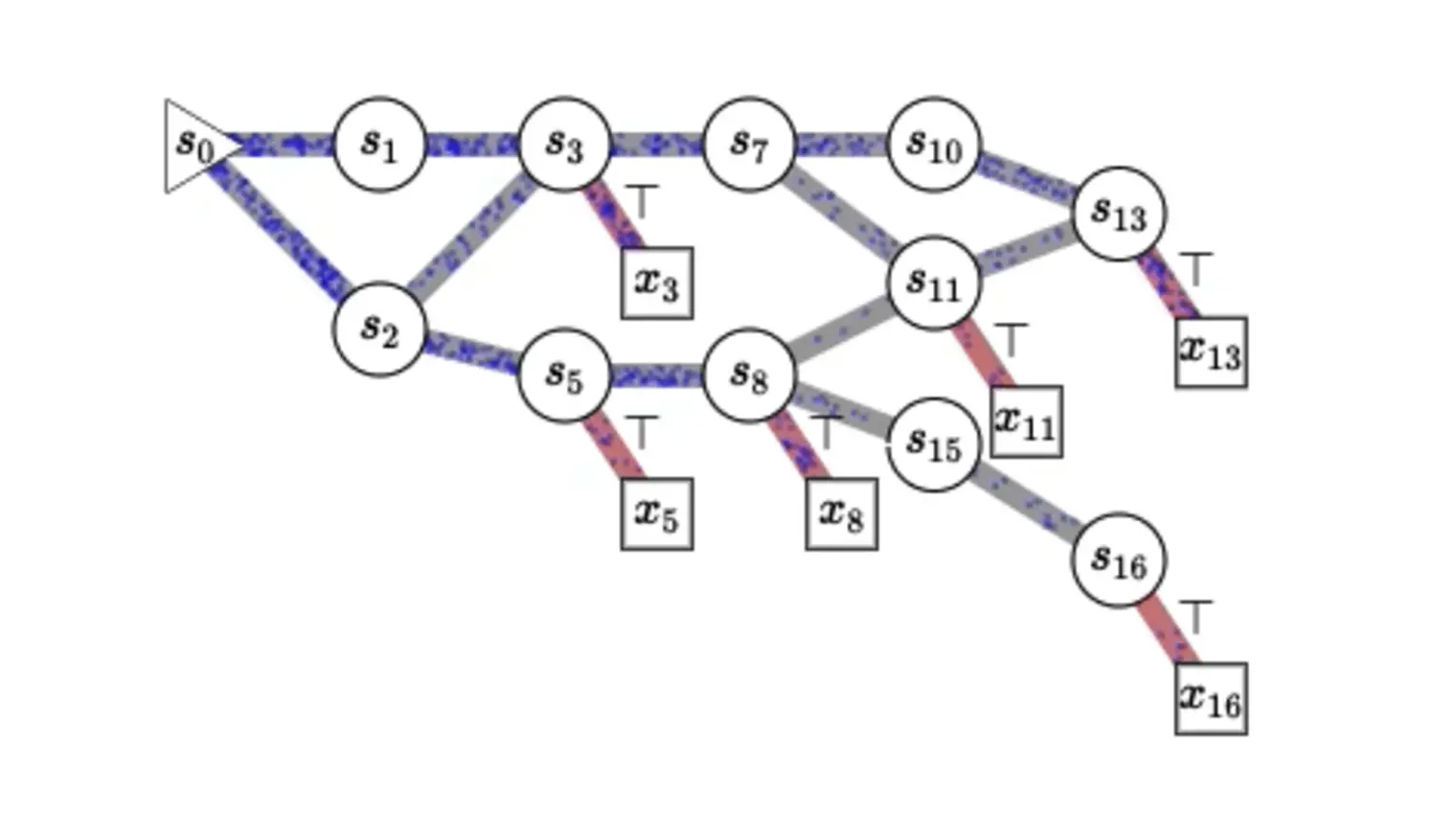
Parameterizing Branch-and-Bound Search Trees to Learn Branching Policies
Branch and Bound (B&B) is the exact tree search method typically used to solve Mixed-Integer Linear Programming problems (MILPs). Learni… (voir plus)ng branching policies for MILP has become an active research area, with most works proposing to imitate the strong branching rule and specialize it to distinct classes of problems. We aim instead at learning a policy that generalizes across heterogeneous MILPs: our main hypothesis is that parameterizing the state of the B&B search tree can aid this type of generalization. We propose a novel imitation learning framework, and introduce new input features and architectures to represent branching. Experiments on MILP benchmark instances clearly show the advantages of incorporating an explicit parameterization of the state of the search tree to modulate the branching decisions, in terms of both higher accuracy and smaller B&B trees. The resulting policies significantly outperform the current state-of-the-art method for "learning to branch" by effectively allowing generalization to generic unseen instances.
Visual Concept Reasoning Networks
Sungwoong Kim
How does hemispheric specialization contribute to human-defining cognition?
Gesa Hartwigsen
CausalWorld: A Robotic Manipulation Benchmark for Causal Structure and Transfer Learning
Despite recent successes of reinforcement learning (RL), it remains a challenge for agents to transfer learned skills to related environment… (voir plus)s. To facilitate research addressing this problem, we propose CausalWorld, a benchmark for causal structure and transfer learning in a robotic manipulation environment. The environment is a simulation of an open-source robotic platform, hence offering the possibility of sim-to-real transfer. Tasks consist of constructing 3D shapes from a given set of blocks - inspired by how children learn to build complex structures. The key strength of CausalWorld is that it provides a combinatorial family of such tasks with common causal structure and underlying factors (including, e.g., robot and object masses, colors, sizes). The user (or the agent) may intervene on all causal variables, which allows for fine-grained control over how similar different tasks (or task distributions) are. One can thus easily define training and evaluation distributions of a desired difficulty level, targeting a specific form of generalization (e.g., only changes in appearance or object mass). Further, this common parametrization facilitates defining curricula by interpolating between an initial and a target task. While users may define their own task distributions, we present eight meaningful distributions as concrete benchmarks, ranging from simple to very challenging, all of which require long-horizon planning as well as precise low-level motor control. Finally, we provide baseline results for a subset of these tasks on distinct training curricula and corresponding evaluation protocols, verifying the feasibility of the tasks in this benchmark.
Factorizing Declarative and Procedural Knowledge in Structured, Dynamical Environments
Philippe Beaudoin
Charles Blundell
Sergey Levine
Michael Mozer
Learning Neural Generative Dynamics for Molecular Conformation Generation
Shitong Luo
Jian Peng
We study how to generate molecule conformations (i.e., 3D structures) from a molecular graph. Traditional methods, such as molecular dynamic… (voir plus)s, sample conformations via computationally expensive simulations. Recently, machine learning methods have shown great potential by training on a large collection of conformation data. Challenges arise from the limited model capacity for capturing complex distributions of conformations and the difficulty in modeling long-range dependencies between atoms. Inspired by the recent progress in deep generative models, in this paper, we propose a novel probabilistic framework to generate valid and diverse conformations given a molecular graph. We propose a method combining the advantages of both flow-based and energy-based models, enjoying: (1) a high model capacity to estimate the multimodal conformation distribution; (2) explicitly capturing the complex long-range dependencies between atoms in the observation space. Extensive experiments demonstrate the superior performance of the proposed method on several benchmarks, including conformation generation and distance modeling tasks, with a significant improvement over existing generative models for molecular conformation sampling.
Predicting Infectiousness for Proactive Contact Tracing
Prateek Gupta
Nasim Rahaman
Pierre-Luc St-Charles
Hannah Alsdurf
Olexa Bilanuik
Pierre-Luc Carrier
Joumana Ghosn
Bernhard Schölkopf … (voir 3 de plus)
Abhinav Sharma
The COVID-19 pandemic has spread rapidly worldwide, overwhelming manual contact tracing in many countries and resulting in widespread lockdo… (voir plus)wns for emergency containment. Large-scale digital contact tracing (DCT) has emerged as a potential solution to resume economic and social activity while minimizing spread of the virus. Various DCT methods have been proposed, each making trade-offs between privacy, mobility restrictions, and public health. The most common approach, binary contact tracing (BCT), models infection as a binary event, informed only by an individual's test results, with corresponding binary recommendations that either all or none of the individual's contacts quarantine. BCT ignores the inherent uncertainty in contacts and the infection process, which could be used to tailor messaging to high-risk individuals, and prompt proactive testing or earlier warnings. It also does not make use of observations such as symptoms or pre-existing medical conditions, which could be used to make more accurate infectiousness predictions. In this paper, we use a recently-proposed COVID-19 epidemiological simulator to develop and test methods that can be deployed to a smartphone to locally and proactively predict an individual's infectiousness (risk of infecting others) based on their contact history and other information, while respecting strong privacy constraints. Predictions are used to provide personalized recommendations to the individual via an app, as well as to send anonymized messages to the individual's contacts, who use this information to better predict their own infectiousness, an approach we call proactive contact tracing (PCT). We find a deep-learning based PCT method which improves over BCT for equivalent average mobility, suggesting PCT could help in safe re-opening and second-wave prevention.