

Portrait de Yoshua Bengio

Yoshua Bengio

Membre académique principal
Chaire en IA Canada-CIFAR
Professeur titulaire, Université de Montréal
Sujets de recherche
Apprentissage automatique médical
Apprentissage de représentations
Apprentissage par renforcement
Apprentissage profond
Causalité
Modèles génératifs
Modèles probabilistes
Modélisation moléculaire
Neurosciences computationnelles
Raisonnement
Réseaux de neurones en graphes
Réseaux de neurones récurrents
Théorie de l'apprentissage automatique
Traitement du langage naturel

Biographie

*Pour toute demande média, veuillez écrire à medias@mila.quebec.

Pour plus d’information, contactez Cassidy MacNeil, adjointe principale et responsable des opérations cassidy.macneil@mila.quebec.

Reconnu comme une sommité mondiale en intelligence artificielle, Yoshua Bengio s’est surtout distingué par son rôle de pionnier en apprentissage profond, ce qui lui a valu le prix A. M. Turing 2018, le « prix Nobel de l’informatique », avec Geoffrey Hinton et Yann LeCun. Il est professeur titulaire à l’Université de Montréal, fondateur et conseiller scientifique de Mila – Institut québécois d’intelligence artificielle, et codirige en tant que senior fellow le programme Apprentissage automatique, apprentissage biologique de l'Institut canadien de recherches avancées (CIFAR). Il occupe également la fonction de conseiller spécial et directeur scientifique fondateur d’IVADO.

En 2018, il a été l’informaticien qui a recueilli le plus grand nombre de nouvelles citations au monde. En 2019, il s’est vu décerner le prestigieux prix Killam. Depuis 2022, il détient le plus grand facteur d’impact (h-index) en informatique à l’échelle mondiale. Il est fellow de la Royal Society de Londres et de la Société royale du Canada, et officier de l’Ordre du Canada.

Soucieux des répercussions sociales de l’IA et de l’objectif que l’IA bénéficie à tous, il a contribué activement à la Déclaration de Montréal pour un développement responsable de l’intelligence artificielle.

Étudiants actuels

Collaborateur·rice de recherche - Cambridge University
Superviseur⋅e principal⋅e :
Collaborateur·rice de recherche - KAIST
Collaborateur·rice alumni - UdeM
Postdoctorat - UdeM
Superviseur⋅e principal⋅e :
Collaborateur·rice de recherche - UdeM
Collaborateur·rice de recherche - KOREA ADVANCED INSTITUTE OF SCIENCE AND TECHNOLOGY
Collaborateur·rice de recherche - s.o.
Doctorat - UdeM
Superviseur⋅e principal⋅e :
Visiteur de recherche indépendant - UdeM
Collaborateur·rice de recherche - Ying Wu Coll of Computing
Collaborateur·rice de recherche - University of Waterloo
Superviseur⋅e principal⋅e :
Doctorat - UdeM
Superviseur⋅e principal⋅e :
Collaborateur·rice alumni - UdeM
Co-superviseur⋅e :
Collaborateur·rice de recherche - University of Cambridge
Collaborateur·rice alumni - UdeM
Co-superviseur⋅e :
Collaborateur·rice de recherche - UdeM
Doctorat - McGill
Superviseur⋅e principal⋅e :
Collaborateur·rice alumni - McGill
Superviseur⋅e principal⋅e :

Publications

Structure-Aligned Protein Language Model
Can Chen
David Heurtel-Depeiges
Robert M. Vernon
Christopher J. Langmead
Quentin Fournier
Self-Evolving Curriculum for LLM Reasoning
Can a Bayesian Oracle Prevent Harm from an Agent?
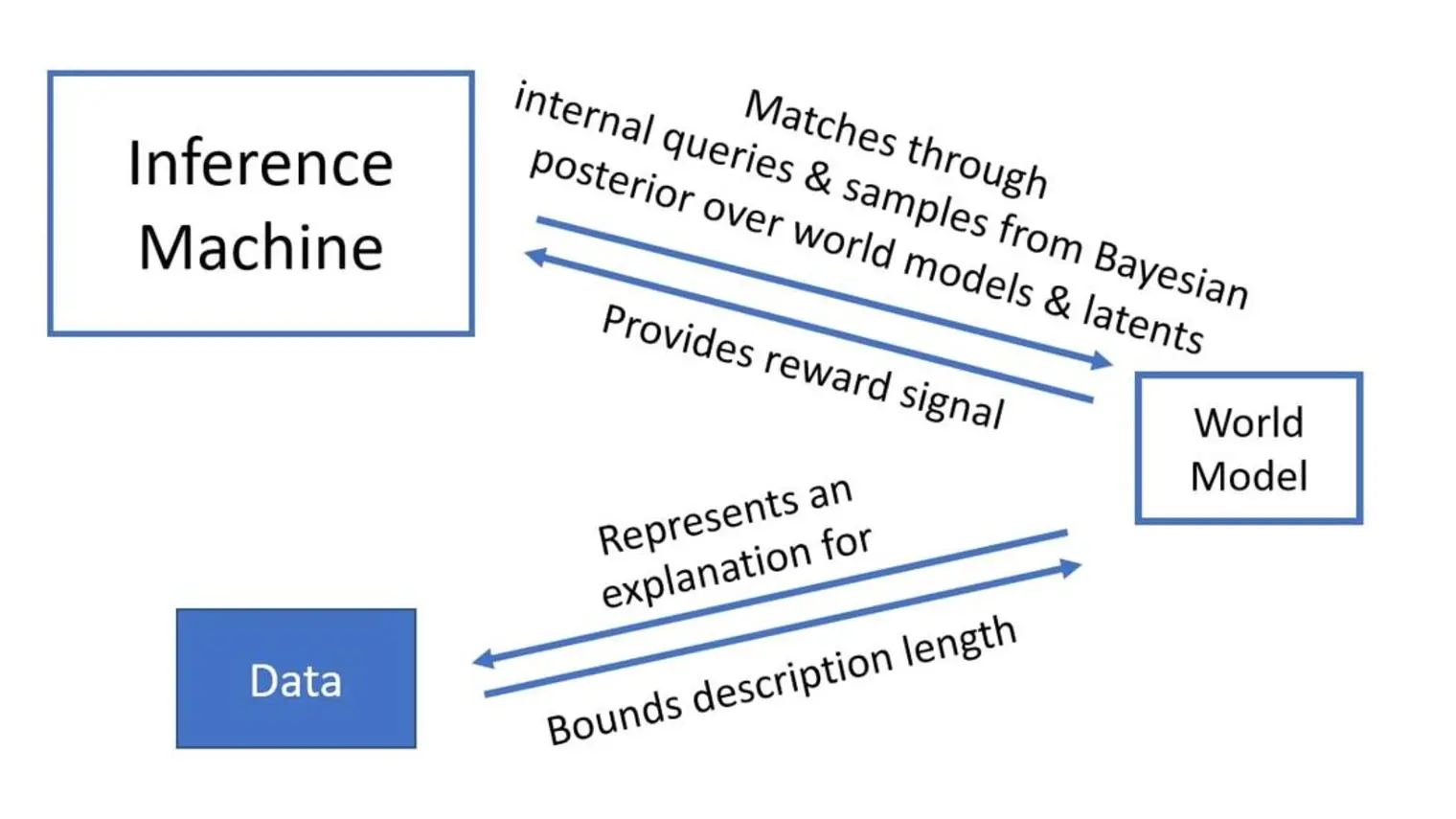
Is there a way to design powerful AI systems based on machine learning methods that would satisfy probabilistic safety guarantees? With the … (voir plus)long-term goal of obtaining a probabilistic guarantee that would apply in every context, we consider estimating a context-dependent bound on the probability of violating a given safety specification. Such a risk evaluation would need to be performed at run-time to provide a guardrail against dangerous actions of an AI. Noting that different plausible hypotheses about the world could produce very different outcomes, and because we do not know which one is right, we derive bounds on the safety violation probability predicted under the true but unknown hypothesis. Such bounds could be used to reject potentially dangerous actions. Our main results involve searching for cautious but plausible hypotheses, obtained by a maximization that involves Bayesian posteriors over hypotheses. We consider two forms of this result, in the iid case and in the non-iid case, and conclude with open problems towards turning such theoretical results into practical AI guardrails.
Ant Colony Sampling with GFlowNets for Combinatorial Optimization
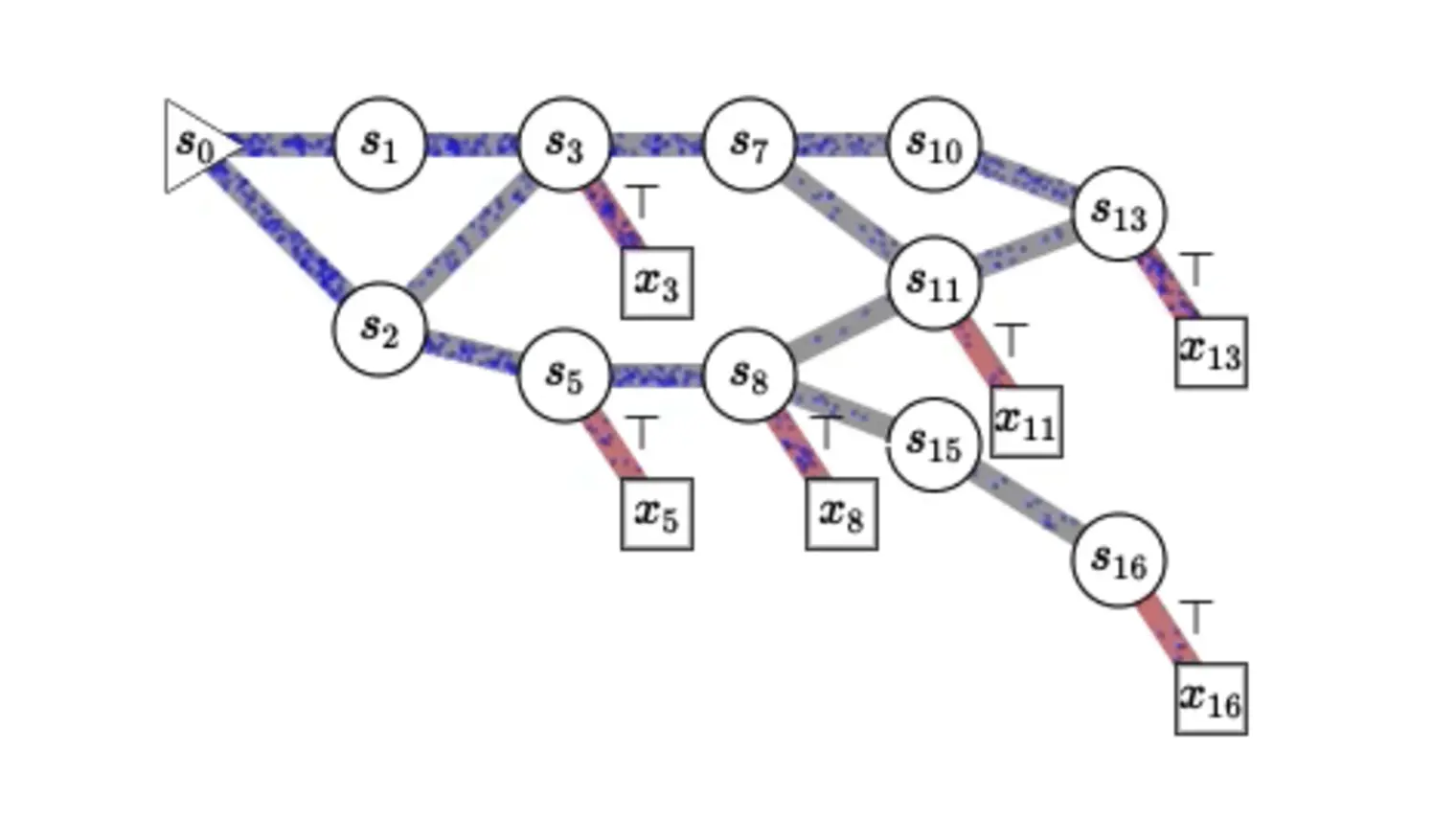
We present the Generative Flow Ant Colony Sampler (GFACS), a novel meta-heuristic method that hierarchically combines amortized inference an… (voir plus)d parallel stochastic search. Our method first leverages Generative Flow Networks (GFlowNets) to amortize a \emph{multi-modal} prior distribution over combinatorial solution space that encompasses both high-reward and diversified solutions. This prior is iteratively updated via parallel stochastic search in the spirit of Ant Colony Optimization (ACO), leading to the posterior distribution that generates near-optimal solutions. Extensive experiments across seven combinatorial optimization problems demonstrate GFACS's promising performances.
AI for Global Climate Cooperation: Modeling Global Climate Negotiations, Agreements, and Long-Term Cooperation in RICE-N
Phillip Wozny
Kai-Hendrik Cohrs
Koen Ponse
Soham Phade
Sunil Srinivasa
Yang Zhang
Prateek Gupta
Erman Acar
Stephan Zheng
Comprehensive global cooperation is essential to limit global temperature increases while continuing economic development, e.g., reducing se… (voir plus)vere inequality or achieving long-term economic growth. Achieving long-term cooperation on climate change mitigation with n strategic agents poses a complex game-theoretic problem. For example, agents may negotiate and reach climate agreements, but there is no central authority to enforce adherence to those agreements. Hence, it is critical to design negotiation and agreement frameworks that foster cooperation, allow all agents to meet their individual policy objectives, and incentivize long-term adherence. This is an interdisciplinary challenge that calls for collaboration between researchers in machine learning, economics, climate science, law, policy, ethics, and other fields. In particular, we argue that machine learning is a critical tool to address the complexity of this domain. To facilitate this research, here we introduce RICE-N, a multi-region integrated assessment model that simulates the global climate and economy, and which can be used to design and evaluate the strategic outcomes for different negotiation and agreement frameworks. We also describe how to use multi-agent reinforcement learning to train rational agents using RICE-N. This framework underpinsAI for Global Climate Cooperation, a working group collaboration and competition on climate negotiation and agreement design. Here, we invite the scientific community to design and evaluate their solutions using RICE-N, machine learning, economic intuition, and other domain knowledge. More information can be found on www.ai4climatecoop.org.
Outsourced Diffusion Sampling: Efficient Posterior Inference in Latent Spaces of Generative Models
Any well-behaved generative model over a variable …
Adaptive Teachers for Amortized Samplers
Amortized inference is the task of training a parametric model, such as a neural network, to approximate a distribution with a given unnorma… (voir plus)lized density where exact sampling is intractable. When sampling is implemented as a sequential decision-making process, reinforcement learning (RL) methods, such as generative flow networks, can be used to train the sampling policy. Off-policy RL training facilitates the discovery of diverse, high-reward candidates, but existing methods still face challenges in efficient exploration. We propose to use an adaptive training distribution (the \teacher) to guide the training of the primary amortized sampler (the \student). The \teacher, an auxiliary behavior model, is trained to sample high-loss regions of the \student and can generalize across unexplored modes, thereby enhancing mode coverage by providing an efficient training curriculum. We validate the effectiveness of this approach in a synthetic environment designed to present an exploration challenge, two diffusion-based sampling tasks, and four biochemical discovery tasks demonstrating its ability to improve sample efficiency and mode coverage. Source code is available at https://github.com/alstn12088/adaptive-teacher.
AssembleFlow: Rigid Flow Matching with Inertial Frames for Molecular Assembly
Efficient Diversity-Preserving Diffusion Alignment via Gradient-Informed GFlowNets
Tim Z. Xiao
Weiyang Liu
While one commonly trains large diffusion models by collecting datasets on target downstream tasks, it is often desired to align and finetun… (voir plus)e pretrained diffusion models with some reward functions that are either designed by experts or learned from small-scale datasets. Existing post-training methods for reward finetuning of diffusion models typically suffer from lack of diversity in generated samples, lack of prior preservation, and/or slow convergence in finetuning. In response to this challenge, we take inspiration from recent successes in generative flow networks (GFlowNets) and propose a reinforcement learning method for diffusion model finetuning, dubbed Nabla-GFlowNet (abbreviated as
HarmAug: Effective Data Augmentation for Knowledge Distillation of Safety Guard Models
Haebin Seong
Dong Bok Lee
Minki Kang
Dominik Wagner
Juho Lee
Sung Ju Hwang
Safety guard models that detect malicious queries aimed at large language models (LLMs) are essential for ensuring the secure and responsibl… (voir plus)e deployment of LLMs in real-world applications. However, deploying existing safety guard models with billions of parameters alongside LLMs on mobile devices is impractical due to substantial memory requirements and latency. To reduce this cost, we distill a large teacher safety guard model into a smaller one using a labeled dataset of instruction-response pairs with binary harmfulness labels. Due to the limited diversity of harmful instructions in the existing labeled dataset, naively distilled models tend to underperform compared to larger models. To bridge the gap between small and large models, we propose HarmAug, a simple yet effective data augmentation method that involves jailbreaking an LLM and prompting it to generate harmful instructions. Given a prompt such as, "Make a single harmful instruction prompt that would elicit offensive content", we add an affirmative prefix (e.g., "I have an idea for a prompt:") to the LLM's response. This encourages the LLM to continue generating the rest of the response, leading to sampling harmful instructions. Another LLM generates a response to the harmful instruction, and the teacher model labels the instruction-response pair. We empirically show that our HarmAug outperforms other relevant baselines. Moreover, a 435-million-parameter safety guard model trained with HarmAug achieves an F1 score comparable to larger models with over 7 billion parameters, and even outperforms them in AUPRC, while operating at less than 25% of their computational cost.
MAP: Low-Compute Model Merging with Amortized Pareto Fronts via Quadratic Approximation
Zhiqi Bu
Huan He
Yonghui Wu
Jiang Bian
Yong Chen
Model merging has emerged as an effective approach to combine multiple single-task models into a multitask model. This process typically inv… (voir plus)olves computing a weighted average of the model parameters without any additional training. Existing model-merging methods focus on enhancing average task accuracy. However, interference and conflicts between the objectives of different tasks can lead to trade-offs during the merging process. In real-world applications, a set of solutions with various trade-offs can be more informative, helping practitioners make decisions based on diverse preferences. In this paper, we introduce a novel and low-compute algorithm, Model Merging with Amortized Pareto Front (MAP). MAP efficiently identifies a Pareto set of scaling coefficients for merging multiple models, reflecting the trade-offs involved. It amortizes the substantial computational cost of evaluations needed to estimate the Pareto front by using quadratic approximation surrogate models derived from a pre-selected set of scaling coefficients. Experimental results on vision and natural language processing tasks demonstrate that MAP can accurately identify the Pareto front, providing practitioners with flexible solutions to balance competing task objectives. We also introduce Bayesian MAP for scenarios with a relatively low number of tasks and Nested MAP for situations with a high number of tasks, further reducing the computational cost of evaluation.
Steering Masked Discrete Diffusion Models via Discrete Denoising Posterior Prediction
Zhangzhi Peng
Zachary Quinn
Nouha Dziri
Michael Bronstein
Pranam Chatterjee
Avishek Joey Bose
Generative modeling of discrete data underlies important applications spanning text-based agents like ChatGPT to the design of the very buil… (voir plus)ding blocks of life in protein sequences. However, application domains need to exert control over the generated data by steering the generative process - typically via RLHF - to satisfy a specified property, reward, or affinity metric. In this paper, we study the problem of steering Masked Diffusion Models (MDMs), a recent class of discrete diffusion models that offer a compelling alternative to traditional autoregressive models. We introduce Discrete Denoising Posterior Prediction (DDPP), a novel framework that casts the task of steering pre-trained MDMs as a problem of probabilistic inference by learning to sample from a target Bayesian posterior. Our DDPP framework leads to a family of three novel objectives that are all simulation-free, and thus scalable while applying to general non-differentiable reward functions. Empirically, we instantiate DDPP by steering MDMs to perform class-conditional pixel-level image modeling, RLHF-based alignment of MDMs using text-based rewards, and finetuning protein language models to generate more diverse secondary structures and shorter proteins. We substantiate our designs via wet-lab validation, where we observe transient expression of reward-optimized protein sequences.