Portrait de Yoshua Bengio

Yoshua Bengio

Membre académique principal
Chaire en IA Canada-CIFAR
Professeur titulaire, Université de Montréal, Département d'informatique et de recherche opérationnelle
Sujets de recherche
Apprentissage automatique médical
Apprentissage de représentations
Apprentissage par renforcement
Apprentissage profond
Causalité
Modèles génératifs
Modèles probabilistes
Modélisation moléculaire
Neurosciences computationnelles
Raisonnement
Réseaux de neurones en graphes
Réseaux de neurones récurrents
Théorie de l'apprentissage automatique
Traitement du langage naturel

Biographie

*Pour toute demande média, veuillez écrire à medias@mila.quebec.

Pour plus d’information, contactez Cassidy MacNeil, adjointe principale et responsable des opérations cassidy.macneil@mila.quebec.

Reconnu comme une sommité mondiale en intelligence artificielle, Yoshua Bengio s’est surtout distingué par son rôle de pionnier en apprentissage profond, ce qui lui a valu le prix A. M. Turing 2018, le « prix Nobel de l’informatique », avec Geoffrey Hinton et Yann LeCun. Il est professeur titulaire à l’Université de Montréal, fondateur et conseiller scientifique de Mila – Institut québécois d’intelligence artificielle, et codirige en tant que senior fellow le programme Apprentissage automatique, apprentissage biologique de l'Institut canadien de recherches avancées (CIFAR). Il occupe également la fonction de conseiller spécial et directeur scientifique fondateur d’IVADO.

En 2018, il a été l’informaticien qui a recueilli le plus grand nombre de nouvelles citations au monde. En 2019, il s’est vu décerner le prestigieux prix Killam. Depuis 2022, il détient le plus grand facteur d’impact (h-index) en informatique à l’échelle mondiale. Il est fellow de la Royal Society de Londres et de la Société royale du Canada, et officier de l’Ordre du Canada.

Soucieux des répercussions sociales de l’IA et de l’objectif que l’IA bénéficie à tous, il a contribué activement à la Déclaration de Montréal pour un développement responsable de l’intelligence artificielle.

Étudiants actuels

Collaborateur·rice de recherche - Cambridge University
Superviseur⋅e principal⋅e :
Collaborateur·rice de recherche - N/A
Superviseur⋅e principal⋅e :
Collaborateur·rice de recherche - KAIST
Collaborateur·rice alumni - UdeM
Collaborateur·rice de recherche - UdeM
Postdoctorat - UdeM
Superviseur⋅e principal⋅e :
Stagiaire de recherche - KOREA ADVANCED INSTITUTE OF SCIENCE AND TECHNOLOGY
Collaborateur·rice de recherche - s.o.
Doctorat - UdeM
Superviseur⋅e principal⋅e :
Visiteur de recherche indépendant - UdeM
Collaborateur·rice de recherche - Ying Wu Coll of Computing
Collaborateur·rice de recherche - University of Waterloo
Superviseur⋅e principal⋅e :
Doctorat - UdeM
Superviseur⋅e principal⋅e :
Collaborateur·rice alumni - UdeM
Co-superviseur⋅e :
Collaborateur·rice de recherche - University of Cambridge
Collaborateur·rice alumni - UdeM
Co-superviseur⋅e :
Collaborateur·rice de recherche - UdeM
Doctorat - McGill
Superviseur⋅e principal⋅e :

Publications

PhAST: Physics-Aware, Scalable, and Task-Specific GNNs for Accelerated Catalyst Design
Mitigating the climate crisis requires a rapid transition towards lower-carbon energy. Catalyst materials play a crucial role in the electro… (voir plus)chemical reactions involved in numerous industrial processes key to this transition, such as renewable energy storage and electrofuel synthesis. To reduce the energy spent on such activities, we must quickly discover more efficient catalysts to drive electrochemical reactions. Machine learning (ML) holds the potential to efficiently model materials properties from large amounts of data, accelerating electrocatalyst design. The Open Catalyst Project OC20 dataset was constructed to that end. However, ML models trained on OC20 are still neither scalable nor accurate enough for practical applications. In this paper, we propose task-specific innovations applicable to most architectures, enhancing both computational efficiency and accuracy. This includes improvements in (1) the graph creation step, (2) atom representations, (3) the energy prediction head, and (4) the force prediction head. We describe these contributions, referred to as PhAST, and evaluate them thoroughly on multiple architectures. Overall, PhAST improves energy MAE by 4 to 42
Redesigning Information Markets in the Era of Language Models
Nasim Rahaman
Manuel Wuthrich
Li Erran Li
Bernhard Schölkopf
Christopher Pal
Memory Efficient Neural Processes via Constant Memory Attention Block
Frederick Tung
Hossein Hajimirsadeghi
Mohamed Osama Ahmed
On Generalization for Generative Flow Networks
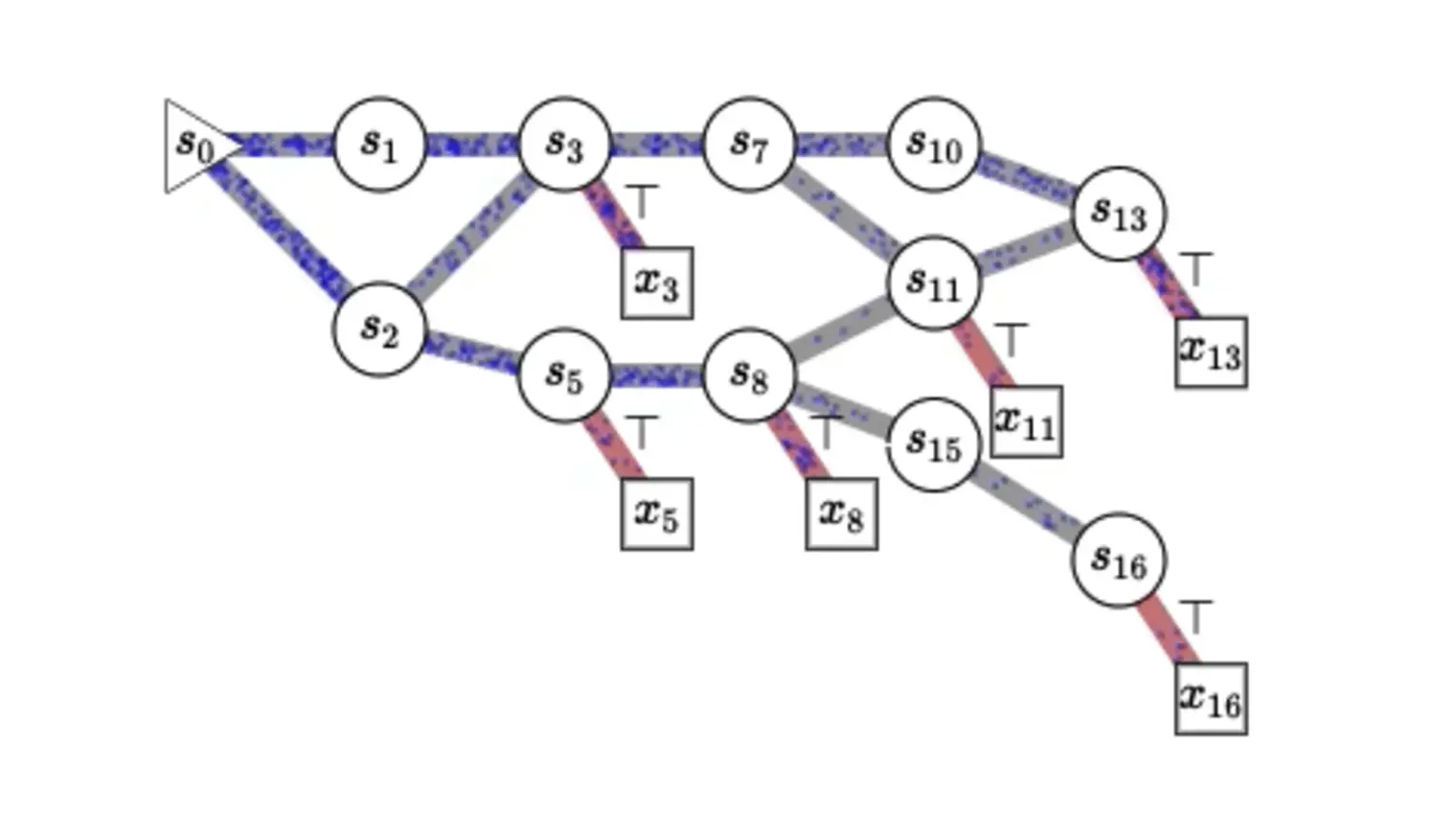
Generative Flow Networks (GFlowNets) have emerged as an innovative learning paradigm designed to address the challenge of sampling from an u… (voir plus)nnormalized probability distribution, called the reward function. This framework learns a policy on a constructed graph, which enables sampling from an approximation of the target probability distribution through successive steps of sampling from the learned policy. To achieve this, GFlowNets can be trained with various objectives, each of which can lead to the model s ultimate goal. The aspirational strength of GFlowNets lies in their potential to discern intricate patterns within the reward function and their capacity to generalize effectively to novel, unseen parts of the reward function. This paper attempts to formalize generalization in the context of GFlowNets, to link generalization with stability, and also to design experiments that assess the capacity of these models to uncover unseen parts of the reward function. The experiments will focus on length generalization meaning generalization to states that can be constructed only by longer trajectories than those seen in training.
Cell Morphology-Guided Small Molecule Generation with GFlowNets
Stephen Zhewen Lu
Ziqing Lu
Ehsan Hajiramezanali
Tommaso Biancalani
Gabriele Scalia
Estimating Expectations without Sampling: Neural Stein Estimation
Cheikh Ahmed
Awa Khouna
We propose a method for estimating the expected value of a given function …
Attention as an RNN
Frederick Tung
Hossein Hajimirsadeghi
Mohamed Osama Ahmed
Greg Mori
The advent of Transformers marked a significant breakthrough in sequence modelling, providing a highly performant architecture capable of le… (voir plus)veraging GPU parallelism. However, Transformers are computationally expensive at inference time, limiting their applications, particularly in low-resource settings (e.g., mobile and embedded devices). Addressing this, we (1) begin by showing that attention can be viewed as a special Recurrent Neural Network (RNN) with the ability to compute its \textit{many-to-one} RNN output efficiently. We then (2) show that popular attention-based models such as Transformers can be viewed as RNN variants. However, unlike traditional RNNs (e.g., LSTMs), these models cannot be updated efficiently with new tokens, an important property in sequence modelling. Tackling this, we (3) introduce a new efficient method of computing attention's \textit{many-to-many} RNN output based on the parallel prefix scan algorithm. Building on the new attention formulation, we (4) introduce \textbf{Aaren}, an attention-based module that can not only (i) be trained in parallel (like Transformers) but also (ii) be updated efficiently with new tokens, requiring only constant memory for inferences (like traditional RNNs). Empirically, we show Aarens achieve comparable performance to Transformers on
BitPruning: Learning Bitlengths for Aggressive and Accurate Quantization
Ciaran Bannon
Alberto Delmas Lascorz
Omar Mohamed Awad
Isak Edo Vivancos
Andreas Moshovos
Neural networks have demonstrably achieved state-of-the art accuracy using low-bitlength integer quantization, yielding both execution time … (voir plus)and energy benefits on existing hardware designs that support short bitlengths. However, the question of finding the minimum bitlength for a desired accuracy remains open. We introduce a training method for minimizing inference bitlength at any granularity while maintaining accuracy. Namely, we propose a regularizer that penalizes large bitlength representations throughout the architecture and show how it can be modified to minimize other quantifiable criteria, such as number of operations or memory footprint. We demonstrate that our method learns thrifty representations while maintaining accuracy. With ImageNet, the method produces an average per layer bitlength of 4.13, 3.76 and 4.36 bits on AlexNet, ResNet18 and MobileNet V2 respectively, remaining within 2.0%, 0.5% and 0.5% of the base TOP-1 accuracy.
Machine Learning and Information Theory Concepts Towards an AI Mathematician
Nikolay Malkin
The current state-of-the-art in artificial intelligence is impressive, especially in terms of mastery of language, but not so much in terms … (voir plus)of mathematical reasoning. What could be missing? Can we learn something useful about that gap from how the brains of mathematicians go about their craft? This essay builds on the idea that current deep learning mostly succeeds at system 1 abilities -- which correspond to our intuition and habitual behaviors -- but still lacks something important regarding system 2 abilities -- which include reasoning and robust uncertainty estimation. It takes an information-theoretical posture to ask questions about what constitutes an interesting mathematical statement, which could guide future work in crafting an AI mathematician. The focus is not on proving a given theorem but on discovering new and interesting conjectures. The central hypothesis is that a desirable body of theorems better summarizes the set of all provable statements, for example by having a small description length while at the same time being close (in terms of number of derivation steps) to many provable statements.
Towards Guaranteed Safe AI: A Framework for Ensuring Robust and Reliable AI Systems
David Dalrymple
David
Joar Max Viktor Skalse
Stuart Russell
Max Tegmark
Sanjit A. Seshia
Steve Omohundro
Christian Szegedy
Ben Goldhaber
Nora Ammann
Alessandro Abate
Joe Halpern
Clark Barrett
Ding Zhao
Zhi-Xuan Tan
Jeannette Wing
Joshua B. Tenenbaum
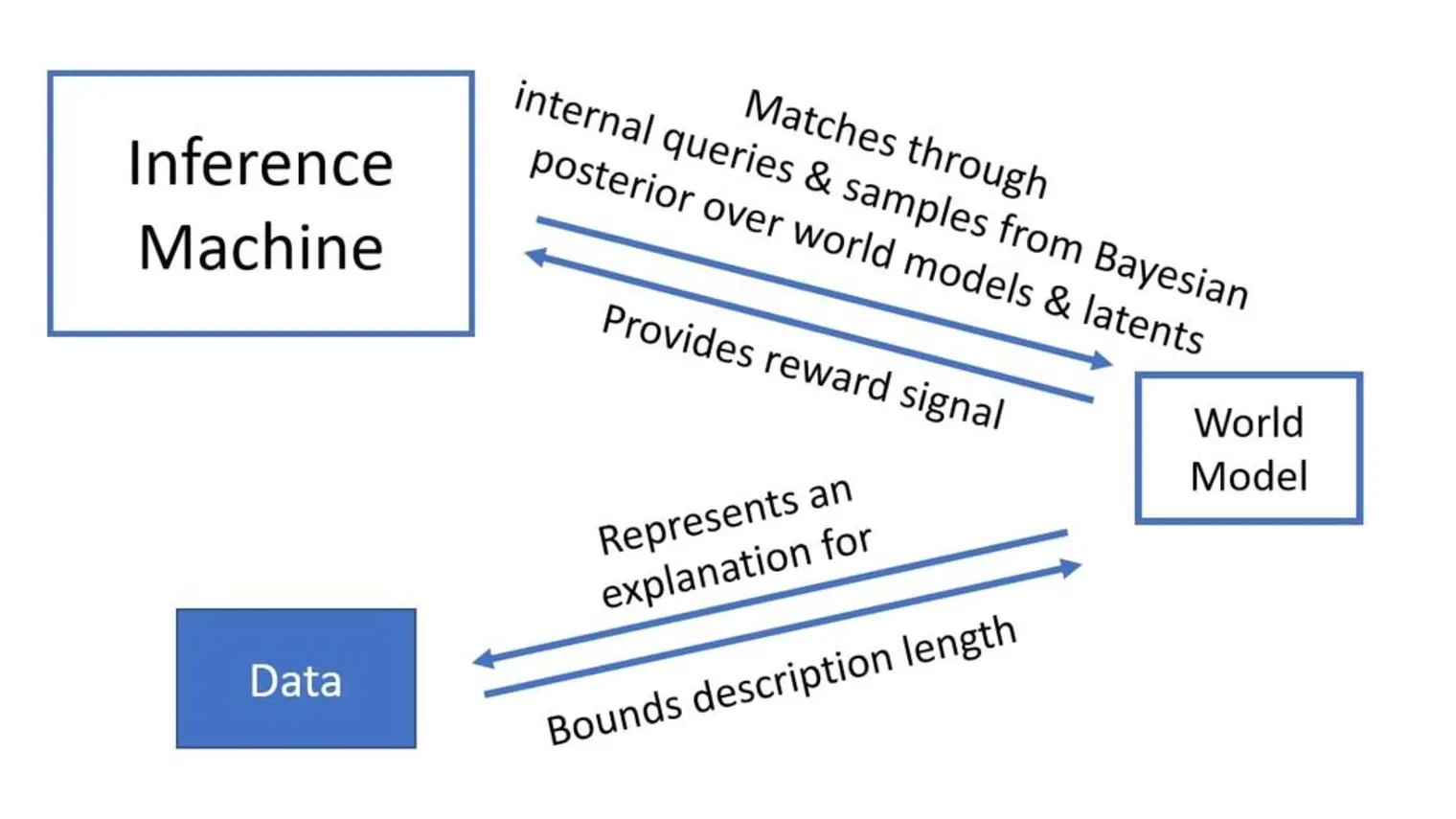
Ensuring that AI systems reliably and robustly avoid harmful or dangerous behaviours is a crucial challenge, especially for AI systems with … (voir plus)a high degree of autonomy and general intelligence, or systems used in safety-critical contexts. In this paper, we will introduce and define a family of approaches to AI safety, which we will refer to as guaranteed safe (GS) AI. The core feature of these approaches is that they aim to produce AI systems which are equipped with high-assurance quantitative safety guarantees. This is achieved by the interplay of three core components: a world model (which provides a mathematical description of how the AI system affects the outside world), a safety specification (which is a mathematical description of what effects are acceptable), and a verifier (which provides an auditable proof certificate that the AI satisfies the safety specification relative to the world model). We outline a number of approaches for creating each of these three core components, describe the main technical challenges, and suggest a number of potential solutions to them. We also argue for the necessity of this approach to AI safety, and for the inadequacy of the main alternative approaches.
Amortizing Intractable Inference in Large Language Models
Autoregressive large language models (LLMs) compress knowledge from their training data through next-token conditional distributions. This l… (voir plus)imits tractable querying of this knowledge to start-to-end autoregressive sampling. However, many tasks of interest -- including sequence continuation, infilling, and other forms of constrained generation -- involve sampling from intractable posterior distributions. We address this limitation by using amortized Bayesian inference to sample from these intractable posteriors. Such amortization is algorithmically achieved by fine-tuning LLMs via diversity-seeking reinforcement learning algorithms: generative flow networks (GFlowNets). We empirically demonstrate that this distribution-matching paradigm of LLM fine-tuning can serve as an effective alternative to maximum-likelihood training and reward-maximizing policy optimization. As an important application, we interpret chain-of-thought reasoning as a latent variable modeling problem and demonstrate that our approach enables data-efficient adaptation of LLMs to tasks that require multi-step rationalization and tool use.
Cycle Consistency Driven Object Discovery
Developing deep learning models that effectively learn object-centric representations, akin to human cognition, remains a challenging task. … (voir plus)Existing approaches facilitate object discovery by representing objects as fixed-size vectors, called ``slots'' or ``object files''. While these approaches have shown promise in certain scenarios, they still exhibit certain limitations. First, they rely on architectural priors which can be unreliable and usually require meticulous engineering to identify the correct objects. Second, there has been a notable gap in investigating the practical utility of these representations in downstream tasks. To address the first limitation, we introduce a method that explicitly optimizes the constraint that each object in a scene should be associated with a distinct slot. We formalize this constraint by introducing consistency objectives which are cyclic in nature. By integrating these consistency objectives into various existing slot-based object-centric methods, we showcase substantial improvements in object-discovery performance. These enhancements consistently hold true across both synthetic and real-world scenes, underscoring the effectiveness and adaptability of the proposed approach. To tackle the second limitation, we apply the learned object-centric representations from the proposed method to two downstream reinforcement learning tasks, demonstrating considerable performance enhancements compared to conventional slot-based and monolithic representation learning methods. Our results suggest that the proposed approach not only improves object discovery, but also provides richer features for downstream tasks.