
Portrait of Yoshua Bengio

Yoshua Bengio

Core Academic Member
Canada CIFAR AI Chair
Full Professor, Université de Montréal
Research Topics
Causality
Computational Neuroscience
Deep Learning
Generative Models
Graph Neural Networks
Machine Learning Theory
Medical Machine Learning
Molecular Modeling
Natural Language Processing
Probabilistic Models
Reasoning
Recurrent Neural Networks
Reinforcement Learning
Representation Learning

Biography

*For media requests, please write to medias@mila.quebec.

For more information please contact Cassidy MacNeil, Senior Assistant and Operation Lead at cassidy.macneil@mila.quebec.

Yoshua Bengio is recognized worldwide as a leading expert in AI. He is most known for his pioneering work in deep learning, which earned him the 2018 A.M. Turing Award, “the Nobel Prize of computing,” with Geoffrey Hinton and Yann LeCun.

Bengio is a full professor at Université de Montréal, and the founder and scientific advisor of Mila – Quebec Artificial Intelligence Institute. He is also a senior fellow at CIFAR and co-directs its Learning in Machines & Brains program, serves as special advisor and founding scientific director of IVADO, and holds a Canada CIFAR AI Chair.

In 2019, Bengio was awarded the prestigious Killam Prize and in 2022, he was the most cited computer scientist in the world by h-index. He is a Fellow of the Royal Society of London, Fellow of the Royal Society of Canada, Knight of the Legion of Honor of France and Officer of the Order of Canada. In 2023, he was appointed to the UN’s Scientific Advisory Board for Independent Advice on Breakthroughs in Science and Technology.

Concerned about the social impact of AI, Bengio helped draft the Montréal Declaration for the Responsible Development of Artificial Intelligence and continues to raise awareness about the importance of mitigating the potentially catastrophic risks associated with future AI systems.

Current Students

Collaborating researcher - Cambridge University
Principal supervisor :
PhD - Université de Montréal
Collaborating Alumni - Université de Montréal
Postdoctorate - Université de Montréal
Principal supervisor :
Collaborating researcher - Université de Montréal
Collaborating researcher - KOREA ADVANCED INSTITUTE OF SCIENCE AND TECHNOLOGY
Collaborating researcher - s.o.
PhD - Université de Montréal
Co-supervisor :
PhD - Université de Montréal
Principal supervisor :
Independent visiting researcher - Université de Montréal
Collaborating researcher - Ying Wu Coll of Computing
Collaborating researcher - University of Waterloo
Principal supervisor :
Postdoctorate - Université de Montréal
PhD - Université de Montréal
Principal supervisor :
Postdoctorate - Université de Montréal
Co-supervisor :
Collaborating Alumni - Université de Montréal
Co-supervisor :
Collaborating Alumni - Université de Montréal
Collaborating researcher - University of Cambridge
Collaborating Alumni - Université de Montréal
Co-supervisor :
PhD - Université de Montréal
Principal supervisor :
Collaborating researcher - Université de Montréal
PhD - McGill University
Principal supervisor :
Collaborating Alumni - McGill University
Principal supervisor :

Publications

Consciousness-Inspired Spatio-Temporal Abstractions for Better Generalization in Reinforcement Learning
Mingde Zhao
Harm van Seijen
Romain Laroche
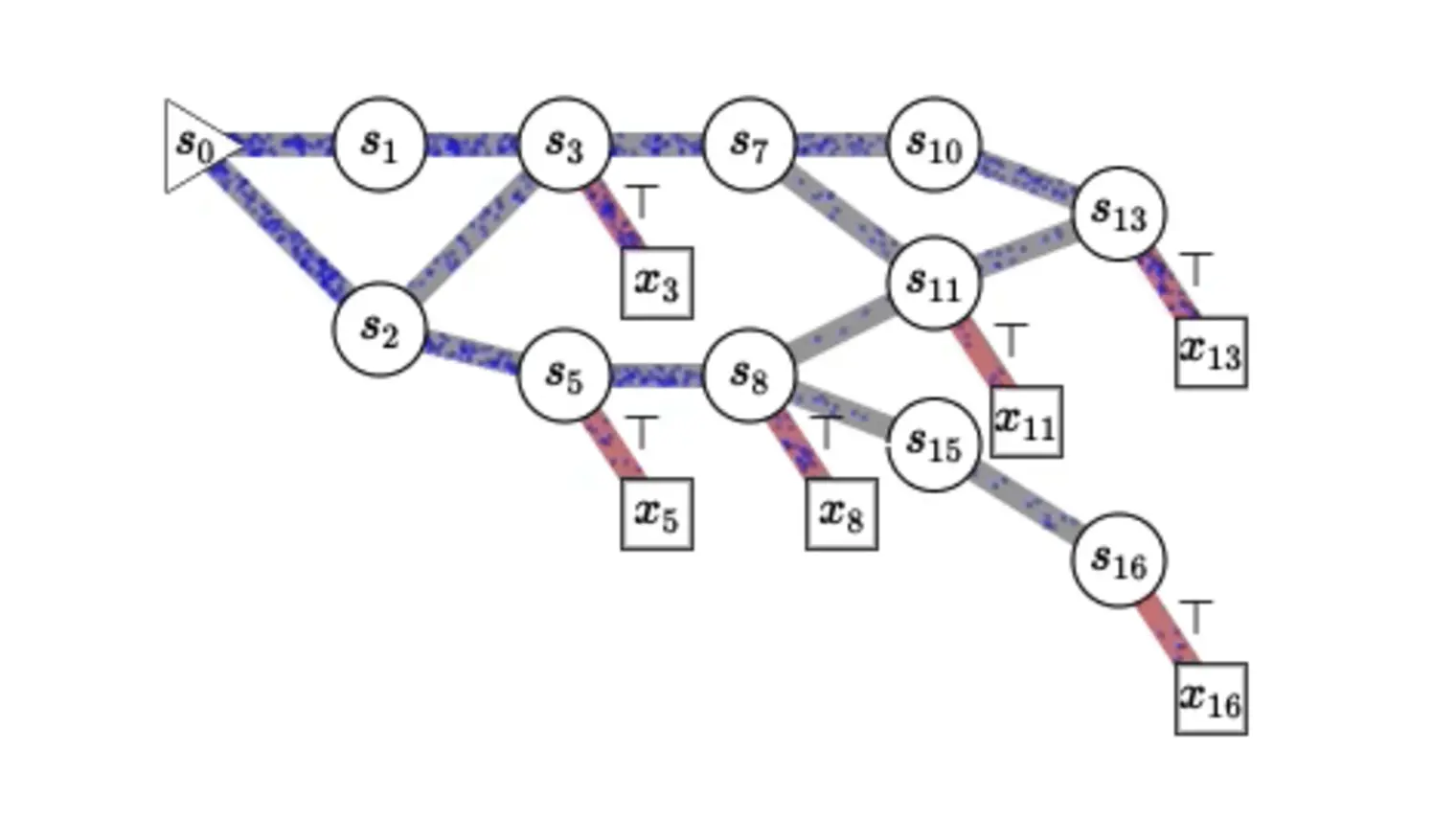
Inspired by human conscious planning, we propose Skipper, a model-based reinforcement learning framework utilizing spatio-temporal abstracti… (see more)ons to generalize better in novel situations. It automatically decomposes the given task into smaller, more manageable subtasks, and thus enables sparse decision-making and focused computation on the relevant parts of the environment. The decomposition relies on the extraction of an abstracted proxy problem represented as a directed graph, in which vertices and edges are learned end-to-end from hindsight. Our theoretical analyses provide performance guarantees under appropriate assumptions and establish where our approach is expected to be helpful. Generalization-focused experiments validate Skipper's significant advantage in zero-shot generalization, compared to some existing state-of-the-art hierarchical planning methods.
blocks: Version 0.2.0
A Theano framework for building and training neural networks
Generative Active Learning for the Search of Small-Molecule Protein Binders
Cheng-Hao Liu
Éric Jolicoeur
Edward Ruediger
Andrei Nica
Daniel St-Cyr
Doris Alexandra Schuetz
Victor Ion Butoi
Saikrishna Gottipati
Prateek Gupta
Sasikanth Avancha
William Hamilton
Brooks Paige
Sanchit Misra
Bharat Kaul
José Miguel Hernández-Lobato
Marwin Segler
Michael Bronstein
Anne Marinier
Mike Tyers
Despite substantial progress in machine learning for scientific discovery in recent years, truly de novo design of small molecules which exh… (see more)ibit a property of interest remains a significant challenge. We introduce LambdaZero, a generative active learning approach to search for synthesizable molecules. Powered by deep reinforcement learning, LambdaZero learns to search over the vast space of molecules to discover candidates with a desired property. We apply LambdaZero with molecular docking to design novel small molecules that inhibit the enzyme soluble Epoxide Hydrolase 2 (sEH), while enforcing constraints on synthesizability and drug-likeliness. LambdaZero provides an exponential speedup in terms of the number of calls to the expensive molecular docking oracle, and LambdaZero de novo designed molecules reach docking scores that would otherwise require the virtual screening of a hundred billion molecules. Importantly, LambdaZero discovers novel scaffolds of synthesizable, drug-like inhibitors for sEH. In in vitro experimental validation, a series of ligands from a generated quinazoline-based scaffold were synthesized, and the lead inhibitor N-(4,6-di(pyrrolidin-1-yl)quinazolin-2-yl)-N-methylbenzamide (UM0152893) displayed sub-micromolar enzyme inhibition of sEH.
Speech Model Pre-training for End-to-End Spoken Language Understanding
Patrick Ignoto
Vikrant Singh Tomar
Whereas conventional spoken language understanding (SLU) systems map speech to text, and then text to intent, end-to-end SLU systems map spe… (see more)ech directly to intent through a single trainable model. Achieving high accuracy with these end-to-end models without a large amount of training data is difficult. We propose a method to reduce the data requirements of end-to-end SLU in which the model is first pre-trained to predict words and phonemes, thus learning good features for SLU. We introduce a new SLU dataset, Fluent Speech Commands, and show that our method improves performance both when the full dataset is used for training and when only a small subset is used. We also describe preliminary experiments to gauge the model's ability to generalize to new phrases not heard during training.
Towards equilibrium molecular conformation generation with GFlowNets
Cheng-Hao Liu
Santiago Miret
Luca Thiede
Alán Aspuru-Guzik
Sampling diverse, thermodynamically feasible molecular conformations plays a crucial role in predicting properties of a molecule. In this pa… (see more)per we propose to use GFlowNet for sampling conformations of small molecules from the Boltzmann distribution, as determined by the molecule's energy. The proposed approach can be used in combination with energy estimation methods of different fidelity and discovers a diverse set of low-energy conformations for highly flexible drug-like molecules. We demonstrate that GFlowNet can reproduce molecular potential energy surfaces by sampling proportionally to the Boltzmann distribution.
Contrastive Retrospection: honing in on critical steps for rapid learning and generalization in RL
In real life, success is often contingent upon multiple critical steps that are distant in time from each other and from the final reward. T… (see more)hese critical steps are challenging to identify with traditional reinforcement learning (RL) methods that rely on the Bellman equation for credit assignment. Here, we present a new RL algorithm that uses offline contrastive learning to hone in on these critical steps. This algorithm, which we call Contrastive Retrospection (ConSpec), can be added to any existing RL algorithm. ConSpec learns a set of prototypes for the critical steps in a task by a novel contrastive loss and delivers an intrinsic reward when the current state matches one of the prototypes. The prototypes in ConSpec provide two key benefits for credit assignment: (i) They enable rapid identification of all the critical steps. (ii) They do so in a readily interpretable manner, enabling out-of-distribution generalization when sensory features are altered. Distinct from other contemporary RL approaches to credit assignment, ConSpec takes advantage of the fact that it is easier to retrospectively identify the small set of steps that success is contingent upon (and ignoring other states) than it is to prospectively predict reward at every taken step. ConSpec greatly improves learning in a diverse set of RL tasks. The code is available at the link: https://github.com/sunchipsster1/ConSpec
DynGFN: Towards Bayesian Inference of Gene Regulatory Networks with GFlowNets
Bo Wang
Leo J. Lee
Jason Hartford
One of the grand challenges of cell biology is inferring the gene regulatory network (GRN) which describes interactions between genes and th… (see more)eir products that control gene expression and cellular function. We can treat this as a causal discovery problem but with two non-standard challenges: (1) regulatory networks are inherently cyclic so we should not model a GRN as a directed acyclic graph (DAG), and (2) observations have significant measurement noise, so for typical sample sizes there will always be a large equivalence class of graphs that are likely given the data, and we want methods that capture this uncertainty. Existing methods either focus on challenge (1), identifying cyclic structure from dynamics, or on challenge (2) learning complex Bayesian posteriors over DAGs, but not both. In this paper we leverage the fact that it is possible to estimate the "velocity" of gene expression with RNA velocity techniques to develop an approach that addresses both challenges. Because we have access to velocity information, we can treat the Bayesian structure learning problem as a problem of sparse identification of a dynamical system, capturing cyclic feedback loops through time. Since our objective is to model uncertainty over discrete structures, we leverage Generative Flow Networks (GFlowNets) to estimate the posterior distribution over the combinatorial space of possible sparse dependencies. Our results indicate that our method learns posteriors that better encapsulate the distributions of cyclic structures compared to counterpart state-of-the-art Bayesian structure learning approaches.
GEO-Bench: Toward Foundation Models for Earth Monitoring
Alexandre Lacoste
Nils Lehmann
Pau Rodríguez
Evan David Sherwin
Hannah Kerner
Björn Lütjens
Jeremy Irvin
David Dao
Hamed Alemohammad
Mehmet Gunturkun
Dava Newman
Stefano Ermon
Xiao Xiang Zhu
Recent progress in self-supervision has shown that pre-training large neural networks on vast amounts of unsupervised data can lead to subst… (see more)antial increases in generalization to downstream tasks. Such models, recently coined foundation models, have been transformational to the field of natural language processing. Variants have also been proposed for image data, but their applicability to remote sensing tasks is limited. To stimulate the development of foundation models for Earth monitoring, we propose a benchmark comprised of six classification and six segmentation tasks, which were carefully curated and adapted to be both relevant to the field and well-suited for model evaluation. We accompany this benchmark with a robust methodology for evaluating models and reporting aggregated results to enable a reliable assessment of progress. Finally, we report results for 20 baselines to gain information about the performance of existing models. We believe that this benchmark will be a driver of progress across a variety of Earth monitoring tasks.
A Hitchhiker's Guide to Geometric GNNs for 3D Atomic Systems
Alexandre AGM Duval
Simon V. Mathis
Chaitanya K. Joshi
Santiago Miret
Fragkiskos D. Malliaros
Taco Cohen
Pietro Lio’
Michael M. Bronstein
Improving day-ahead Solar Irradiance Time Series Forecasting by Leveraging Spatio-Temporal Context
Solar power harbors immense potential in mitigating climate change by substantially reducing CO…
Joint Bayesian Inference of Graphical Structure and Parameters with a Single Generative Flow Network
Generative Flow Networks (GFlowNets), a class of generative models over discrete and structured sample spaces, have been previously applied … (see more)to the problem of inferring the marginal posterior distribution over the directed acyclic graph (DAG) of a Bayesian Network, given a dataset of observations. Based on recent advances extending this framework to non-discrete sample spaces, we propose in this paper to approximate the joint posterior over not only the structure of a Bayesian Network, but also the parameters of its conditional probability distributions. We use a single GFlowNet whose sampling policy follows a two-phase process: the DAG is first generated sequentially one edge at a time, and then the corresponding parameters are picked once the full structure is known. Since the parameters are included in the posterior distribution, this leaves more flexibility for the local probability models of the Bayesian Network, making our approach applicable even to non-linear models parametrized by neural networks. We show that our method, called JSP-GFN, offers an accurate approximation of the joint posterior, while comparing favorably against existing methods on both simulated and real data.
Let the Flows Tell: Solving Graph Combinatorial Optimization Problems with GFlowNets