Portrait of Yoshua Bengio

Yoshua Bengio

Core Academic Member
Canada CIFAR AI Chair
Full Professor, Université de Montréal, Department of Computer Science and Operations Research Department
Founder and Scientific Advisor, Leadership Team
Research Topics
Causality
Computational Neuroscience
Deep Learning
Generative Models
Graph Neural Networks
Machine Learning Theory
Medical Machine Learning
Molecular Modeling
Natural Language Processing
Probabilistic Models
Reasoning
Recurrent Neural Networks
Reinforcement Learning
Representation Learning

Biography

*For media requests, please write to medias@mila.quebec.

For more information please contact Cassidy MacNeil, Senior Assistant and Operation Lead at cassidy.macneil@mila.quebec.

Yoshua Bengio is recognized worldwide as a leading expert in AI. He is most known for his pioneering work in deep learning, which earned him the 2018 A.M. Turing Award, “the Nobel Prize of computing,” with Geoffrey Hinton and Yann LeCun.

Bengio is a full professor at Université de Montréal, and the founder and scientific advisor of Mila – Quebec Artificial Intelligence Institute. He is also a senior fellow at CIFAR and co-directs its Learning in Machines & Brains program, serves as special advisor and founding scientific director of IVADO, and holds a Canada CIFAR AI Chair.

In 2019, Bengio was awarded the prestigious Killam Prize and in 2022, he was the most cited computer scientist in the world by h-index. He is a Fellow of the Royal Society of London, Fellow of the Royal Society of Canada, Knight of the Legion of Honor of France and Officer of the Order of Canada. In 2023, he was appointed to the UN’s Scientific Advisory Board for Independent Advice on Breakthroughs in Science and Technology.

Concerned about the social impact of AI, Bengio helped draft the Montréal Declaration for the Responsible Development of Artificial Intelligence and continues to raise awareness about the importance of mitigating the potentially catastrophic risks associated with future AI systems.

Current Students

Collaborating Alumni - McGill University
Collaborating researcher - Cambridge University
Principal supervisor :
PhD - Université de Montréal
Independent visiting researcher
Co-supervisor :
Collaborating researcher - N/A
Principal supervisor :
PhD - Université de Montréal
Collaborating researcher - KAIST
PhD - Université de Montréal
Collaborating Alumni - Université de Montréal
Co-supervisor :
Independent visiting researcher
Principal supervisor :
PhD - Université de Montréal
Co-supervisor :
PhD - Université de Montréal
Principal supervisor :
Collaborating Alumni - Université de Montréal
Postdoctorate - Université de Montréal
Principal supervisor :
Postdoctorate - Université de Montréal
Principal supervisor :
Collaborating Alumni
Collaborating Alumni - Université de Montréal
PhD - Université de Montréal
Co-supervisor :
PhD - Université de Montréal
Principal supervisor :
Independent visiting researcher - Université de Montréal
PhD - Université de Montréal
Principal supervisor :
Collaborating researcher - Ying Wu Coll of Computing
Collaborating researcher - University of Waterloo
Principal supervisor :
Collaborating Alumni - Max-Planck-Institute for Intelligent Systems
Collaborating researcher - Université de Montréal
Co-supervisor :
PhD - Université de Montréal
Postdoctorate - Université de Montréal
PhD - Université de Montréal
Principal supervisor :
Collaborating Alumni - Université de Montréal
Postdoctorate
Co-supervisor :
Collaborating Alumni - Polytechnique Montréal
Co-supervisor :
PhD - Université de Montréal
Co-supervisor :
Collaborating researcher
Principal supervisor :
Collaborating Alumni - Université de Montréal
Co-supervisor :
PhD - Université de Montréal
Principal supervisor :
Collaborating researcher
Collaborating researcher - Université de Montréal
PhD - McGill University
Principal supervisor :
PhD - Université de Montréal
Principal supervisor :
PhD - Université de Montréal
Collaborating Alumni - McGill University
Principal supervisor :

Publications

Causal machine learning for single-cell genomics
Alejandro Tejada-Lapuerta
Hananeh Aliee
Fabian J. Theis
A cry for help: Early detection of brain injury in newborns
Samantha Latremouille
Arsenii Gorin
Junhao Wang
Uchenna Ekwochi
P. Ubuane
O. Kehinde
Muhammad A. Salisu
Datonye Briggs
Crystal-GFN: sampling crystals with desirable properties and constraints
Accelerating material discovery holds the potential to greatly help mitigate the climate crisis. Discovering new solid-state materials such … (see more)as electrocatalysts, super-ionic conductors or photovoltaic materials can have a crucial impact, for instance, in improving the efficiency of renewable energy production and storage. In this paper, we introduce Crystal-GFN, a generative model of crystal structures that sequentially samples structural properties of crystalline materials, namely the space group, composition and lattice parameters. This domain-inspired approach enables the flexible incorporation of physical and structural hard constraints, as well as the use of any available predictive model of a desired physicochemical property as an objective function. To design stable materials, one must target the candidates with the lowest formation energy. Here, we use as objective the formation energy per atom of a crystal structure predicted by a new proxy machine learning model trained on MatBench. The results demonstrate that Crystal-GFN is able to sample highly diverse crystals with low (median -3.1 eV/atom) predicted formation energy.
Causal Inference in Gene Regulatory Networks with GFlowNet: Towards Scalability in Large Systems
Trang Nguyen
Dianbo Liu
Understanding causal relationships within Gene Regulatory Networks (GRNs) is essential for unraveling the gene interactions in cellular proc… (see more)esses. However, causal discovery in GRNs is a challenging problem for multiple reasons including the existence of cyclic feedback loops and uncertainty that yields diverse possible causal structures. Previous works in this area either ignore cyclic dynamics (assume acyclic structure) or struggle with scalability. We introduce Swift-DynGFN as a novel framework that enhances causal structure learning in GRNs while addressing scalability concerns. Specifically, Swift-DynGFN exploits gene-wise independence to boost parallelization and to lower computational cost. Experiments on real single-cell RNA velocity and synthetic GRN datasets showcase the advancement in learning causal structure in GRNs and scalability in larger systems.
Leveraging Diffusion Disentangled Representations to Mitigate Shortcuts in Underspecified Visual Tasks
Alexander Rubinstein
Armand Mihai Nicolicioiu
Damien Teney
Spurious correlations in the data, where multiple cues are predictive of the target labels, often lead to shortcut learning phenomena, where… (see more) a model may rely on erroneous, easy-to-learn, cues while ignoring reliable ones. In this work, we propose an ensemble diversification framework exploiting the generation of synthetic counterfactuals using Diffusion Probabilistic Models (DPMs). We discover that DPMs have the inherent capability to represent multiple visual cues independently, even when they are largely correlated in the training data. We leverage this characteristic to encourage model diversity and empirically show the efficacy of the approach with respect to several diversification objectives. We show that diffusion-guided diversification can lead models to avert attention from shortcut cues, achieving ensemble diversity performance comparable to previous methods requiring additional data collection.
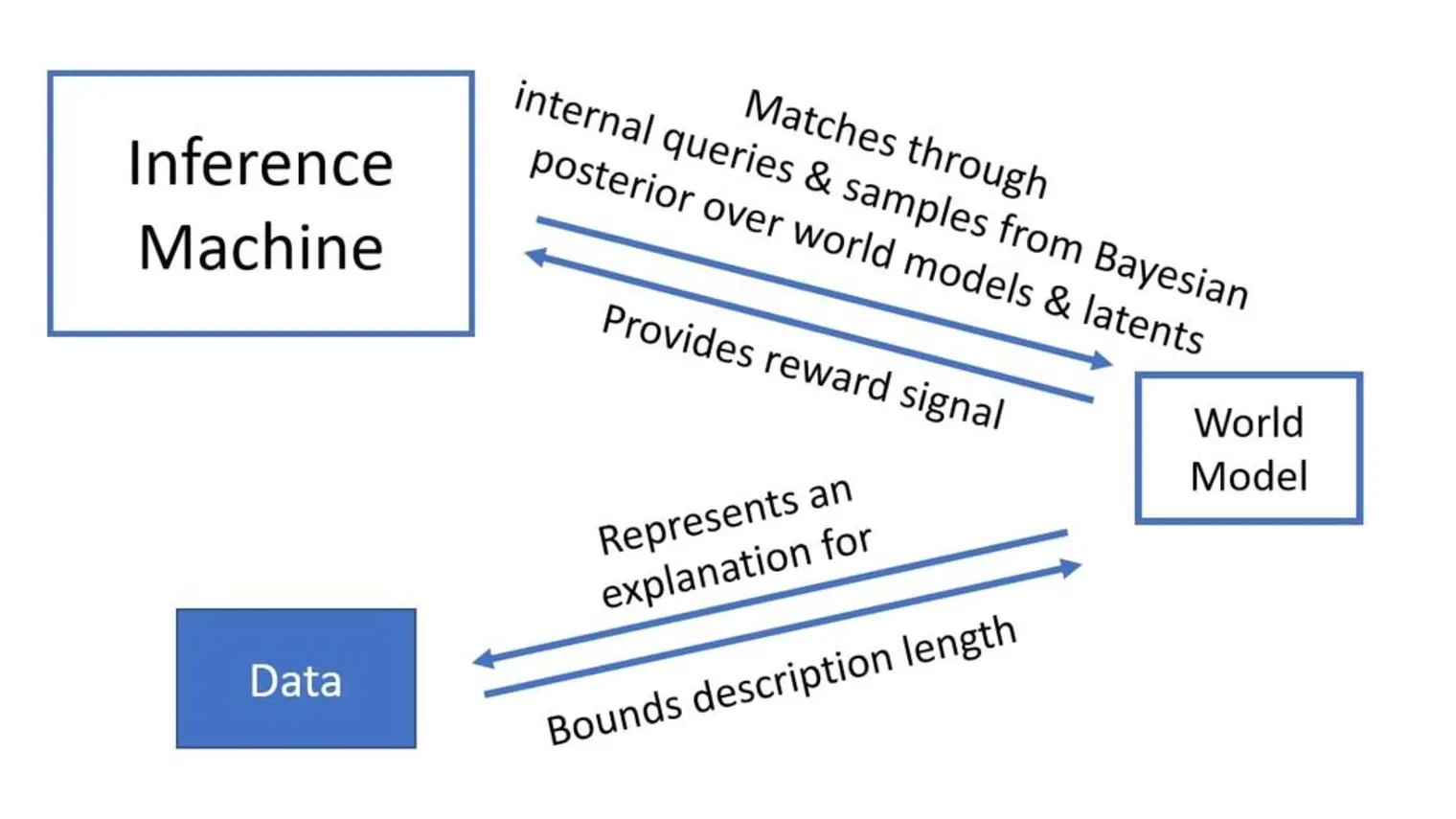
AI and Catastrophic Risk
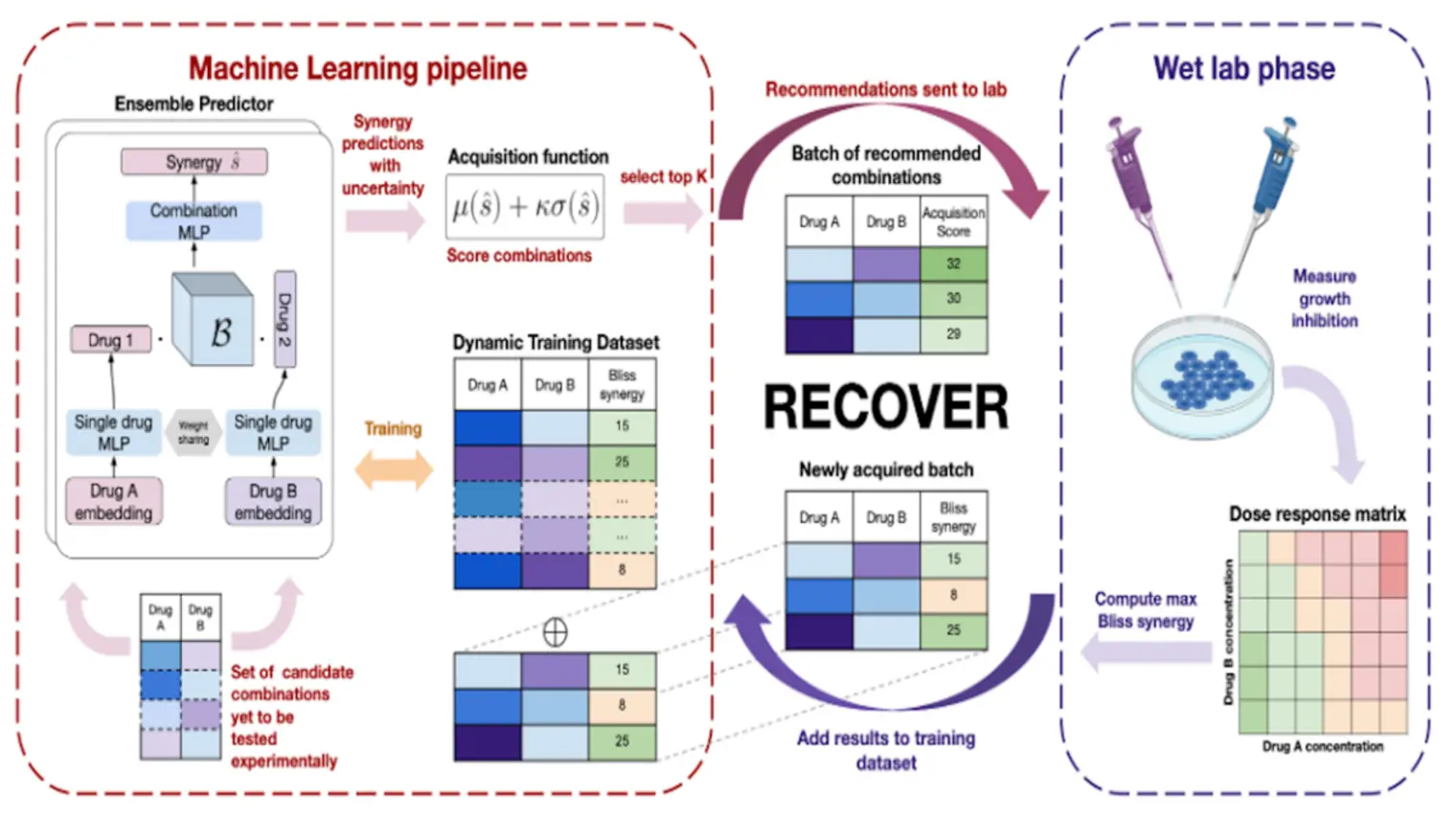
RECOVER identifies synergistic drug combinations in vitro through sequential model optimization
Thomas Gaudelet
Andrew Anighoro
Torsten Gross
Francisco Martínez-Peña
Eileen L. Tang
M.S. Suraj
Cristian Regep
Jeremy B.R. Hayter
Nicholas Valiante
Mike Tyers
Charles E.S. Roberts
Michael M. Bronstein
Luke L. Lairson
Jake P. Taylor-King
GEO-Bench: Toward Foundation Models for Earth Monitoring
Alexandre Lacoste
Nils Lehmann
Pau Rodríguez
Evan David Sherwin
Hannah Kerner
Björn Lütjens
Jeremy Irvin
David Dao
Hamed Alemohammad
Mehmet Gunturkun
Dava Newman
Stefano Ermon
Xiao Xiang Zhu
Recent progress in self-supervision has shown that pre-training large neural networks on vast amounts of unsupervised data can lead to subst… (see more)antial increases in generalization to downstream tasks. Such models, recently coined foundation models, have been transformational to the field of natural language processing. Variants have also been proposed for image data, but their applicability to remote sensing tasks is limited. To stimulate the development of foundation models for Earth monitoring, we propose a benchmark comprised of six classification and six segmentation tasks, which were carefully curated and adapted to be both relevant to the field and well-suited for model evaluation. We accompany this benchmark with a robust methodology for evaluating models and reporting aggregated results to enable a reliable assessment of progress. Finally, we report results for 20 baselines to gain information about the performance of existing models. We believe that this benchmark will be a driver of progress across a variety of Earth monitoring tasks.
Contrastive Retrospection: honing in on critical steps for rapid learning and generalization in RL
In real life, success is often contingent upon multiple critical steps that are distant in time from each other and from the final reward. T… (see more)hese critical steps are challenging to identify with traditional reinforcement learning (RL) methods that rely on the Bellman equation for credit assignment. Here, we present a new RL algorithm that uses offline contrastive learning to hone in on these critical steps. This algorithm, which we call Contrastive Retrospection (ConSpec), can be added to any existing RL algorithm. ConSpec learns a set of prototypes for the critical steps in a task by a novel contrastive loss and delivers an intrinsic reward when the current state matches one of the prototypes. The prototypes in ConSpec provide two key benefits for credit assignment: (i) They enable rapid identification of all the critical steps. (ii) They do so in a readily interpretable manner, enabling out-of-distribution generalization when sensory features are altered. Distinct from other contemporary RL approaches to credit assignment, ConSpec takes advantage of the fact that it is easier to retrospectively identify the small set of steps that success is contingent upon (and ignoring other states) than it is to prospectively predict reward at every taken step. ConSpec greatly improves learning in a diverse set of RL tasks. The code is available at the link: https://github.com/sunchipsster1/ConSpec
DynGFN: Towards Bayesian Inference of Gene Regulatory Networks with GFlowNets
Jason Hartford
Leo J. Lee
Bo Wang
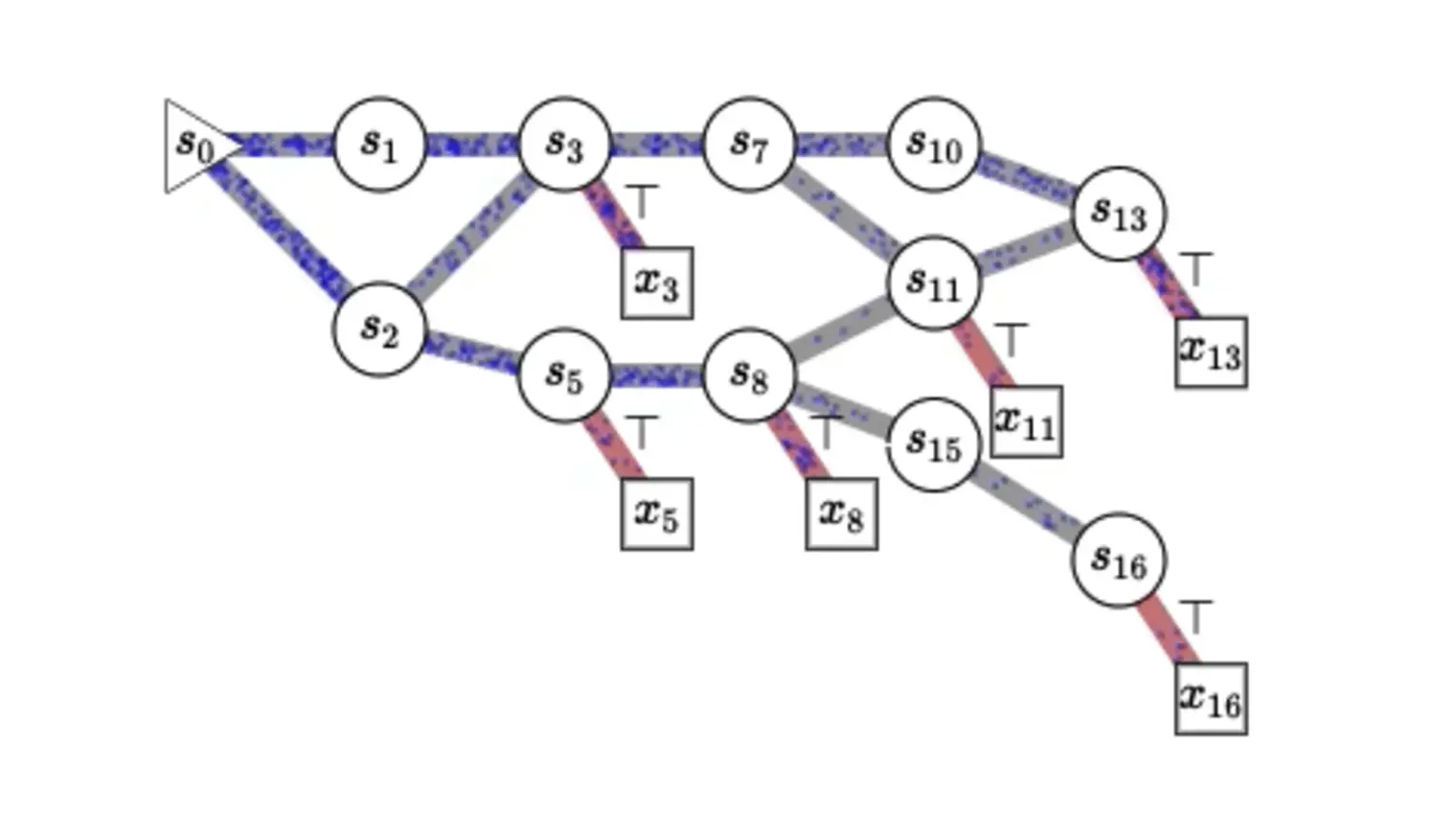
One of the grand challenges of cell biology is inferring the gene regulatory network (GRN) which describes interactions between genes and th… (see more)eir products that control gene expression and cellular function. We can treat this as a causal discovery problem but with two non-standard challenges: (1) regulatory networks are inherently cyclic so we should not model a GRN as a directed acyclic graph (DAG), and (2) observations have significant measurement noise, so for typical sample sizes there will always be a large equivalence class of graphs that are likely given the data, and we want methods that capture this uncertainty. Existing methods either focus on challenge (1), identifying cyclic structure from dynamics, or on challenge (2) learning complex Bayesian posteriors over DAGs, but not both. In this paper we leverage the fact that it is possible to estimate the "velocity" of gene expression with RNA velocity techniques to develop an approach that addresses both challenges. Because we have access to velocity information, we can treat the Bayesian structure learning problem as a problem of sparse identification of a dynamical system, capturing cyclic feedback loops through time. Since our objective is to model uncertainty over discrete structures, we leverage Generative Flow Networks (GFlowNets) to estimate the posterior distribution over the combinatorial space of possible sparse dependencies. Our results indicate that our method learns posteriors that better encapsulate the distributions of cyclic structures compared to counterpart state-of-the-art Bayesian structure learning approaches.
Improving day-ahead Solar Irradiance Time Series Forecasting by Leveraging Spatio-Temporal Context
Solar power harbors immense potential in mitigating climate change by substantially reducing CO…
Joint Bayesian Inference of Graphical Structure and Parameters with a Single Generative Flow Network
Generative Flow Networks (GFlowNets), a class of generative models over discrete and structured sample spaces, have been previously applied … (see more)to the problem of inferring the marginal posterior distribution over the directed acyclic graph (DAG) of a Bayesian Network, given a dataset of observations. Based on recent advances extending this framework to non-discrete sample spaces, we propose in this paper to approximate the joint posterior over not only the structure of a Bayesian Network, but also the parameters of its conditional probability distributions. We use a single GFlowNet whose sampling policy follows a two-phase process: the DAG is first generated sequentially one edge at a time, and then the corresponding parameters are picked once the full structure is known. Since the parameters are included in the posterior distribution, this leaves more flexibility for the local probability models of the Bayesian Network, making our approach applicable even to non-linear models parametrized by neural networks. We show that our method, called JSP-GFN, offers an accurate approximation of the joint posterior, while comparing favorably against existing methods on both simulated and real data.