


AI Conference Benefiting Centraide of Greater Montreal
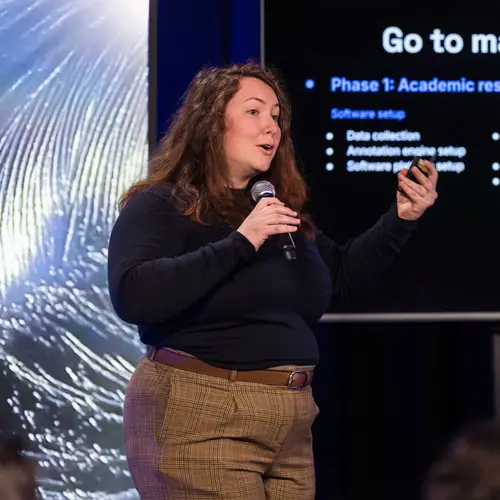
In collaboration with Mila, Techaide will be hosting another edition of its 1-day AI research conference on May 29. The event will bring researchers and professors from Mila to present their current projects and sharing their field expertise. It will also be featuring keynote speakers : Oana Balmau, Jean-François Godbout, Natasha Jaques, Ivana Kajic, Hugo Larochelle and Catherine Regis.
In addition to being exposed to the most recent research in AI, attendees will be contributing to a great cause. Indeed, all proceeds of the conference will go towards the Techaide initiative to give back to Centraide of Greater Montreal, in support of their fight against poverty and social exclusion. Attendees are encouraged to give generously. No matter the amount, every donation counts. To double our impact, Mila’s scientific director, Hugo Larochelle, has offered to match all donations, up to $25,000!
Co-organizers: Ioannis Mitliagkas (Mila), Alex Hernandez-Garcia (Mila), Hugo Larochelle (Google - Mila), Nadine Khairallah (Mila), Mélany Mathieu (Mila)
The event will be held at Mila's offices, at 6650 Saint-Urbain Street.
*Please note that the event will be held in English.
*The ticket includes breakfast, coffee/tea, lunch and a cocktail reception.
Speakers
Oana Balmau
Associate Academic Member at Mila and Assistant Professor, School of Computer Science, McGill
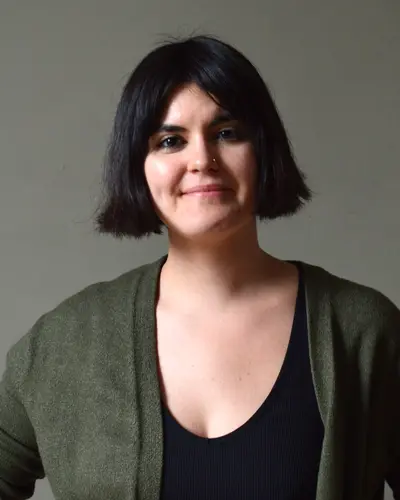
Oana Balmau is an Assistant Professor in the School of Computer Science at McGill University, where she leads the DISCS Lab. She also holds a status-only appointment in the Computer Science department at the University of Toronto and is a part of MLCommons, where she co-founded MLPerf Storage, an open-source benchmark for storage on ML workloads. Her research focuses on storage systems and data management, with an emphasis on ML, data science, and edge computing workloads.
She completed her PhD in Computer Science at the University of Sydney, advised by Prof. Willy Zwaenepoel. Before her PhD, Oana earned her Bachelors and Masters degrees in Computer Science from EPFL, Switzerland. Oana won the CORE John Makepeace Bennet Award 2021 for the best computer science dissertation in Australia and New Zealand, an Honorable Mention for the ACM SIGOPS Dennis M. Ritchie Doctoral Dissertation Award 2021, as well as Best Paper Awards in the USENIX Annual Technical Conference (USENIX ATC) 2019, and the ACM/IEEE Symposium on Edge Computing (SEC) 2024. Before joining McGill, Oana worked with Nutanix, ABB Research, and HP Vertica.

Jean-François Godbout
Associate Academic Member at Mila, Full Professor, Department of Political Science, Université de Montréal
Jean-François Godbout is a professor at the Université de Montréal in the Department of Political Science and an Associate Academic Member at Mila - Quebec Artificial Intelligence Institute. His research is primarily focused on computational social science, AI safety, and the impact of generative AI on society. He is currently Director of the Data analysis undergraduate program in social sciences and humanities at the Université de Montréal and a researcher at IVADO.

Natasha Jaques
Assistant Professor at University of Washington and Staff Research Scientist at Google DeepMind
Natasha Jaques is an Assistant Professor of Computer Science and Engineering at the University of Washington, and a Staff Research Scientist at Google DeepMind. Her research focuses on Social Reinforcement Learning in multi-agent and human-AI interactions. During her PhD at MIT, she developed foundational techniques for training language models with Reinforcement Learning from Human Feedback (RLHF). In the multi-agent space, she has developed techniques for improving coordination through social influence, and unsupervised environment design.
Natasha’s work has received various awards, including Best Demo at NeurIPS, an honourable mention for Best Paper at ICML, and the Outstanding PhD Dissertation Award from the Association for the Advancement of Affective Computing. Her work has been featured in Science Magazine, MIT Technology Review, Quartz, IEEE Spectrum, Boston Magazine, and on NBC and CBC news, among others. Natasha earned her Masters degree from the University of British Columbia, undergraduate degrees in Computer Science and Psychology from the University of Regina, and was a postdoctoral fellow at UC Berkeley.
Ivana Kajic
Staff Research Scientist, Google Deepmind
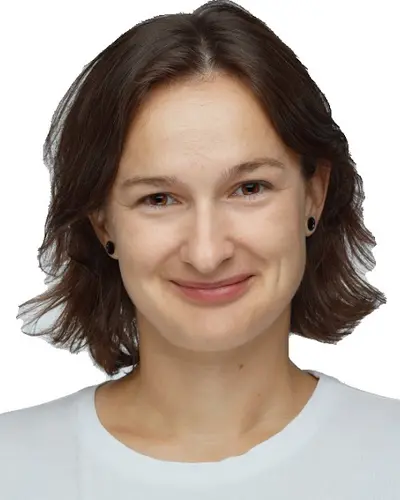
Ivana Kajic is a Research Scientist at Google DeepMind in Montreal working on evaluation and benchmarking of multimodal AI models. Her research uses methods and techniques from cognitive science in analysis and characterization of behavior of machine learning models. This spans the design of evaluation protocols, benchmarks and metrics to comprehensively understand the capabilities and limitations of large multimodal AI models, which have demonstrated strong performance in various cognitive tasks in recent years.
Her research has been published in leading ML venues, and she has organized and contributed to multiple conferences and workshops at the intersection of AI, neuroscience and cognitive science. She obtained her PhD in Computer Science at the University of Waterloo in Canada in the Computational Neuroscience Research group (CNRG).
She earned her Master’s in Computational Neuroscience from the Bernstein Centre for Computational Neuroscience in Berlin, and undergraduate degree from FER at the University of Zagreb.

Hugo Larochelle
Scientific Director of Mila and Adjunct Professor at Université de Montréal and McGill
Hugo Larochelle is a pioneering deep learning researcher, industry leader and philanthropist.
He started his academic journey with two of the « Godfathers » of artificial intelligence: Yoshua Bengio, his Ph.D. supervisor at the Université de Montréal, and Geoffrey Hinton, his postdoctoral supervisor at the University of Toronto.
Over the years, his research has contributed several conceptual breakthroughs found in modern AI systems. His work on Denoising Autoencoders (DAE) identified the reconstruction of clean data from corrupted versions as a scalable paradigm for learning meaningful representations from large quantities of unlabeled data. With models such as the Neural Autoregressive Distribution Estimator (NADE) and the Masked Autoencoder Distribution Estimator (MADE), he helped popularize autoregressive modeling with neural networks, a paradigm now omnipresent in generative AI. And his work on Zero-Data Learning of New Tasks introduced for the first time the now common concept of zero-shot learning.
He then brought his academic expertise to the industry by co-founding the startup Whetlab, which was acquired by Twitter in 2015. After a role at Twitter Cortex, he was recruited to lead Google's AI research lab in Montreal (Google Brain), now part of Google DeepMind. He is now an Adjunct Professor at the Université de Montréal and McGill University. He has also developed a series of free online courses on machine learning.
A father of four, Hugo Larochelle and his wife, Angèle St-Pierre, have also made multiple donations to the Université de Montréal, Université de Sherbrooke (where he used to be a Professor) and Université Laval to support students and advance research, particularly in AI for environmental sustainability. He also initiated the TechAide conference, mobilizing Montreal's tech community to raise funds for the charity Centraide to support its mission to fight poverty and social exclusion.

Catherine Régis
Associate Academic Member at Mila and Full Professor, Université de Montréal
Catherine Régis is Full Professor at the Faculty of Law of Université de Montréal (UdeM), Co-director of the Canadian AI Safety Institute research program and Director of Social Innovation and International Policy at IVADO. In addition to holding a Canada CIFAR Chair in AI and Human Rights and a Canada Research Chair in Health Law and Policy, she is a Senior Research Associate at the Intellectual Forum of the University of Cambridge. From 2021 to 2023, she was UdeM’s Associate VP for Strategic Planning and Responsible Digital Innovation.
Prof Régis is very active on the international scene. In 2022, she was appointed Cochair of the Working Group on Responsible AI of the Global Partnership on AI (GPAI), which comprises 29 member states (including Canada, France, Germany, India, Japan and the USA) for a period of two years. From 2020 to 2024, she led the Working Group on Responsible Digital Innovation and AI of the U7+ Alliance, which includes more than 50 universities from around the world. In 2022, she was a selected Fellow for the UN’s Institute for Training and Research’s program (UNITAR) in Science Diplomacy and, in 2024, she became part of the Technical Committee for UNESCO’s AI and the Rule of Law Program.
Prof Régis is used to executing consulting or training assignments both in Canada and elsewhere. She has been a visiting professor in different countries, and she has presented her work at institutions such as the OECD, the World Health Organization, the United Nations Institute for Disarmament Research, the Alan Turing Institute, the Supreme Court of Canada, and the Aspen Ministers Forum; in more than 20 universities worldwide (e.g., Cambridge, Costa Rica, Edinburgh, Georgetown, Osaka, Oxford, Sciences Po Paris, Sorbonne, Toronto); and in high-level conferences, including the AI Safety Summit at Bletchley Park in 2023 and NeurIPS. She is involved in the development of Science Diplomacy (which aims at building leadership and communication skills to bridge science and diplomacy in policymaking) at the national and international levels. She also guides governments, public organizations and international organizations (e.g., academic health centres, ombudspeople and ministries of health or innovation, UNESCO, WHO, UN) on policy orientation and responsible AI projects.
Most of her work explores how to best regulate AI at the national and international levels and to build responsible AI governance approaches more broadly. Her main objectives are: 1) to ensure human rights considerations are integrated throughout the AI life cycle; 2) to help policymakers map out and implement normative strategies that will contribute to the equitable distribution of AI benefits across nations; and 3) to inform the creation of the regulatory and governance tools needed for the responsible design and deployment of AI in key systems like healthcare and justice.
Agenda
| 8:30 - 9:15 AM | Welcome, coffee and registration |
| 9:15 AM | A word from the organizing committee |
| 9:25 AM | A Word from Centraide - Julie Gagné, VP Marketing and Technology from Centraide du Grand Montréal |
| 9:30 AM | Catherine Regis |
| 10:15 AM | Oana Balmau |
| 11:00 AM | 15 min Break |
| 11:15 AM | Natasha Jaques |
| 12:00 PM | Lunch Break |
| 1:30 PM | Jean-François Godbout |
| 2:15 PM | Hugo Larochelle |
| 3:00 PM | 15 min Break |
| 3:15 PM | Ivana Kajic |
| 4:00 - 6:00 PM | Cocktail / Networking / Sponsor Booths |


Gold Sponsor

Silver Sponsor


Bronze Sponsor