Portrait of Yoshua Bengio

Yoshua Bengio

Core Academic Member
Canada CIFAR AI Chair
Full Professor, Université de Montréal, Department of Computer Science and Operations Research Department
Founder and Scientific Advisor, Leadership Team
Research Topics
Causality
Computational Neuroscience
Deep Learning
Generative Models
Graph Neural Networks
Machine Learning Theory
Medical Machine Learning
Molecular Modeling
Natural Language Processing
Probabilistic Models
Reasoning
Recurrent Neural Networks
Reinforcement Learning
Representation Learning

Biography

*For media requests, please write to medias@mila.quebec.

For more information please contact Cassidy MacNeil, Senior Assistant and Operation Lead at cassidy.macneil@mila.quebec.

Yoshua Bengio is recognized worldwide as a leading expert in AI. He is most known for his pioneering work in deep learning, which earned him the 2018 A.M. Turing Award, “the Nobel Prize of computing,” with Geoffrey Hinton and Yann LeCun.

Bengio is a full professor at Université de Montréal, and the founder and scientific advisor of Mila – Quebec Artificial Intelligence Institute. He is also a senior fellow at CIFAR and co-directs its Learning in Machines & Brains program, serves as special advisor and founding scientific director of IVADO, and holds a Canada CIFAR AI Chair.

In 2019, Bengio was awarded the prestigious Killam Prize and in 2022, he was the most cited computer scientist in the world by h-index. He is a Fellow of the Royal Society of London, Fellow of the Royal Society of Canada, Knight of the Legion of Honor of France and Officer of the Order of Canada. In 2023, he was appointed to the UN’s Scientific Advisory Board for Independent Advice on Breakthroughs in Science and Technology.

Concerned about the social impact of AI, Bengio helped draft the Montréal Declaration for the Responsible Development of Artificial Intelligence and continues to raise awareness about the importance of mitigating the potentially catastrophic risks associated with future AI systems.

Current Students

Collaborating Alumni - McGill University
Collaborating researcher - Cambridge University
Principal supervisor :
PhD - Université de Montréal
Independent visiting researcher
Co-supervisor :
Collaborating researcher - N/A
Principal supervisor :
PhD - Université de Montréal
Collaborating researcher - KAIST
PhD - Université de Montréal
Collaborating Alumni - Université de Montréal
Co-supervisor :
Independent visiting researcher
Principal supervisor :
PhD - Université de Montréal
Co-supervisor :
PhD - Université de Montréal
Principal supervisor :
Collaborating Alumni - Université de Montréal
Postdoctorate - Université de Montréal
Principal supervisor :
Postdoctorate - Université de Montréal
Principal supervisor :
Collaborating Alumni
Collaborating Alumni - Université de Montréal
PhD - Université de Montréal
Co-supervisor :
PhD - Université de Montréal
Principal supervisor :
Independent visiting researcher - Université de Montréal
PhD - Université de Montréal
Principal supervisor :
Collaborating researcher - Ying Wu Coll of Computing
Collaborating researcher - University of Waterloo
Principal supervisor :
Collaborating Alumni - Max-Planck-Institute for Intelligent Systems
Collaborating researcher - Université de Montréal
Co-supervisor :
PhD - Université de Montréal
Postdoctorate - Université de Montréal
PhD - Université de Montréal
Principal supervisor :
Collaborating Alumni - Université de Montréal
Postdoctorate
Co-supervisor :
Collaborating Alumni - Polytechnique Montréal
Co-supervisor :
PhD - Université de Montréal
Co-supervisor :
Collaborating researcher
Principal supervisor :
Collaborating Alumni - Université de Montréal
Co-supervisor :
PhD - Université de Montréal
Principal supervisor :
Collaborating researcher
Collaborating researcher - Université de Montréal
PhD - Université de Montréal
PhD - McGill University
Principal supervisor :
PhD - Université de Montréal
Principal supervisor :
Collaborating Alumni - McGill University
Principal supervisor :

Publications

Efficient Causal Graph Discovery Using Large Language Models
Towards DNA-Encoded Library Generation with GFlowNets
Louis Vaillancourt
Doris Alexandra Schuetz
Mathieu Bourgey
Anne Marinier
Distributional GFlowNets with Quantile Flows
Generative Flow Networks (GFlowNets) are a new family of probabilistic samplers where an agent learns a stochastic policy for generating com… (see more)plex combinatorial structure through a series of decision-making steps. Despite being inspired from reinforcement learning, the current GFlowNet framework is relatively limited in its applicability and cannot handle stochasticity in the reward function. In this work, we adopt a distributional paradigm for GFlowNets, turning each flow function into a distribution, thus providing more informative learning signals during training. By parameterizing each edge flow through their quantile functions, our proposed \textit{quantile matching} GFlowNet learning algorithm is able to learn a risk-sensitive policy, an essential component for handling scenarios with risk uncertainty. Moreover, we find that the distributional approach can achieve substantial improvement on existing benchmarks compared to prior methods due to our enhanced training algorithm, even in settings with deterministic rewards.
Computing Power and the Governance of Artificial Intelligence
Girish Sastry
Lennart Heim
Haydn Belfield
Markus Anderljung
Miles Brundage
Julian Hazell
Cullen C. O'keefe
Gillian K. Hadfield
Richard Ngo
Konstantin Pilz
George Gor
Emma Bluemke
Sarah Shoker
Janet Egan
Robert Trager
Shahar Avin
Adrian Weller
Diane Coyle
Computing power, or"compute,"is crucial for the development and deployment of artificial intelligence (AI) capabilities. As a result, govern… (see more)ments and companies have started to leverage compute as a means to govern AI. For example, governments are investing in domestic compute capacity, controlling the flow of compute to competing countries, and subsidizing compute access to certain sectors. However, these efforts only scratch the surface of how compute can be used to govern AI development and deployment. Relative to other key inputs to AI (data and algorithms), AI-relevant compute is a particularly effective point of intervention: it is detectable, excludable, and quantifiable, and is produced via an extremely concentrated supply chain. These characteristics, alongside the singular importance of compute for cutting-edge AI models, suggest that governing compute can contribute to achieving common policy objectives, such as ensuring the safety and beneficial use of AI. More precisely, policymakers could use compute to facilitate regulatory visibility of AI, allocate resources to promote beneficial outcomes, and enforce restrictions against irresponsible or malicious AI development and usage. However, while compute-based policies and technologies have the potential to assist in these areas, there is significant variation in their readiness for implementation. Some ideas are currently being piloted, while others are hindered by the need for fundamental research. Furthermore, naive or poorly scoped approaches to compute governance carry significant risks in areas like privacy, economic impacts, and centralization of power. We end by suggesting guardrails to minimize these risks from compute governance.
Amortizing Intractable Inference in Large Language Models
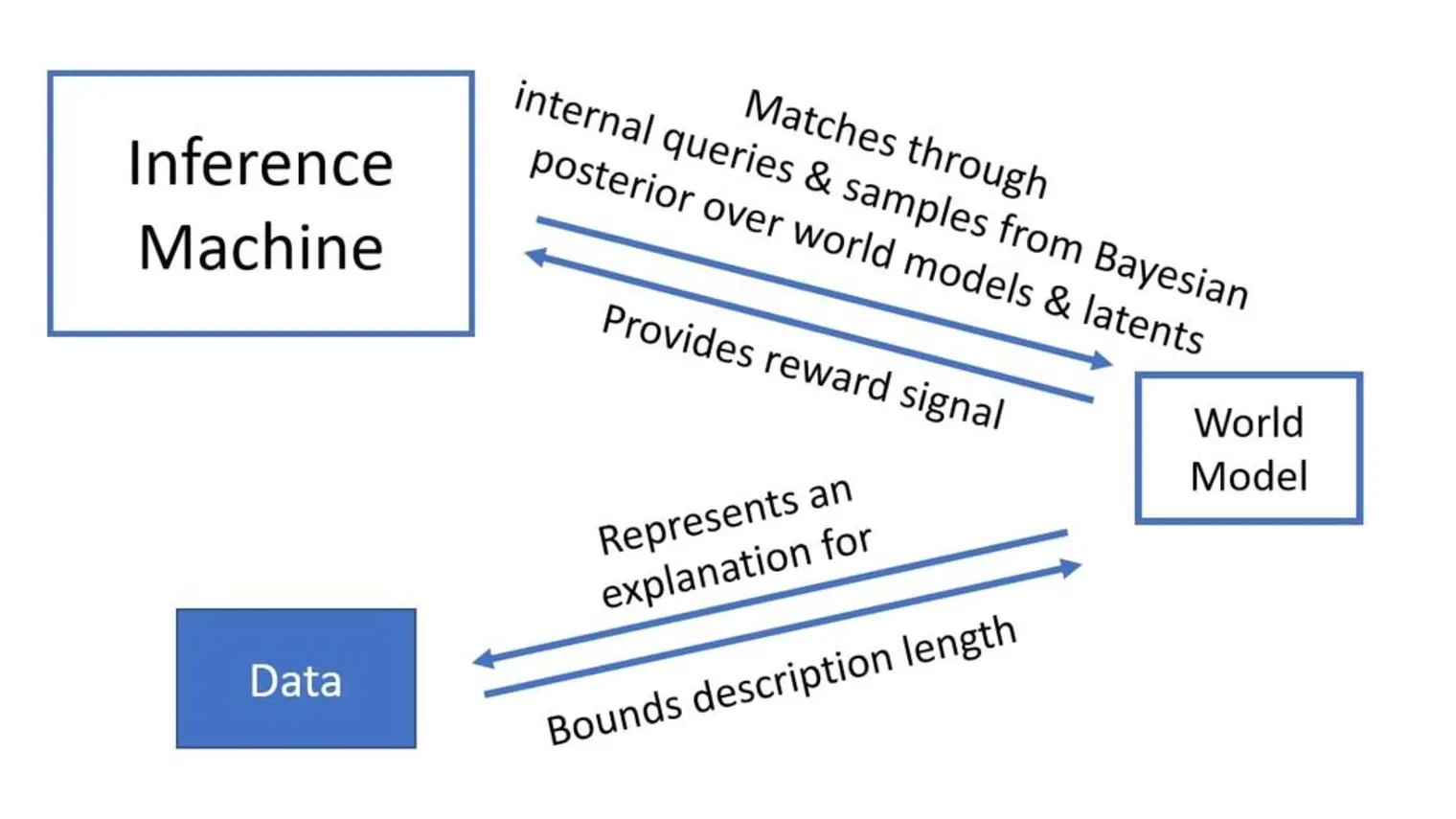
Autoregressive large language models (LLMs) compress knowledge from their training data through next-token conditional distributions. This l… (see more)imits tractable querying of this knowledge to start-to-end autoregressive sampling. However, many tasks of interest -- including sequence continuation, infilling, and other forms of constrained generation -- involve sampling from intractable posterior distributions. We address this limitation by using amortized Bayesian inference to sample from these intractable posteriors. Such amortization is algorithmically achieved by fine-tuning LLMs via diversity-seeking reinforcement learning algorithms: generative flow networks (GFlowNets). We empirically demonstrate that this distribution-matching paradigm of LLM fine-tuning can serve as an effective alternative to maximum-likelihood training and reward-maximizing policy optimization. As an important application, we interpret chain-of-thought reasoning as a latent variable modeling problem and demonstrate that our approach enables data-efficient adaptation of LLMs to tasks that require multi-step rationalization and tool use.
Consciousness-Inspired Spatio-Temporal Abstractions for Better Generalization in Reinforcement Learning
Harry Zhao 0001
Mingde Zhao
Harm van Seijen
Romain Laroche
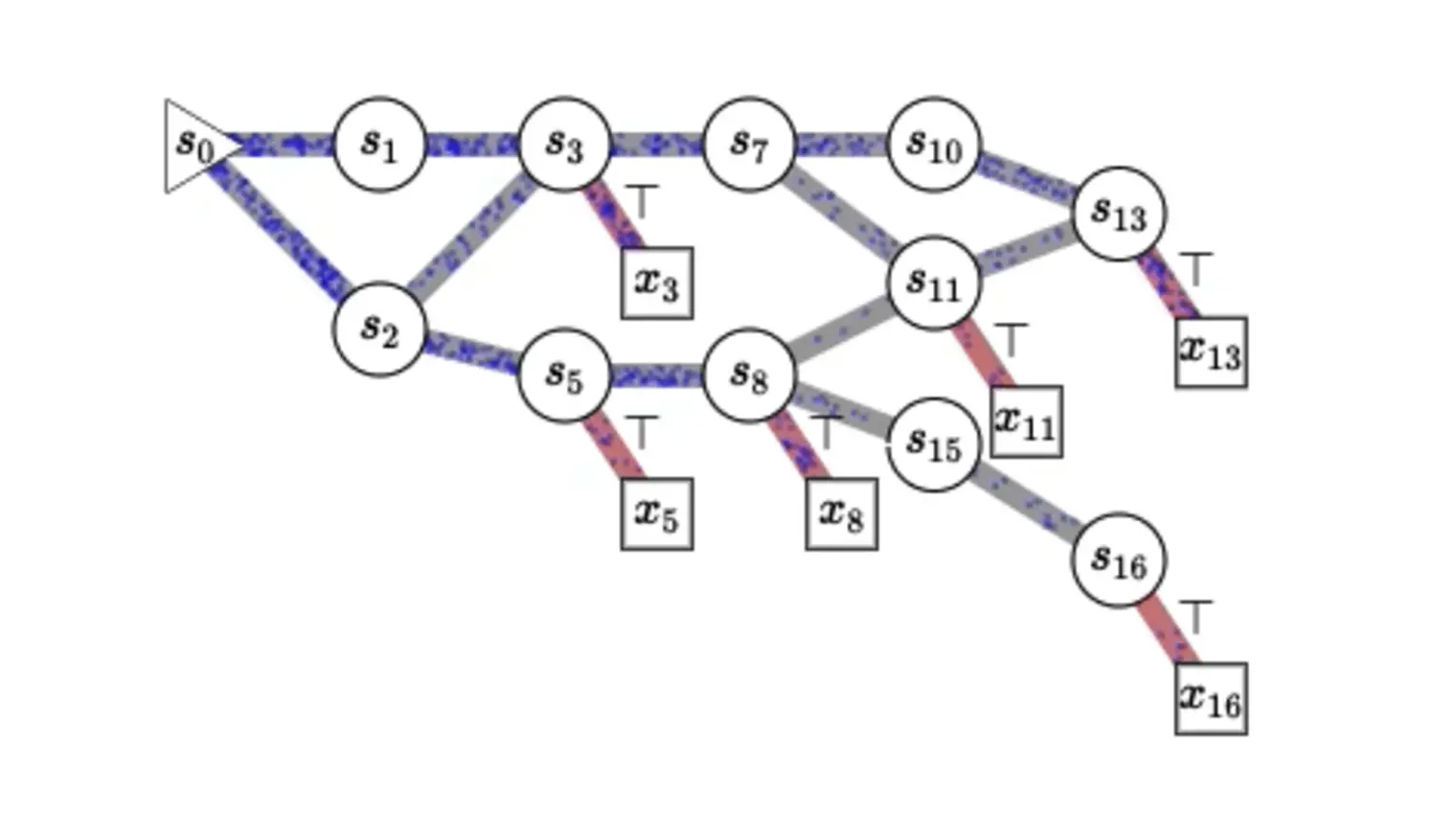
Inspired by human conscious planning, we propose Skipper, a model-based reinforcement learning framework utilizing spatio-temporal abstracti… (see more)ons to generalize better in novel situations. It automatically decomposes the given task into smaller, more manageable subtasks, and thus enables sparse decision-making and focused computation on the relevant parts of the environment. The decomposition relies on the extraction of an abstracted proxy problem represented as a directed graph, in which vertices and edges are learned end-to-end from hindsight. Our theoretical analyses provide performance guarantees under appropriate assumptions and establish where our approach is expected to be helpful. Generalization-focused experiments validate Skipper's significant advantage in zero-shot generalization, compared to some existing state-of-the-art hierarchical planning methods.
Cycle Consistency Driven Object Discovery
Developing deep learning models that effectively learn object-centric representations, akin to human cognition, remains a challenging task. … (see more)Existing approaches facilitate object discovery by representing objects as fixed-size vectors, called ``slots'' or ``object files''. While these approaches have shown promise in certain scenarios, they still exhibit certain limitations. First, they rely on architectural priors which can be unreliable and usually require meticulous engineering to identify the correct objects. Second, there has been a notable gap in investigating the practical utility of these representations in downstream tasks. To address the first limitation, we introduce a method that explicitly optimizes the constraint that each object in a scene should be associated with a distinct slot. We formalize this constraint by introducing consistency objectives which are cyclic in nature. By integrating these consistency objectives into various existing slot-based object-centric methods, we showcase substantial improvements in object-discovery performance. These enhancements consistently hold true across both synthetic and real-world scenes, underscoring the effectiveness and adaptability of the proposed approach. To tackle the second limitation, we apply the learned object-centric representations from the proposed method to two downstream reinforcement learning tasks, demonstrating considerable performance enhancements compared to conventional slot-based and monolithic representation learning methods. Our results suggest that the proposed approach not only improves object discovery, but also provides richer features for downstream tasks.
Delta-AI: Local Objectives for Amortized Inference in Sparse Graphical Models
We present a new algorithm for amortized inference in sparse probabilistic graphical models (PGMs), which we call …
Diffusion Generative Flow Samplers: Improving Learning Signals Through Partial Trajectory Optimization
Ricky T. Q. Chen
Cheng-Hao Liu
We tackle the problem of sampling from intractable high-dimensional density functions, a fundamental task that often appears in machine lear… (see more)ning and statistics. We extend recent sampling-based approaches that leverage controlled stochastic processes to model approximate samples from these target densities. The main drawback of these approaches is that the training objective requires full trajectories to compute, resulting in sluggish credit assignment issues due to use of entire trajectories and a learning signal present only at the terminal time. In this work, we present Diffusion Generative Flow Samplers (DGFS), a sampling-based framework where the learning process can be tractably broken down into short partial trajectory segments, via parameterizing an additional "flow function". Our method takes inspiration from the theory developed for generative flow networks (GFlowNets), allowing us to make use of intermediate learning signals. Through various challenging experiments, we demonstrate that DGFS achieves more accurate estimates of the normalization constant than closely-related prior methods.
Expected Flow Networks in Stochastic Environments and Two-Player Zero-Sum Games
Generative flow networks (GFlowNets) are sequential sampling models trained to match a given distribution. GFlowNets have been successfully … (see more)applied to various structured object generation tasks, sampling a diverse set of high-reward objects quickly. We propose expected flow networks (EFlowNets), which extend GFlowNets to stochastic environments. We show that EFlowNets outperform other GFlowNet formulations in stochastic tasks such as protein design. We then extend the concept of EFlowNets to adversarial environments, proposing adversarial flow networks (AFlowNets) for two-player zero-sum games. We show that AFlowNets learn to find above 80% of optimal moves in Connect-4 via self-play and outperform AlphaZero in tournaments.
Object-Centric Architectures Enable Efficient Causal Representation Learning
Causal representation learning has showed a variety of settings in which we can disentangle latent variables with identifiability guarantees… (see more) (up to some reasonable equivalence class). Common to all of these approaches is the assumption that (1) the latent variables are represented as
PhyloGFN: Phylogenetic Inference with Generative Flow Networks
Phylogenetics is a branch of computational biology that studies the evolutionary relationships among biological entities. Its long history a… (see more)nd numerous applications notwithstanding, inference of phylogenetic trees from sequence data remains challenging: the high complexity of tree space poses a significant obstacle for the current combinatorial and probabilistic techniques. In this paper, we adopt the framework of generative flow networks (GFlowNets) to tackle two core problems in phylogenetics: parsimony-based and Bayesian phylogenetic inference. Because GFlowNets are well-suited for sampling complex combinatorial structures, they are a natural choice for exploring and sampling from the multimodal posterior distribution over tree topologies and evolutionary distances. We demonstrate that our amortized posterior sampler, PhyloGFN, produces diverse and high-quality evolutionary hypotheses on real benchmark datasets. PhyloGFN is competitive with prior works in marginal likelihood estimation and achieves a closer fit to the target distribution than state-of-the-art variational inference methods. Our code is available at https://github.com/zmy1116/phylogfn.