


Portrait of Yoshua Bengio

Yoshua Bengio

Core Academic Member
Canada CIFAR AI Chair
Full Professor, Université de Montréal, Department of Computer Science and Operations Research Department
Founder and Scientific Advisor, Leadership Team
Research Topics
Causality
Computational Neuroscience
Deep Learning
Generative Models
Graph Neural Networks
Machine Learning Theory
Medical Machine Learning
Molecular Modeling
Natural Language Processing
Probabilistic Models
Reasoning
Recurrent Neural Networks
Reinforcement Learning
Representation Learning

Biography

*For media requests, please write to medias@mila.quebec.

For more information please contact Cassidy MacNeil, Senior Assistant and Operation Lead at cassidy.macneil@mila.quebec.

Yoshua Bengio is recognized worldwide as a leading expert in AI. He is most known for his pioneering work in deep learning, which earned him the 2018 A.M. Turing Award, “the Nobel Prize of computing,” with Geoffrey Hinton and Yann LeCun.

Bengio is a full professor at Université de Montréal, and the founder and scientific advisor of Mila – Quebec Artificial Intelligence Institute. He is also a senior fellow at CIFAR and co-directs its Learning in Machines & Brains program, serves as special advisor and founding scientific director of IVADO, and holds a Canada CIFAR AI Chair.

In 2019, Bengio was awarded the prestigious Killam Prize and in 2022, he was the most cited computer scientist in the world by h-index. He is a Fellow of the Royal Society of London, Fellow of the Royal Society of Canada, Knight of the Legion of Honor of France and Officer of the Order of Canada. In 2023, he was appointed to the UN’s Scientific Advisory Board for Independent Advice on Breakthroughs in Science and Technology.

Concerned about the social impact of AI, Bengio helped draft the Montréal Declaration for the Responsible Development of Artificial Intelligence and continues to raise awareness about the importance of mitigating the potentially catastrophic risks associated with future AI systems.

Current Students

Collaborating Alumni - McGill University
Collaborating researcher - Cambridge University
Principal supervisor :
PhD - Université de Montréal
Independent visiting researcher
Co-supervisor :
PhD - Université de Montréal
Collaborating researcher - N/A
Principal supervisor :
PhD - Université de Montréal
Collaborating researcher - KAIST
PhD - Université de Montréal
Collaborating Alumni - Université de Montréal
Co-supervisor :
Independent visiting researcher
Principal supervisor :
PhD - Université de Montréal
Co-supervisor :
PhD - Université de Montréal
Principal supervisor :
Collaborating Alumni - Université de Montréal
Postdoctorate - Université de Montréal
Principal supervisor :
Postdoctorate - Université de Montréal
Principal supervisor :
Collaborating Alumni
Collaborating Alumni - Université de Montréal
PhD - Université de Montréal
Co-supervisor :
PhD - Université de Montréal
Principal supervisor :
Independent visiting researcher - Université de Montréal
PhD - Université de Montréal
Principal supervisor :
Collaborating researcher - Ying Wu Coll of Computing
Collaborating researcher - University of Waterloo
Principal supervisor :
Collaborating Alumni - Max-Planck-Institute for Intelligent Systems
Collaborating researcher - Université de Montréal
Co-supervisor :
PhD - Université de Montréal
Postdoctorate - Université de Montréal
PhD - Université de Montréal
Principal supervisor :
Collaborating Alumni - Université de Montréal
Postdoctorate
Co-supervisor :
Collaborating Alumni - Polytechnique Montréal
Co-supervisor :
PhD - Université de Montréal
Co-supervisor :
Collaborating researcher
Principal supervisor :
Collaborating Alumni - Université de Montréal
Co-supervisor :
PhD - Université de Montréal
Principal supervisor :
PhD - Université de Montréal
Collaborating researcher
Collaborating researcher - Université de Montréal
PhD - Université de Montréal
PhD - McGill University
Principal supervisor :
PhD - Université de Montréal
Principal supervisor :
Collaborating Alumni - McGill University
Principal supervisor :

Publications

Memory Efficient Neural Processes via Constant Memory Attention Block
Frederick Tung
Hossein Hajimirsadeghi
Mohamed Osama Ahmed
On Generalization for Generative Flow Networks
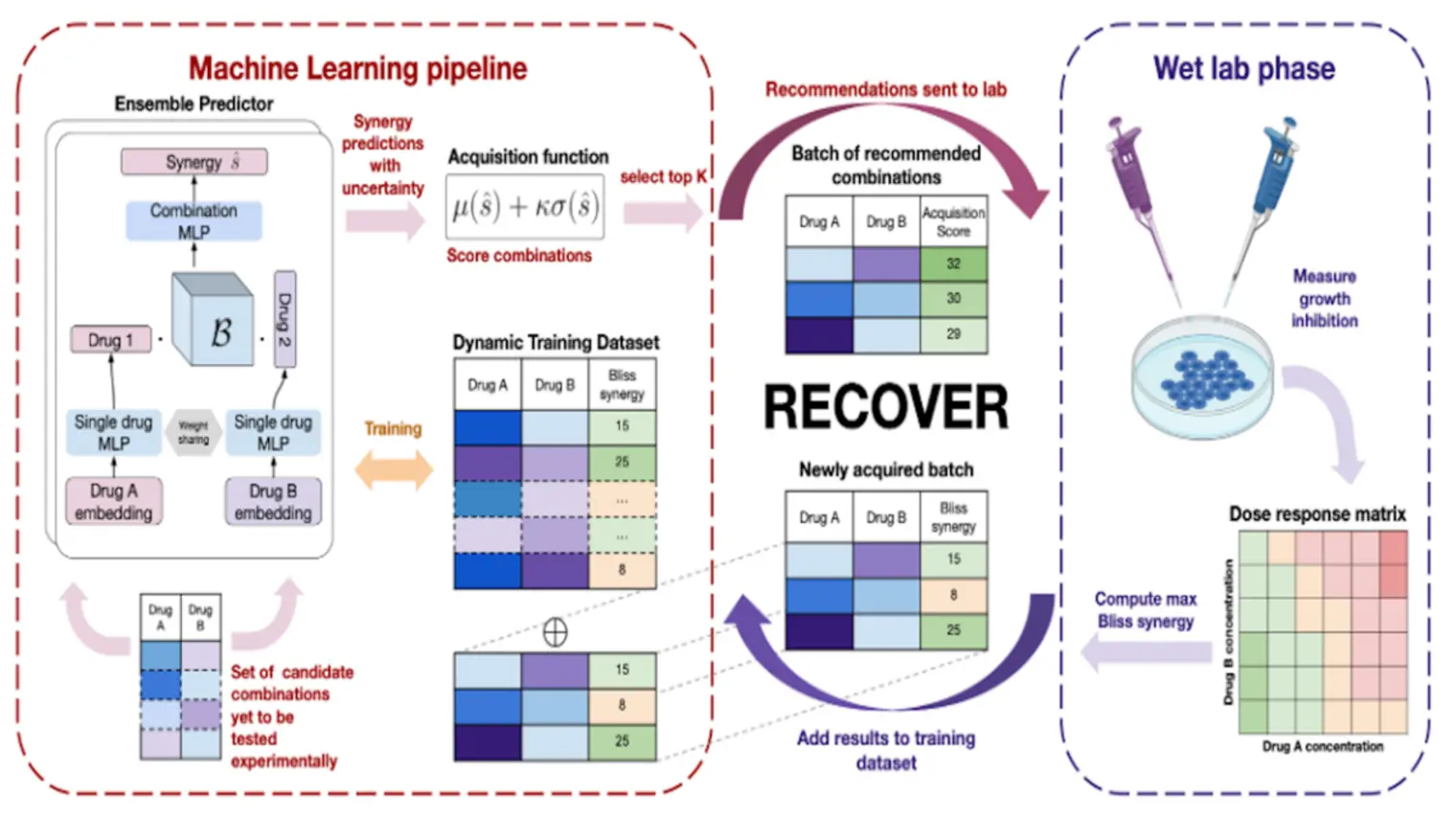
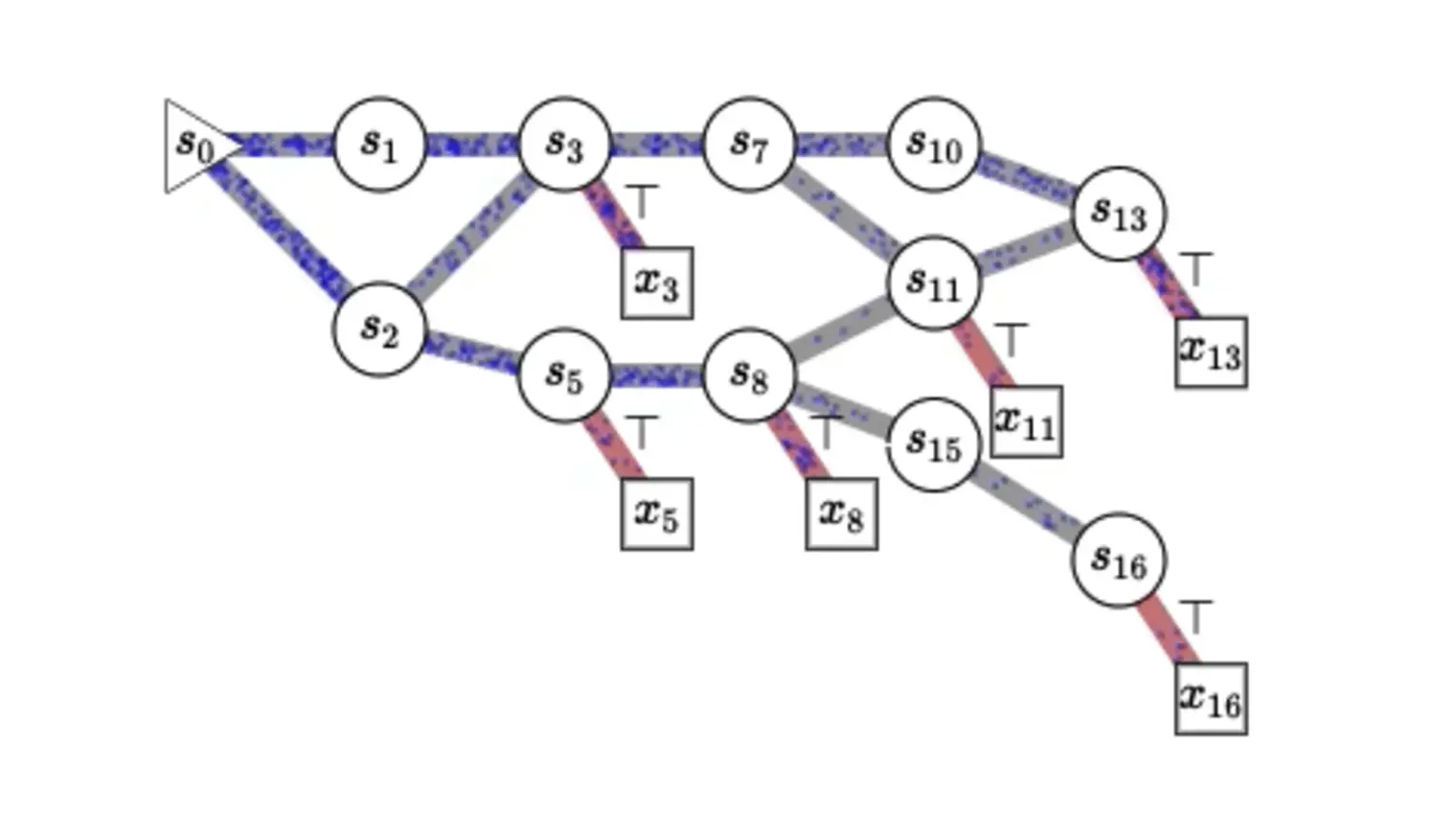
Generative Flow Networks (GFlowNets) have emerged as an innovative learning paradigm designed to address the challenge of sampling from an u… (see more)nnormalized probability distribution, called the reward function. This framework learns a policy on a constructed graph, which enables sampling from an approximation of the target probability distribution through successive steps of sampling from the learned policy. To achieve this, GFlowNets can be trained with various objectives, each of which can lead to the model s ultimate goal. The aspirational strength of GFlowNets lies in their potential to discern intricate patterns within the reward function and their capacity to generalize effectively to novel, unseen parts of the reward function. This paper attempts to formalize generalization in the context of GFlowNets, to link generalization with stability, and also to design experiments that assess the capacity of these models to uncover unseen parts of the reward function. The experiments will focus on length generalization meaning generalization to states that can be constructed only by longer trajectories than those seen in training.
Cell Morphology-Guided Small Molecule Generation with GFlowNets
Stephen Zhewen Lu
Ziqing Lu
Ehsan Hajiramezanali
Tommaso Biancalani
Gabriele Scalia
Estimating Expectations without Sampling: Neural Stein Estimation
Cheikh Ahmed
Awa Khouna
We propose a method for estimating the expected value of a given function …
Attention as an RNN
Frederick Tung
Hossein Hajimirsadeghi
Mohamed Osama Ahmed
Greg Mori
The advent of Transformers marked a significant breakthrough in sequence modelling, providing a highly performant architecture capable of le… (see more)veraging GPU parallelism. However, Transformers are computationally expensive at inference time, limiting their applications, particularly in low-resource settings (e.g., mobile and embedded devices). Addressing this, we (1) begin by showing that attention can be viewed as a special Recurrent Neural Network (RNN) with the ability to compute its \textit{many-to-one} RNN output efficiently. We then (2) show that popular attention-based models such as Transformers can be viewed as RNN variants. However, unlike traditional RNNs (e.g., LSTMs), these models cannot be updated efficiently with new tokens, an important property in sequence modelling. Tackling this, we (3) introduce a new efficient method of computing attention's \textit{many-to-many} RNN output based on the parallel prefix scan algorithm. Building on the new attention formulation, we (4) introduce \textbf{Aaren}, an attention-based module that can not only (i) be trained in parallel (like Transformers) but also (ii) be updated efficiently with new tokens, requiring only constant memory for inferences (like traditional RNNs). Empirically, we show Aarens achieve comparable performance to Transformers on
BitPruning: Learning Bitlengths for Aggressive and Accurate Quantization
Ciaran Bannon
Alberto Delmas Lascorz
Omar Mohamed Awad
Isak Edo Vivancos
Andreas Moshovos
Neural networks have demonstrably achieved state-of-the art accuracy using low-bitlength integer quantization, yielding both execution time … (see more)and energy benefits on existing hardware designs that support short bitlengths. However, the question of finding the minimum bitlength for a desired accuracy remains open. We introduce a training method for minimizing inference bitlength at any granularity while maintaining accuracy. Namely, we propose a regularizer that penalizes large bitlength representations throughout the architecture and show how it can be modified to minimize other quantifiable criteria, such as number of operations or memory footprint. We demonstrate that our method learns thrifty representations while maintaining accuracy. With ImageNet, the method produces an average per layer bitlength of 4.13, 3.76 and 4.36 bits on AlexNet, ResNet18 and MobileNet V2 respectively, remaining within 2.0%, 0.5% and 0.5% of the base TOP-1 accuracy.
Towards Guaranteed Safe AI: A Framework for Ensuring Robust and Reliable AI Systems
David Dalrymple
David
Joar Max Viktor Skalse
Stuart Russell
Max Tegmark
Sanjit A. Seshia
Steve Omohundro
Christian Szegedy
Ben Goldhaber
Nora Ammann
Alessandro Abate
Joe Halpern
Clark Barrett
Ding Zhao
Zhi-Xuan Tan
Jeannette Wing
Joshua B. Tenenbaum
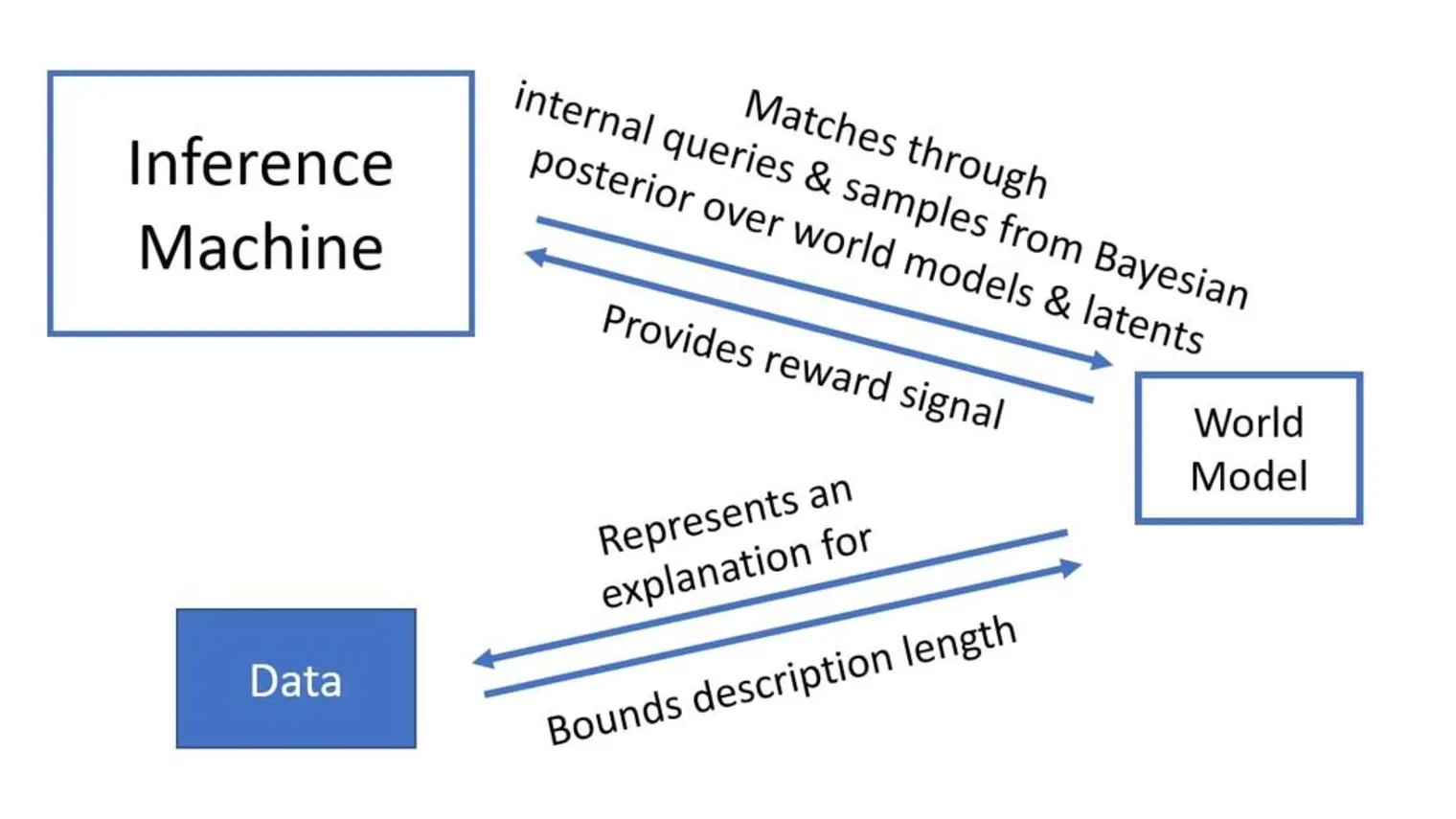
Ensuring that AI systems reliably and robustly avoid harmful or dangerous behaviours is a crucial challenge, especially for AI systems with … (see more)a high degree of autonomy and general intelligence, or systems used in safety-critical contexts. In this paper, we will introduce and define a family of approaches to AI safety, which we will refer to as guaranteed safe (GS) AI. The core feature of these approaches is that they aim to produce AI systems which are equipped with high-assurance quantitative safety guarantees. This is achieved by the interplay of three core components: a world model (which provides a mathematical description of how the AI system affects the outside world), a safety specification (which is a mathematical description of what effects are acceptable), and a verifier (which provides an auditable proof certificate that the AI satisfies the safety specification relative to the world model). We outline a number of approaches for creating each of these three core components, describe the main technical challenges, and suggest a number of potential solutions to them. We also argue for the necessity of this approach to AI safety, and for the inadequacy of the main alternative approaches.
Iterated Denoising Energy Matching for Sampling from Boltzmann Densities
Efficiently generating statistically independent samples from an unnormalized probability distribution, such as equilibrium samples of many-… (see more)body systems, is a foundational problem in science. In this paper, we propose Iterated Denoising Energy Matching (iDEM), an iterative algorithm that uses a novel stochastic score matching objective leveraging solely the energy function and its gradient -- and no data samples -- to train a diffusion-based sampler. Specifically, iDEM alternates between (I) sampling regions of high model density from a diffusion-based sampler and (II) using these samples in our stochastic matching objective to further improve the sampler. iDEM is scalable to high dimensions as the inner matching objective, is simulation-free, and requires no MCMC samples. Moreover, by leveraging the fast mode mixing behavior of diffusion, iDEM smooths out the energy landscape enabling efficient exploration and learning of an amortized sampler. We evaluate iDEM on a suite of tasks ranging from standard synthetic energy functions to invariant
Learning to Scale Logits for Temperature-Conditional GFlowNets
GFlowNets are probabilistic models that sequentially generate compositional structures through a stochastic policy. Among GFlowNets, tempera… (see more)ture-conditional GFlowNets can introduce temperature-based controllability for exploration and exploitation. We propose \textit{Logit-scaling GFlowNets} (Logit-GFN), a novel architectural design that greatly accelerates the training of temperature-conditional GFlowNets. It is based on the idea that previously proposed approaches introduced numerical challenges in the deep network training, since different temperatures may give rise to very different gradient profiles as well as magnitudes of the policy's logits. We find that the challenge is greatly reduced if a learned function of the temperature is used to scale the policy's logits directly. Also, using Logit-GFN, GFlowNets can be improved by having better generalization capabilities in offline learning and mode discovery capabilities in online learning, which is empirically verified in various biological and chemical tasks. Our code is available at https://github.com/dbsxodud-11/logit-gfn
Discrete Probabilistic Inference as Control in Multi-path Environments
We consider the problem of sampling from a discrete and structured distribution as a sequential decision problem, where the objective is to … (see more)find a stochastic policy such that objects are sampled at the end of this sequential process proportionally to some predefined reward. While we could use maximum entropy Reinforcement Learning (MaxEnt RL) to solve this problem for some distributions, it has been shown that in general, the distribution over states induced by the optimal policy may be biased in cases where there are multiple ways to generate the same object. To address this issue, Generative Flow Networks (GFlowNets) learn a stochastic policy that samples objects proportionally to their reward by approximately enforcing a conservation of flows across the whole Markov Decision Process (MDP). In this paper, we extend recent methods correcting the reward in order to guarantee that the marginal distribution induced by the optimal MaxEnt RL policy is proportional to the original reward, regardless of the structure of the underlying MDP. We also prove that some flow-matching objectives found in the GFlowNet literature are in fact equivalent to well-established MaxEnt RL algorithms with a corrected reward. Finally, we study empirically the performance of multiple MaxEnt RL and GFlowNet algorithms on multiple problems involving sampling from discrete distributions.
Government Interventions to Avert Future Catastrophic AI Risks
Regulating advanced artificial agents
Michael K. Cohen
Noam Kolt
Gillian K. Hadfield
Stuart Russell
Governance frameworks should address the prospect of AI systems that cannot be safely tested