


Portrait of Yoshua Bengio

Yoshua Bengio

Core Academic Member
Canada CIFAR AI Chair
Full Professor, Université de Montréal, Department of Computer Science and Operations Research Department
Founder and Scientific Advisor, Leadership Team
Research Topics
Causality
Computational Neuroscience
Deep Learning
Generative Models
Graph Neural Networks
Machine Learning Theory
Medical Machine Learning
Molecular Modeling
Natural Language Processing
Probabilistic Models
Reasoning
Recurrent Neural Networks
Reinforcement Learning
Representation Learning

Biography

*For media requests, please write to medias@mila.quebec.

For more information please contact Cassidy MacNeil, Senior Assistant and Operation Lead at cassidy.macneil@mila.quebec.

Yoshua Bengio is recognized worldwide as a leading expert in AI. He is most known for his pioneering work in deep learning, which earned him the 2018 A.M. Turing Award, “the Nobel Prize of computing,” with Geoffrey Hinton and Yann LeCun.

Bengio is a full professor at Université de Montréal, and the founder and scientific advisor of Mila – Quebec Artificial Intelligence Institute. He is also a senior fellow at CIFAR and co-directs its Learning in Machines & Brains program, serves as special advisor and founding scientific director of IVADO, and holds a Canada CIFAR AI Chair.

In 2019, Bengio was awarded the prestigious Killam Prize and in 2022, he was the most cited computer scientist in the world by h-index. He is a Fellow of the Royal Society of London, Fellow of the Royal Society of Canada, Knight of the Legion of Honor of France and Officer of the Order of Canada. In 2023, he was appointed to the UN’s Scientific Advisory Board for Independent Advice on Breakthroughs in Science and Technology.

Concerned about the social impact of AI, Bengio helped draft the Montréal Declaration for the Responsible Development of Artificial Intelligence and continues to raise awareness about the importance of mitigating the potentially catastrophic risks associated with future AI systems.

Publications

HVAC-GRACE: Transferable Building Control via Heterogeneous Graph Neural Network Policies
Buildings consume 40% of global energy, with HVAC systems responsible for up to half of that demand. As energy use grows, optimizing HVAC ef… (see more)ficiency is critical to meeting climate goals. While reinforcement learning (RL) offers a promising alternative to rule-based control, real-world adoption is limited by poor sample efficiency and generalisation. We introduce HVAC-GRACE, a graph-based RL framework that models buildings as heterogeneous graphs and integrates spatial message passing directly into temporal GRU gates. This enables each zone to learn control actions informed by both its own history and its structural context. Our architecture supports zero-shot transfer by learning topology-agnostic functions—but initial experiments reveal that this benefit depends on sufficient conditioned zone connectivity to maintain gradient flow. These findings highlight both the promise and the architectural requirements of scalable, transferable RL for building control
Efficient Regression-Based Training of Normalizing Flows for Boltzmann Generators
Oscar Davis
Michael Bronstein
Avishek Joey Bose
Simulation-free training frameworks have been at the forefront of the generative modelling revolution in continuous spaces, leading to large… (see more)-scale diffusion and flow matching models. However, such modern generative models suffer from expensive inference, inhibiting their use in numerous scientific applications like Boltzmann Generators (BGs) for molecular conformations that require fast likelihood evaluation. In this paper, we revisit classical normalizing flows in the context of BGs that offer efficient sampling and likelihoods, but whose training via maximum likelihood is often unstable and computationally challenging. We propose Regression Training of Normalizing Flows (RegFlow), a novel and scalable regression-based training objective that bypasses the numerical instability and computational challenge of conventional maximum likelihood training in favour of a simple
Fast Monte Carlo Tree Diffusion: 100x Speedup via Parallel Sparse Planning
Jaesik Yoon
Hyeonseo Cho
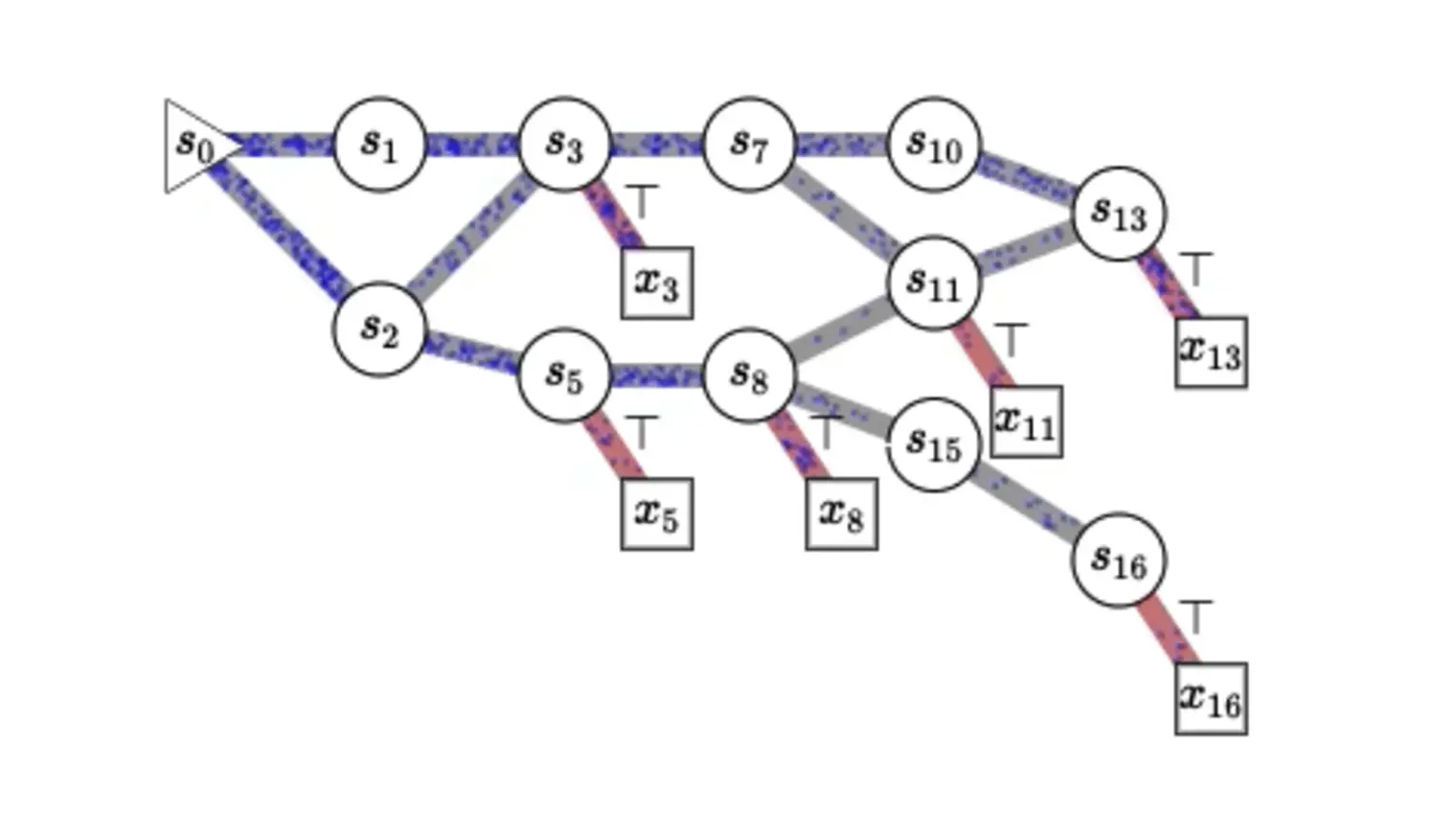
Diffusion models have recently emerged as a powerful approach for trajectory planning. However, their inherently non-sequential nature limit… (see more)s their effectiveness in long-horizon reasoning tasks at test time. The recently proposed Monte Carlo Tree Diffusion (MCTD) offers a promising solution by combining diffusion with tree-based search, achieving state-of-the-art performance on complex planning problems. Despite its strengths, our analysis shows that MCTD incurs substantial computational overhead due to the sequential nature of tree search and the cost of iterative denoising. To address this, we propose Fast-MCTD, a more efficient variant that preserves the strengths of MCTD while significantly improving its speed and scalability. Fast-MCTD integrates two techniques: Parallel MCTD, which enables parallel rollouts via delayed tree updates and redundancy-aware selection; and Sparse MCTD, which reduces rollout length through trajectory coarsening. Experiments show that Fast-MCTD achieves up to 100x speedup over standard MCTD while maintaining or improving planning performance. Remarkably, it even outperforms Diffuser in inference speed on some tasks, despite Diffuser requiring no search and yielding weaker solutions. These results position Fast-MCTD as a practical and scalable solution for diffusion-based inference-time reasoning.
Torsional-GFN: a conditional conformation generator for small molecules
Adaptive Inference-Time Scaling via Cyclic Diffusion Search
Gyubin Lee
Truong Nhat Nguyen Bao
Jaesik Yoon
Dongwoo Lee
Diffusion models have demonstrated strong generative capabilities across domains ranging from image synthesis to complex reasoning tasks. Ho… (see more)wever, most inference-time scaling methods rely on fixed denoising schedules, limiting their ability to allocate computation based on instance difficulty or task-specific demands adaptively. We introduce the challenge of adaptive inference-time scaling-dynamically adjusting computational effort during inference-and propose Adaptive Bi-directional Cyclic Diffusion (ABCD), a flexible, search-based inference framework. ABCD refines outputs through bi-directional diffusion cycles while adaptively controlling exploration depth and termination. It comprises three components: Cyclic Diffusion Search, Automatic Exploration-Exploitation Balancing, and Adaptive Thinking Time. Experiments show that ABCD improves performance across diverse tasks while maintaining computational efficiency.
Can a Bayesian Oracle Prevent Harm from an Agent?
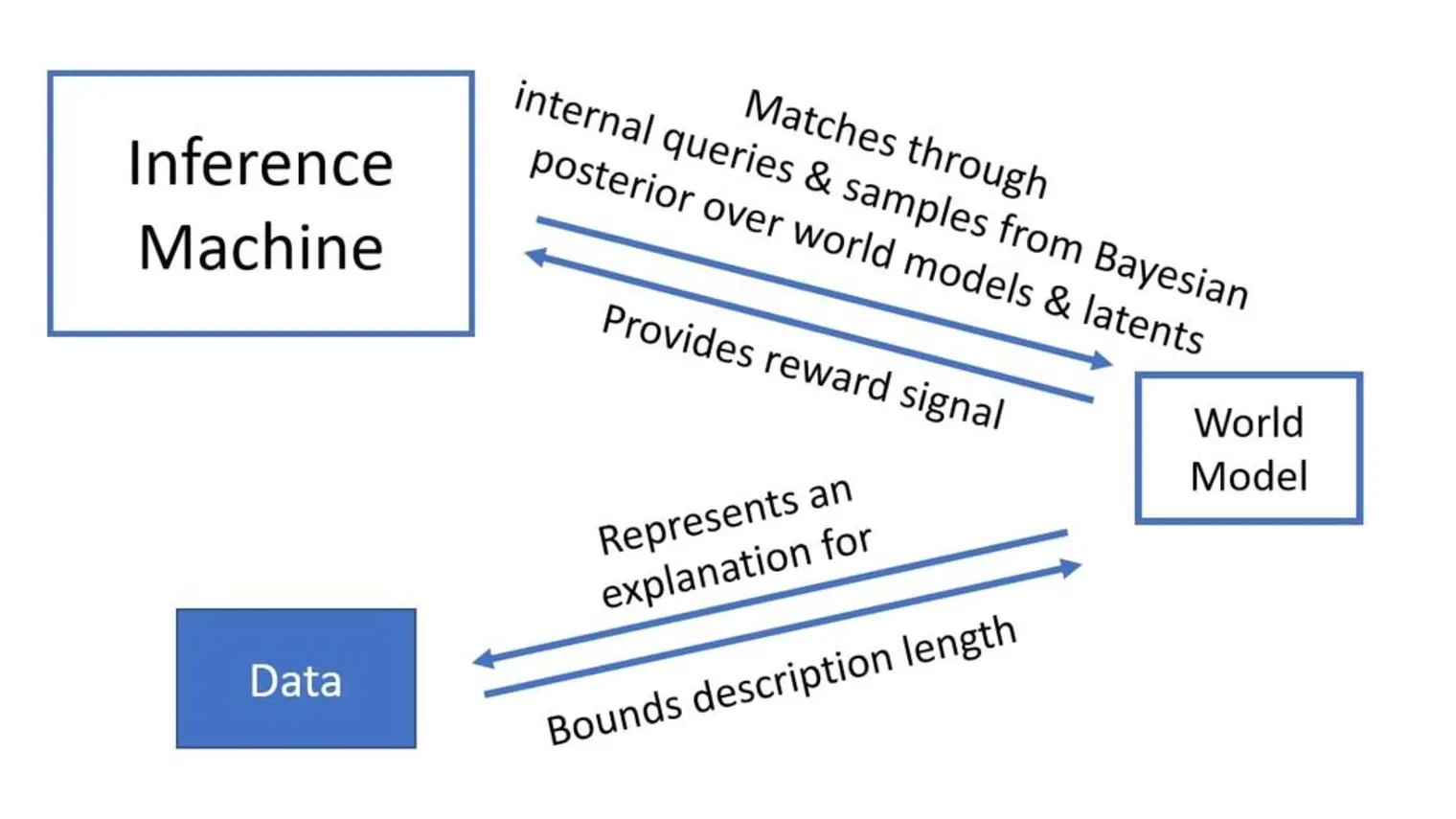
Is there a way to design powerful AI systems based on machine learning methods that would satisfy probabilistic safety guarantees? With the … (see more)long-term goal of obtaining a probabilistic guarantee that would apply in every context, we consider estimating a context-dependent bound on the probability of violating a given safety specification. Such a risk evaluation would need to be performed at run-time to provide a guardrail against dangerous actions of an AI. Noting that different plausible hypotheses about the world could produce very different outcomes, and because we do not know which one is right, we derive bounds on the safety violation probability predicted under the true but unknown hypothesis. Such bounds could be used to reject potentially dangerous actions. Our main results involve searching for cautious but plausible hypotheses, obtained by a maximization that involves Bayesian posteriors over hypotheses. We consider two forms of this result, in the iid case and in the non-iid case, and conclude with open problems towards turning such theoretical results into practical AI guardrails.
AI for Global Climate Cooperation: Modeling Global Climate Negotiations, Agreements, and Long-Term Cooperation in RICE-N
Phillip Wozny
Kai-Hendrik Cohrs
Koen Ponse
Soham Phade
Sunil Srinivasa
Yang Zhang
Prateek Gupta
Erman Acar
Stephan Zheng
Comprehensive global cooperation is essential to limit global temperature increases while continuing economic development, e.g., reducing se… (see more)vere inequality or achieving long-term economic growth. Achieving long-term cooperation on climate change mitigation with n strategic agents poses a complex game-theoretic problem. For example, agents may negotiate and reach climate agreements, but there is no central authority to enforce adherence to those agreements. Hence, it is critical to design negotiation and agreement frameworks that foster cooperation, allow all agents to meet their individual policy objectives, and incentivize long-term adherence. This is an interdisciplinary challenge that calls for collaboration between researchers in machine learning, economics, climate science, law, policy, ethics, and other fields. In particular, we argue that machine learning is a critical tool to address the complexity of this domain. To facilitate this research, here we introduce RICE-N, a multi-region integrated assessment model that simulates the global climate and economy, and which can be used to design and evaluate the strategic outcomes for different negotiation and agreement frameworks. We also describe how to use multi-agent reinforcement learning to train rational agents using RICE-N. This framework underpinsAI for Global Climate Cooperation, a working group collaboration and competition on climate negotiation and agreement design. Here, we invite the scientific community to design and evaluate their solutions using RICE-N, machine learning, economic intuition, and other domain knowledge. More information can be found on www.ai4climatecoop.org.
Latent Veracity Inference for Identifying Errors in Stepwise Reasoning
Jean-Pierre R. Falet
Oliver E. Richardson
Moksh J. Jain
Sungsoo Ahn
Chain-of-Thought (CoT) reasoning has advanced the capabilities and transparency of language models (LMs); however, reasoning chains can cont… (see more)ain inaccurate statements that reduce performance and trustworthiness. To address this, we propose to augment each reasoning step in a CoT with a latent veracity (or correctness) variable. To efficiently explore this expanded space, we introduce Veracity Search (VS), a discrete search algorithm over veracity assignments. It performs otherwise intractable inference in the posterior distribution over latent veracity values by leveraging the LM's joint likelihood over veracity and the final answer as a proxy reward. This efficient inference-time verification method facilitates supervised fine-tuning of an Amortized Veracity Inference (AVI) machine by providing pseudo-labels for veracity. AVI generalizes VS, enabling accurate zero-shot veracity inference in novel contexts. Empirical results demonstrate that VS reliably identifies errors in logical (ProntoQA), mathematical (GSM8K), and commonsense (CommonsenseQA) reasoning benchmarks, with AVI achieving comparable zero-shot accuracy. Finally, we demonstrate the utility of latent veracity inference for providing feedback during self-correction and self-improvement.
Outsourced Diffusion Sampling: Efficient Posterior Inference in Latent Spaces of Generative Models
Any well-behaved generative model over a variable …
Self-Evolving Curriculum for LLM Reasoning
Structure-Aligned Protein Language Model
Can Chen
David Heurtel-Depeiges
Robert M. Vernon
Christopher J. Langmead
Meta Flow Matching: Integrating Vector Fields on the Wasserstein Manifold
Xi Zhang
Brandon Amos
Leo J. Lee
Kirill Neklyudov
Numerous biological and physical processes can be modeled as systems of interacting entities evolving continuously over time, e.g. the dynam… (see more)ics of communicating cells or physical particles. Learning the dynamics of such systems is essential for predicting the temporal evolution of populations across novel samples and unseen environments. Flow-based models allow for learning these dynamics at the population level - they model the evolution of the entire distribution of samples. However, current flow-based models are limited to a single initial population and a set of predefined conditions which describe different dynamics. We argue that multiple processes in natural sciences have to be represented as vector fields on the Wasserstein manifold of probability densities. That is, the change of the population at any moment in time depends on the population itself due to the interactions between samples. In particular, this is crucial for personalized medicine where the development of diseases and their respective treatment response depend on the microenvironment of cells specific to each patient. We propose Meta Flow Matching (MFM), a practical approach to integrate along these vector fields on the Wasserstein manifold by amortizing the flow model over the initial populations. Namely, we embed the population of samples using a Graph Neural Network (GNN) and use these embeddings to train a Flow Matching model. This gives MFM the ability to generalize over the initial distributions, unlike previously proposed methods. We demonstrate the ability of MFM to improve the prediction of individual treatment responses on a large-scale multi-patient single-cell drug screen dataset.