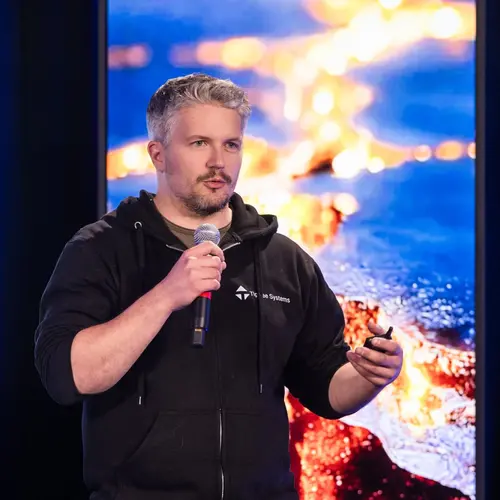

Portrait of Yoshua Bengio

Yoshua Bengio

Core Academic Member
Canada CIFAR AI Chair
Full Professor, Université de Montréal, Department of Computer Science and Operations Research Department
Research Topics
Causality
Computational Neuroscience
Deep Learning
Generative Models
Graph Neural Networks
Machine Learning Theory
Medical Machine Learning
Molecular Modeling
Natural Language Processing
Probabilistic Models
Reasoning
Recurrent Neural Networks
Reinforcement Learning
Representation Learning

Biography

*For media requests, please write to medias@mila.quebec.

For more information please contact Cassidy MacNeil, Senior Assistant and Operation Lead at cassidy.macneil@mila.quebec.

Yoshua Bengio is recognized worldwide as a leading expert in AI. He is most known for his pioneering work in deep learning, which earned him the 2018 A.M. Turing Award, “the Nobel Prize of computing,” with Geoffrey Hinton and Yann LeCun.

Bengio is a full professor at Université de Montréal, and the founder and scientific advisor of Mila – Quebec Artificial Intelligence Institute. He is also a senior fellow at CIFAR and co-directs its Learning in Machines & Brains program, serves as special advisor and founding scientific director of IVADO, and holds a Canada CIFAR AI Chair.

In 2019, Bengio was awarded the prestigious Killam Prize and in 2022, he was the most cited computer scientist in the world by h-index. He is a Fellow of the Royal Society of London, Fellow of the Royal Society of Canada, Knight of the Legion of Honor of France and Officer of the Order of Canada. In 2023, he was appointed to the UN’s Scientific Advisory Board for Independent Advice on Breakthroughs in Science and Technology.

Concerned about the social impact of AI, Bengio helped draft the Montréal Declaration for the Responsible Development of Artificial Intelligence and continues to raise awareness about the importance of mitigating the potentially catastrophic risks associated with future AI systems.

Current Students

Collaborating Alumni - McGill University
Collaborating researcher - Cambridge University
Principal supervisor :
PhD - Université de Montréal
Collaborating researcher - N/A
Principal supervisor :
PhD - Université de Montréal
Collaborating Alumni - Université de Montréal
Postdoctorate - Université de Montréal
Principal supervisor :
Collaborating researcher - Université de Montréal
Research Intern - KOREA ADVANCED INSTITUTE OF SCIENCE AND TECHNOLOGY
Collaborating researcher - s.o.
PhD - Université de Montréal
Co-supervisor :
PhD - Université de Montréal
Principal supervisor :
Independent visiting researcher - Université de Montréal
Collaborating researcher - Ying Wu Coll of Computing
Collaborating researcher - University of Waterloo
Principal supervisor :
Postdoctorate - Université de Montréal
PhD - Université de Montréal
Principal supervisor :
Postdoctorate - Université de Montréal
Co-supervisor :
Collaborating Alumni - Université de Montréal
Co-supervisor :
Collaborating Alumni - Université de Montréal
Collaborating researcher - University of Cambridge
Collaborating Alumni - Université de Montréal
Co-supervisor :
PhD - Université de Montréal
Principal supervisor :
Collaborating researcher - Université de Montréal
PhD - McGill University
Principal supervisor :

Publications

ChatPainter: Improving Text to Image Generation using Dialogue
Shikhar Sharma
S Ebrahimi Kahou
Synthesizing realistic images from text descriptions on a dataset like Microsoft Common Objects in Context (MS COCO), where each image can c… (see more)ontain several objects, is a challenging task. Prior work has used text captions to generate images. However, captions might not be informative enough to capture the entire image and insufficient for the model to be able to understand which objects in the images correspond to which words in the captions. We show that adding a dialogue that further describes the scene leads to significant improvement in the inception score and in the quality of generated images on the MS COCO dataset.
Universal Successor Representations for Transfer Reinforcement Learning
Junfeng Wen
The objective of transfer reinforcement learning is to generalize from a set of previous tasks to unseen new tasks. In this work, we focus o… (see more)n the transfer scenario where the dynamics among tasks are the same, but their goals differ. Although general value function (Sutton et al., 2011) has been shown to be useful for knowledge transfer, learning a universal value function can be challenging in practice. To attack this, we propose (1) to use universal successor representations (USR) to represent the transferable knowledge and (2) a USR approximator (USRA) that can be trained by interacting with the environment. Our experiments show that USR can be effectively applied to new tasks, and the agent initialized by the trained USRA can achieve the goal considerably faster than random initialization.
Low-memory convolutional neural networks through incremental depth-first processing
We introduce an incremental processing scheme for convolutional neural network (CNN) inference, targeted at embedded applications with limit… (see more)ed memory budgets. Instead of processing layers one by one, individual input pixels are propagated through all parts of the network they can influence under the given structural constraints. This depth-first updating scheme comes with hard bounds on the memory footprint: the memory required is constant in the case of 1D input and proportional to the square root of the input dimension in the case of 2D input.
Dynamic Frame Skipping for Fast Speech Recognition in Recurrent Neural Network Based Acoustic Models
A recurrent neural network is a powerful tool for modeling sequential data such as text and speech. While recurrent neural networks have ach… (see more)ieved record-breaking results in speech recognition, one remaining challenge is their slow processing speed. The main cause comes from the nature of recurrent neural networks that read only one frame at each time step. Therefore, reducing the number of reads is an effective approach to reducing processing time. In this paper, we propose a novel recurrent neural network architecture called Skip-RNN, which dynamically skips speech frames that are less important. The Skip-RNN consists of an acoustic model network and skip-policy network that are jointly trained to classify speech frames and determine how many frames to skip. We evaluate our proposed approach on the Wall Street Journal corpus and show that it can accelerate acoustic model computation by up to 2.4 times without any noticeable degradation in transcription accuracy.
Monaural Singing Voice Separation with Skip-Filtering Connections and Recurrent Inference of Time-Frequency Mask
Stylianos Ioannis Mimilakis
Gerald Schuller
Tuomas Virtanen
Singing voice separation based on deep learning relies on the usage of time-frequency masking. In many cases the masking process is not a le… (see more)arnable function or is not encapsulated into the deep learning optimization. Consequently, most of the existing methods rely on a post processing step using the generalized Wiener filtering. This work proposes a method that learns and optimizes (during training) a source-dependent mask and does not need the aforementioned post processing step. We introduce a recurrent inference algorithm, a sparse transformation step to improve the mask generation process, and a learned denoising filter. Obtained results show an increase of 0.49 dB for the signal to distortion ratio and 0.30 dB for the signal to interference ratio, compared to previous state-of-the-art approaches for monaural singing voice separation.
Towards End-to-end Spoken Language Understanding
Yongqiang Wang
Christian Fuegen
Anuj Kumar
Baiyang Liu
Spoken language understanding system is traditionally designed as a pipeline of a number of components. First, the audio signal is processed… (see more) by an automatic speech recognizer for transcription or n-best hypotheses. With the recognition results, a natural language understanding system classifies the text to structured data as domain, intent and slots for down-streaming consumers, such as dialog system, hands-free applications. These components are usually developed and optimized independently. In this paper, we present our study on an end-to-end learning system for spoken language understanding. With this unified approach, we can infer the semantic meaning directly from audio features without the intermediate text representation. This study showed that the trained model can achieve reasonable good result and demonstrated that the model can capture the semantic attention directly from the audio features.
Iteratively unveiling new regions of interest in Deep Learning models
Tess Berthier
Lisa Di Jorio
P Vincent
Recent advance of deep learning has been transforming the landscape in many domains. However, understanding the predictions of a deep networ… (see more)k remains a challenge, which is especially sensitive in health care domains as interpretability is key. Techniques that rely on saliency maps -highlighting the region of an image that influence the classifier’s decision the mostare often used for that purpose. However, gradients fluctuation make saliency maps noisy and thus difficult to interpret at a human level. Moreover, models tend to focus on one particular influential region of interest (ROI) in the image, even though other regions might be relevant for the decision. We propose a new framework that refines those saliency maps to generate segmentation masks over the ROI on the initial image. In a second contribution, we propose to apply those masks over the original inputs, then evaluate our classifier on the masked inputs to identify previously overlooked ROI. This iterative procedure allows us to emphasize new region of interests by extracting meaningful information from the saliency maps.
Fortified Networks: Improving the Robustness of Deep Networks by Modeling the Manifold of Hidden Representations
Deep networks have achieved impressive results across a variety of important tasks. However a known weakness is a failure to perform well wh… (see more)en evaluated on data which differ from the training distribution, even if these differences are very small, as is the case with adversarial examples. We propose Fortified Networks, a simple transformation of existing networks, which fortifies the hidden layers in a deep network by identifying when the hidden states are off of the data manifold, and maps these hidden states back to parts of the data manifold where the network performs well. Our principal contribution is to show that fortifying these hidden states improves the robustness of deep networks and our experiments (i) demonstrate improved robustness to standard adversarial attacks in both black-box and white-box threat models; (ii) suggest that our improvements are not primarily due to the gradient masking problem and (iii) show the advantage of doing this fortification in the hidden layers instead of the input space.
Dynamic Neural Turing Machine with Continuous and Discrete Addressing Schemes
We extend the neural Turing machine (NTM) model into a dynamic neural Turing machine (D-NTM) by introducing trainable address vectors. This … (see more)addressing scheme maintains for each memory cell two separate vectors, content and address vectors. This allows the D-NTM to learn a wide variety of location-based addressing strategies, including both linear and nonlinear ones. We implement the D-NTM with both continuous and discrete read and write mechanisms. We investigate the mechanisms and effects of learning to read and write into a memory through experiments on Facebook bAbI tasks using both a feedforward and GRU controller. We provide extensive analysis of our model and compare different variations of neural Turing machines on this task. We show that our model outperforms long short-term memory and NTM variants. We provide further experimental results on the sequential [Formula: see text]MNIST, Stanford Natural Language Inference, associative recall, and copy tasks.
Fine-grained attention mechanism for neural machine translation
Light Gated Recurrent Units for Speech Recognition
A field that has directly benefited from the recent advances in deep learning is automatic speech recognition (ASR). Despite the great achie… (see more)vements of the past decades, however, a natural and robust human–machine speech interaction still appears to be out of reach, especially in challenging environments characterized by significant noise and reverberation. To improve robustness, modern speech recognizers often employ acoustic models based on recurrent neural networks (RNNs) that are naturally able to exploit large time contexts and long-term speech modulations. It is thus of great interest to continue the study of proper techniques for improving the effectiveness of RNNs in processing speech signals. In this paper, we revise one of the most popular RNN models, namely, gated recurrent units (GRUs), and propose a simplified architecture that turned out to be very effective for ASR. The contribution of this work is twofold: First, we analyze the role played by the reset gate, showing that a significant redundancy with the update gate occurs. As a result, we propose to remove the former from the GRU design, leading to a more efficient and compact single-gate model. Second, we propose to replace hyperbolic tangent with rectified linear unit activations. This variation couples well with batch normalization and could help the model learn long-term dependencies without numerical issues. Results show that the proposed architecture, called light GRU, not only reduces the per-epoch training time by more than 30% over a standard GRU, but also consistently improves the recognition accuracy across different tasks, input features, noisy conditions, as well as across different ASR paradigms, ranging from standard DNN-HMM speech recognizers to end-to-end connectionist temporal classification models.
Learning Anonymized Representations with Adversarial Neural Networks
Statistical methods protecting sensitive information or the identity of the data owner have become critical to ensure privacy of individuals… (see more) as well as of organizations. This paper investigates anonymization methods based on representation learning and deep neural networks, and motivated by novel information theoretical bounds. We introduce a novel training objective for simultaneously training a predictor over target variables of interest (the regular labels) while preventing an intermediate representation to be predictive of the private labels. The architecture is based on three sub-networks: one going from input to representation, one from representation to predicted regular labels, and one from representation to predicted private labels. The training procedure aims at learning representations that preserve the relevant part of the information (about regular labels) while dismissing information about the private labels which correspond to the identity of a person. We demonstrate the success of this approach for two distinct classification versus anonymization tasks (handwritten digits and sentiment analysis).