Portrait of Yoshua Bengio

Yoshua Bengio

Core Academic Member
Canada CIFAR AI Chair
Full Professor, Université de Montréal, Department of Computer Science and Operations Research Department
Founder and Scientific Advisor, Leadership Team
Research Topics
Causality
Computational Neuroscience
Deep Learning
Generative Models
Graph Neural Networks
Machine Learning Theory
Medical Machine Learning
Molecular Modeling
Natural Language Processing
Probabilistic Models
Reasoning
Recurrent Neural Networks
Reinforcement Learning
Representation Learning

Biography

*For media requests, please write to medias@mila.quebec.

For more information please contact Cassidy MacNeil, Senior Assistant and Operation Lead at cassidy.macneil@mila.quebec.

Yoshua Bengio is recognized worldwide as a leading expert in AI. He is most known for his pioneering work in deep learning, which earned him the 2018 A.M. Turing Award, “the Nobel Prize of computing,” with Geoffrey Hinton and Yann LeCun.

Bengio is a full professor at Université de Montréal, and the founder and scientific advisor of Mila – Quebec Artificial Intelligence Institute. He is also a senior fellow at CIFAR and co-directs its Learning in Machines & Brains program, serves as special advisor and founding scientific director of IVADO, and holds a Canada CIFAR AI Chair.

In 2019, Bengio was awarded the prestigious Killam Prize and in 2022, he was the most cited computer scientist in the world by h-index. He is a Fellow of the Royal Society of London, Fellow of the Royal Society of Canada, Knight of the Legion of Honor of France and Officer of the Order of Canada. In 2023, he was appointed to the UN’s Scientific Advisory Board for Independent Advice on Breakthroughs in Science and Technology.

Concerned about the social impact of AI, Bengio helped draft the Montréal Declaration for the Responsible Development of Artificial Intelligence and continues to raise awareness about the importance of mitigating the potentially catastrophic risks associated with future AI systems.

Current Students

Collaborating Alumni - McGill University
Collaborating researcher - Cambridge University
Principal supervisor :
PhD - Université de Montréal
Independent visiting researcher
Co-supervisor :
Collaborating researcher - N/A
Principal supervisor :
PhD - Université de Montréal
Collaborating researcher - KAIST
PhD - Université de Montréal
Collaborating Alumni - Université de Montréal
Co-supervisor :
Independent visiting researcher
Principal supervisor :
PhD - Université de Montréal
Co-supervisor :
PhD - Université de Montréal
Principal supervisor :
Collaborating Alumni - Université de Montréal
Postdoctorate - Université de Montréal
Principal supervisor :
Postdoctorate - Université de Montréal
Principal supervisor :
Collaborating Alumni
Collaborating Alumni - Université de Montréal
PhD - Université de Montréal
Co-supervisor :
PhD - Université de Montréal
Principal supervisor :
Independent visiting researcher - Université de Montréal
PhD - Université de Montréal
Principal supervisor :
Collaborating researcher - Ying Wu Coll of Computing
Collaborating researcher - University of Waterloo
Principal supervisor :
Collaborating Alumni - Max-Planck-Institute for Intelligent Systems
Collaborating researcher - Université de Montréal
Co-supervisor :
PhD - Université de Montréal
Postdoctorate - Université de Montréal
PhD - Université de Montréal
Principal supervisor :
Collaborating Alumni - Université de Montréal
Postdoctorate
Co-supervisor :
Collaborating Alumni - Polytechnique Montréal
Co-supervisor :
PhD - Université de Montréal
Co-supervisor :
Collaborating researcher
Principal supervisor :
Collaborating Alumni - Université de Montréal
Co-supervisor :
PhD - Université de Montréal
Principal supervisor :
Collaborating researcher
Collaborating researcher - Université de Montréal
PhD - McGill University
Principal supervisor :
PhD - Université de Montréal
Principal supervisor :
PhD - Université de Montréal
Collaborating Alumni - McGill University
Principal supervisor :

Publications

FAENet: Frame Averaging Equivariant GNN for Materials Modeling
Alex Hernandez Garcia
Santiago Miret
Fragkiskos D. Malliaros
Applications of machine learning techniques for materials modeling typically involve functions known to be equivariant or invariant to speci… (see more)fic symmetries. While graph neural networks (GNNs) have proven successful in such tasks, they enforce symmetries via the model architecture, which often reduces their expressivity, scalability and comprehensibility. In this paper, we introduce (1) a flexible framework relying on stochastic frame-averaging (SFA) to make any model E(3)-equivariant or invariant through data transformations. (2) FAENet: a simple, fast and expressive GNN, optimized for SFA, that processes geometric information without any symmetrypreserving design constraints. We prove the validity of our method theoretically and empirically demonstrate its superior accuracy and computational scalability in materials modeling on the OC20 dataset (S2EF, IS2RE) as well as common molecular modeling tasks (QM9, QM7-X). A package implementation is available at https://faenet.readthedocs.io.
GFlowNet-EM for Learning Compositional Latent Variable Models
Edward J. Hu
Alexandros Graikos
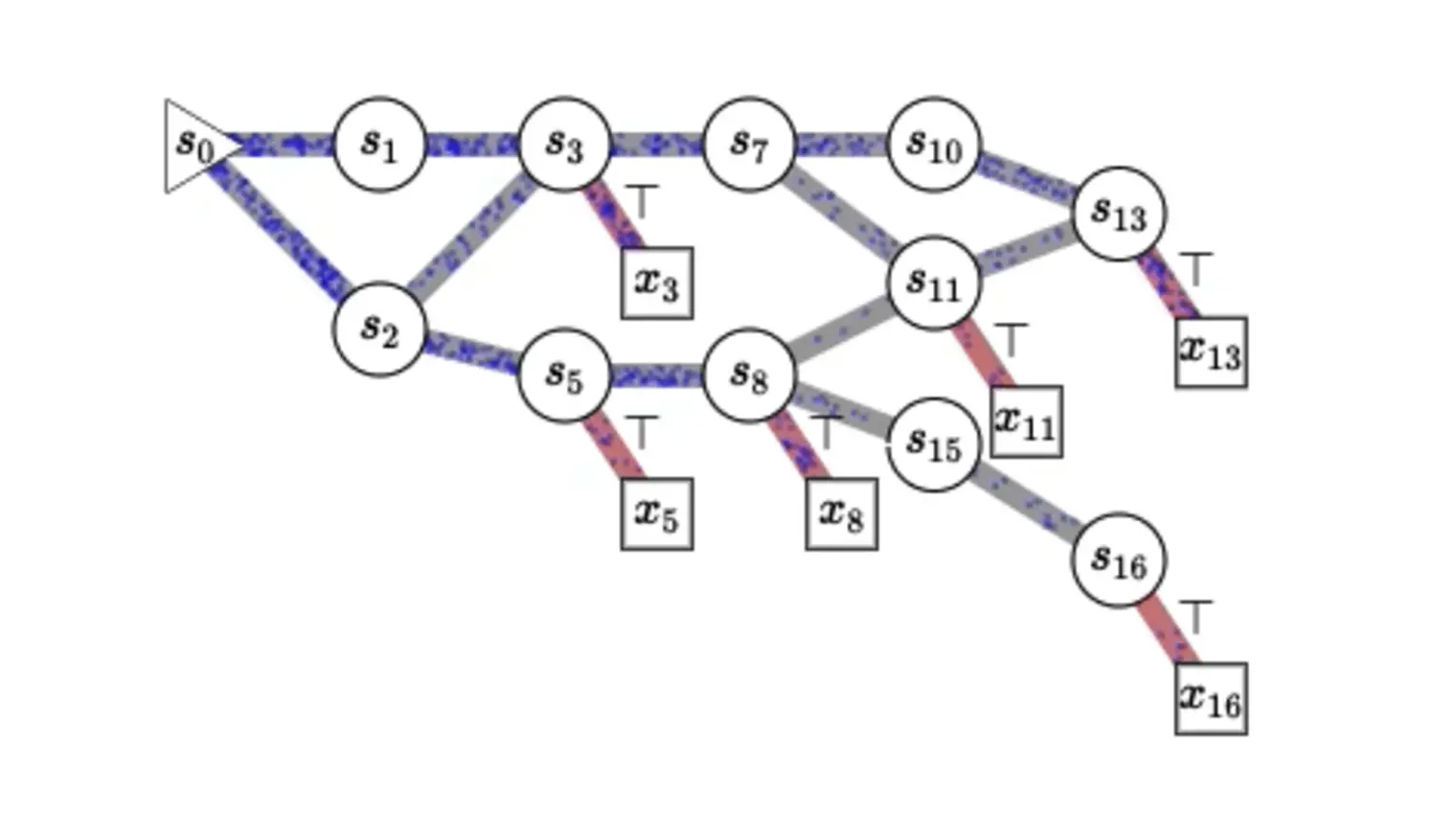
Latent variable models (LVMs) with discrete compositional latents are an important but challenging setting due to a combinatorially large nu… (see more)mber of possible configurations of the latents. A key tradeoff in modeling the posteriors over latents is between expressivity and tractable optimization. For algorithms based on expectation-maximization (EM), the E-step is often intractable without restrictive approximations to the posterior. We propose the use of GFlowNets, algorithms for sampling from an unnormalized density by learning a stochastic policy for sequential construction of samples, for this intractable E-step. By training GFlowNets to sample from the posterior over latents, we take advantage of their strengths as amortized variational inference algorithms for complex distributions over discrete structures. Our approach, GFlowNet-EM, enables the training of expressive LVMs with discrete compositional latents, as shown by experiments on non-context-free grammar induction and on images using discrete variational autoencoders (VAEs) without conditional independence enforced in the encoder.
Multi-Objective GFlowNets
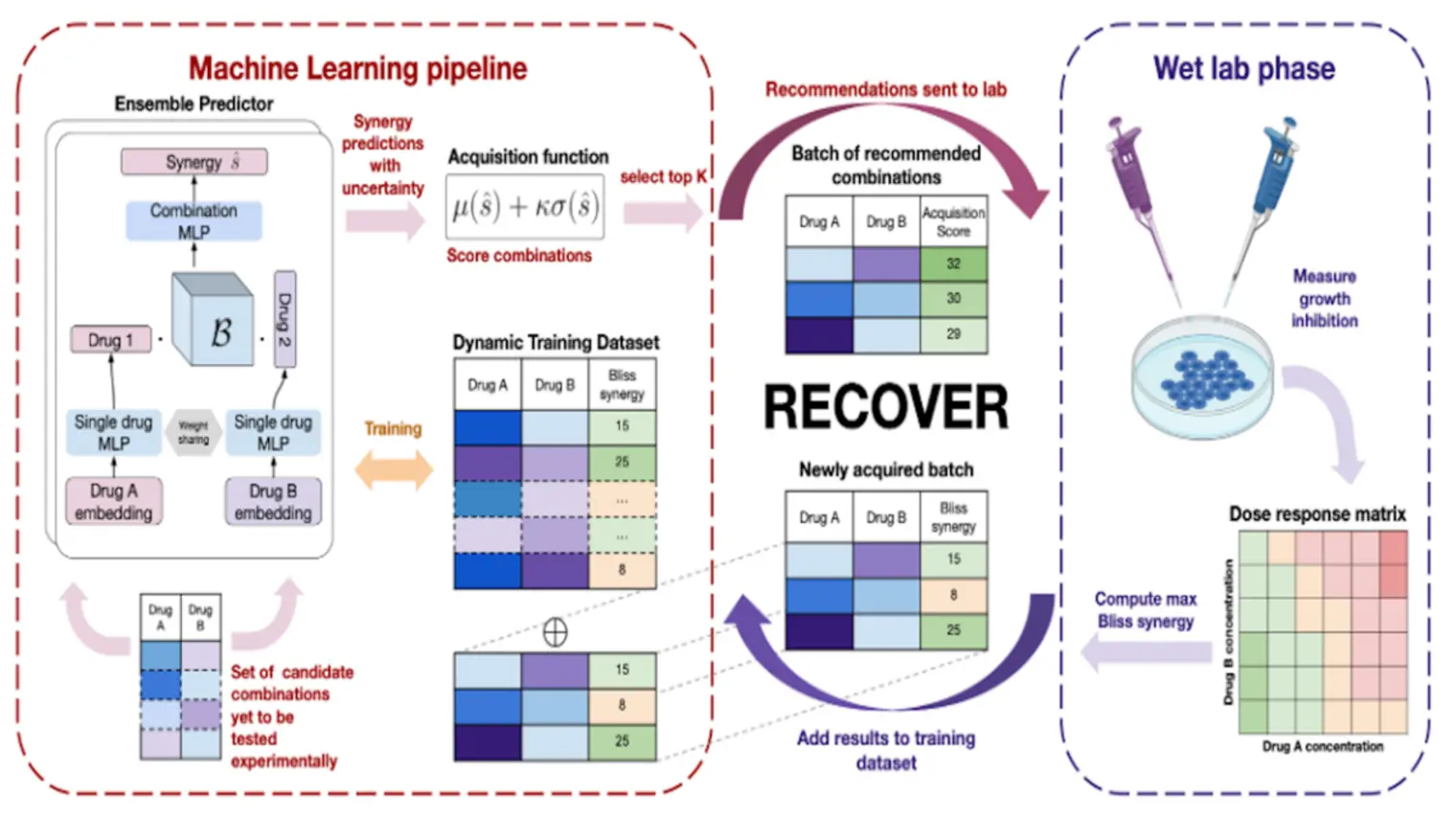
We study the problem of generating diverse candidates in the context of Multi-Objective Optimization. In many applications of machine learni… (see more)ng such as drug discovery and material design, the goal is to generate candidates which simultaneously optimize a set of potentially conflicting objectives. Moreover, these objectives are often imperfect evaluations of some underlying property of interest, making it important to generate diverse candidates to have multiple options for expensive downstream evaluations. We propose Multi-Objective GFlowNets (MOGFNs), a novel method for generating diverse Pareto optimal solutions, based on GFlowNets. We introduce two variants of MOGFNs: MOGFN-PC, which models a family of independent sub-problems defined by a scalarization function, with reward-conditional GFlowNets, and MOGFN-AL, which solves a sequence of sub-problems defined by an acquisition function in an active learning loop. Our experiments on wide variety of synthetic and benchmark tasks demonstrate advantages of the proposed methods in terms of the Pareto performance and importantly, improved candidate diversity, which is the main contribution of this work.
Adaptive Discrete Communication Bottlenecks with Dynamic Vector Quantization for Heterogeneous Representational Coarseness
Dianbo Liu
Pascal Junior Tikeng Notsawo
Michael Mozer
Vector Quantization (VQ) is a method for discretizing latent representations and has become a major part of the deep learning toolkit. It ha… (see more)s been theoretically and empirically shown that discretization of representations leads to improved generalization, including in reinforcement learning where discretization can be used to bottleneck multi-agent communication to promote agent specialization and robustness. The discretization tightness of most VQ-based methods is defined by the number of discrete codes in the representation vector and the codebook size, which are fixed as hyperparameters. In this work, we propose learning to dynamically select discretization tightness conditioned on inputs, based on the hypothesis that data naturally contains variations in complexity that call for different levels of representational coarseness which is observed in many heterogeneous data sets. We show that dynamically varying tightness in communication bottlenecks can improve model performance on visual reasoning and reinforcement learning tasks with heterogeneity in representations.
The Effect of Diversity in Meta-Learning
Recent studies show that task distribution plays a vital role in the meta-learner's performance. Conventional wisdom is that task diversity … (see more)should improve the performance of meta-learning. In this work, we find evidence to the contrary; (i) our experiments draw into question the efficacy of our learned models: similar manifolds can be learned with a subset of the data (lower task diversity). This finding questions the advantage of providing more data to the model, and (ii) adding diversity to the task distribution (higher task diversity) sometimes hinders the model and does not lead to a significant improvement in performance as previously believed. To strengthen our findings, we provide both empirical and theoretical evidence.
Constant Memory Attention Block
Frederick Tung
Hossein Hajimirsadeghi
Mohamed Osama Ahmed
BatchGFN: Generative Flow Networks for Batch Active Learning
Shreshth A Malik
Andrew Jesson
Moksh J. Jain
Yarin Gal
We introduce BatchGFN—a novel approach for pool-based active learning that uses generative flow networks to sample sets of data points pro… (see more)portional to a batch reward. With an appropriate reward function to quantify the utility of acquiring a batch, such as the joint mutual information between the batch and the model parameters, BatchGFN is able to construct highly informative batches for active learning in a principled way. We show our approach enables sampling near-optimal utility batches at inference time with a single forward pass per point in the batch in toy regression problems. This alleviates the computational complexity of batch-aware algorithms and removes the need for greedy approximations to find maximizers for the batch reward. We also present early results for amortizing training across acquisition steps, which will enable scaling to real-world tasks.
Benchmarking Bayesian Causal Discovery Methods for Downstream Treatment Effect Estimation
GFlowNets for Causal Discovery: an Overview
Dragos Cristian Manta
Edward J Hu
Thompson Sampling for Improved Exploration in GFlowNets
Generative flow networks (GFlowNets) are amortized variational inference algorithms that treat sampling from a distribution over composition… (see more)al objects as a sequential decision-making problem with a learnable action policy. Unlike other algorithms for hierarchical sampling that optimize a variational bound, GFlowNet algorithms can stably run off-policy, which can be advantageous for discovering modes of the target distribution. Despite this flexibility in the choice of behaviour policy, the optimal way of efficiently selecting trajectories for training has not yet been systematically explored. In this paper, we view the choice of trajectories for training as an active learning problem and approach it using Bayesian techniques inspired by methods for multi-armed bandits. The proposed algorithm, Thompson sampling GFlowNets (TS-GFN), maintains an approximate posterior distribution over policies and samples trajectories from this posterior for training. We show in two domains that TS-GFN yields improved exploration and thus faster convergence to the target distribution than the off-policy exploration strategies used in past work.
Spotlight Attention: Robust Object-Centric Learning With a Spatial Locality Prior
Ayush K Chakravarthy
Trang M. Nguyen
Michael Curtis Mozer
Model evaluation for extreme risks
Toby Shevlane
Sebastian Farquhar
Ben Garfinkel
Mary Phuong
Jess Whittlestone
Jade Leung
Daniel Kokotajlo
Nahema A. Marchal
Markus Anderljung
Noam Kolt
Lewis Ho
Divya Siddarth
Shahar Avin
W. Hawkins
Been Kim
Iason Gabriel
Vijay Bolina
Jack Clark
Paul F. Christiano … (see 1 more)
Allan Dafoe