Portrait of Yoshua Bengio

Yoshua Bengio

Core Academic Member
Canada CIFAR AI Chair
Full Professor, Université de Montréal, Department of Computer Science and Operations Research Department
Founder and Scientific Advisor, Leadership Team
Research Topics
Causality
Computational Neuroscience
Deep Learning
Generative Models
Graph Neural Networks
Machine Learning Theory
Medical Machine Learning
Molecular Modeling
Natural Language Processing
Probabilistic Models
Reasoning
Recurrent Neural Networks
Reinforcement Learning
Representation Learning

Biography

*For media requests, please write to medias@mila.quebec.

For more information please contact Cassidy MacNeil, Senior Assistant and Operation Lead at cassidy.macneil@mila.quebec.

Yoshua Bengio is recognized worldwide as a leading expert in AI. He is most known for his pioneering work in deep learning, which earned him the 2018 A.M. Turing Award, “the Nobel Prize of computing,” with Geoffrey Hinton and Yann LeCun.

Bengio is a full professor at Université de Montréal, and the founder and scientific advisor of Mila – Quebec Artificial Intelligence Institute. He is also a senior fellow at CIFAR and co-directs its Learning in Machines & Brains program, serves as special advisor and founding scientific director of IVADO, and holds a Canada CIFAR AI Chair.

In 2019, Bengio was awarded the prestigious Killam Prize and in 2022, he was the most cited computer scientist in the world by h-index. He is a Fellow of the Royal Society of London, Fellow of the Royal Society of Canada, Knight of the Legion of Honor of France and Officer of the Order of Canada. In 2023, he was appointed to the UN’s Scientific Advisory Board for Independent Advice on Breakthroughs in Science and Technology.

Concerned about the social impact of AI, Bengio helped draft the Montréal Declaration for the Responsible Development of Artificial Intelligence and continues to raise awareness about the importance of mitigating the potentially catastrophic risks associated with future AI systems.

Current Students

Collaborating Alumni - McGill University
Collaborating researcher - Cambridge University
Principal supervisor :
PhD - Université de Montréal
Independent visiting researcher
Co-supervisor :
Collaborating researcher - N/A
Principal supervisor :
PhD - Université de Montréal
Collaborating researcher - KAIST
PhD - Université de Montréal
Collaborating Alumni - Université de Montréal
Co-supervisor :
Independent visiting researcher
Principal supervisor :
PhD - Université de Montréal
Co-supervisor :
PhD - Université de Montréal
Principal supervisor :
Collaborating Alumni - Université de Montréal
Postdoctorate - Université de Montréal
Principal supervisor :
Postdoctorate - Université de Montréal
Principal supervisor :
Collaborating Alumni
Collaborating Alumni - Université de Montréal
PhD - Université de Montréal
Co-supervisor :
PhD - Université de Montréal
Principal supervisor :
Independent visiting researcher - Université de Montréal
PhD - Université de Montréal
Principal supervisor :
Collaborating researcher - Ying Wu Coll of Computing
Collaborating researcher - University of Waterloo
Principal supervisor :
Collaborating Alumni - Max-Planck-Institute for Intelligent Systems
Collaborating researcher - Université de Montréal
Co-supervisor :
PhD - Université de Montréal
Postdoctorate - Université de Montréal
PhD - Université de Montréal
Principal supervisor :
Collaborating Alumni - Université de Montréal
Postdoctorate
Co-supervisor :
Collaborating Alumni - Polytechnique Montréal
Co-supervisor :
PhD - Université de Montréal
Co-supervisor :
Collaborating researcher
Principal supervisor :
Collaborating Alumni - Université de Montréal
Co-supervisor :
PhD - Université de Montréal
Principal supervisor :
Collaborating researcher
Collaborating researcher - Université de Montréal
PhD - McGill University
Principal supervisor :
PhD - Université de Montréal
Principal supervisor :
PhD - Université de Montréal
Collaborating Alumni - McGill University
Principal supervisor :

Publications

Laughing Hyena Distillery: Extracting Compact Recurrences From Convolutions
Michael Poli
Daniel Y Fu
Hermann Kumbong
Rom Nishijima Parnichkun
Aman Timalsina
David W. Romero
Quinn McIntyre
Beidi Chen
Atri Rudra
Ce Zhang
Christopher Re
Stefano Ermon
Recent advances in attention-free sequence models rely on convolutions as alternatives to the attention operator at the core of Transformers… (see more). In particular, long convolution sequence models have achieved state-of-the-art performance in many domains, but incur a significant cost during auto-regressive inference workloads -- naively requiring a full pass (or caching of activations) over the input sequence for each generated token -- similarly to attention-based models. In this paper, we seek to enable
Let the Flows Tell: Solving Graph Combinatorial Optimization Problems with GFlowNets
Reusable Slotwise Mechanisms
Trang Nguyen
Khuong Nguyen
Nguyen Duy Khuong
Dianbo Liu
Agents with the ability to comprehend and reason about the dynamics of objects would be expected to exhibit improved robustness and generali… (see more)zation in novel scenarios. However, achieving this capability necessitates not only an effective scene representation but also an understanding of the mechanisms governing interactions among object subsets. Recent studies have made significant progress in representing scenes using object slots. In this work, we introduce Reusable Slotwise Mechanisms, or RSM, a framework that models object dynamics by leveraging communication among slots along with a modular architecture capable of dynamically selecting reusable mechanisms for predicting the future states of each object slot. Crucially, RSM leverages the Central Contextual Information (CCI), enabling selected mechanisms to access the remaining slots through a bottleneck, effectively allowing for modeling of higher order and complex interactions that might require a sparse subset of objects. Experimental results demonstrate the superior performance of RSM compared to state-of-the-art methods across various future prediction and related downstream tasks, including Visual Question Answering and action planning. Furthermore, we showcase RSM's Out-of-Distribution generalization ability to handle scenes in intricate scenarios.
Neural Causal Structure Discovery from Interventions
Nan Rosemary Ke
Bernhard Schölkopf
Michael Curtis Mozer
Christopher Pal
Recent promising results have generated a surge of interest in continuous optimization methods for causal discovery from observational data.… (see more) However, there are theoretical limitations on the identifiability of underlying structures obtained solely from observational data. Interventional data, on the other hand, provides richer information about the underlying data-generating process. Nevertheless, extending and applying methods designed for observational data to include interventions is a challenging problem. To address this issue, we propose a general framework based on neural networks to develop models that incorporate both observational and interventional data. Notably, our method can handle the challenging and realistic scenario where the identity of the intervened upon variable is unknown. We evaluate our proposed approach in the context of graph recovery, both de novo and from a partially-known edge set. Our method achieves strong benchmark results on various structure learning tasks, including structure recovery of synthetic graphs as well as standard graphs from the Bayesian Network Repository.
Consciousness in Artificial Intelligence: Insights from the Science of Consciousness
Patrick Mark Butlin
Run Long
Jonathan C. P. Birch
Axel Constant
George Deane
S. Fleming
C. Frith
Xuanxiu Ji
Ryota Kanai
C. Klein
Grace W. Lindsay
Matthias Michel
Liad Mudrik
Megan A. K. Peters
Eric Schwitzgebel
Jonathan Simon
Rufin Vanrullen
Scientific discovery in the age of artificial intelligence
Hanchen Wang
Tianfan Fu
Yuanqi Du
Wenhao Gao
Kexin Huang
Ziming Liu
Payal Chandak
Peter Van Katwyk
Andreea Deac
Animashree Anandkumar
K. Bergen
Carla P. Gomes
Shirley Ho
Pushmeet Kohli
Joan Lasenby
Jure Leskovec
Tie-Yan Liu
A. Manrai
Debora Susan Marks … (see 10 more)
Bharath Ramsundar
Le Song
Jimeng Sun
MAX WELLING
Linfeng Zhang
Connor Wilson. Coley
Marinka Žitnik
AI For Global Climate Cooperation 2023 Competition Proceedings
Prateek Arun Gupta
Li Li
Soham Rajesh Phade
Sunil Srinivasa
Andrew Robert Williams
Yang Zhang
Stephan Zheng
The international community must collaborate to mitigate climate change and sustain economic growth. However, collaboration is hard to achie… (see more)ve, partly because no global authority can ensure compliance with international climate agreements. Combining AI with climate-economic simulations offers a promising solution to design international frameworks, including negotiation protocols and climate agreements, that promote and incentivize collaboration. In addition, these frameworks should also have policy goals fulfillment, and sustained commitment, taking into account climate-economic dynamics and strategic behaviors. These challenges require an interdisciplinary approach across machine learning, economics, climate science, law, policy, ethics, and other fields. Towards this objective, we organized AI for Global Climate Cooperation, a Mila competition in which teams submitted proposals and analyses of international frameworks, based on (modifications of) RICE-N, an AI-driven integrated assessment model (IAM). In particular, RICE-N supports modeling regional decision-making using AI agents. Furthermore, the IAM then models the climate-economic impact of those decisions into the future. Whereas the first track focused only on performance metrics, the proposals submitted to the second track were evaluated both quantitatively and qualitatively. The quantitative evaluation focused on a combination of (i) the degree of mitigation of global temperature rise and (ii) the increase in economic productivity. On the other hand, an interdisciplinary panel of human experts in law, policy, sociology, economics and environmental science, evaluated the solutions qualitatively. In particular, the panel considered the effectiveness, simplicity, feasibility, ethics, and notions of climate justice of the protocols. In the third track, the participants were asked to critique and improve RICE-N.
International Institutions for Advanced AI
Lewis Ho
Joslyn N. Barnhart
Robert Trager
Miles Brundage
Allison Sovey Carnegie
Rumman Chowdhury
Allan Dafoe
Gillian K. Hadfield
Margaret Levi
D. Snidal
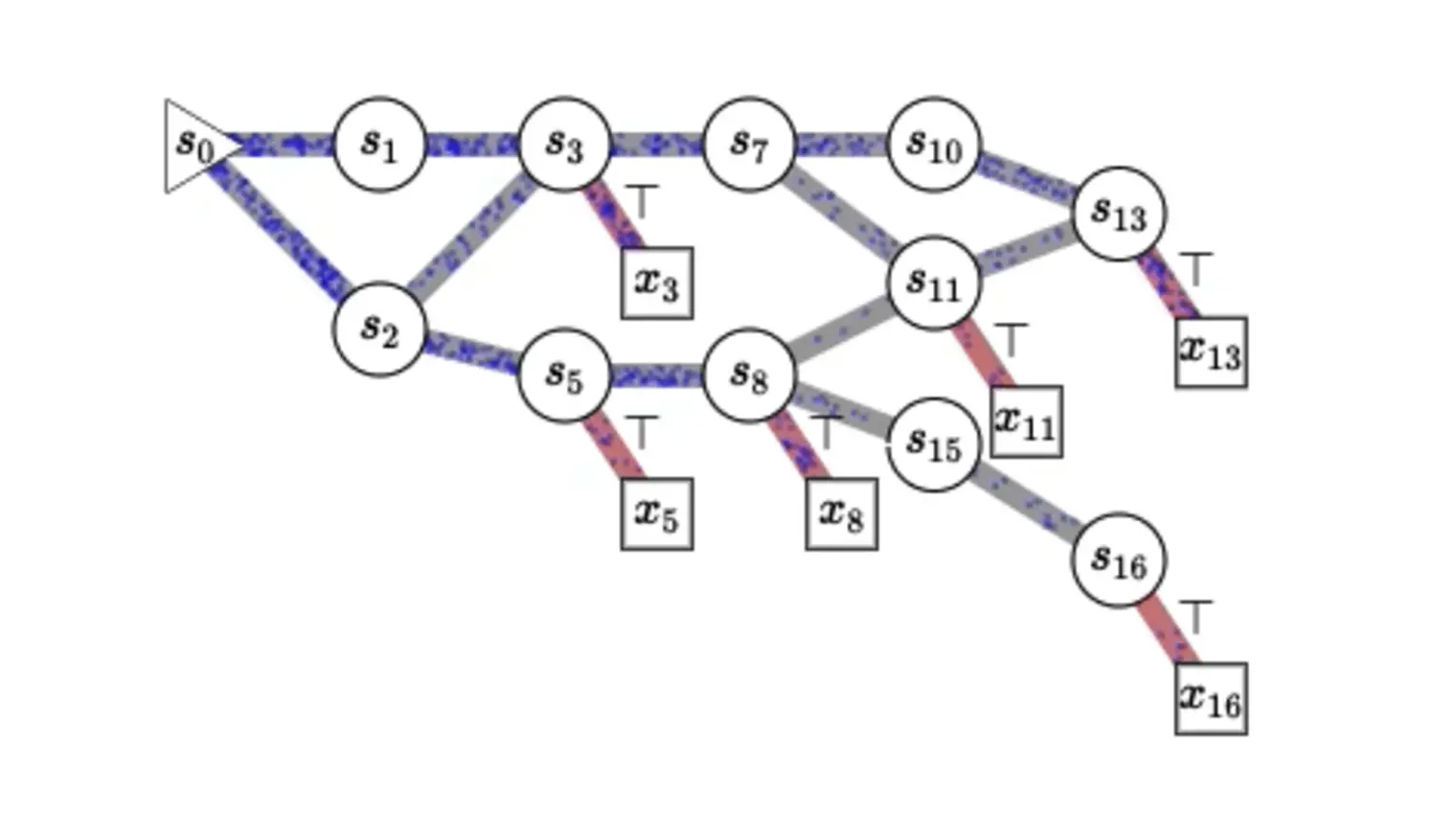
Generative Flow Networks: a Markov Chain Perspective
Better Training of GFlowNets with Local Credit and Incomplete Trajectories
Generative Flow Networks or GFlowNets are related to Monte-Carlo Markov chain methods (as they sample from a distribution specified by an en… (see more)ergy function), reinforcement learning (as they learn a policy to sample composed objects through a sequence of steps), generative models (as they learn to represent and sample from a distribution) and amortized variational methods (as they can be used to learn to approximate and sample from an otherwise intractable posterior, given a prior and a likelihood). They are trained to generate an object
Discrete Key-Value Bottleneck
Nasim Rahaman
Michael Mozer
Bernhard Schölkopf
Deep neural networks perform well on classification tasks where data streams are i.i.d. and labeled data is abundant. Challenges emerge with… (see more) non-stationary training data streams such as continual learning. One powerful approach that has addressed this challenge involves pre-training of large encoders on volumes of readily available data, followed by task-specific tuning. Given a new task, however, updating the weights of these encoders is challenging as a large number of weights needs to be fine-tuned, and as a result, they forget information about the previous tasks. In the present work, we propose a model architecture to address this issue, building upon a discrete bottleneck containing pairs of separate and learnable key-value codes. Our paradigm will be to encode; process the representation via a discrete bottleneck; and decode. Here, the input is fed to the pre-trained encoder, the output of the encoder is used to select the nearest keys, and the corresponding values are fed to the decoder to solve the current task. The model can only fetch and re-use a sparse number of these key-value pairs during inference, enabling localized and context-dependent model updates. We theoretically investigate the ability of the discrete key-value bottleneck to minimize the effect of learning under distribution shifts and show that it reduces the complexity of the hypothesis class. We empirically verify the proposed method under challenging class-incremental learning scenarios and show that the proposed model - without any task boundaries - reduces catastrophic forgetting across a wide variety of pre-trained models, outperforming relevant baselines on this task.
Equivariance with Learned Canonicalization Functions
Sékou-Oumar Kaba
Arnab Kumar Mondal
Symmetry-based neural networks often constrain the architecture in order to achieve invariance or equivariance to a group of transformations… (see more). In this paper, we propose an alternative that avoids this architectural constraint by learning to produce canonical representations of the data. These canonicalization functions can readily be plugged into non-equivariant backbone architectures. We offer explicit ways to implement them for some groups of interest. We show that this approach enjoys universality while providing interpretable insights. Our main hypothesis, supported by our empirical results, is that learning a small neural network to perform canonicalization is better than using predefined heuristics. Our experiments show that learning the canonicalization function is competitive with existing techniques for learning equivariant functions across many tasks, including image classification,