Portrait of Yoshua Bengio

Yoshua Bengio

Core Academic Member
Canada CIFAR AI Chair
Full Professor, Université de Montréal, Department of Computer Science and Operations Research Department
Founder and Scientific Advisor, Leadership Team
Research Topics
Causality
Computational Neuroscience
Deep Learning
Generative Models
Graph Neural Networks
Machine Learning Theory
Medical Machine Learning
Molecular Modeling
Natural Language Processing
Probabilistic Models
Reasoning
Recurrent Neural Networks
Reinforcement Learning
Representation Learning

Biography

*For media requests, please write to medias@mila.quebec.

For more information please contact Cassidy MacNeil, Senior Assistant and Operation Lead at cassidy.macneil@mila.quebec.

Yoshua Bengio is recognized worldwide as a leading expert in AI. He is most known for his pioneering work in deep learning, which earned him the 2018 A.M. Turing Award, “the Nobel Prize of computing,” with Geoffrey Hinton and Yann LeCun.

Bengio is a full professor at Université de Montréal, and the founder and scientific advisor of Mila – Quebec Artificial Intelligence Institute. He is also a senior fellow at CIFAR and co-directs its Learning in Machines & Brains program, serves as special advisor and founding scientific director of IVADO, and holds a Canada CIFAR AI Chair.

In 2019, Bengio was awarded the prestigious Killam Prize and in 2022, he was the most cited computer scientist in the world by h-index. He is a Fellow of the Royal Society of London, Fellow of the Royal Society of Canada, Knight of the Legion of Honor of France and Officer of the Order of Canada. In 2023, he was appointed to the UN’s Scientific Advisory Board for Independent Advice on Breakthroughs in Science and Technology.

Concerned about the social impact of AI, Bengio helped draft the Montréal Declaration for the Responsible Development of Artificial Intelligence and continues to raise awareness about the importance of mitigating the potentially catastrophic risks associated with future AI systems.

Current Students

Collaborating Alumni - McGill University
Collaborating researcher - Cambridge University
Principal supervisor :
PhD - Université de Montréal
Independent visiting researcher
Co-supervisor :
PhD - Université de Montréal
Collaborating researcher - N/A
Principal supervisor :
PhD - Université de Montréal
Collaborating researcher - KAIST
PhD - Université de Montréal
Collaborating Alumni - Université de Montréal
Co-supervisor :
Independent visiting researcher
Principal supervisor :
PhD - Université de Montréal
Co-supervisor :
PhD - Université de Montréal
Principal supervisor :
Collaborating Alumni - Université de Montréal
Postdoctorate - Université de Montréal
Principal supervisor :
Collaborating Alumni
Collaborating Alumni - Université de Montréal
PhD - Université de Montréal
Co-supervisor :
PhD - Université de Montréal
Principal supervisor :
Independent visiting researcher - Université de Montréal
PhD - Université de Montréal
Principal supervisor :
Collaborating researcher - Ying Wu Coll of Computing
Collaborating researcher - University of Waterloo
Principal supervisor :
Collaborating Alumni - Max-Planck-Institute for Intelligent Systems
Collaborating researcher - Université de Montréal
Co-supervisor :
PhD - Université de Montréal
Postdoctorate - Université de Montréal
PhD - Université de Montréal
Principal supervisor :
Collaborating Alumni - Université de Montréal
Postdoctorate
Collaborating Alumni - Polytechnique Montréal
Co-supervisor :
PhD - Université de Montréal
Co-supervisor :
Collaborating researcher
Principal supervisor :
Collaborating Alumni - Université de Montréal
Co-supervisor :
PhD - Université de Montréal
Principal supervisor :
PhD - Université de Montréal
Collaborating researcher
Collaborating researcher - Université de Montréal
PhD - Université de Montréal
PhD - McGill University
Principal supervisor :
PhD - Université de Montréal
Principal supervisor :
Collaborating Alumni - McGill University
Principal supervisor :

Publications

Multi-Domain Balanced Sampling Improves Out-of-Distribution Generalization of Chest X-ray Pathology Prediction Models
Enoch Amoatey Tetteh
Joseph D Viviano
David M. Krueger
Learning models that generalize under different distribution shifts in medical imaging has been a long-standing research challenge. There ha… (see more)ve been several proposals for efficient and robust visual representation learning among vision research practitioners, especially in the sensitive and critical biomedical domain. In this paper, we propose an idea for out-of-distribution generalization of chest X-ray pathologies that uses a simple balanced batch sampling technique. We observed that balanced sampling between the multiple training datasets improves the performance over baseline models trained without balancing.
Long-Term Credit Assignment via Model-based Temporal Shortcuts
Effect of diversity in Meta-Learning
Few-shot learning aims to learn representations that can tackle novel tasks given a small number of examples. Recent studies show that task … (see more)distribution plays a vital role in the performance of the model. Conventional wisdom is that task diversity should improve the performance of meta-learning. In this work, we find evidence to the contrary; we study different task distributions on a myriad of models and datasets to evaluate the effect of task diversity on meta-learning algorithms. For this experiment, we train on two datasets - Omniglot and miniImageNet and with three broad classes of meta-learning models - Metric-based (i.e., Protonet, Matching Networks), Optimization-based (i.e., MAML, Reptile, and MetaOptNet), and Bayesian meta-learning models (i.e., CNAPs). Our experiments demonstrate that the effect of task diversity on all these algorithms follows a similar trend, and task diversity does not seem to offer any benefits to the learning of the model. Furthermore, we also demonstrate that even a handful of tasks, repeated over multiple batches, would be sufficient to achieve a performance similar to uniform sampling and draws into question the need for additional tasks to create better models.
GFlowNet Foundations
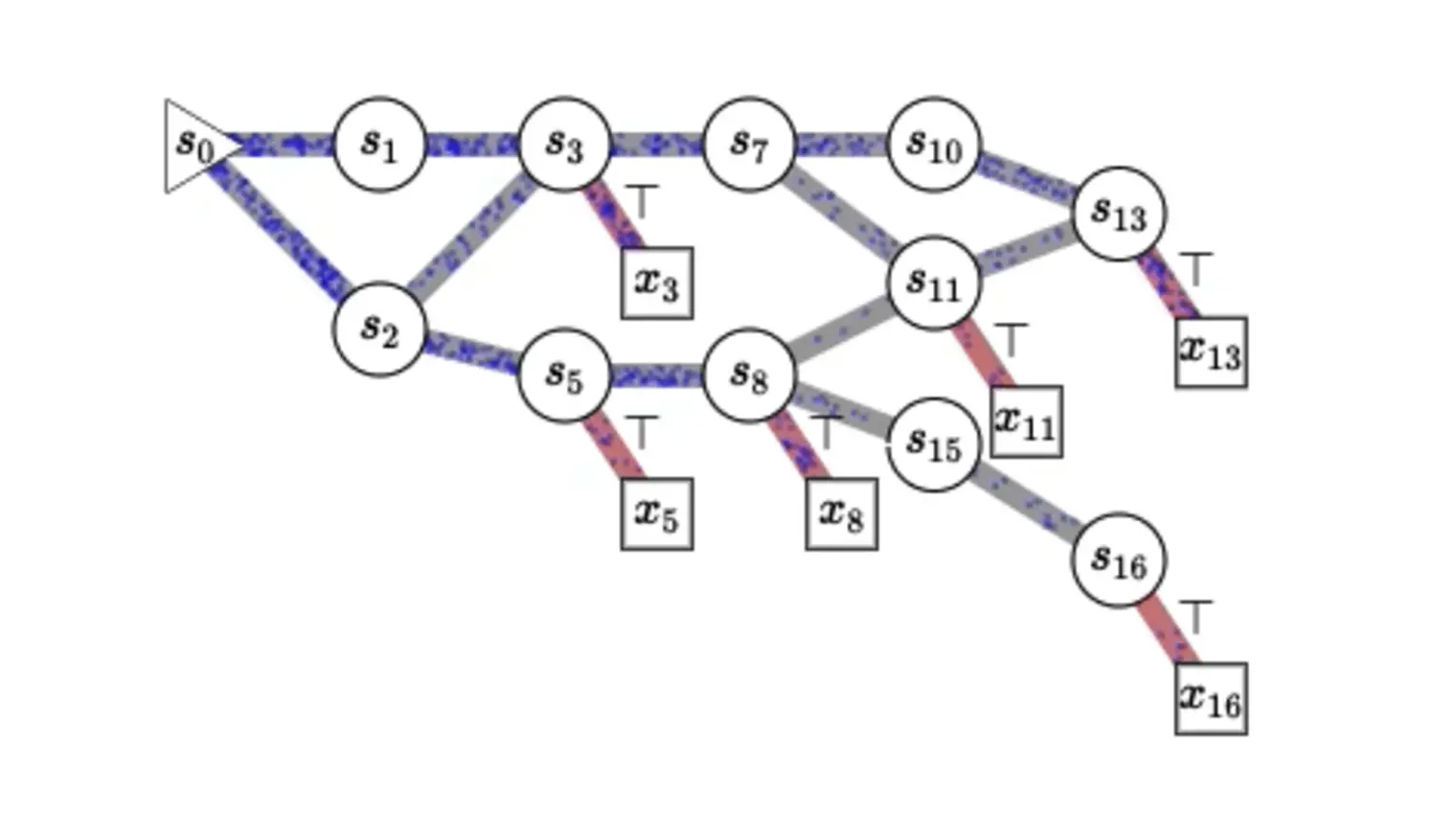
Generative Flow Networks (GFlowNets) have been introduced as a method to sample a diverse set of candidates in an active learning context, w… (see more)ith a training objective that makes them approximately sample in proportion to a given reward function. In this paper, we show a number of additional theoretical properties of GFlowNets. They can be used to estimate joint probability distributions and the corresponding marginal distributions where some variables are unspecified and, of particular interest, can represent distributions over composite objects like sets and graphs. GFlowNets amortize the work typically done by computationally expensive MCMC methods in a single but trained generative pass. They could also be used to estimate partition functions and free energies, conditional probabilities of supersets (supergraphs) given a subset (subgraph), as well as marginal distributions over all supersets (supergraphs) of a given set (graph). We introduce variations enabling the estimation of entropy and mutual information, sampling from a Pareto frontier, connections to reward-maximizing policies, and extensions to stochastic environments, continuous actions and modular energy functions.
Gradient Starvation: A Learning Proclivity in Neural Networks
We identify and formalize a fundamental gradient descent phenomenon resulting in a learning proclivity in over-parameterized neural networks… (see more). Gradient Starvation arises when cross-entropy loss is minimized by capturing only a subset of features relevant for the task, despite the presence of other predictive features that fail to be discovered. This work provides a theoretical explanation for the emergence of such feature imbalance in neural networks. Using tools from Dynamical Systems theory, we identify simple properties of learning dynamics during gradient descent that lead to this imbalance, and prove that such a situation can be expected given certain statistical structure in training data. Based on our proposed formalism, we develop guarantees for a novel regularization method aimed at decoupling feature learning dynamics, improving accuracy and robustness in cases hindered by gradient starvation. We illustrate our findings with simple and real-world out-of-distribution (OOD) generalization experiments.
Neural Production Systems
Nan Rosemary Ke
Charles Blundell
Philippe Beaudoin
Nicolas Heess
Michael Mozer
Visual environments are structured, consisting of distinct objects or entities. These entities have properties -- both visible and latent --… (see more) that determine the manner in which they interact with one another. To partition images into entities, deep-learning researchers have proposed structural inductive biases such as slot-based architectures. To model interactions among entities, equivariant graph neural nets (GNNs) are used, but these are not particularly well suited to the task for two reasons. First, GNNs do not predispose interactions to be sparse, as relationships among independent entities are likely to be. Second, GNNs do not factorize knowledge about interactions in an entity-conditional manner. As an alternative, we take inspiration from cognitive science and resurrect a classic approach, production systems, which consist of a set of rule templates that are applied by binding placeholder variables in the rules to specific entities. Rules are scored on their match to entities, and the best fitting rules are applied to update entity properties. In a series of experiments, we demonstrate that this architecture achieves a flexible, dynamic flow of control and serves to factorize entity-specific and rule-based information. This disentangling of knowledge achieves robust future-state prediction in rich visual environments, outperforming state-of-the-art methods using GNNs, and allows for the extrapolation from simple (few object) environments to more complex environments.
The Causal-Neural Connection: Expressiveness, Learnability, and Inference
Kevin Xia
Kai-Zhan Lee
Elias Bareinboim
One of the central elements of any causal inference is an object called structural causal model (SCM), which represents a collection of mech… (see more)anisms and exogenous sources of random variation of the system under investigation (Pearl, 2000). An important property of many kinds of neural networks is universal approximability: the ability to approximate any function to arbitrary precision. Given this property, one may be tempted to surmise that a collection of neural nets is capable of learning any SCM by training on data generated by that SCM. In this paper, we show this is not the case by disentangling the notions of expressivity and learnability. Specifically, we show that the causal hierarchy theorem (Thm. 1, Bareinboim et al., 2020), which describes the limits of what can be learned from data, still holds for neural models. For instance, an arbitrarily complex and expressive neural net is unable to predict the effects of interventions given observational data alone. Given this result, we introduce a special type of SCM called a neural causal model (NCM), and formalize a new type of inductive bias to encode structural constraints necessary for performing causal inferences. Building on this new class of models, we focus on solving two canonical tasks found in the literature known as causal identification and estimation. Leveraging the neural toolbox, we develop an algorithm that is both sufficient and necessary to determine whether a causal effect can be learned from data (i.e., causal identifiability); it then estimates the effect whenever identifiability holds (causal estimation). Simulations corroborate the proposed approach.
Problèmes associés au déploiement des modèles fondés sur l’apprentissage machine en santé
Tianshi Cao
Joseph D Viviano
Michael Fralick
Marzyeh Ghassemi
Muhammad Mamdani
Russell Greiner
From Machine Learning to Robotics: Challenges and Opportunities for Embodied Intelligence
Nicholas Roy
Ingmar Posner
T. Barfoot
Philippe Beaudoin
Jeannette Bohg
Oliver Brock
Isabelle Depatie
Dieter Fox
D. Koditschek
Tom'as Lozano-p'erez
Vikash K. Mansinghka
Christopher Pal
Blake Aaron Richards
Dorsa Sadigh
Stefan Schaal
G. Sukhatme
Denis Therien
Marc Emile Toussaint
Michiel van de Panne
CACHE (Critical Assessment of Computational Hit-finding Experiments): A public-private partnership benchmarking initiative to enable the development of computational methods for hit-finding
Suzanne Ackloo
Rima Al-awar
Rommie E. Amaro
Cheryl H. Arrowsmith
Hatylas Azevedo
Robert A. Batey
Ulrich A.K. Betz
Cristian G. Bologa
John D. Chodera
Wendy D. Cornell
Ian Dunham
Gerhard F. Ecker
Kristina Edfeldt
Aled M. Edwards
Michael K. Gilson
Claudia R. Gordijo
Gerhard Hessler
Alexander Hillisch
Anders Hogner … (see 19 more)
John J. Irwin
Johanna M. Jansen
Daniel Kuhn
Andrew R. Leach
Alpha A. Lee
Uta Lessel
John Moult
Ingo Muegge
Tudor I. Oprea
Benjamin G. Perry
Patrick Riley
Kumar Singh Saikatendu
Vijayaratnam Santhakumar
Matthieu Schapira
Cora Scholten
Matthew H. Todd
Masoud Vedadi
Andrea Volkamer
Timothy M. Willson
Computational approaches in drug discovery and development hold great promise, with artificial intelligence methods undergoing widespread co… (see more)ntemporary use, but the experimental validation of these new approaches is frequently inadequate. We are initiating Critical Assessment of Computational Hit-finding Experiments (CACHE) as a public benchmarking project that aims to accelerate the development of small molecule hit-finding algorithms by competitive assessment. Compounds will be identified by participants using a wide range of computational methods for dozens of protein targets selected for different types of prediction scenarios, as well as for their potential biological or pharmaceutical relevance. Community-generated predictions will be tested centrally and rigorously in an experimental hub(s), and all data, including the chemical structures of experimentally tested compounds, will be made publicly available without restrictions. The ability of a range of computational approaches to find novel compounds will be evaluated, compared, and published. The overarching goal of CACHE is to accelerate the development of computational chemistry methods by providing rapid and unbiased feedback to those developing methods, with an ancillary and valuable benefit of identifying new compound-protein binding pairs for biologically interesting targets. The initiative builds on the power of crowd sourcing and expands the open science paradigm for drug discovery.
Systematic Evaluation of Causal Discovery in Visual Model Based Reinforcement Learning
Nan Rosemary Ke
Aniket Rajiv Didolkar
Danilo Jimenez Rezende
Michael Curtis Mozer
Christopher Pal
Inducing causal relationships from observations is a classic problem in machine learning. Most work in causality starts from the premise tha… (see more)t the causal variables themselves are observed. However, for AI agents such as robots trying to make sense of their environment, the only observables are low-level variables like pixels in images. To generalize well, an agent must induce high-level variables, particularly those which are causal or are affected by causal variables. A central goal for AI and causality is thus the joint discovery of abstract representations and causal structure. However, we note that existing environments for studying causal induction are poorly suited for this objective because they have complicated task-specific causal graphs which are impossible to manipulate parametrically (e.g., number of nodes, sparsity, causal chain length, etc.). In this work, our goal is to facilitate research in learning representations of high-level variables as well as causal structures among them. In order to systematically probe the ability of methods to identify these variables and structures, we design a suite of benchmarking RL environments. We evaluate various representation learning algorithms from the literature and find that explicitly incorporating structure and modularity in models can help causal induction in model-based reinforcement learning.
FloW: A Dataset and Benchmark for Floating Waste Detection in Inland Waters
Yuwei Cheng
Jiannan Zhu
Mengxin Jiang
Changsong Pang
Peidong Wang
Olawale Moses Onabola
Yimin Liu
Dianbo Liu
Marine debris is severely threatening the marine lives and causing sustained pollution to the whole ecosystem. To prevent the wastes from ge… (see more)tting into the ocean, it is helpful to clean up the floating wastes in inland waters using the autonomous cleaning devices like unmanned surface vehicles. The cleaning efficiency relies on a high-accurate and robust object detection system. However, the small size of the target, the strong light reflection over water surface, and the reflection of other objects on bank-side all bring challenges to the vision-based object detection system. To promote the practical application for autonomous floating wastes cleaning, we present FloW†, the first dataset for floating waste detection in inland water areas. The dataset consists of an image sub-dataset FloW-Img and a multimodal sub-dataset FloW-RI which contains synchronized millimeter wave radar data and images. Accurate annotations for images and radar data are provided, supporting floating waste detection strategies based on image, radar data, and the fusion of two sensors. We perform several baseline experiments on our dataset, including vision-based and radar-based detection methods. The results show that, the detection accuracy is relatively low and floating waste detection still remains a challenging task.