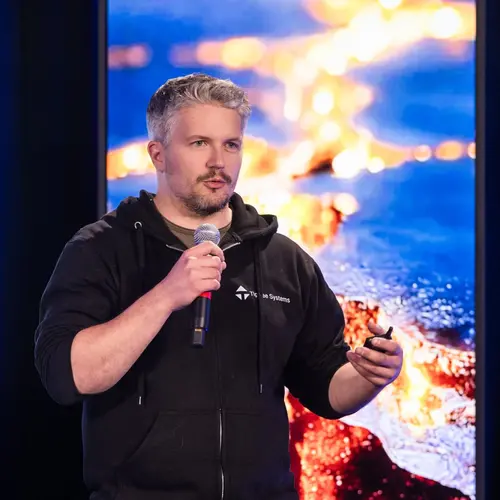

Portrait of Yoshua Bengio

Yoshua Bengio

Core Academic Member
Canada CIFAR AI Chair
Full Professor, Université de Montréal, Department of Computer Science and Operations Research Department
Founder and Scientific Advisor, Leadership Team
Research Topics
Causality
Computational Neuroscience
Deep Learning
Generative Models
Graph Neural Networks
Machine Learning Theory
Medical Machine Learning
Molecular Modeling
Natural Language Processing
Probabilistic Models
Reasoning
Recurrent Neural Networks
Reinforcement Learning
Representation Learning

Biography

*For media requests, please write to medias@mila.quebec.

For more information please contact Cassidy MacNeil, Senior Assistant and Operation Lead at cassidy.macneil@mila.quebec.

Yoshua Bengio is recognized worldwide as a leading expert in AI. He is most known for his pioneering work in deep learning, which earned him the 2018 A.M. Turing Award, “the Nobel Prize of computing,” with Geoffrey Hinton and Yann LeCun.

Bengio is a full professor at Université de Montréal, and the founder and scientific advisor of Mila – Quebec Artificial Intelligence Institute. He is also a senior fellow at CIFAR and co-directs its Learning in Machines & Brains program, serves as special advisor and founding scientific director of IVADO, and holds a Canada CIFAR AI Chair.

In 2019, Bengio was awarded the prestigious Killam Prize and in 2022, he was the most cited computer scientist in the world by h-index. He is a Fellow of the Royal Society of London, Fellow of the Royal Society of Canada, Knight of the Legion of Honor of France and Officer of the Order of Canada. In 2023, he was appointed to the UN’s Scientific Advisory Board for Independent Advice on Breakthroughs in Science and Technology.

Concerned about the social impact of AI, Bengio helped draft the Montréal Declaration for the Responsible Development of Artificial Intelligence and continues to raise awareness about the importance of mitigating the potentially catastrophic risks associated with future AI systems.

Current Students

Collaborating Alumni - McGill University
Collaborating researcher - Cambridge University
Principal supervisor :
PhD - Université de Montréal
Independent visiting researcher
Co-supervisor :
Collaborating researcher - N/A
Principal supervisor :
PhD - Université de Montréal
Collaborating researcher - KAIST
PhD - Université de Montréal
Collaborating Alumni - Université de Montréal
Co-supervisor :
Independent visiting researcher
Principal supervisor :
PhD - Université de Montréal
Co-supervisor :
PhD - Université de Montréal
Principal supervisor :
Collaborating Alumni - Université de Montréal
Postdoctorate - Université de Montréal
Principal supervisor :
Postdoctorate - Université de Montréal
Principal supervisor :
Collaborating Alumni
Collaborating Alumni - Université de Montréal
PhD - Université de Montréal
Co-supervisor :
PhD - Université de Montréal
Principal supervisor :
Independent visiting researcher - Université de Montréal
PhD - Université de Montréal
Principal supervisor :
Collaborating researcher - Ying Wu Coll of Computing
Collaborating researcher - University of Waterloo
Principal supervisor :
Collaborating Alumni - Max-Planck-Institute for Intelligent Systems
Collaborating researcher - Université de Montréal
Co-supervisor :
PhD - Université de Montréal
Postdoctorate - Université de Montréal
PhD - Université de Montréal
Principal supervisor :
Collaborating Alumni - Université de Montréal
Postdoctorate
Co-supervisor :
Collaborating Alumni - Polytechnique Montréal
Co-supervisor :
PhD - Université de Montréal
Co-supervisor :
Collaborating researcher
Principal supervisor :
Collaborating Alumni - Université de Montréal
Co-supervisor :
PhD - Université de Montréal
Principal supervisor :
Collaborating researcher
Collaborating researcher - Université de Montréal
PhD - Université de Montréal
PhD - McGill University
Principal supervisor :
PhD - Université de Montréal
Principal supervisor :
Collaborating Alumni - McGill University
Principal supervisor :

Publications

Robust and Controllable Object-Centric Learning through Energy-based Models
Tong Che
Boris Ivanovic
Marco Pavone
Humans are remarkably good at understanding and reasoning about complex visual scenes. The capability to decompose low-level observations in… (see more)to discrete objects allows us to build a grounded abstract representation and identify the compositional structure of the world. Accordingly, it is a crucial step for machine learning models to be capable of inferring objects and their properties from visual scenes without explicit supervision. However, existing works on object-centric representation learning either rely on tailor-made neural network modules or strong probabilistic assumptions in the underlying generative and inference processes. In this work, we present \ours, a conceptually simple and general approach to learning object-centric representations through an energy-based model. By forming a permutation-invariant energy function using vanilla attention blocks readily available in Transformers, we can infer object-centric latent variables via gradient-based MCMC methods where permutation equivariance is automatically guaranteed. We show that \ours can be easily integrated into existing architectures and can effectively extract high-quality object-centric representations, leading to better segmentation accuracy and competitive downstream task performance. Further, empirical evaluations show that \ours's learned representations are robust against distribution shift. Finally, we demonstrate the effectiveness of \ours in systematic compositional generalization, by re-composing learned energy functions for novel scene generation and manipulation.
Stateful Active Facilitator: Coordination and Environmental Heterogeneity in Cooperative Multi-Agent Reinforcement Learning
Dianbo Liu
Tianmin Shu
Michael Mozer
Nicolas Heess
In cooperative multi-agent reinforcement learning, a team of agents works together to achieve a common goal. Different environments or tasks… (see more) may require varying degrees of coordination among agents in order to achieve the goal in an optimal way. The nature of coordination will depend on the properties of the environment -- its spatial layout, distribution of obstacles, dynamics, etc. We term this variation of properties within an environment as heterogeneity. Existing literature has not sufficiently addressed the fact that different environments may have different levels of heterogeneity. We formalize the notions of coordination level and heterogeneity level of an environment and present HECOGrid, a suite of multi-agent RL environments that facilitates empirical evaluation of different MARL approaches across different levels of coordination and environmental heterogeneity by providing a quantitative control over coordination and heterogeneity levels of the environment. Further, we propose a Centralized Training Decentralized Execution learning approach called Stateful Active Facilitator (SAF) that enables agents to work efficiently in high-coordination and high-heterogeneity environments through a differentiable and shared knowledge source used during training and dynamic selection from a shared pool of policies. We evaluate SAF and compare its performance against baselines IPPO and MAPPO on HECOGrid. Our results show that SAF consistently outperforms the baselines across different tasks and different heterogeneity and coordination levels. We release the code for HECOGrid as well as all our experiments.
Leveraging the Third Dimension in Contrastive Learning
Sumukh K Aithal
Michael Curtis Mozer
Self-Supervised Learning (SSL) methods operate on unlabeled data to learn robust representations useful for downstream tasks. Most SSL metho… (see more)ds rely on augmentations obtained by transforming the 2D image pixel map. These augmentations ignore the fact that biological vision takes place in an immersive three-dimensional, temporally contiguous environment, and that low-level biological vision relies heavily on depth cues. Using a signal provided by a pretrained state-of-the-art monocular RGB-to-depth model (the \emph{Depth Prediction Transformer}, Ranftl et al., 2021), we explore two distinct approaches to incorporating depth signals into the SSL framework. First, we evaluate contrastive learning using an RGB+depth input representation. Second, we use the depth signal to generate novel views from slightly different camera positions, thereby producing a 3D augmentation for contrastive learning. We evaluate these two approaches on three different SSL methods -- BYOL, SimSiam, and SwAV -- using ImageNette (10 class subset of ImageNet), ImageNet-100 and ImageNet-1k datasets. We find that both approaches to incorporating depth signals improve the robustness and generalization of the baseline SSL methods, though the first approach (with depth-channel concatenation) is superior. For instance, BYOL with the additional depth channel leads to an increase in downstream classification accuracy from 85.3\% to 88.0\% on ImageNette and 84.1\% to 87.0\% on ImageNet-C.
Regeneration Learning: A Learning Paradigm for Data Generation
Xu Tan
Tao Qin
Jiang Bian
Tie-Yan Liu
Scalable Neural Network Algorithms for High Dimensional Data
Mukesh Soni
Marwan Ali Shnan
Benchmarking Graph Neural Networks
Vijay Prakash Dwivedi
Chaitanya K. Joshi
Thomas Laurent
Anh Tuan Luu
Xavier Bresson
Conditional Flow Matching: Simulation-Free Dynamic Optimal Transport
Constant Memory Attentive Neural Processes
Frederick Tung
Hossein Hajimirsadeghi
Mohamed Osama Ahmed
GFlowNets for AI-Driven Scientific Discovery
Tackling the most pressing problems for humanity, such as the climate crisis and the threat of global pandemics, requires accelerating the p… (see more)ace of scientific discovery. While science has traditionally relied on trial and error and even serendipity to a large extent, the last few decades have seen a surge of data-driven scientific discoveries. However, in order to truly leverage large-scale data sets and high-throughput experimental setups, machine learning methods will need to be further improved and better integrated in the scientific discovery pipeline. A key challenge for current machine learning methods in this context is the efficient exploration of very large search spaces, which requires techniques for estimating reducible (epistemic) uncertainty and generating sets of diverse and informative experiments to perform. This motivated a new probabilistic machine learning framework called GFlowNets, which can be applied in the modeling, hypotheses generation and experimental design stages of the experimental science loop. GFlowNets learn to sample from a distribution given indirectly by a reward function corresponding to an unnormalized probability, which enables sampling diverse, high-reward candidates. GFlowNets can also be used to form efficient and amortized Bayesian posterior estimators for causal models conditioned on the already acquired experimental data. Having such posterior models can then provide estimators of epistemic uncertainty and information gain that can drive an experimental design policy. Altogether, here we will argue that GFlowNets can become a valuable tool for AI-driven scientific discovery, especially in scenarios of very large candidate spaces where we have access to cheap but inaccurate measurements or to expensive but accurate measurements. This is a common setting in the context of drug and material discovery, which we use as examples throughout the paper.
GFlowOut: Dropout with Generative Flow Networks
Dianbo Liu
Bonaventure F. P. Dossou
Qianli Shen
Chris C. Emezue
Bayesian Inference offers principled tools to tackle many critical problems with modern neural networks such as poor calibration and general… (see more)ization, and data inefficiency. However, scaling Bayesian inference to large architectures is challenging and requires restrictive approximations. Monte Carlo Dropout has been widely used as a relatively cheap way for approximate Inference and to estimate uncertainty with deep neural networks. Traditionally, the dropout mask is sampled independently from a fixed distribution. Recent works show that the dropout mask can be viewed as a latent variable, which can be inferred with variational inference. These methods face two important challenges: (a) the posterior distribution over masks can be highly multi-modal which can be difficult to approximate with standard variational inference and (b) it is not trivial to fully utilize sample-dependent information and correlation among dropout masks to improve posterior estimation. In this work, we propose GFlowOut to address these issues. GFlowOut leverages the recently proposed probabilistic framework of Generative Flow Networks (GFlowNets) to learn the posterior distribution over dropout masks. We empirically demonstrate that GFlowOut results in predictive distributions that generalize better to out-of-distribution data, and provide uncertainty estimates which lead to better performance in downstream tasks.
HyenaDNA: Long-Range Genomic Sequence Modeling at Single Nucleotide Resolution
Eric Nguyen
Michael Poli
Marjan Faizi
Armin W Thomas
Callum Birch-Sykes
Michael Wornow
Aman Patel
Clayton M. Rabideau
Stefano Ermon
Stephen Baccus
Christopher Re
Learning GFlowNets From Partial Episodes For Improved Convergence And Stability
Generative flow networks (GFlowNets) are a family of algorithms for training a sequential sampler of discrete objects under an unnormalized … (see more)target density and have been successfully used for various probabilistic modeling tasks. Existing training objectives for GFlowNets are either local to states or transitions, or propagate a reward signal over an entire sampling trajectory. We argue that these alternatives represent opposite ends of a gradient bias-variance tradeoff and propose a way to exploit this tradeoff to mitigate its harmful effects. Inspired by the TD(