Portrait of Yoshua Bengio

Yoshua Bengio

Core Academic Member
Canada CIFAR AI Chair
Full Professor, Université de Montréal, Department of Computer Science and Operations Research Department
Founder and Scientific Advisor, Leadership Team
Research Topics
Causality
Computational Neuroscience
Deep Learning
Generative Models
Graph Neural Networks
Machine Learning Theory
Medical Machine Learning
Molecular Modeling
Natural Language Processing
Probabilistic Models
Reasoning
Recurrent Neural Networks
Reinforcement Learning
Representation Learning

Biography

*For media requests, please write to medias@mila.quebec.

For more information please contact Cassidy MacNeil, Senior Assistant and Operation Lead at cassidy.macneil@mila.quebec.

Yoshua Bengio is recognized worldwide as a leading expert in AI. He is most known for his pioneering work in deep learning, which earned him the 2018 A.M. Turing Award, “the Nobel Prize of computing,” with Geoffrey Hinton and Yann LeCun.

Bengio is a full professor at Université de Montréal, and the founder and scientific advisor of Mila – Quebec Artificial Intelligence Institute. He is also a senior fellow at CIFAR and co-directs its Learning in Machines & Brains program, serves as special advisor and founding scientific director of IVADO, and holds a Canada CIFAR AI Chair.

In 2019, Bengio was awarded the prestigious Killam Prize and in 2022, he was the most cited computer scientist in the world by h-index. He is a Fellow of the Royal Society of London, Fellow of the Royal Society of Canada, Knight of the Legion of Honor of France and Officer of the Order of Canada. In 2023, he was appointed to the UN’s Scientific Advisory Board for Independent Advice on Breakthroughs in Science and Technology.

Concerned about the social impact of AI, Bengio helped draft the Montréal Declaration for the Responsible Development of Artificial Intelligence and continues to raise awareness about the importance of mitigating the potentially catastrophic risks associated with future AI systems.

Current Students

Collaborating Alumni - McGill University
Collaborating researcher - Cambridge University
Principal supervisor :
PhD - Université de Montréal
Independent visiting researcher
Co-supervisor :
Collaborating researcher - N/A
Principal supervisor :
PhD - Université de Montréal
Collaborating researcher - KAIST
PhD - Université de Montréal
Collaborating Alumni - Université de Montréal
Co-supervisor :
Independent visiting researcher
Principal supervisor :
PhD - Université de Montréal
Co-supervisor :
PhD - Université de Montréal
Principal supervisor :
Collaborating Alumni - Université de Montréal
Postdoctorate - Université de Montréal
Principal supervisor :
Postdoctorate - Université de Montréal
Principal supervisor :
Collaborating Alumni
Collaborating Alumni - Université de Montréal
PhD - Université de Montréal
Co-supervisor :
PhD - Université de Montréal
Principal supervisor :
PhD - Université de Montréal
Principal supervisor :
Independent visiting researcher - Université de Montréal
PhD - Université de Montréal
Principal supervisor :
Collaborating researcher - Ying Wu Coll of Computing
Collaborating researcher - University of Waterloo
Principal supervisor :
Collaborating Alumni - Max-Planck-Institute for Intelligent Systems
Collaborating researcher - Université de Montréal
Co-supervisor :
PhD - Université de Montréal
Postdoctorate - Université de Montréal
Independent visiting researcher - Université de Montréal
Postdoctorate - Université de Montréal
PhD - Université de Montréal
Principal supervisor :
Collaborating Alumni - Université de Montréal
Postdoctorate
Co-supervisor :
Collaborating Alumni - Polytechnique Montréal
Co-supervisor :
PhD - Université de Montréal
Co-supervisor :
Collaborating researcher
Principal supervisor :
Collaborating Alumni - Université de Montréal
Co-supervisor :
PhD - Université de Montréal
Principal supervisor :
Collaborating researcher
Collaborating researcher - Université de Montréal
PhD - Université de Montréal
PhD - McGill University
Principal supervisor :
PhD - Université de Montréal
Principal supervisor :
Collaborating Alumni - McGill University
Principal supervisor :

Publications

Navigating ternary doping in Li-ion cathodes with closed-loop multi-objective Bayesian optimization
Nooshin Zeinali Galabi
Cheng-Hao Liu
Marc Kamel
Shipeng Jia
Eric McCalla
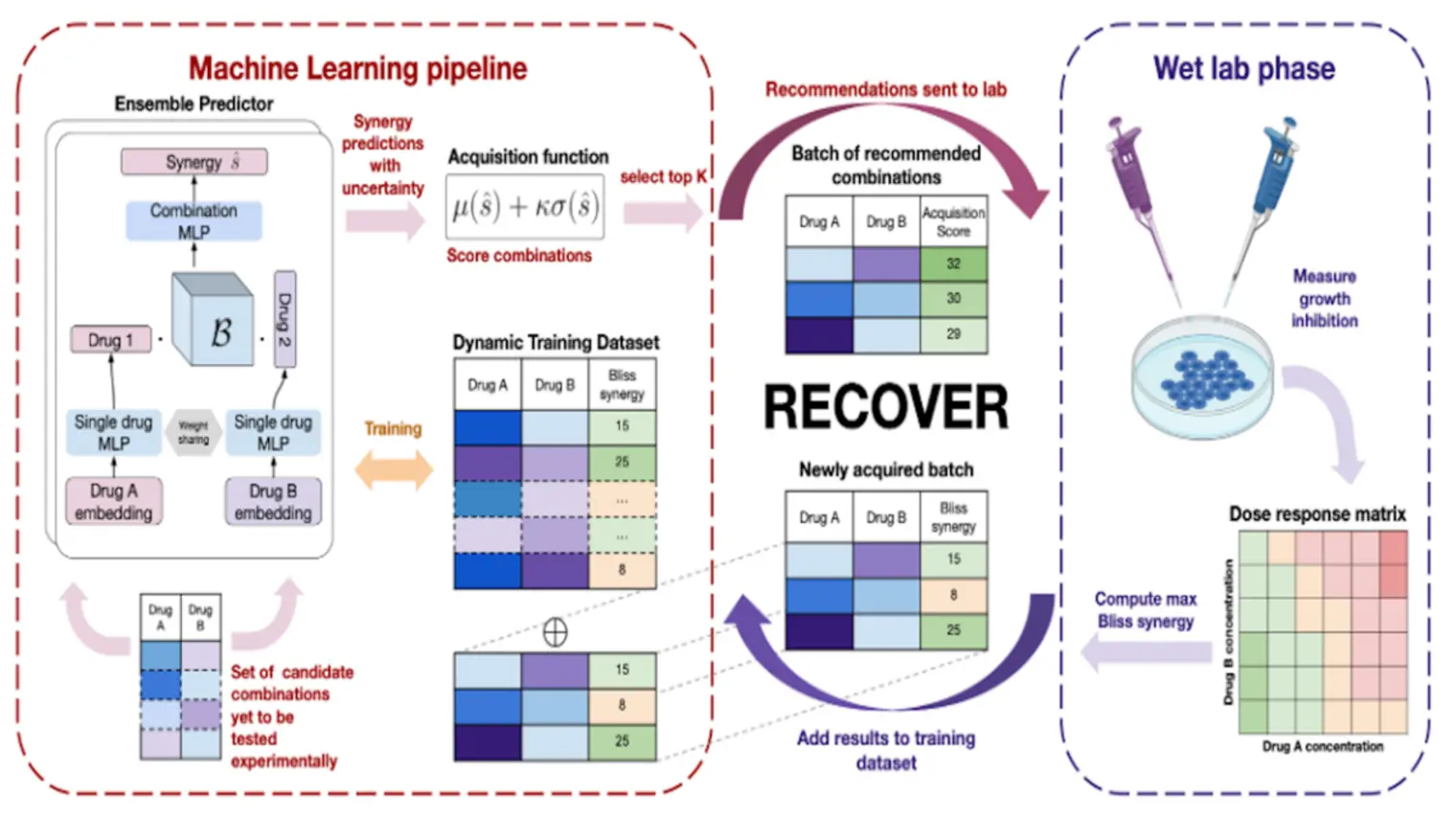
To further improve secondary battery materials, we are increasingly exploring highly complex composition spaces in attempts to optimize mult… (see more)iple properties simultaneously. While our past work has done this in systematic manners using high-throughput experimentation, the exponential increase in the search space with triple doping makes grid search prohibitively expensive. Here, we demonstrate a closed-loop, multi-objective machine learning approach to guide the high-throughput workflow to efficiently navigate a space with approximately 14 million unique combinations. The test system is LiCoPO4 which we have previously explored using systematic codoping that was effective in optimizing one property only: energy density. To learn multiple electrochemical metrics, we first pretrain a set transformer on the public Materials Project database as a feature extractor, then attach a multi-task Gaussian process head and finetune the entire model on our high-throughput data. Through 3 rounds of active learning, we demonstrate that with a very small number of samples (as few as 125 random compositions and 63 predicted) we are able to simultaneously optimize four key electrochemical properties. Relative to the undoped system, the best composition raises our composite figure of merit by up to five times. This establishes an end-to-end workflow for accelerated battery materials design to be used in the rapidly growing field of autonomous materials discovery.
Synthesizable Molecular Generation via Soft-constrained GFlowNets with Rich Chemical Priors
D. Biton
Louis Vaillancourt
Yves V. Brun
Divergent creativity in humans and large language models
Antoine Bellemare-Pepin
François Lespinasse
Yann Harel
Kory Mathewson
Jay A. Olson
Psychology Department
U. Montr'eal
Montreal
Qc
Canada
Music department
C. University
Sociology
Anthropology department
Mila
Departmentof Psychology
University of Toronto Mississauga … (see 5 more)
Mississauga
On
Department of Computer Science
Operations Research
Unique Center
The recent surge of Large Language Models (LLMs) has led to claims that they are approaching a level of creativity akin to human capabilitie… (see more)s. This idea has sparked a blend of excitement and apprehension. However, a critical piece that has been missing in this discourse is a systematic evaluation of LLMs’ semantic diversity, particularly in comparison to human divergent thinking. To bridge this gap, we leverage recent advances in computational creativity to analyze semantic divergence in both state-of-the-art LLMs and a substantial dataset of 100,000 humans. These divergence-based measures index associative thinking—the ability to access and combine remote concepts in semantic space—an established facet of creative cognition. We benchmark performance on the Divergent Association Task (DAT) and across multiple creative-writing tasks (haiku, story synopses, and flash fiction), using identical, objective scoring. We found evidence that LLMs can surpass average human performance on the DAT, and approach human creative writing abilities, yet they remain below the mean creativity scores observed among the more creative segment of human participants. Notably, even the top performing LLMs are still largely surpassed by the aggregated top half of human participants, underscoring a ceiling that current LLMs still fail to surpass. We also systematically varied linguistic strategy prompts and temperature, observing reliable gains in semantic divergence for several models. Our human-machine benchmarking framework addresses the polemic surrounding the imminent replacement of human creative labor by AI, disentangling the quality of the respective creative linguistic outputs using established objective measures. While prompting deeper exploration of the distinctive elements of human inventive thought compared to those of AI systems, we lay out a series of techniques to improve their outputs with respect to semantic diversity, such as prompt design and hyper-parameter tuning.
A Comedy of Estimators: On KL Regularization in RL Training of LLMs
The reasoning performance of large language models (LLMs) can be substantially improved by training them with reinforcement learning (RL). T… (see more)he RL objective for LLM training involves a regularization term, which is the reverse Kullback-Leibler (KL) divergence between the trained policy and the reference policy. Since computing the KL divergence exactly is intractable, various estimators are used in practice to estimate it from on-policy samples. Despite its wide adoption, including in several open-source libraries, there is no systematic study analyzing the numerous ways of incorporating KL estimators in the objective and their effect on the downstream performance of RL-trained models. Recent works show that prevailing practices for incorporating KL regularization do not provide correct gradients for stated objectives, creating a discrepancy between the objective and its implementation. In this paper, we further analyze these practices and study the gradients of several estimators configurations, revealing how design choices shape gradient bias. We substantiate these findings with empirical observations by RL fine-tuning \texttt{Qwen2.5-7B}, \texttt{Llama-3.1-8B-Instruct} and \texttt{Qwen3-4B-Instruct-2507} with different configurations and evaluating their performance on both in- and out-of-distribution tasks. Through our analysis, we observe that, in on-policy settings: (1) estimator configurations with biased gradients can result in training instabilities; and (2) using estimator configurations resulting in unbiased gradients leads to better performance on in-domain as well as out-of-domain tasks. We also investigate the performance resulting from different KL configurations in off-policy settings and observe that KL regularization can help stabilize off-policy RL training resulting from asynchronous setups.
Adsorption energies are necessary but not sufficient to identify good catalysts
Alexander Davis
Alexandre AGM Duval
Oleksandr Voznyy
Alex Hern'andez-Garcia
FALCON: Few-step Accurate Likelihoods for Continuous Flows
Sliding Window Recurrences for Sequence Models
Garyk Brixi
Taiji Suzuki
Michael Poli
Multi-hybrid architectures are poised to take over language modeling due to better quality and performance. We introduce a hierarchical deco… (see more)mposition framework for linear recurrences that allows us to develop algorithms aligned with GPU memory hierarchies, yielding Sliding Window Recurrences. We focus specifically on truncating recurrences to hardware-aligned windows which are naturally jagged, limiting costly inter-warp communication. Using SWR, we develop Phalanx layers that serve as drop-in replacements for windowed attention or linear recurrences. In 1B parameter multi-hybrid models, Phalanx achieves over 10-40% speedup across 4K to 32K context length over optimized Transformers while matching perplexity.
Leveraging a Fully Differentiable Integrated Assessment Model for RL and Inference
Koen Ponse
Kai-Hendrik Cohrs
Phillip Wozny
Andrew Robert Williams
Erman Acar
Aske Plaat
Thomas M. Moerland
Pierre Gentine
Gustau Camps-Valls
Learning What Matters: Steering Diffusion via Spectrally Anisotropic Forward Noise
Berton Earnshaw
Jason Hartford
Diffusion Probabilistic Models (DPMs) have achieved strong generative performance, yet their inductive biases remain largely implicit. In th… (see more)is work, we aim to build inductive biases into the training and sampling of diffusion models to better accommodate the target distribution of the data to model. We introduce an anisotropic noise operator that shapes these biases by replacing the isotropic forward covariance with a structured, frequency-diagonal covariance. This operator unifies band-pass masks and power-law weightings, allowing us to emphasize or suppress designated frequency bands, while keeping the forward process Gaussian. We refer to this as spectrally anisotropic Gaussian diffusion (SAGD). In this work, we derive the score relation for anisotropic covariances and show that, under full support, the learned score converges to the true data score as
Learning What Matters: Steering Diffusion via Spectrally Anisotropic Forward Noise
Berton Earnshaw
Jason Hartford
AI for Global Climate Cooperation: Modeling Global Climate Negotiations, Agreements, and Long-Term Cooperation in RICE-N
Andrew Robert Williams
Phillip Wozny
Kai-Hendrik Cohrs
Koen Ponse
Soham Rajesh Phade
Sunil Srinivasa
Li Li
Yang Zhang
Prateek Gupta
Erman Acar
Stephan Zheng
Global cooperation on climate change mitigation is essential to limit temperature increases while supporting long-term, equitable economic g… (see more)rowth and sustainable development. Achieving such cooperation among diverse regions, each with different incentives, in a dynamic environment shaped by complex geopolitical and economic factors, without a central authority, is a profoundly challenging game-theoretic problem. This article introduces RICE-N, a multi-region integrated assessment model that simulates the global climate, economy, and climate negotiations and agreements. RICE-N uses multi-agent reinforcement learning (MARL) to encourage agents to develop strategic behaviors based on the environmental dynamics and the actions of the others. We present two negotiation protocols: (1) Bilateral Negotiation, an exemplary protocol and (2) Basic Club, inspired from Climate Clubs and the carbon border adjustment mechanism (Nordhaus, 2015; Comissions, 2022). We compare their impact against a no-negotiation baseline with various mitigation strategies, showing that both protocols significantly reduce temperature growth at the cost of a minor drop in production while ensuring a more equitable distribution of the emission reduction costs.
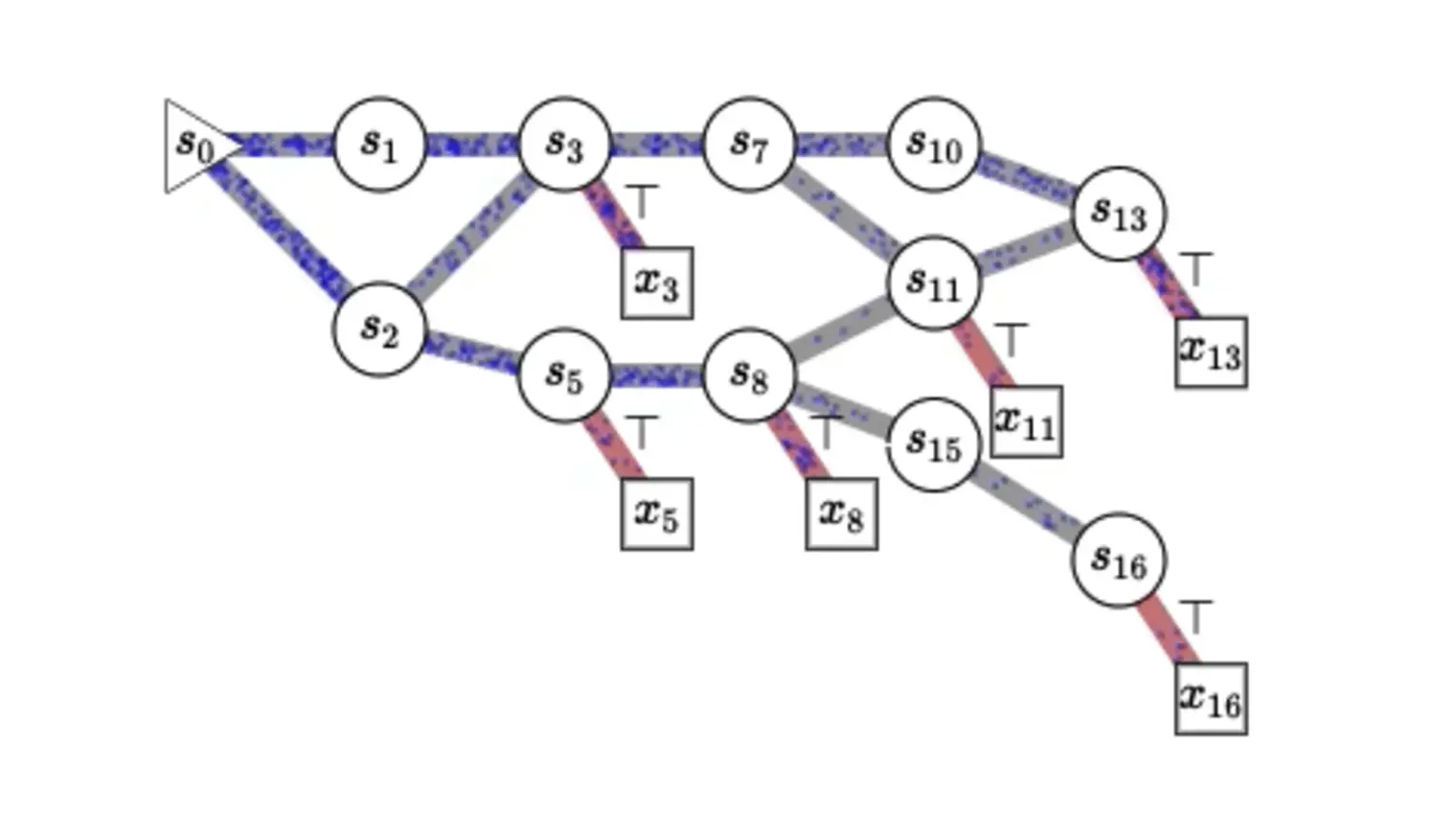
Monte Carlo Tree Diffusion for System 2 Planning
Jaesik Yoon
Hyeonseo Cho
Doojin Baek
Diffusion models have recently emerged as a powerful tool for planning. However, unlike Monte Carlo Tree Search (MCTS)-whose performance nat… (see more)urally improves with additional test-time computation (TTC), standard diffusion-based planners offer only limited avenues for TTC scalability. In this paper, we introduce Monte Carlo Tree Diffusion (MCTD), a novel framework that integrates the generative strength of diffusion models with the adaptive search capabilities of MCTS. Our method reconceptualizes denoising as a tree-structured process, allowing partially denoised plans to be iteratively evaluated, pruned, and refined. By selectively expanding promising trajectories while retaining the flexibility to revisit and improve suboptimal branches, MCTD achieves the benefits of MCTS such as controlling exploration-exploitation trade-offs within the diffusion framework. Empirical results on challenging long-horizon tasks show that MCTD outperforms diffusion baselines, yielding higher-quality solutions as TTC increases.