
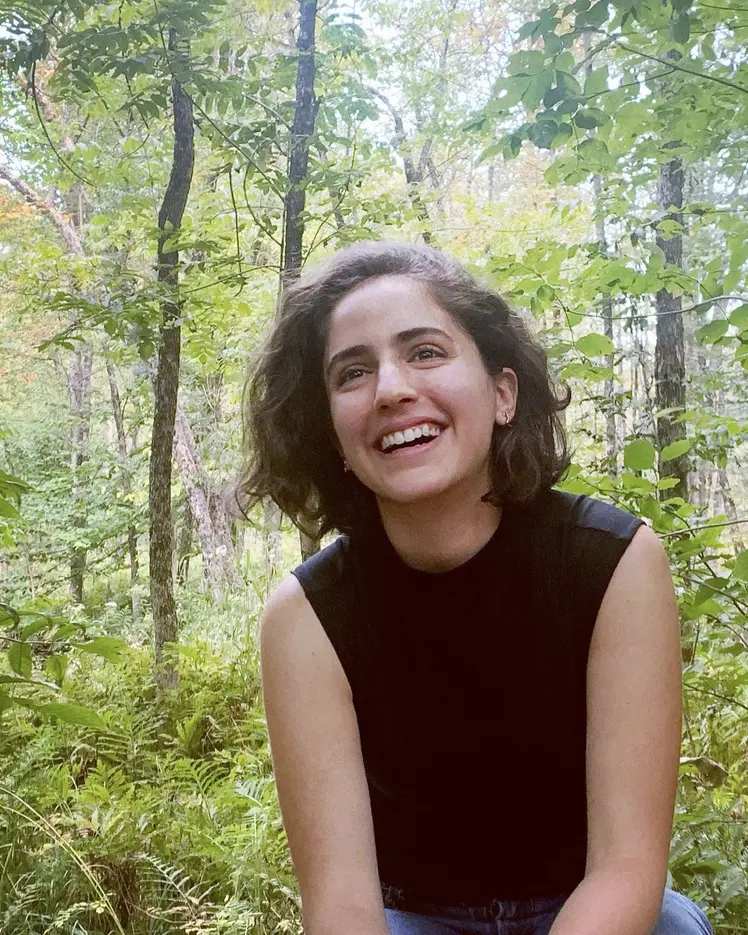
Dounia Shaaban Kabakibo
Biography
I’m a PhD student in physics at Université de Montréal, co-supervised by Michel Côté and Alex Hernandez Garcia. My interests have wandered from theoretical to computational physics and, more recently, to AI—especially generative models and graph neural networks—which I see as new and exciting tools in my physicist’s toolbox. I use them to explore topics from Raman spectra to battery materials and critical phenomena. Outside of science, I’m passionate about social justice, art, and learning new things.
Since joining Mila, I fell for its vibrant, welcoming community. I got involved in many (mostly unofficial) ways—the talent show, speed science competitions, the mending workshop, and student–administration discussions—until it felt natural to make things official and propose my candidacy as a LabRep. I’m grateful to the students who said yes. As a LabRep, I hope to be able to give back by amplifying student voices and supporting social events that bring people together.
I’m often told I’m a good listener—feel free to reach out if you need an ear or have ideas for us LabReps!