

Portrait of Yoshua Bengio

Yoshua Bengio

Core Academic Member
Canada CIFAR AI Chair
Full Professor, Université de Montréal, Department of Computer Science and Operations Research Department
Research Topics
Causality
Computational Neuroscience
Deep Learning
Generative Models
Graph Neural Networks
Machine Learning Theory
Medical Machine Learning
Molecular Modeling
Natural Language Processing
Probabilistic Models
Reasoning
Recurrent Neural Networks
Reinforcement Learning
Representation Learning

Biography

*For media requests, please write to medias@mila.quebec.

For more information please contact Cassidy MacNeil, Senior Assistant and Operation Lead at cassidy.macneil@mila.quebec.

Yoshua Bengio is recognized worldwide as a leading expert in AI. He is most known for his pioneering work in deep learning, which earned him the 2018 A.M. Turing Award, “the Nobel Prize of computing,” with Geoffrey Hinton and Yann LeCun.

Bengio is a full professor at Université de Montréal, and the founder and scientific advisor of Mila – Quebec Artificial Intelligence Institute. He is also a senior fellow at CIFAR and co-directs its Learning in Machines & Brains program, serves as special advisor and founding scientific director of IVADO, and holds a Canada CIFAR AI Chair.

In 2019, Bengio was awarded the prestigious Killam Prize and in 2022, he was the most cited computer scientist in the world by h-index. He is a Fellow of the Royal Society of London, Fellow of the Royal Society of Canada, Knight of the Legion of Honor of France and Officer of the Order of Canada. In 2023, he was appointed to the UN’s Scientific Advisory Board for Independent Advice on Breakthroughs in Science and Technology.

Concerned about the social impact of AI, Bengio helped draft the Montréal Declaration for the Responsible Development of Artificial Intelligence and continues to raise awareness about the importance of mitigating the potentially catastrophic risks associated with future AI systems.

Current Students

Collaborating Alumni - McGill University
Collaborating researcher - Cambridge University
PhD - Université de Montréal
Collaborating Alumni - Université de Montréal
Collaborating researcher - Université de Montréal
Postdoctorate - Université de Montréal
Research Intern - KOREA ADVANCED INSTITUTE OF SCIENCE AND TECHNOLOGY
Collaborating researcher - s.o.
Independent visiting researcher - Université de Montréal
Collaborating researcher - Ying Wu Coll of Computing
Collaborating researcher - University of Waterloo
Postdoctorate - Université de Montréal
Collaborating Alumni - Université de Montréal
Collaborating researcher - University of Cambridge
Collaborating Alumni - Université de Montréal
Collaborating researcher - Université de Montréal

Publications

Causal Discovery in Astrophysics: Unraveling Supermassive Black Hole and Galaxy Coevolution
Zehao Jin
Mario Pasquato
Benjamin L. Davis
Yu Luo
Changhyun Cho
Xi Kang
Andrea Valerio Maccio
Correlation does not imply causation, but patterns of statistical association between variables can be exploited to infer a causal structure… (see more) (even with purely observational data) with the burgeoning field of causal discovery. As a purely observational science, astrophysics has much to gain by exploiting these new methods. The supermassive black hole (SMBH)--galaxy interaction has long been constrained by observed scaling relations, that is low-scatter correlations between variables such as SMBH mass and the central velocity dispersion of stars in a host galaxy's bulge. This study, using advanced causal discovery techniques and an up-to-date dataset, reveals a causal link between galaxy properties and dynamically-measured SMBH masses. We apply a score-based Bayesian framework to compute the exact conditional probabilities of every causal structure that could possibly describe our galaxy sample. With the exact posterior distribution, we determine the most likely causal structures and notice a probable causal reversal when separating galaxies by morphology. In elliptical galaxies, bulge properties (built from major mergers) tend to influence SMBH growth, while in spiral galaxies, SMBHs are seen to affect host galaxy properties, potentially through feedback in gas-rich environments. For spiral galaxies, SMBHs progressively quench star formation, whereas in elliptical galaxies, quenching is complete, and the causal connection has reversed. Our findings support theoretical models of hierarchical assembly of galaxies and active galactic nuclei feedback regulating galaxy evolution. Our study suggests the potentiality for further exploration of causal links in astrophysical and cosmological scaling relations, as well as any other observational science.
Action Abstractions for Amortized Sampling
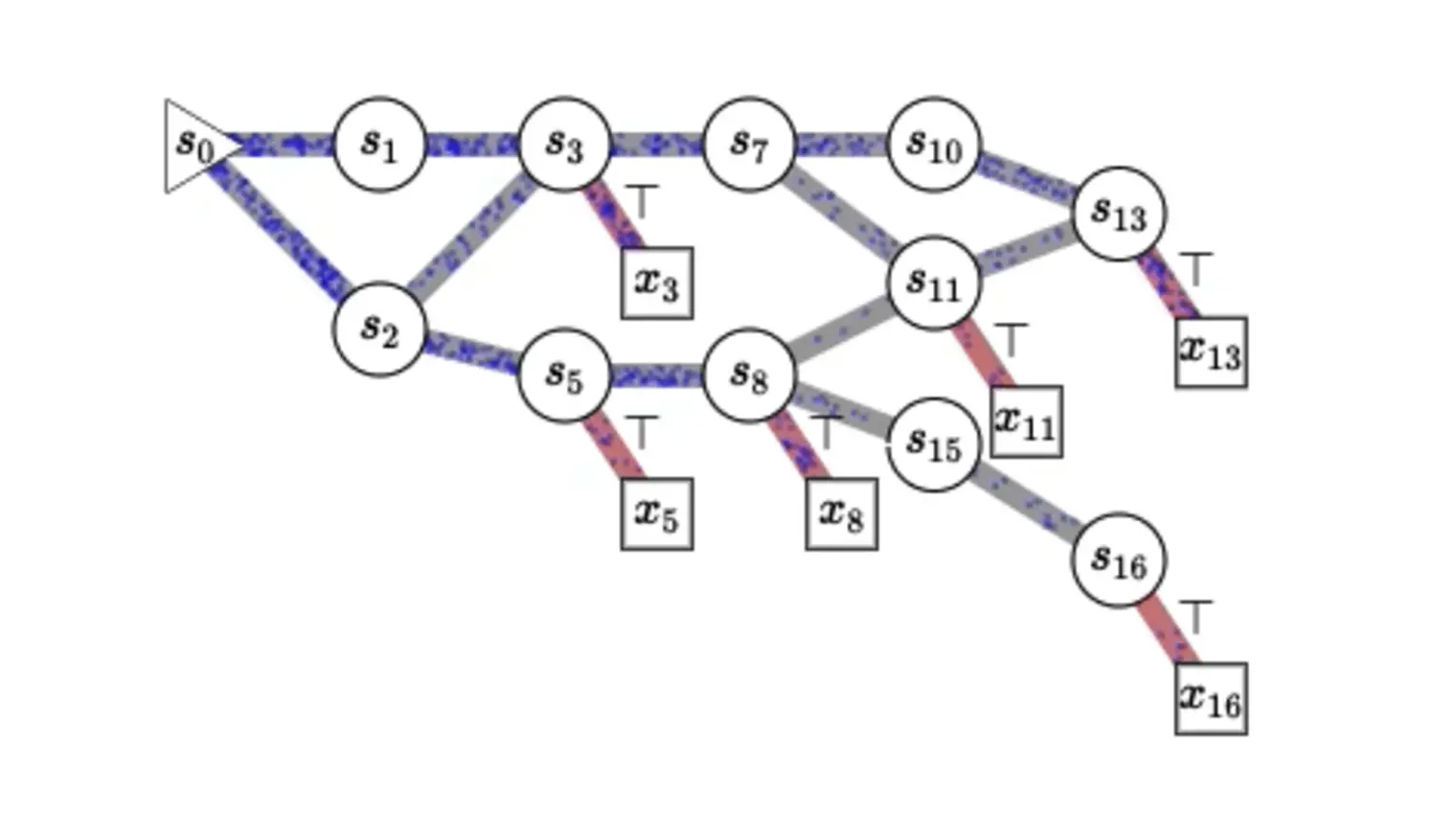
As trajectories sampled by policies used by reinforcement learning (RL) and generative flow networks (GFlowNets) grow longer, credit assignm… (see more)ent and exploration become more challenging, and the long planning horizon hinders mode discovery and generalization. The challenge is particularly pronounced in entropy-seeking RL methods, such as generative flow networks, where the agent must learn to sample from a structured distribution and discover multiple high-reward states, each of which take many steps to reach. To tackle this challenge, we propose an approach to incorporate the discovery of action abstractions, or high-level actions, into the policy optimization process. Our approach involves iteratively extracting action subsequences commonly used across many high-reward trajectories and `chunking' them into a single action that is added to the action space. In empirical evaluation on synthetic and real-world environments, our approach demonstrates improved sample efficiency performance in discovering diverse high-reward objects, especially on harder exploration problems. We also observe that the abstracted high-order actions are interpretable, capturing the latent structure of the reward landscape of the action space. This work provides a cognitively motivated approach to action abstraction in RL and is the first demonstration of hierarchical planning in amortized sequential sampling.
BigDocs: An Open Dataset for Training Multi-modal Models on Document and Code Tasks
Xiangru Jian
Akshay Kalkunte
Amirhossein Abaskohi
Pierre-Andre Noel
Sanket Biswas … (see 23 more)
Sara Shanian
Noah Bolger
Kurt MacDonald
Simon Fauvel
Sathwik Tejaswi
Srinivas Sunkara
Joao Monteiro
Krishnamurthy Dj Dvijotham
Torsten Scholak
Sepideh Kharagani
Sean Hughes
M. Özsu
Christopher Pal
Sai Rajeswar
Multimodal AI has the potential to significantly enhance document-understanding tasks, such as processing receipts, understanding workflows,… (see more) extracting data from documents, and summarizing reports. Code generation tasks that require long-structured outputs can also be enhanced by multimodality. Despite this, their use in commercial applications is often limited due to limited access to training data and restrictive licensing, which hinders open access. To address these limitations, we introduce BigDocs-7.5M, a high-quality, open-access dataset comprising 7.5 million multimodal documents across 30 tasks. We use an efficient data curation process to ensure our data is high-quality and license-permissive. Our process emphasizes accountability, responsibility, and transparency through filtering rules, traceable metadata, and careful content analysis. Additionally, we introduce BigDocs-Bench, a benchmark suite with 10 novel tasks where we create datasets that reflect real-world use cases involving reasoning over Graphical User Interfaces (GUI) and code generation from images. Our experiments show that training with BigDocs-Bench improves average performance up to 25.8% over closed-source GPT-4o in document reasoning and structured output tasks such as Screenshot2HTML or Image2Latex generation. Finally, human evaluations showed a preference for outputs from models trained on BigDocs over GPT-4o. This suggests that BigDocs can help both academics and the open-source community utilize and improve AI tools to enhance multimodal capabilities and document reasoning. The project is hosted at https://bigdocs.github.io .
Learning Diverse Attacks on Large Language Models for Robust Red-Teaming and Safety Tuning
Red-teaming, or identifying prompts that elicit harmful responses, is a critical step in ensuring the safe and responsible deployment of lar… (see more)ge language models (LLMs). Developing effective protection against many modes of attack prompts requires discovering diverse attacks. Automated red-teaming typically uses reinforcement learning to fine-tune an attacker language model to generate prompts that elicit undesirable responses from a target LLM, as measured, for example, by an auxiliary toxicity classifier. We show that even with explicit regularization to favor novelty and diversity, existing approaches suffer from mode collapse or fail to generate effective attacks. As a flexible and probabilistically principled alternative, we propose to use GFlowNet fine-tuning, followed by a secondary smoothing phase, to train the attacker model to generate diverse and effective attack prompts. We find that the attacks generated by our method are effective against a wide range of target LLMs, both with and without safety tuning, and transfer well between target LLMs. Finally, we demonstrate that models safety-tuned using a dataset of red-teaming prompts generated by our method are robust to attacks from other RL-based red-teaming approaches.
Meta Flow Matching: Integrating Vector Fields on the Wasserstein Manifold
Xi Zhang
Brandon Amos
Leo J. Lee
Kirill Neklyudov
Numerous biological and physical processes can be modeled as systems of interacting entities evolving continuously over time, e.g. the dynam… (see more)ics of communicating cells or physical particles. Learning the dynamics of such systems is essential for predicting the temporal evolution of populations across novel samples and unseen environments. Flow-based models allow for learning these dynamics at the population level - they model the evolution of the entire distribution of samples. However, current flow-based models are limited to a single initial population and a set of predefined conditions which describe different dynamics. We argue that multiple processes in natural sciences have to be represented as vector fields on the Wasserstein manifold of probability densities. That is, the change of the population at any moment in time depends on the population itself due to the interactions between samples. In particular, this is crucial for personalized medicine where the development of diseases and their respective treatment response depend on the microenvironment of cells specific to each patient. We propose Meta Flow Matching (MFM), a practical approach to integrate along these vector fields on the Wasserstein manifold by amortizing the flow model over the initial populations. Namely, we embed the population of samples using a Graph Neural Network (GNN) and use these embeddings to train a Flow Matching model. This gives MFM the ability to generalize over the initial distributions, unlike previously proposed methods. We demonstrate the ability of MFM to improve the prediction of individual treatment responses on a large-scale multi-patient single-cell drug screen dataset.
On the Transfer of Object-Centric Representation Learning.
Aniket Rajiv Didolkar
Andrii Zadaianchuk
Michael Curtis Mozer
Georg Martius
Maximilian Seitzer
Geometric Signatures of Compositionality Across a Language Model's Lifetime
Jin Hwa Lee
Lei Yu
Emily Cheng
Compositionality, the notion that the meaning of an expression is constructed from the meaning of its parts and syntactic rules, permits the… (see more) infinite productivity of human language. For the first time, artificial language models (LMs) are able to match human performance in a number of compositional generalization tasks. However, much remains to be understood about the representational mechanisms underlying these abilities. We take a high-level geometric approach to this problem by relating the degree of compositionality in a dataset to the intrinsic dimensionality of its representations under an LM, a measure of feature complexity. We find not only that the degree of dataset compositionality is reflected in representations' intrinsic dimensionality, but that the relationship between compositionality and geometric complexity arises due to learned linguistic features over training. Finally, our analyses reveal a striking contrast between linear and nonlinear dimensionality, showing that they respectively encode formal and semantic aspects of linguistic composition.
ICLR 2025 Workshop on Tackling Climate Change with Machine Learning: Data-Centric Approaches in ML for Climate Action
Konstantin Klemmer
Melissa Chapman
Lily Xu
Poon Kin Ho
Mélisande Teng
Patrick Emami
Climate change is one of the greatest problems society has ever faced, with increasingly severe consequences for humanity as natural disaste… (see more)rs multiply, sea levels rise, and ecosystems falter. While no silver bullet, machine learning can be an invaluable tool in fighting climate change via a wide array of applications and techniques, from designing smart electric grids to tracking greenhouse gas emissions through satellite imagery. These applications require algorithmic innovations in machine learning and close collaboration with diverse fields and practitioners. This workshop is intended as a forum for those in the global machine learning community who wish to help tackle climate change, and is further aimed to help foster cross-pollination between researchers in machine learning and experts in complementary climate-relevant fields. Building on our past workshops on this topic, this workshop particularly aims to explore data-centric ML approaches for climate action. Data-centric ML is not only a timely topic within the ICLR community, as analyzing and engineering (pre)training datasets becomes increasingly important, but holds specific challenges and opportunities in climate-related areas. We also want to take the opportunity of ICLR being hosted in Singapore to engage with local communities and shine a light on work that deploys, analyzes or critiques ML methods and their use for climate change adaptation and mitigation on the Asian continent.
Integrating Generative and Experimental Platforms for Biomolecular Design
Cheng-Hao Liu
Soojung Yang
Sidney L Lisanza
Francesca-Zhoufan Li
Hannes Stärk
Jacob Gershon
Lauren Hong
Pranam Chatterjee
Tommi Jaakkola
Regina Barzilay
David Baker
Frances H. Arnold
Biomolecular design, through artificial engineering of proteins, ligands, and nucleic acids, holds immense promise in addressing pressing me… (see more)dical, industrial, and environmental challenges. While generative machine learning has shown significant potential in this area, a palpable disconnect exists with experimental biology: many ML research efforts prioritize static benchmark performance, potentially sidelining impactful biological applications. This workshop seeks to bridge this gap by bringing computationalists and experimentalists together, catalyzing a deeper interdisciplinary discourse. Together, we will explore the strengths and challenges of generative ML in biology, experimental integration of generative ML, and biological problems ready for ML. To attract high-quality and diverse research, we partnered with Nature Biotechnology for a special collection, and we created dedicated tracks for in-silico ML research and hybrid ML-experimental biology research. Our lineup features emerging leaders as speakers and renowned scientists as panelists, encapsulating a spectrum from high-throughput experimentation and computational biology to generative ML. With a diverse organizing team and backed by industry sponsors, we dedicate the workshop to pushing the boundaries of ML's role in biology.
International AI Safety Report
Bronwyn Fox
André Carlos Ponce de Leon Ferreira de Carvalho
Mona Nemer
Raquel Pezoa Rivera
Yi Zeng
Juha Heikkilä
Guillaume Avrin
Antonio Krüger
Balaraman Ravindran
Hammam Riza
Ciarán Seoighe
Ziv Katzir
Andrea Monti
Hiroaki Kitano
Nusu Mwamanzi
Fahad Albalawi
José Ramón López Portillo
Haroon Sheikh
Gill Jolly … (see 86 more)
Olubunmi Ajala
Jerry Sheehan
Dominic Vincent Ligot
Kyoung Mu Lee
Crystal Rugege
Denise Wong
Nuria Oliver
Christian Busch
Ahmet Halit Hatip
Oleksii Molchanovskyi
Marwan Alserkal
Chris Johnson
Amandeep Singh Gill
Saif M. Khan
Daniel Privitera
Tamay Besiroglu
Rishi Bommasani
Stephen Casper
Yejin Choi
Philip Fox
Ben Garfinkel
Danielle Goldfarb
Hoda Heidari
Anson Ho
Sayash Kapoor
Leila Khalatbari
Shayne Longpre
Sam Manning
Vasilios Mavroudis
Mantas Mazeika
Julian Michael
Jessica Newman
Kwan Yee Ng
Chinasa T. Okolo
Deborah Raji
Girish Sastry
Elizabeth Seger
Theodora Skeadas
Tobin South
Daron Acemoglu
Olubayo Adekanmbi
David Dalrymple
Thomas G. Dietterich
Edward W. Felten
Pascale Fung
Pierre-Olivier Gourinchas
Fredrik Heintz
Geoffrey Hinton
Nick Jennings
Andreas Krause
Susan Leavy
Percy Liang
Teresa Ludermir
Vidushi Marda
Emma Strubell
Florian Tramèr
Lucia Velasco
Nicole Wheeler
Helen Margetts
John McDermid
Jane Munga
Arvind Narayanan
Alondra Nelson
Clara Neppel
Alice Oh
Gopal Ramchurn
Stuart Russell
Marietje Schaake
Bernhard Schölkopf
Dawn Song
Alvaro Soto
Lee Tiedrich
Andrew Yao
Ya-Qin Zhang
Baran Acar
Ben Clifford
Lambrini Das
Claire Dennis
Freya Hempleman
Hannah Merchant
Rian Overy
Ben Snodin
Jonathan Barry
Benjamin Prud’homme
The first International AI Safety Report comprehensively synthesizes the current evidence on the capabilities, risks, and safety of advanced… (see more) AI systems. The report was mandated by the nations attending the AI Safety Summit in Bletchley, UK. Thirty nations, the UN, the OECD, and the EU each nominated a representative to the report's Expert Advisory Panel. A total of 100 AI experts contributed, representing diverse perspectives and disciplines. Led by the report's Chair, these independent experts collectively had full discretion over the report's content.
Open Technical Problems in Open-Weight AI Model Risk Management
Stephen Casper
Kyle O'Brien
Shayne Longpre
Elizabeth Seger
Kevin Klyman
Rishi Bommasani
Aniruddha Nrusimha
Ilia Shumailov
Sören Mindermann
Steven Basart
Frank Rudzicz
Avijit Ghosh
Andrew Strait
Robert Kirk
Dan Hendrycks
J. Zico Kolter
Geoffrey Irving
Yarin Gal … (see 2 more)
Dylan Hadfield-Menell
Superintelligent Agents Pose Catastrophic Risks: Can Scientist AI Offer a Safer Path?
Michael Cohen
Joumana Ghosn
Adam Oberman
Jesse Richardson
Oliver Richardson
Marc-Antoine Rondeau
Pierre-Luc St-Charles
David Williams-King
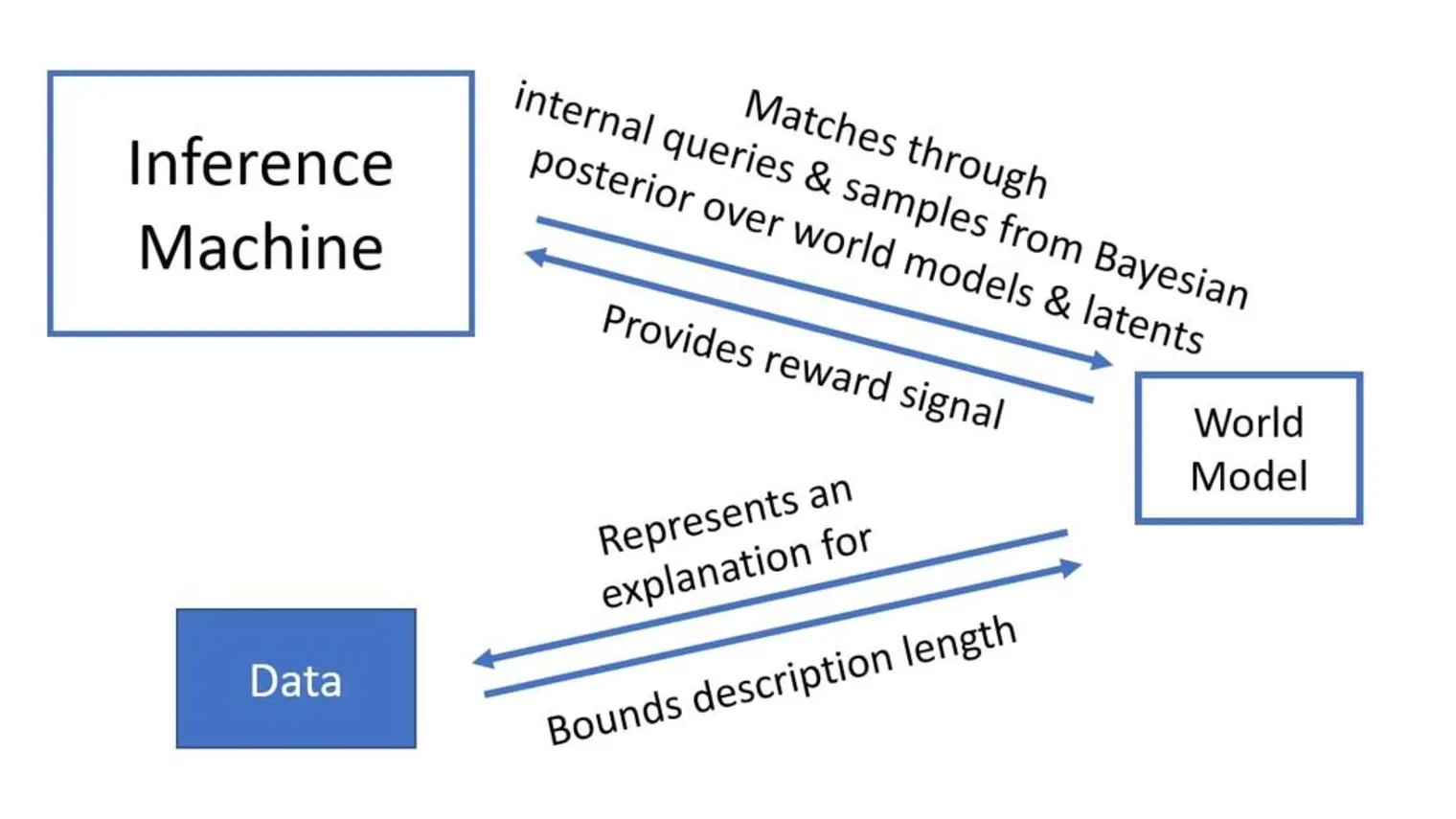
The leading AI companies are increasingly focused on building generalist AI agents -- systems that can autonomously plan, act, and pursue go… (see more)als across almost all tasks that humans can perform. Despite how useful these systems might be, unchecked AI agency poses significant risks to public safety and security, ranging from misuse by malicious actors to a potentially irreversible loss of human control. We discuss how these risks arise from current AI training methods. Indeed, various scenarios and experiments have demonstrated the possibility of AI agents engaging in deception or pursuing goals that were not specified by human operators and that conflict with human interests, such as self-preservation. Following the precautionary principle, we see a strong need for safer, yet still useful, alternatives to the current agency-driven trajectory. Accordingly, we propose as a core building block for further advances the development of a non-agentic AI system that is trustworthy and safe by design, which we call Scientist AI. This system is designed to explain the world from observations, as opposed to taking actions in it to imitate or please humans. It comprises a world model that generates theories to explain data and a question-answering inference machine. Both components operate with an explicit notion of uncertainty to mitigate the risks of overconfident predictions. In light of these considerations, a Scientist AI could be used to assist human researchers in accelerating scientific progress, including in AI safety. In particular, our system can be employed as a guardrail against AI agents that might be created despite the risks involved. Ultimately, focusing on non-agentic AI may enable the benefits of AI innovation while avoiding the risks associated with the current trajectory. We hope these arguments will motivate researchers, developers, and policymakers to favor this safer path.