

Portrait of Yoshua Bengio

Yoshua Bengio

Core Academic Member
Canada CIFAR AI Chair
Full Professor, Université de Montréal, Department of Computer Science and Operations Research Department
Founder and Scientific Advisor, Leadership Team
Research Topics
Causality
Computational Neuroscience
Deep Learning
Generative Models
Graph Neural Networks
Machine Learning Theory
Medical Machine Learning
Molecular Modeling
Natural Language Processing
Probabilistic Models
Reasoning
Recurrent Neural Networks
Reinforcement Learning
Representation Learning

Biography

*For media requests, please write to medias@mila.quebec.

For more information please contact Cassidy MacNeil, Senior Assistant and Operation Lead at cassidy.macneil@mila.quebec.

Yoshua Bengio is recognized worldwide as a leading expert in AI. He is most known for his pioneering work in deep learning, which earned him the 2018 A.M. Turing Award, “the Nobel Prize of computing,” with Geoffrey Hinton and Yann LeCun.

Bengio is a full professor at Université de Montréal, and the founder and scientific advisor of Mila – Quebec Artificial Intelligence Institute. He is also a senior fellow at CIFAR and co-directs its Learning in Machines & Brains program, serves as special advisor and founding scientific director of IVADO, and holds a Canada CIFAR AI Chair.

In 2019, Bengio was awarded the prestigious Killam Prize and in 2022, he was the most cited computer scientist in the world by h-index. He is a Fellow of the Royal Society of London, Fellow of the Royal Society of Canada, Knight of the Legion of Honor of France and Officer of the Order of Canada. In 2023, he was appointed to the UN’s Scientific Advisory Board for Independent Advice on Breakthroughs in Science and Technology.

Concerned about the social impact of AI, Bengio helped draft the Montréal Declaration for the Responsible Development of Artificial Intelligence and continues to raise awareness about the importance of mitigating the potentially catastrophic risks associated with future AI systems.

Current Students

Collaborating Alumni - McGill University
Collaborating researcher - Cambridge University
Principal supervisor :
PhD - Université de Montréal
Independent visiting researcher
Co-supervisor :
Collaborating researcher - N/A
Principal supervisor :
PhD - Université de Montréal
Collaborating researcher - KAIST
PhD - Université de Montréal
Collaborating Alumni - Université de Montréal
Co-supervisor :
Independent visiting researcher
Principal supervisor :
PhD - Université de Montréal
Co-supervisor :
PhD - Université de Montréal
Principal supervisor :
Collaborating Alumni - Université de Montréal
Postdoctorate - Université de Montréal
Principal supervisor :
Collaborating Alumni
Collaborating Alumni - Université de Montréal
PhD - Université de Montréal
Co-supervisor :
PhD - Université de Montréal
Principal supervisor :
Independent visiting researcher - Université de Montréal
PhD - Université de Montréal
Principal supervisor :
Collaborating researcher - Ying Wu Coll of Computing
Collaborating researcher - University of Waterloo
Principal supervisor :
Collaborating Alumni - Max-Planck-Institute for Intelligent Systems
Collaborating researcher - Université de Montréal
Co-supervisor :
PhD - Université de Montréal
Postdoctorate - Université de Montréal
PhD - Université de Montréal
Principal supervisor :
Collaborating Alumni - Université de Montréal
Postdoctorate
Collaborating Alumni - Polytechnique Montréal
Co-supervisor :
PhD - Université de Montréal
Co-supervisor :
Collaborating researcher
Principal supervisor :
Collaborating Alumni - Université de Montréal
Co-supervisor :
PhD - Université de Montréal
Principal supervisor :
Collaborating researcher
Collaborating researcher - Université de Montréal
PhD - Université de Montréal
PhD - McGill University
Principal supervisor :
PhD - Université de Montréal
Principal supervisor :
Collaborating Alumni - McGill University
Principal supervisor :

Publications

Bayesian Structure Learning with Generative Flow Networks
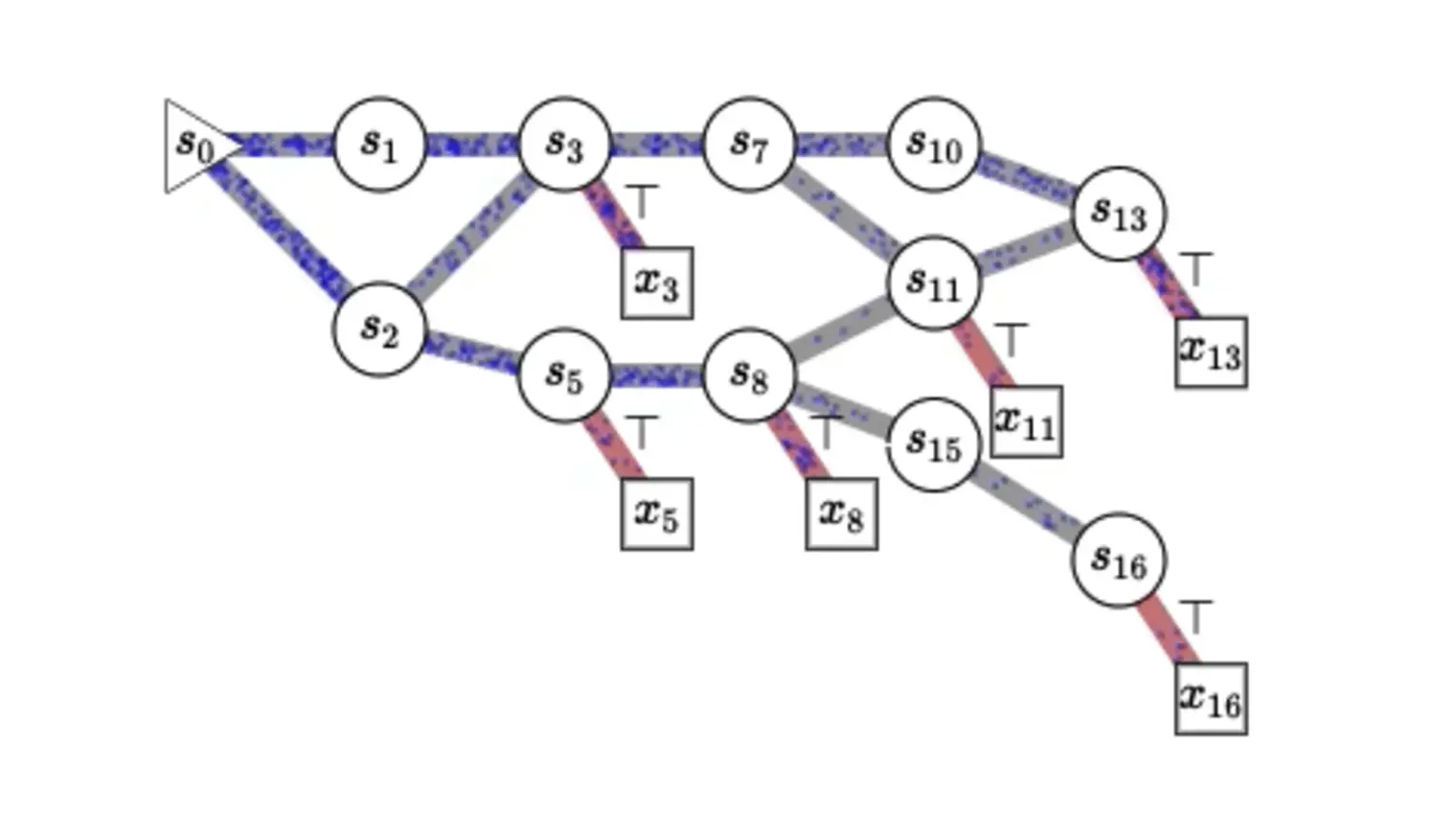
In Bayesian structure learning, we are interested in inferring a distribution over the directed acyclic graph (DAG) structure of Bayesian ne… (see more)tworks, from data. Defining such a distribution is very challenging, due to the combinatorially large sample space, and approximations based on MCMC are often required. Recently, a novel class of probabilistic models, called Generative Flow Networks (GFlowNets), have been introduced as a general framework for generative modeling of discrete and composite objects, such as graphs. In this work, we propose to use a GFlowNet as an alternative to MCMC for approximating the posterior distribution over the structure of Bayesian networks, given a dataset of observations. Generating a sample DAG from this approximate distribution is viewed as a sequential decision problem, where the graph is constructed one edge at a time, based on learned transition probabilities. Through evaluation on both simulated and real data, we show that our approach, called DAG-GFlowNet, provides an accurate approximation of the posterior over DAGs, and it compares favorably against other methods based on MCMC or variational inference.
Temporal Abstractions-Augmented Temporally Contrastive Learning: An Alternative to the Laplacian in RL
Marlos C. Machado
Mingde Zhao
Sainbayar Sukhbaatar
Alessandro Lazaric
Ludovic Denoyer
In reinforcement learning, the graph Laplacian has proved to be a valuable tool in the task-agnostic setting, with applications ranging from… (see more) skill discovery to reward shaping. Recently, learning the Laplacian representation has been framed as the optimization of a temporally-contrastive objective to overcome its computational limitations in large (or continuous) state spaces. However, this approach requires uniform access to all states in the state space, overlooking the exploration problem that emerges during the representation learning process. In this work, we propose an alternative method that is able to recover, in a non-uniform-prior setting, the expressiveness and the desired properties of the Laplacian representation. We do so by combining the representation learning with a skill-based covering policy, which provides a better training distribution to extend and refine the representation. We also show that a simple augmentation of the representation objective with the learned temporal abstractions improves dynamics-awareness and helps exploration. We find that our method succeeds as an alternative to the Laplacian in the non-uniform setting and scales to challenging continuous control environments. Finally, even if our method is not optimized for skill discovery, the learned skills can successfully solve difficult continuous navigation tasks with sparse rewards, where standard skill discovery approaches are no so effective.
FedILC: Weighted Geometric Mean and Invariant Gradient Covariance for Federated Learning on Non-IID Data
Mike He Zhu
Lena Nehale Ezzine
Dianbo Liu
Chunked Autoregressive GAN for Conditional Waveform Synthesis
Conditional waveform synthesis models learn a distribution of audio waveforms given conditioning such as text, mel-spectrograms, or MIDI. Th… (see more)ese systems employ deep generative models that model the waveform via either sequential (autoregressive) or parallel (non-autoregressive) sampling. Generative adversarial networks (GANs) have become a common choice for non-autoregressive waveform synthesis. However, state-of-the-art GAN-based models produce artifacts when performing mel-spectrogram inversion. In this paper, we demonstrate that these artifacts correspond with an inability for the generator to learn accurate pitch and periodicity. We show that simple pitch and periodicity conditioning is insufficient for reducing this error relative to using autoregression. We discuss the inductive bias that autoregression provides for learning the relationship between instantaneous frequency and phase, and show that this inductive bias holds even when autoregressively sampling large chunks of the waveform during each forward pass. Relative to prior state-of-the-art GAN-based models, our proposed model, Chunked Autoregressive GAN (CARGAN) reduces pitch error by 40-60%, reduces training time by 58%, maintains a fast generation speed suitable for real-time or interactive applications, and maintains or improves subjective quality.
Compositional Attention: Disentangling Search and Retrieval
Multi-head, key-value attention is the backbone of the widely successful Transformer model and its variants. This attention mechanism uses m… (see more)ultiple parallel key-value attention blocks (called heads), each performing two fundamental computations: (1) search - selection of a relevant entity from a set via query-key interactions, and (2) retrieval - extraction of relevant features from the selected entity via a value matrix. Importantly, standard attention heads learn a rigid mapping between search and retrieval. In this work, we first highlight how this static nature of the pairing can potentially: (a) lead to learning of redundant parameters in certain tasks, and (b) hinder generalization. To alleviate this problem, we propose a novel attention mechanism, called Compositional Attention, that replaces the standard head structure. The proposed mechanism disentangles search and retrieval and composes them in a dynamic, flexible and context-dependent manner through an additional soft competition stage between the query-key combination and value pairing. Through a series of numerical experiments, we show that it outperforms standard multi-head attention on a variety of tasks, including some out-of-distribution settings. Through our qualitative analysis, we demonstrate that Compositional Attention leads to dynamic specialization based on the type of retrieval needed. Our proposed mechanism generalizes multi-head attention, allows independent scaling of search and retrieval, and can easily be implemented in lieu of standard attention heads in any network architecture.
RetroGNN: Fast Estimation of Synthesizability for Virtual Screening and De Novo Design by Learning from Slow Retrosynthesis Software
Cheng-Hao Liu
Stanisław Jastrzębski
Paweł Włodarczyk-Pruszyński
Marwin Segler
E VALUATING G ENERALIZATION IN GF LOW N ETS FOR M OLECULE D ESIGN
Moksh J. Jain
Cheng-Hao Liu
Michael M. Bronstein
Deep learning bears promise for drug discovery problems such as de novo molecular design. Generating data to train such models is a costly a… (see more)nd time-consuming process, given the need for wet-lab experiments or expensive simulations. This problem is compounded by the notorious data-hungriness of machine learning algorithms. In small molecule generation the recently proposed GFlowNet method has shown good performance in generating diverse high-scoring candidates, and has the interesting advantage of being an off-policy offline method. Finding an appropriate generalization evaluation metric for such models, one predictive of the desired search performance (i.e. finding high-scoring diverse candidates), will help guide online data collection for such an algorithm. In this work, we develop techniques for evaluating GFlowNet performance on a test set, and identify the most promising metric for predicting generalization. We present empirical results on several small-molecule design tasks in drug discovery, for several GFlowNet training setups, and we find a metric strongly correlated with diverse high-scoring batch generation. This metric should be used to identify the best generative model from which to sample batches of molecules to be evaluated.
Inductive Biases for Relational Tasks
Current deep learning approaches have shown good in-distribution performance but struggle in out-of-distribution settings. This is especiall… (see more)y true in the case of tasks involving abstract relations like recognizing rules in sequences, as required in many intelligence tests. In contrast, our brains are remarkably flexible at such tasks, an attribute that is likely linked to anatomical constraints on computations. Inspired by this, recent work has explored how enforcing that relational representations remain distinct from sensory representations can help artificial systems. Building on this work, we further explore and formalize the advantages afforded by ``partitioned'' representations of relations and sensory details. We investigate inductive biases that ensure abstract relations are learned and represented distinctly from sensory data across several neural network architectures and show that they outperform existing architectures on out-of-distribution generalization for various relational tasks. These results show that partitioning relational representations from other information streams may be a simple way to augment existing network architectures' robustness when performing relational computations.
Object-centric Compositional Imagination for Visual Abstract Reasoning
Like humans devoid of imagination, current machine learning systems lack the ability to adapt to new, unexpected situations by foreseeing th… (see more)em, which makes them unable to solve new tasks by analogical reasoning. In this work, we introduce a new compositional imagination framework that improves a model's ability to generalize. One of the key components of our framework is object-centric inductive biases that enables models to perceive the environment as a series of objects, properties, and transformations. By composing these key ingredients, it is possible to generate new unseen tasks that, when used to train the model, improve generalization. Experiments on a simplified version of the Abstraction and Reasoning Corpus (ARC) demonstrate the effectiveness of our framework.
A New Era: Intelligent Tutoring Systems Will Transform Online Learning for Millions
Francois St-Hilaire
Dung D. Vu
Antoine Frau
Nathan J. Burns
Farid Faraji
Joseph Potochny
Stephane Robert
Arnaud Roussel
Selene Zheng
Taylor Glazier
Junfel Vincent Romano
Robert Belfer
Muhammad Shayan
Ariella Smofsky
Tommy Delarosbil
Seulmin Ahn
Simon Eden-Walker
Kritika Sony
Ansona Onyi Ching
Sabina Elkins … (see 11 more)
A. Stepanyan
Adela Matajova
Victor Chen
Hossein Sahraei
Robert Larson
N. Markova
Andrew Barkett
Iulian V. Serban
Ekaterina Kochmar
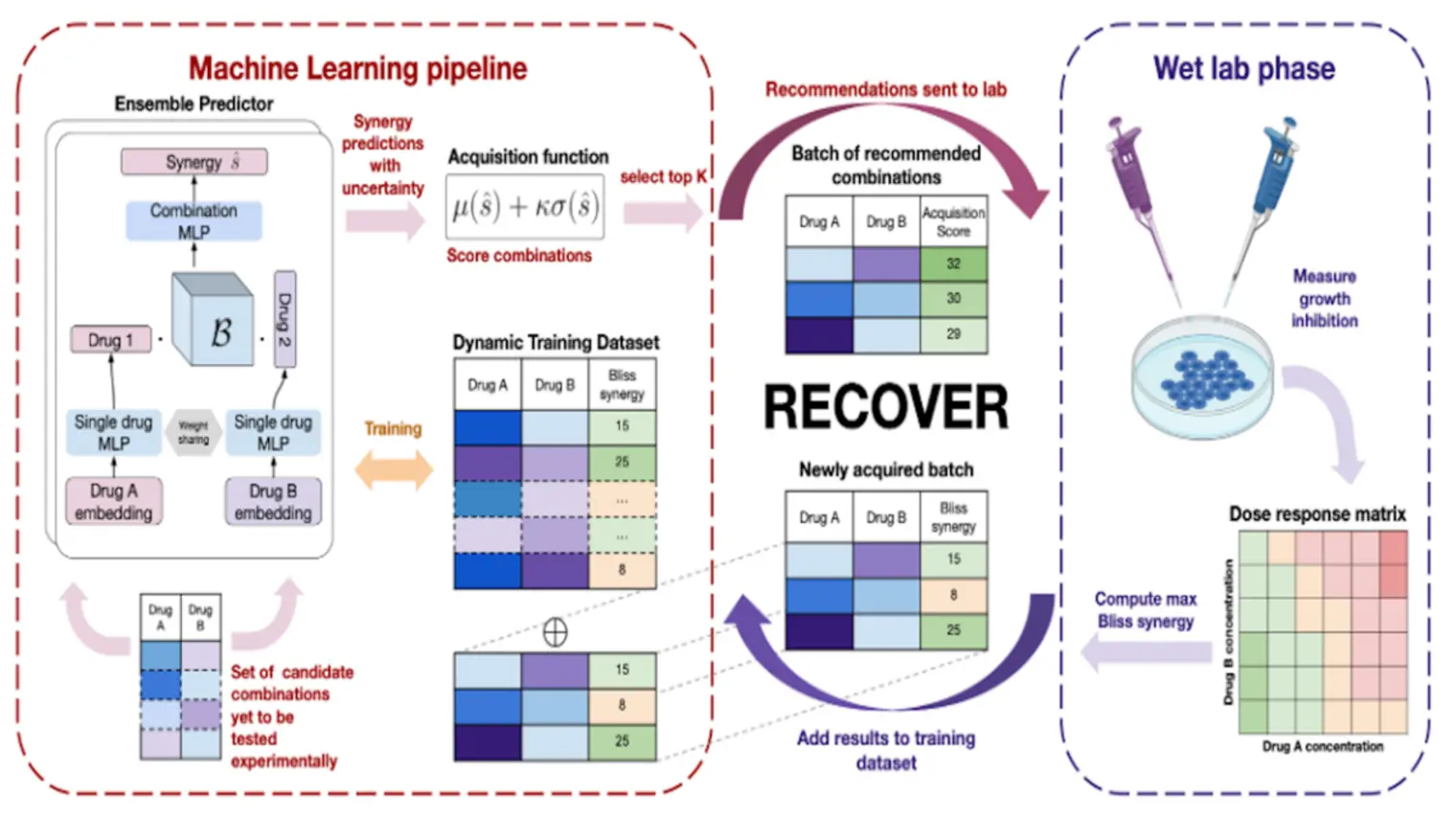
RECOVER: sequential model optimization platform for combination drug repurposing identifies novel synergistic compounds in vitro
Thomas Gaudelet
Andrew Anighoro
Torsten Gross
Francisco Martínez-Peña
Eileen L. Tang
S. SurajM
Cristian Regep
Jeremy B.R. Hayter
N. Valiante
Almer M. van der Sloot
Mike Tyers
Charles E.S. Roberts
Michael M. Bronstein
Luke Lee Lairson
Jake P. Taylor-King
Tackling Climate Change with Machine Learning
Priya L. Donti
Lynn H. Kaack
Kelly Kochanski
Alexandre Lacoste
Andrew Slavin Ross
Nikola Milojevic-Dupont
Natasha Jaques
Anna Waldman-Brown
Alexandra Luccioni
Evan D. Sherwin
S. Karthik Mukkavilli
Konrad P. Kording
Carla Gomes
Andrew Y. Ng
Demis Hassabis
John C. Platt
Felix Creutzig … (see 2 more)
Jennifer Chayes
Climate change is one of the greatest challenges facing humanity, and we, as machine learning experts, may wonder how we can help. Here we d… (see more)escribe how machine learning can be a powerful tool in reducing greenhouse gas emissions and helping society adapt to a changing climate. From smart grids to disaster management, we identify high impact problems where existing gaps can be filled by machine learning, in collaboration with other fields. Our recommendations encompass exciting research questions as well as promising business opportunities. We call on the machine learning community to join the global effort against climate change.