
Portrait of Yoshua Bengio

Yoshua Bengio

Core Academic Member
Canada CIFAR AI Chair
Full Professor, Université de Montréal, Department of Computer Science and Operations Research Department
Founder and Scientific Advisor, Leadership Team
Research Topics
Causality
Computational Neuroscience
Deep Learning
Generative Models
Graph Neural Networks
Machine Learning Theory
Medical Machine Learning
Molecular Modeling
Natural Language Processing
Probabilistic Models
Reasoning
Recurrent Neural Networks
Reinforcement Learning
Representation Learning

Biography

*For media requests, please write to medias@mila.quebec.

For more information please contact Cassidy MacNeil, Senior Assistant and Operation Lead at cassidy.macneil@mila.quebec.

Yoshua Bengio is recognized worldwide as a leading expert in AI. He is most known for his pioneering work in deep learning, which earned him the 2018 A.M. Turing Award, “the Nobel Prize of computing,” with Geoffrey Hinton and Yann LeCun.

Bengio is a full professor at Université de Montréal, and the founder and scientific advisor of Mila – Quebec Artificial Intelligence Institute. He is also a senior fellow at CIFAR and co-directs its Learning in Machines & Brains program, serves as special advisor and founding scientific director of IVADO, and holds a Canada CIFAR AI Chair.

In 2019, Bengio was awarded the prestigious Killam Prize and in 2022, he was the most cited computer scientist in the world by h-index. He is a Fellow of the Royal Society of London, Fellow of the Royal Society of Canada, Knight of the Legion of Honor of France and Officer of the Order of Canada. In 2023, he was appointed to the UN’s Scientific Advisory Board for Independent Advice on Breakthroughs in Science and Technology.

Concerned about the social impact of AI, Bengio helped draft the Montréal Declaration for the Responsible Development of Artificial Intelligence and continues to raise awareness about the importance of mitigating the potentially catastrophic risks associated with future AI systems.

Current Students

Collaborating Alumni - McGill University
Collaborating researcher - Cambridge University
Principal supervisor :
PhD - Université de Montréal
Independent visiting researcher
Co-supervisor :
Collaborating researcher - N/A
Principal supervisor :
PhD - Université de Montréal
Collaborating researcher - KAIST
PhD - Université de Montréal
Collaborating Alumni - Université de Montréal
Co-supervisor :
Independent visiting researcher
Principal supervisor :
PhD - Université de Montréal
Co-supervisor :
PhD - Université de Montréal
Principal supervisor :
Collaborating Alumni - Université de Montréal
Postdoctorate - Université de Montréal
Principal supervisor :
Postdoctorate - Université de Montréal
Principal supervisor :
Collaborating Alumni
Collaborating Alumni - Université de Montréal
PhD - Université de Montréal
Co-supervisor :
PhD - Université de Montréal
Principal supervisor :
Independent visiting researcher - Université de Montréal
PhD - Université de Montréal
Principal supervisor :
Collaborating researcher - Ying Wu Coll of Computing
Collaborating researcher - University of Waterloo
Principal supervisor :
Collaborating Alumni - Max-Planck-Institute for Intelligent Systems
Collaborating researcher - Université de Montréal
Co-supervisor :
PhD - Université de Montréal
Postdoctorate - Université de Montréal
PhD - Université de Montréal
Principal supervisor :
Collaborating Alumni - Université de Montréal
Postdoctorate
Co-supervisor :
Collaborating Alumni - Polytechnique Montréal
Co-supervisor :
PhD - Université de Montréal
Co-supervisor :
Collaborating researcher
Principal supervisor :
Collaborating Alumni - Université de Montréal
Co-supervisor :
PhD - Université de Montréal
Principal supervisor :
Collaborating researcher
Collaborating researcher - Université de Montréal
PhD - McGill University
Principal supervisor :
PhD - Université de Montréal
Principal supervisor :
PhD - Université de Montréal
Collaborating Alumni - McGill University
Principal supervisor :

Publications

Diversifying Design of Nucleic Acid Aptamers Using Unsupervised Machine Learning
Siba Moussa
Michael Kilgour
Clara Jans
Miroslava Cuperlovic‐culf
On the Generalization and Adaption Performance of Causal Models
Biological Sequence Design with GFlowNets
Alex-Hernandez Garcia
Bonaventure F. P. Dossou
Chanakya Ekbote
Michael Kilgour
Payel Das
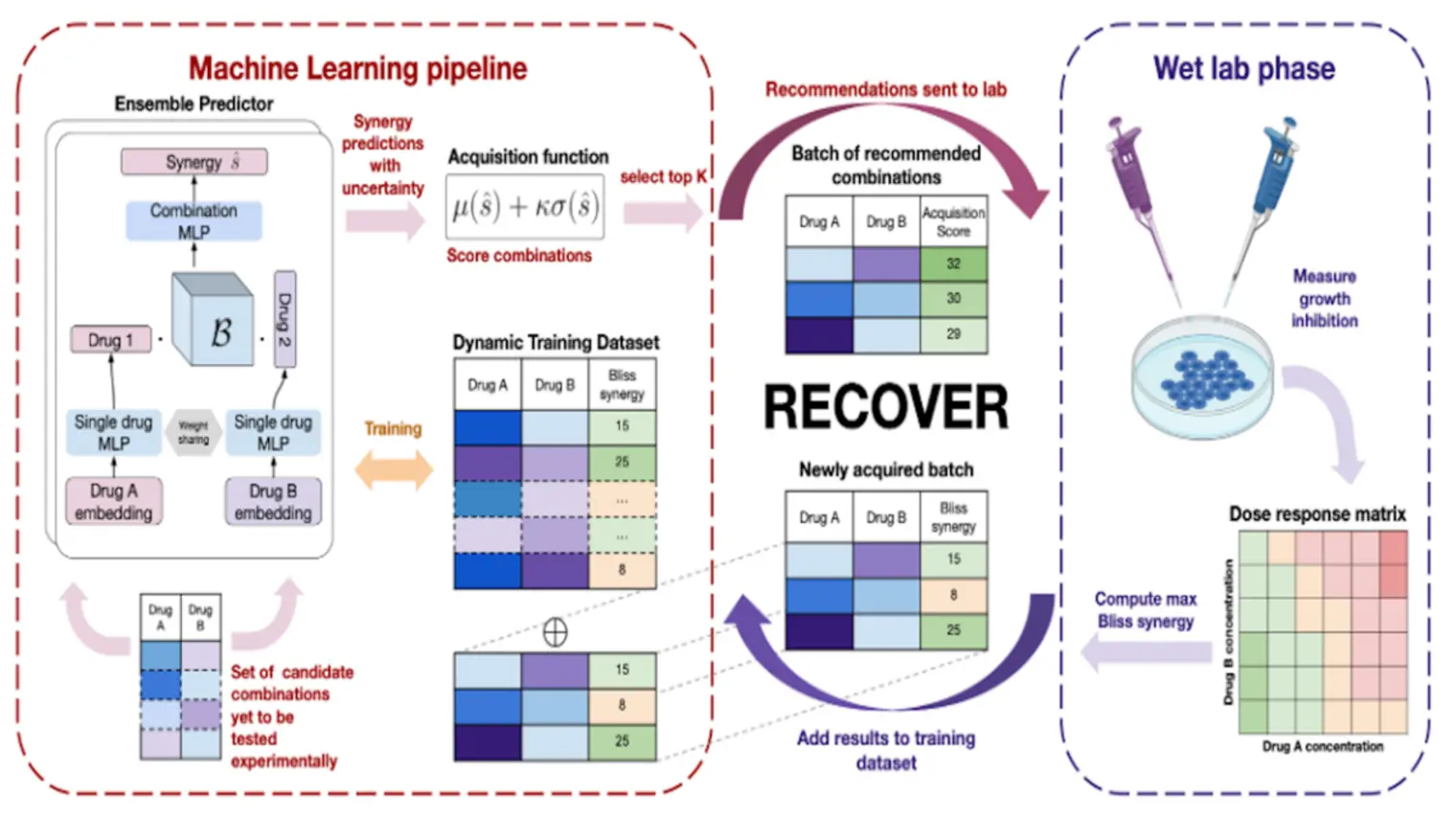
Design of de novo biological sequences with desired properties, like protein and DNA sequences, often involves an active loop with several r… (see more)ounds of molecule ideation and expensive wet-lab evaluations. These experiments can consist of multiple stages, with increasing levels of precision and cost of evaluation, where candidates are filtered. This makes the diversity of proposed candidates a key consideration in the ideation phase. In this work, we propose an active learning algorithm leveraging epistemic uncertainty estimation and the recently proposed GFlowNets as a generator of diverse candidate solutions, with the objective to obtain a diverse batch of useful (as defined by some utility function, for example, the predicted anti-microbial activity of a peptide) and informative candidates after each round. We also propose a scheme to incorporate existing labeled datasets of candidates, in addition to a reward function, to speed up learning in GFlowNets. We present empirical results on several biological sequence design tasks, and we find that our method generates more diverse and novel batches with high scoring candidates compared to existing approaches.
Building Robust Ensembles via Margin Boosting
Hongyang R. Zhang
Pradeep Ravikumar
Arun Sai Suggala
In the context of adversarial robustness, a single model does not usually have enough power to defend against all possible adversarial attac… (see more)ks, and as a result, has sub-optimal robustness. Consequently, an emerging line of work has focused on learning an ensemble of neural networks to defend against adversarial attacks. In this work, we take a principled approach towards building robust ensembles. We view this problem from the perspective of margin-boosting and develop an algorithm for learning an ensemble with maximum margin. Through extensive empirical evaluation on benchmark datasets, we show that our algorithm not only outperforms existing ensembling techniques, but also large models trained in an end-to-end fashion. An important byproduct of our work is a margin-maximizing cross-entropy (MCE) loss, which is a better alternative to the standard cross-entropy (CE) loss. Empirically, we show that replacing the CE loss in state-of-the-art adversarial training techniques with our MCE loss leads to significant performance improvement.
Generative Flow Networks for Discrete Probabilistic Modeling
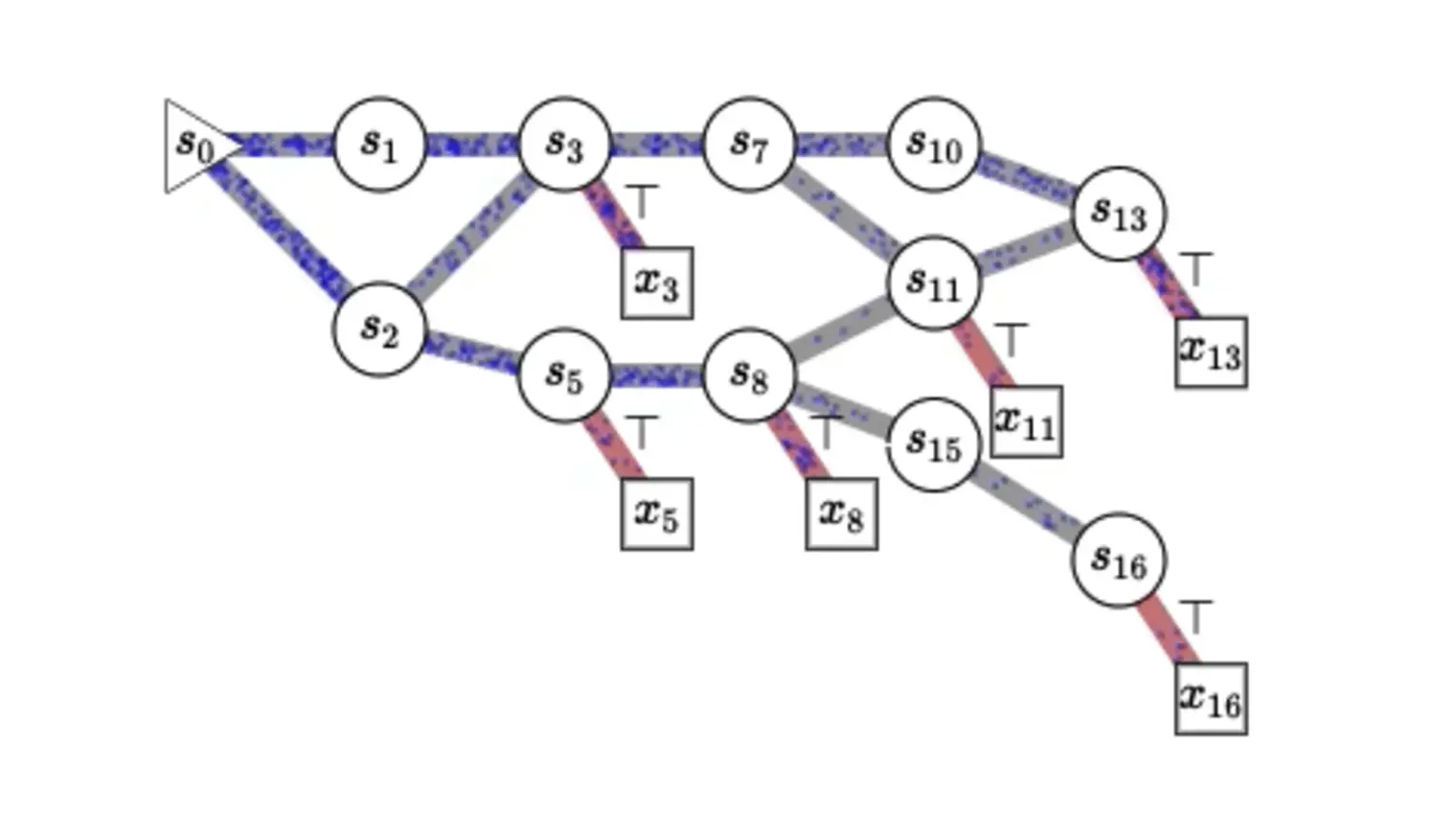
We present energy-based generative flow networks (EB-GFN), a novel probabilistic modeling algorithm for high-dimensional discrete data. Buil… (see more)ding upon the theory of generative flow networks (GFlowNets), we model the generation process by a stochastic data construction policy and thus amortize expensive MCMC exploration into a fixed number of actions sampled from a GFlowNet. We show how GFlowNets can approximately perform large-block Gibbs sampling to mix between modes. We propose a framework to jointly train a GFlowNet with an energy function, so that the GFlowNet learns to sample from the energy distribution, while the energy learns with an approximate MLE objective with negative samples from the GFlowNet. We demonstrate EB-GFN's effectiveness on various probabilistic modeling tasks. Code is publicly available at https://github.com/zdhNarsil/EB_GFN.
Multi-scale Feature Learning Dynamics: Insights for Double Descent
A key challenge in building theoretical foundations for deep learning is the complex optimization dynamics of neural networks, resulting fro… (see more)m the high-dimensional interactions between the large number of network parameters. Such non-trivial dynamics lead to intriguing behaviors such as the phenomenon of "double descent" of the generalization error. The more commonly studied aspect of this phenomenon corresponds to model-wise double descent where the test error exhibits a second descent with increasing model complexity, beyond the classical U-shaped error curve. In this work, we investigate the origins of the less studied epoch-wise double descent in which the test error undergoes two non-monotonous transitions, or descents as the training time increases. By leveraging tools from statistical physics, we study a linear teacher-student setup exhibiting epoch-wise double descent similar to that in deep neural networks. In this setting, we derive closed-form analytical expressions for the evolution of generalization error over training. We find that double descent can be attributed to distinct features being learned at different scales: as fast-learning features overfit, slower-learning features start to fit, resulting in a second descent in test error. We validate our findings through numerical experiments where our theory accurately predicts empirical findings and remains consistent with observations in deep neural networks.
Towards Scaling Difference Target Propagation by Learning Backprop Targets
The development of biologically-plausible learning algorithms is important for understanding learning in the brain, but most of them fail to… (see more) scale-up to real-world tasks, limiting their potential as explanations for learning by real brains. As such, it is important to explore learning algorithms that come with strong theoretical guarantees and can match the performance of backpropagation (BP) on complex tasks. One such algorithm is Difference Target Propagation (DTP), a biologically-plausible learning algorithm whose close relation with Gauss-Newton (GN) optimization has been recently established. However, the conditions under which this connection rigorously holds preclude layer-wise training of the feedback pathway synaptic weights (which is more biologically plausible). Moreover, good alignment between DTP weight updates and loss gradients is only loosely guaranteed and under very specific conditions for the architecture being trained. In this paper, we propose a novel feedback weight training scheme that ensures both that DTP approximates BP and that layer-wise feedback weight training can be restored without sacrificing any theoretical guarantees. Our theory is corroborated by experimental results and we report the best performance ever achieved by DTP on CIFAR-10 and ImageNet 32
VIM: Variational Independent Modules for Video Prediction
YOUR AUTOREGRESSIVE GENERATIVE MODEL CAN BE BETTER IF YOU TREAT IT AS AN ENERGY-BASED ONE
Yezhen Wang
Tong Che
Bin Li
Kaitao Song
Hengzhi Pei
Dongsheng Li
On Neural Architecture Inductive Biases for Relational Tasks
Current deep learning approaches have shown good in-distribution generalization performance, but struggle with out-of-distribution generaliz… (see more)ation. This is especially true in the case of tasks involving abstract relations like recognizing rules in sequences, as we find in many intelligence tests. Recent work has explored how forcing relational representations to remain distinct from sensory representations, as it seems to be the case in the brain, can help artificial systems. Building on this work, we further explore and formalize the advantages afforded by 'partitioned' representations of relations and sensory details, and how this inductive bias can help recompose learned relational structure in newly encountered settings. We introduce a simple architecture based on similarity scores which we name Compositional Relational Network (CoRelNet). Using this model, we investigate a series of inductive biases that ensure abstract relations are learned and represented distinctly from sensory data, and explore their effects on out-of-distribution generalization for a series of relational psychophysics tasks. We find that simple architectural choices can outperform existing models in out-of-distribution generalization. Together, these results show that partitioning relational representations from other information streams may be a simple way to augment existing network architectures' robustness when performing out-of-distribution relational computations.
Agnostic Physics-Driven Deep Learning
Siddhartha Mishra
Yann Ollivier
Coordinating Policies Among Multiple Agents via an Intelligent Communication Channel
Dianbo Liu
Tianmin Shu
Michael Curtis Mozer
Nicolas Heess
In Multi-Agent Reinforcement Learning (MARL), specialized channels are often introduced that allow agents to communicate directly with one a… (see more)nother. In this paper, we propose an alternative approach whereby agents communicate through an intelligent facilitator that learns to sift through and interpret signals provided by all agents to improve the agents’ collective performance. To ensure that this facilitator does not become a centralized controller, agents are incentivized to reduce their dependence on the messages it conveys, and the messages can only influence the selection of a policy from a fixed set, not instantaneous actions given the policy. We demonstrate the strength of this architecture over existing baselines on several cooperative MARL environments.