
Portrait of Yoshua Bengio

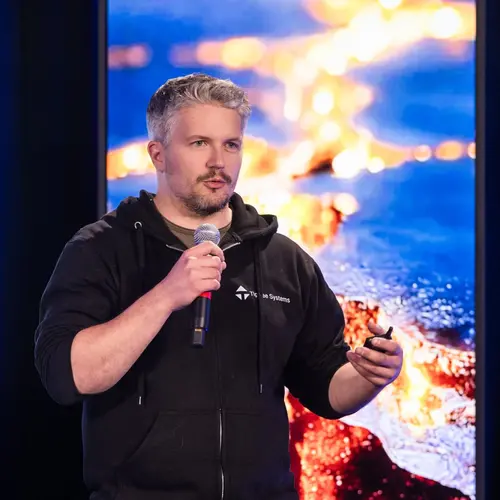
Yoshua Bengio

Core Academic Member
Canada CIFAR AI Chair
Full Professor, Université de Montréal, Department of Computer Science and Operations Research Department
Research Topics
Causality
Computational Neuroscience
Deep Learning
Generative Models
Graph Neural Networks
Machine Learning Theory
Medical Machine Learning
Molecular Modeling
Natural Language Processing
Probabilistic Models
Reasoning
Recurrent Neural Networks
Reinforcement Learning
Representation Learning

Biography

*For media requests, please write to medias@mila.quebec.

For more information please contact Cassidy MacNeil, Senior Assistant and Operation Lead at cassidy.macneil@mila.quebec.

Yoshua Bengio is recognized worldwide as a leading expert in AI. He is most known for his pioneering work in deep learning, which earned him the 2018 A.M. Turing Award, “the Nobel Prize of computing,” with Geoffrey Hinton and Yann LeCun.

Bengio is a full professor at Université de Montréal, and the founder and scientific advisor of Mila – Quebec Artificial Intelligence Institute. He is also a senior fellow at CIFAR and co-directs its Learning in Machines & Brains program, serves as special advisor and founding scientific director of IVADO, and holds a Canada CIFAR AI Chair.

In 2019, Bengio was awarded the prestigious Killam Prize and in 2022, he was the most cited computer scientist in the world by h-index. He is a Fellow of the Royal Society of London, Fellow of the Royal Society of Canada, Knight of the Legion of Honor of France and Officer of the Order of Canada. In 2023, he was appointed to the UN’s Scientific Advisory Board for Independent Advice on Breakthroughs in Science and Technology.

Concerned about the social impact of AI, Bengio helped draft the Montréal Declaration for the Responsible Development of Artificial Intelligence and continues to raise awareness about the importance of mitigating the potentially catastrophic risks associated with future AI systems.

Current Students

Collaborating Alumni - McGill University
Collaborating researcher - Cambridge University
Principal supervisor :
PhD - Université de Montréal
Collaborating researcher - N/A
Principal supervisor :
PhD - Université de Montréal
Collaborating Alumni - Université de Montréal
Postdoctorate - Université de Montréal
Principal supervisor :
Collaborating researcher - Université de Montréal
Research Intern - KOREA ADVANCED INSTITUTE OF SCIENCE AND TECHNOLOGY
Collaborating researcher - s.o.
PhD - Université de Montréal
Co-supervisor :
PhD - Université de Montréal
Principal supervisor :
Independent visiting researcher - Université de Montréal
Collaborating researcher - Ying Wu Coll of Computing
Collaborating researcher - University of Waterloo
Principal supervisor :
Postdoctorate - Université de Montréal
PhD - Université de Montréal
Principal supervisor :
Postdoctorate - Université de Montréal
Co-supervisor :
Collaborating Alumni - Université de Montréal
Co-supervisor :
Collaborating Alumni - Université de Montréal
Collaborating researcher - University of Cambridge
Collaborating Alumni - Université de Montréal
Co-supervisor :
PhD - Université de Montréal
Principal supervisor :
Collaborating researcher - Université de Montréal
PhD - McGill University
Principal supervisor :

Publications

Leveraging the Third Dimension in Contrastive Learning
Sumukh K Aithal
Michael Curtis Mozer
Self-Supervised Learning (SSL) methods operate on unlabeled data to learn robust representations useful for downstream tasks. Most SSL metho… (see more)ds rely on augmentations obtained by transforming the 2D image pixel map. These augmentations ignore the fact that biological vision takes place in an immersive three-dimensional, temporally contiguous environment, and that low-level biological vision relies heavily on depth cues. Using a signal provided by a pretrained state-of-the-art monocular RGB-to-depth model (the \emph{Depth Prediction Transformer}, Ranftl et al., 2021), we explore two distinct approaches to incorporating depth signals into the SSL framework. First, we evaluate contrastive learning using an RGB+depth input representation. Second, we use the depth signal to generate novel views from slightly different camera positions, thereby producing a 3D augmentation for contrastive learning. We evaluate these two approaches on three different SSL methods -- BYOL, SimSiam, and SwAV -- using ImageNette (10 class subset of ImageNet), ImageNet-100 and ImageNet-1k datasets. We find that both approaches to incorporating depth signals improve the robustness and generalization of the baseline SSL methods, though the first approach (with depth-channel concatenation) is superior. For instance, BYOL with the additional depth channel leads to an increase in downstream classification accuracy from 85.3\% to 88.0\% on ImageNette and 84.1\% to 87.0\% on ImageNet-C.
Regeneration Learning: A Learning Paradigm for Data Generation
Xu Tan
Tao Qin
Jiang Bian
Tie-Yan Liu
Scalable Neural Network Algorithms for High Dimensional Data
Mukesh Soni
Marwan Ali Shnan
Benchmarking Graph Neural Networks
Vijay Prakash Dwivedi
Chaitanya K. Joshi
Thomas Laurent
Anh Tuan Luu
Xavier Bresson
Combining Parameter-efficient Modules for Task-level Generalisation
A modular design encourages neural models to disentangle and recombine different facets of knowledge to generalise more systematically to ne… (see more)w tasks. In this work, we assume that each task is associated with a subset of latent skills from an (arbitrary size) inventory. In turn, each skill corresponds to a parameter-efficient (sparse / low-rank) model adapter. By jointly learning adapters and a routing function that allocates skills to each task, the full network is instantiated as the average of the parameters of active skills. We propose several inductive biases that encourage re-usage and composition of the skills, including variable-size skill allocation and a dual-speed learning rate. We evaluate our latent-skill model in two main settings: 1) multitask reinforcement learning for instruction following on 8 levels of the BabyAI platform; and 2) few-shot fine-tuning of language models on 160 NLP tasks of the CrossFit benchmark. We find that the modular design of our network enhances sample efficiency in reinforcement learning and few-shot generalisation in supervised learning, compared to a series of baselines. These include models where parameters are fully shared, task-specific, conditionally generated (HyperFormer), or sparse mixture-of-experts (TaskMoE).
Conditional Flow Matching: Simulation-Free Dynamic Optimal Transport
Constant Memory Attentive Neural Processes
Frederick Tung
Hossein Hajimirsadeghi
Mohamed Osama Ahmed
GFlowNet Foundations
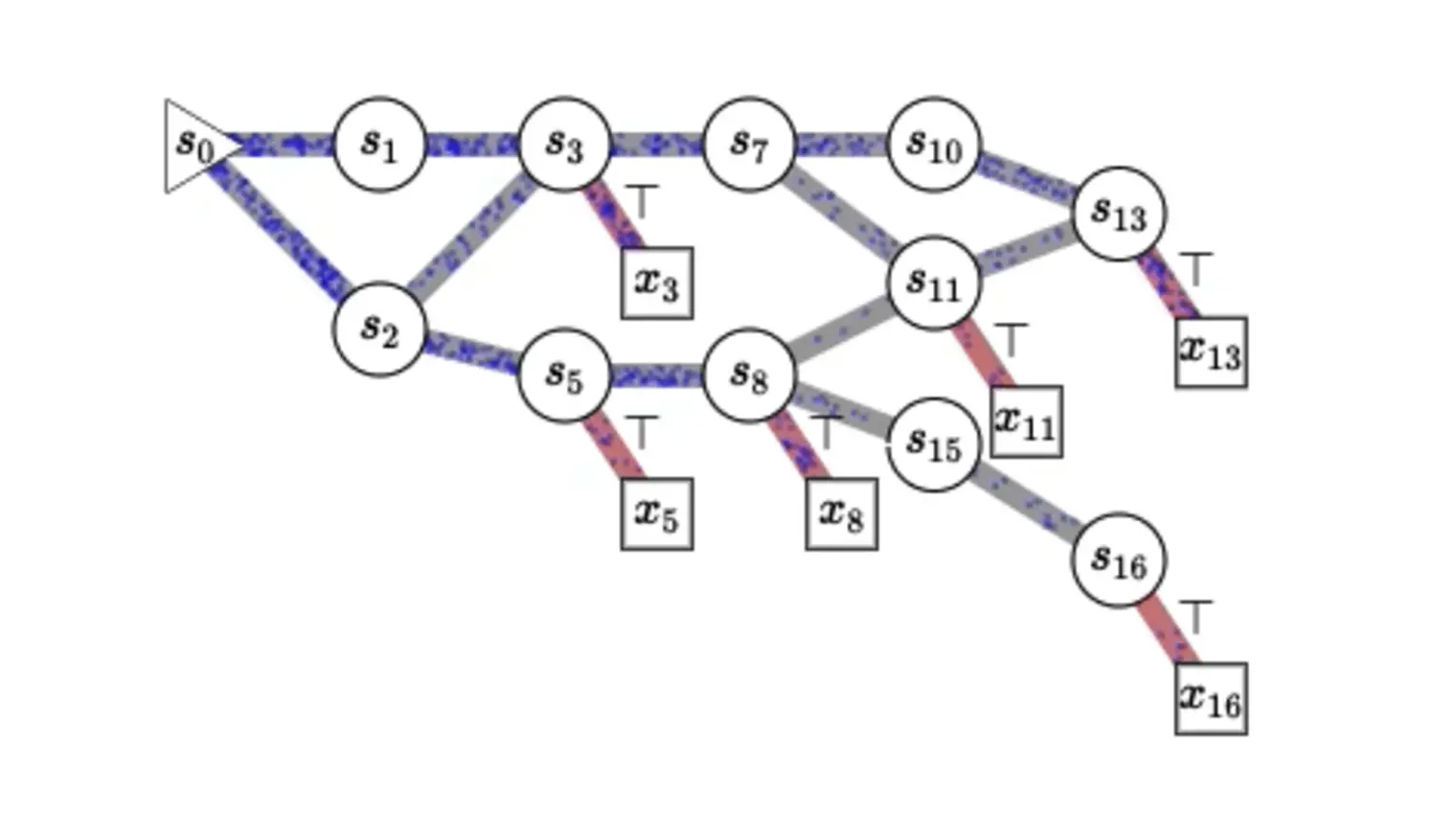
Generative Flow Networks (GFlowNets) have been introduced as a method to sample a diverse set of candidates in an active learning context, w… (see more)ith a training objective that makes them approximately sample in proportion to a given reward function. In this paper, we show a number of additional theoretical properties of GFlowNets. They can be used to estimate joint probability distributions and the corresponding marginal distributions where some variables are unspecified and, of particular interest, can represent distributions over composite objects like sets and graphs. GFlowNets amortize the work typically done by computationally expensive MCMC methods in a single but trained generative pass. They could also be used to estimate partition functions and free energies, conditional probabilities of supersets (supergraphs) given a subset (subgraph), as well as marginal distributions over all supersets (supergraphs) of a given set (graph). We introduce variations enabling the estimation of entropy and mutual information, sampling from a Pareto frontier, connections to reward-maximizing policies, and extensions to stochastic environments, continuous actions and modular energy functions.
GFlowNets for AI-Driven Scientific Discovery
Tackling the most pressing problems for humanity, such as the climate crisis and the threat of global pandemics, requires accelerating the p… (see more)ace of scientific discovery. While science has traditionally relied on trial and error and even serendipity to a large extent, the last few decades have seen a surge of data-driven scientific discoveries. However, in order to truly leverage large-scale data sets and high-throughput experimental setups, machine learning methods will need to be further improved and better integrated in the scientific discovery pipeline. A key challenge for current machine learning methods in this context is the efficient exploration of very large search spaces, which requires techniques for estimating reducible (epistemic) uncertainty and generating sets of diverse and informative experiments to perform. This motivated a new probabilistic machine learning framework called GFlowNets, which can be applied in the modeling, hypotheses generation and experimental design stages of the experimental science loop. GFlowNets learn to sample from a distribution given indirectly by a reward function corresponding to an unnormalized probability, which enables sampling diverse, high-reward candidates. GFlowNets can also be used to form efficient and amortized Bayesian posterior estimators for causal models conditioned on the already acquired experimental data. Having such posterior models can then provide estimators of epistemic uncertainty and information gain that can drive an experimental design policy. Altogether, here we will argue that GFlowNets can become a valuable tool for AI-driven scientific discovery, especially in scenarios of very large candidate spaces where we have access to cheap but inaccurate measurements or to expensive but accurate measurements. This is a common setting in the context of drug and material discovery, which we use as examples throughout the paper.
NEURAL NETWORK-BASED SOLVERS FOR PDES
M. Cameron
Ian G Goodfellow
(1) N (x; θ) = Ll+1 ○ σl ○Ll ○ σl−1 ○ . . . ○ σ1 ○L1. The symbol Lk denotes the k’s affine operator of the form Lk(x) = … (see more)Akx + bk, while σk denotes a nonlinear function called an activation function. The activation functions are chosen by the user. The matrices Ak and shift vectors (or bias vectors) bk are encoded into the argument θ: θ = {Ak, bk} l+1 k=1. The term training neural network means finding {Ak, bk} l+1 k=1 such that N (x; θ) satisfies certain conditions. These conditions are described by the loss function chosen by the user. For example, one might want the neural network to assume certain values fj at certain points xj , j = 1, . . . ,N . These points x are called the training data. In this case, a common choice of the loss function is the least squares error:
Stochastic Generative Flow Networks
Supplementary Material for MixupE
Yingtian Zou
Wai Hoh Tang
Hieu Pham
Juho Kannala
Arno Solin
We denote by z = (x,y) the input and output pair where x ∈ X ⊆ R and y ∈ Y ⊆ R . Let fθ(x) ∈ R be the output of the logits (i.e.,… (see more) the last layer before the softmax or sigmoid) of the model parameterized by θ. We use l(θ, z) = h(fθ(x)) − yfθ(x) to denote the loss function. Let g(·) be the activation function. We use x(i) to index i-th element of the vector x and xj to represent j-th variable in a set. The notation list is: