Portrait of Yoshua Bengio

Yoshua Bengio

Core Academic Member
Canada CIFAR AI Chair
Full Professor, Université de Montréal, Department of Computer Science and Operations Research Department
Research Topics
Causality
Computational Neuroscience
Deep Learning
Generative Models
Graph Neural Networks
Machine Learning Theory
Medical Machine Learning
Molecular Modeling
Natural Language Processing
Probabilistic Models
Reasoning
Recurrent Neural Networks
Reinforcement Learning
Representation Learning

Biography

*For media requests, please write to medias@mila.quebec.

For more information please contact Cassidy MacNeil, Senior Assistant and Operation Lead at cassidy.macneil@mila.quebec.

Yoshua Bengio is recognized worldwide as a leading expert in AI. He is most known for his pioneering work in deep learning, which earned him the 2018 A.M. Turing Award, “the Nobel Prize of computing,” with Geoffrey Hinton and Yann LeCun.

Bengio is a full professor at Université de Montréal, and the founder and scientific advisor of Mila – Quebec Artificial Intelligence Institute. He is also a senior fellow at CIFAR and co-directs its Learning in Machines & Brains program, serves as special advisor and founding scientific director of IVADO, and holds a Canada CIFAR AI Chair.

In 2019, Bengio was awarded the prestigious Killam Prize and in 2022, he was the most cited computer scientist in the world by h-index. He is a Fellow of the Royal Society of London, Fellow of the Royal Society of Canada, Knight of the Legion of Honor of France and Officer of the Order of Canada. In 2023, he was appointed to the UN’s Scientific Advisory Board for Independent Advice on Breakthroughs in Science and Technology.

Concerned about the social impact of AI, Bengio helped draft the Montréal Declaration for the Responsible Development of Artificial Intelligence and continues to raise awareness about the importance of mitigating the potentially catastrophic risks associated with future AI systems.

Current Students

Collaborating Alumni - McGill University
Collaborating researcher - Cambridge University
Principal supervisor :
PhD - Université de Montréal
Collaborating researcher - N/A
Principal supervisor :
PhD - Université de Montréal
Collaborating Alumni - Université de Montréal
Postdoctorate - Université de Montréal
Principal supervisor :
Collaborating researcher - Université de Montréal
Research Intern - KOREA ADVANCED INSTITUTE OF SCIENCE AND TECHNOLOGY
Collaborating researcher - s.o.
PhD - Université de Montréal
Co-supervisor :
PhD - Université de Montréal
Principal supervisor :
Independent visiting researcher - Université de Montréal
Collaborating researcher - Ying Wu Coll of Computing
Collaborating researcher - University of Waterloo
Principal supervisor :
Postdoctorate - Université de Montréal
PhD - Université de Montréal
Principal supervisor :
Postdoctorate - Université de Montréal
Co-supervisor :
Collaborating Alumni - Université de Montréal
Co-supervisor :
Collaborating Alumni - Université de Montréal
Collaborating researcher - University of Cambridge
Collaborating Alumni - Université de Montréal
Co-supervisor :
PhD - Université de Montréal
Principal supervisor :
Collaborating researcher - Université de Montréal
PhD - McGill University
Principal supervisor :

Publications

Automated Detection of Anatomical Landmarks During Colonoscopy Using a Deep Learning Model
Mahsa Taghiakbari
Sina Hamidi Ghalehjegh
Emmanuel Jehanno
Tess Berthier
Lisa Di Jorio
Saber Ghadakzadeh
Alan Barkun
Mark Takla
Mickael Bouin
Eric Deslandres
Simon Bouchard
Sacha Sidani
Daniel von Renteln
Abstract Background and aims Identification and photo-documentation of the ileocecal valve (ICV) and appendiceal orifice (AO) confirm comple… (see more)teness of colonoscopy examinations. We aimed to develop and test a deep convolutional neural network (DCNN) model that can automatically identify ICV and AO, and differentiate these landmarks from normal mucosa and colorectal polyps. Methods We prospectively collected annotated full-length colonoscopy videos of 318 patients undergoing outpatient colonoscopies. We created three nonoverlapping training, validation, and test data sets with 25,444 unaltered frames extracted from the colonoscopy videos showing four landmarks/image classes (AO, ICV, normal mucosa, and polyps). A DCNN classification model was developed, validated, and tested in separate data sets of images containing the four different landmarks. Results After training and validation, the DCNN model could identify both AO and ICV in 18 out of 21 patients (85.7%). The accuracy of the model for differentiating AO from normal mucosa, and ICV from normal mucosa were 86.4% (95% CI 84.1% to 88.5%), and 86.4% (95% CI 84.1% to 88.6%), respectively. Furthermore, the accuracy of the model for differentiating polyps from normal mucosa was 88.6% (95% CI 86.6% to 90.3%). Conclusion This model offers a novel tool to assist endoscopists with automated identification of AO and ICV during colonoscopy. The model can reliably distinguish these anatomical landmarks from normal mucosa and colorectal polyps. It can be implemented into automated colonoscopy report generation, photo-documentation, and quality auditing solutions to improve colonoscopy reporting quality.
GFlowNets and Variational Inference
This paper builds bridges between two families of probabilistic algorithms: (hierarchical) variational inference (VI), which is typically us… (see more)ed to model distributions over continuous spaces, and generative flow networks (GFlowNets), which have been used for distributions over discrete structures such as graphs. We demonstrate that, in certain cases, VI algorithms are equivalent to special cases of GFlowNets in the sense of equality of expected gradients of their learning objectives. We then point out the differences between the two families and show how these differences emerge experimentally. Notably, GFlowNets, which borrow ideas from reinforcement learning, are more amenable than VI to off-policy training without the cost of high gradient variance induced by importance sampling. We argue that this property of GFlowNets can provide advantages for capturing diversity in multimodal target distributions.
Latent Bottlenecked Attentive Neural Processes
Hossein Hajimirsadeghi
Mohamed Osama Ahmed
Neural Processes (NPs) are popular methods in meta-learning that can estimate predictive uncertainty on target datapoints by conditioning on… (see more) a context dataset. Previous state-of-the-art method Transformer Neural Processes (TNPs) achieve strong performance but require quadratic computation with respect to the number of context datapoints, significantly limiting its scalability. Conversely, existing sub-quadratic NP variants perform significantly worse than that of TNPs. Tackling this issue, we propose Latent Bottlenecked Attentive Neural Processes (LBANPs), a new computationally efficient sub-quadratic NP variant, that has a querying computational complexity independent of the number of context datapoints. The model encodes the context dataset into a constant number of latent vectors on which self-attention is performed. When making predictions, the model retrieves higher-order information from the context dataset via multiple cross-attention mechanisms on the latent vectors. We empirically show that LBANPs achieve results competitive with the state-of-the-art on meta-regression, image completion, and contextual multi-armed bandits. We demonstrate that LBANPs can trade-off the computational cost and performance according to the number of latent vectors. Finally, we show LBANPs can scale beyond existing attention-based NP variants to larger dataset settings.
Latent State Marginalization as a Low-Cost Approach for Improving Exploration
Qinqing Zheng
Ricky T. Q. Chen
While the maximum entropy (MaxEnt) reinforcement learning (RL) framework -- often touted for its exploration and robustness capabilities -- … (see more)is usually motivated from a probabilistic perspective, the use of deep probabilistic models has not gained much traction in practice due to their inherent complexity. In this work, we propose the adoption of latent variable policies within the MaxEnt framework, which we show can provably approximate any policy distribution, and additionally, naturally emerges under the use of world models with a latent belief state. We discuss why latent variable policies are difficult to train, how naive approaches can fail, then subsequently introduce a series of improvements centered around low-cost marginalization of the latent state, allowing us to make full use of the latent state at minimal additional cost. We instantiate our method under the actor-critic framework, marginalizing both the actor and critic. The resulting algorithm, referred to as Stochastic Marginal Actor-Critic (SMAC), is simple yet effective. We experimentally validate our method on continuous control tasks, showing that effective marginalization can lead to better exploration and more robust training. Our implementation is open sourced at https://github.com/zdhNarsil/Stochastic-Marginal-Actor-Critic.
Predictive Inference with Feature Conformal Prediction
Jiaye Teng
Chuan Wen
Yang Gao
Yang Yuan
Conformal prediction is a distribution-free technique for establishing valid prediction intervals. Although conventionally people conduct co… (see more)nformal prediction in the output space, this is not the only possibility. In this paper, we propose feature conformal prediction, which extends the scope of conformal prediction to semantic feature spaces by leveraging the inductive bias of deep representation learning. From a theoretical perspective, we demonstrate that feature conformal prediction provably outperforms regular conformal prediction under mild assumptions. Our approach could be combined with not only vanilla conformal prediction, but also other adaptive conformal prediction methods. Apart from experiments on existing predictive inference benchmarks, we also demonstrate the state-of-the-art performance of the proposed methods on large-scale tasks such as ImageNet classification and Cityscapes image segmentation.The code is available at https://github.com/AlvinWen428/FeatureCP.
Robust and Controllable Object-Centric Learning through Energy-based Models
Tong Che
Boris Ivanovic
Marco Pavone
Humans are remarkably good at understanding and reasoning about complex visual scenes. The capability to decompose low-level observations in… (see more)to discrete objects allows us to build a grounded abstract representation and identify the compositional structure of the world. Accordingly, it is a crucial step for machine learning models to be capable of inferring objects and their properties from visual scenes without explicit supervision. However, existing works on object-centric representation learning either rely on tailor-made neural network modules or strong probabilistic assumptions in the underlying generative and inference processes. In this work, we present \ours, a conceptually simple and general approach to learning object-centric representations through an energy-based model. By forming a permutation-invariant energy function using vanilla attention blocks readily available in Transformers, we can infer object-centric latent variables via gradient-based MCMC methods where permutation equivariance is automatically guaranteed. We show that \ours can be easily integrated into existing architectures and can effectively extract high-quality object-centric representations, leading to better segmentation accuracy and competitive downstream task performance. Further, empirical evaluations show that \ours's learned representations are robust against distribution shift. Finally, we demonstrate the effectiveness of \ours in systematic compositional generalization, by re-composing learned energy functions for novel scene generation and manipulation.
Stateful Active Facilitator: Coordination and Environmental Heterogeneity in Cooperative Multi-Agent Reinforcement Learning
Dianbo Liu
Tianmin Shu
Michael Mozer
Nicolas Heess
In cooperative multi-agent reinforcement learning, a team of agents works together to achieve a common goal. Different environments or tasks… (see more) may require varying degrees of coordination among agents in order to achieve the goal in an optimal way. The nature of coordination will depend on the properties of the environment -- its spatial layout, distribution of obstacles, dynamics, etc. We term this variation of properties within an environment as heterogeneity. Existing literature has not sufficiently addressed the fact that different environments may have different levels of heterogeneity. We formalize the notions of coordination level and heterogeneity level of an environment and present HECOGrid, a suite of multi-agent RL environments that facilitates empirical evaluation of different MARL approaches across different levels of coordination and environmental heterogeneity by providing a quantitative control over coordination and heterogeneity levels of the environment. Further, we propose a Centralized Training Decentralized Execution learning approach called Stateful Active Facilitator (SAF) that enables agents to work efficiently in high-coordination and high-heterogeneity environments through a differentiable and shared knowledge source used during training and dynamic selection from a shared pool of policies. We evaluate SAF and compare its performance against baselines IPPO and MAPPO on HECOGrid. Our results show that SAF consistently outperforms the baselines across different tasks and different heterogeneity and coordination levels. We release the code for HECOGrid as well as all our experiments.
Catalyzing next-generation Artificial Intelligence through NeuroAI
Anthony Zador
Blake Aaron Richards
Bence Ölveczky
Sean Escola
Kwabena Boahen
Matthew Botvinick
Dmitri Chklovskii
Anne Churchland
James DiCarlo
Surya Ganguli
Jeff Hawkins
Konrad Paul Kording
Alexei Koulakov
Timothy P Lillicrap
Adam Marblestone
Bruno Olshausen
Alexandre Pouget … (see 7 more)
Cristina Savin
Terrence Sejnowski
Eero Simoncelli
Sara Solla
David Sussillo
Andreas S. Tolias
Doris Tsao
Proactive Contact Tracing
Prateek Gupta
Nasim Rahaman
Hannah Alsdurf
Nanor Minoyan
Soren Harnois-Leblanc
Joanna Merckx
Pierre-Luc St-Charles
Akshay Patel
Yang Zhang
David L. Buckeridge
Christopher Pal
Bernhard Schölkopf
The COVID-19 pandemic has spurred an unprecedented demand for interventions that can reduce disease spread without excessively restricting d… (see more)aily activity, given negative impacts on mental health and economic outcomes. Digital contact tracing (DCT) apps have emerged as a component of the epidemic management toolkit. Existing DCT apps typically recommend quarantine to all digitally-recorded contacts of test-confirmed cases. Over-reliance on testing may, however, impede the effectiveness of such apps, since by the time cases are confirmed through testing, onward transmissions are likely to have occurred. Furthermore, most cases are infectious over a short period; only a subset of their contacts are likely to become infected. These apps do not fully utilize data sources to base their predictions of transmission risk during an encounter, leading to recommendations of quarantine to many uninfected people and associated slowdowns in economic activity. This phenomenon, commonly termed as “pingdemic,” may additionally contribute to reduced compliance to public health measures. In this work, we propose a novel DCT framework, Proactive Contact Tracing (PCT), which uses multiple sources of information (e.g. self-reported symptoms, received messages from contacts) to estimate app users’ infectiousness histories and provide behavioral recommendations. PCT methods are by design proactive, predicting spread before it occurs. We present an interpretable instance of this framework, the Rule-based PCT algorithm, designed via a multi-disciplinary collaboration among epidemiologists, computer scientists, and behavior experts. Finally, we develop an agent-based model that allows us to compare different DCT methods and evaluate their performance in negotiating the trade-off between epidemic control and restricting population mobility. Performing extensive sensitivity analysis across user behavior, public health policy, and virological parameters, we compare Rule-based PCT to i) binary contact tracing (BCT), which exclusively relies on test results and recommends a fixed-duration quarantine, and ii) household quarantine (HQ). Our results suggest that both BCT and Rule-based PCT improve upon HQ, however, Rule-based PCT is more efficient at controlling spread of disease than BCT across a range of scenarios. In terms of cost-effectiveness, we show that Rule-based PCT pareto-dominates BCT, as demonstrated by a decrease in Disability Adjusted Life Years, as well as Temporary Productivity Loss. Overall, we find that Rule-based PCT outperforms existing approaches across a varying range of parameters. By leveraging anonymized infectiousness estimates received from digitally-recorded contacts, PCT is able to notify potentially infected users earlier than BCT methods and prevent onward transmissions. Our results suggest that PCT-based applications could be a useful tool in managing future epidemics.
Tackling Climate Change with Machine Learning
Priya L. Donti
Lynn H. Kaack
Kelly Kochanski
Alexandre Lacoste
Andrew Slavin Ross
Nikola Milojevic-Dupont
Natasha Jaques
Anna Waldman-Brown
Alexandra Luccioni
Evan D. Sherwin
S. Karthik Mukkavilli
Konrad P. Kording
Carla Gomes
Andrew Y. Ng
Demis Hassabis
John C. Platt
Felix Creutzig … (see 2 more)
Jennifer Chayes
Climate change is one of the greatest challenges facing humanity, and we, as machine learning experts, may wonder how we can help. Here we d… (see more)escribe how machine learning can be a powerful tool in reducing greenhouse gas emissions and helping society adapt to a changing climate. From smart grids to disaster management, we identify high impact problems where existing gaps can be filled by machine learning, in collaboration with other fields. Our recommendations encompass exciting research questions as well as promising business opportunities. We call on the machine learning community to join the global effort against climate change.
DEUP: Direct Epistemic Uncertainty Prediction
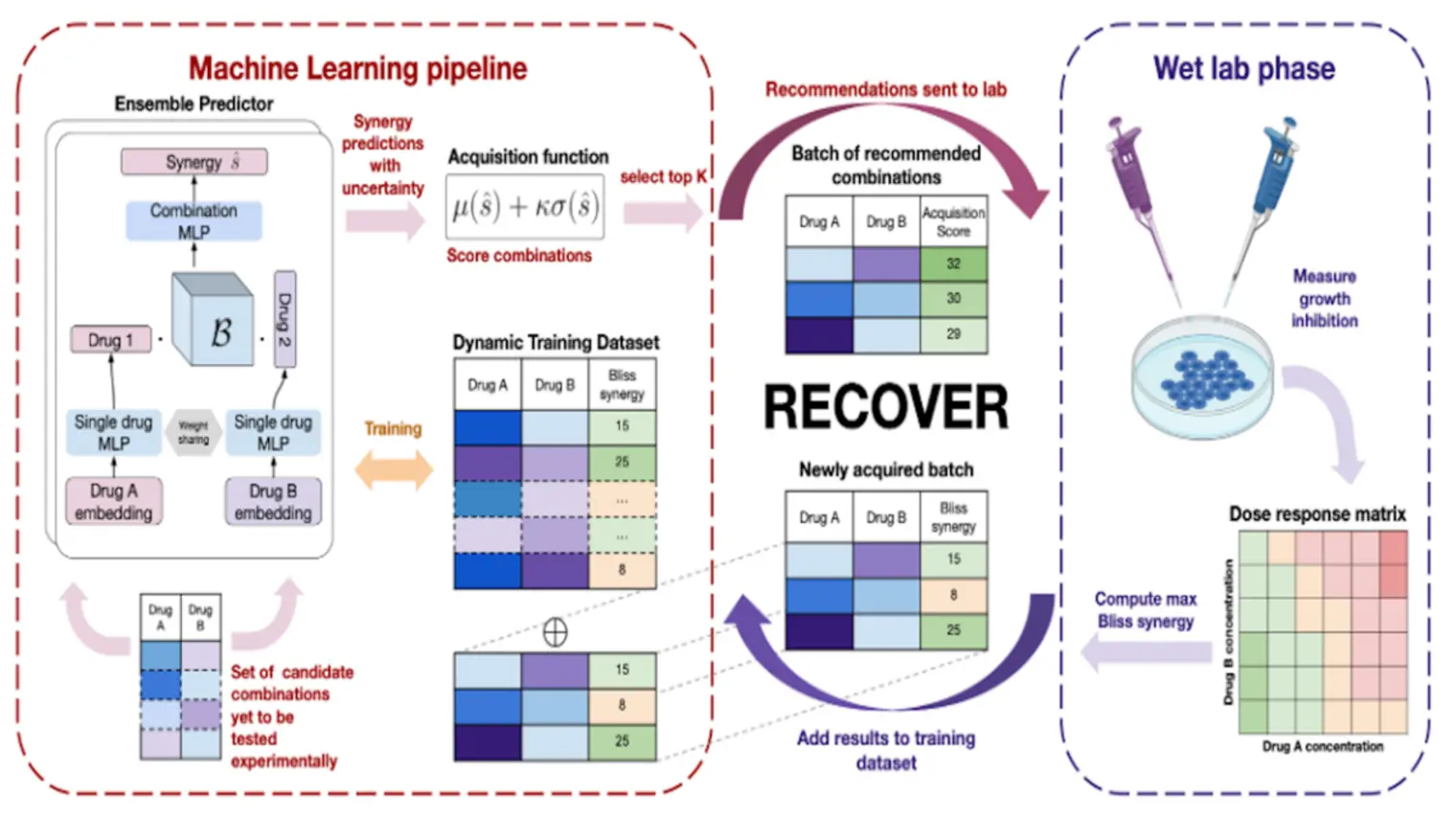
Epistemic Uncertainty is a measure of the lack of knowledge of a learner which diminishes with more evidence. While existing work focuses on… (see more) using the variance of the Bayesian posterior due to parameter uncertainty as a measure of epistemic uncertainty, we argue that this does not capture the part of lack of knowledge induced by model misspecification. We discuss how the excess risk, which is the gap between the generalization error of a predictor and the Bayes predictor, is a sound measure of epistemic uncertainty which captures the effect of model misspecification. We thus propose a principled framework for directly estimating the excess risk by learning a secondary predictor for the generalization error and subtracting an estimate of aleatoric uncertainty, i.e., intrinsic unpredictability. We discuss the merits of this novel measure of epistemic uncertainty, and highlight how it differs from variance-based measures of epistemic uncertainty and addresses its major pitfall. Our framework, Direct Epistemic Uncertainty Prediction (DEUP) is particularly interesting in interactive learning environments, where the learner is allowed to acquire novel examples in each round. Through a wide set of experiments, we illustrate how existing methods in sequential model optimization can be improved with epistemic uncertainty estimates from DEUP, and how DEUP can be used to drive exploration in reinforcement learning. We also evaluate the quality of uncertainty estimates from DEUP for probabilistic image classification and predicting synergies of drug combinations.
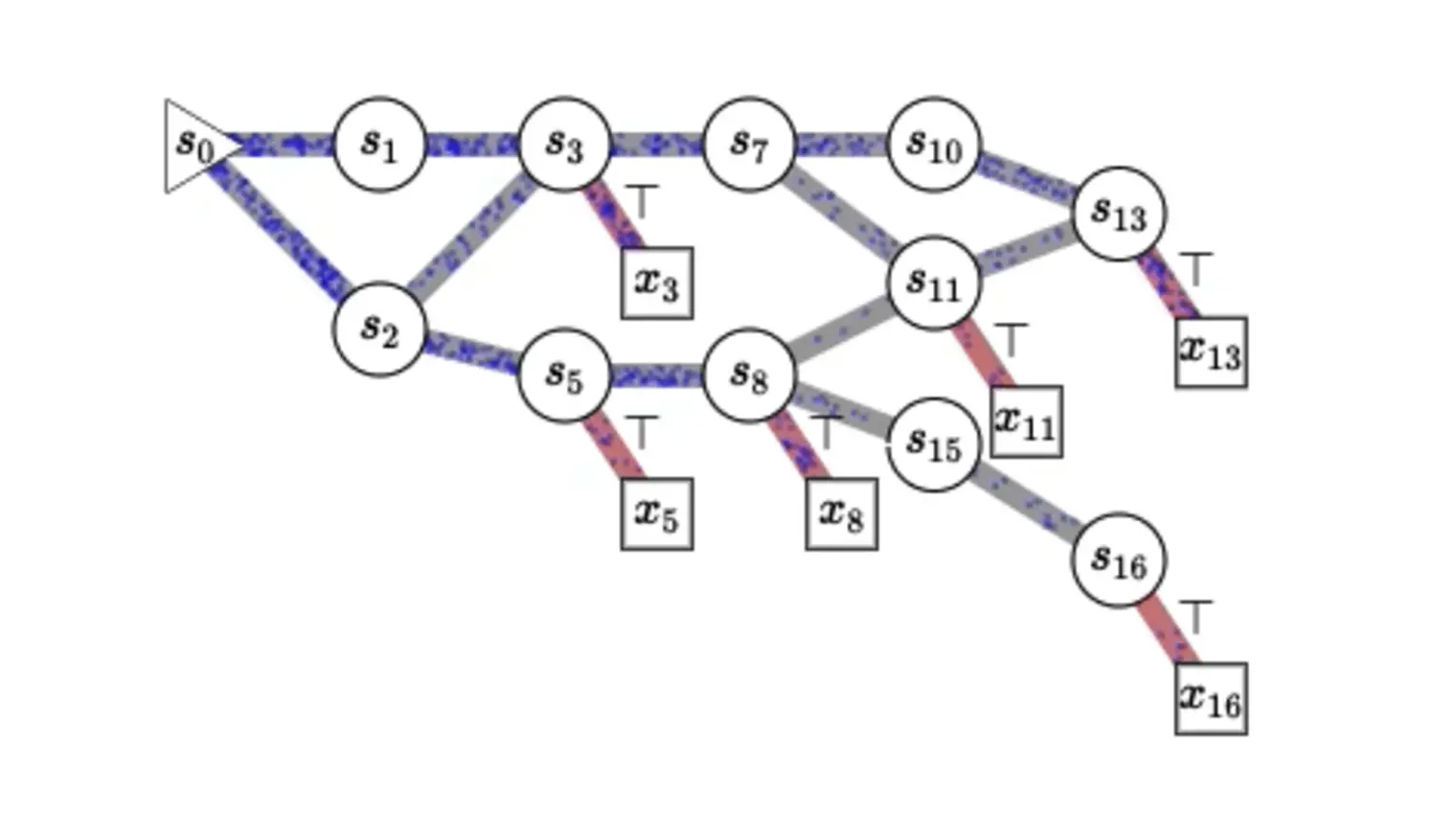
Generative Augmented Flow Networks
The Generative Flow Network is a probabilistic framework where an agent learns a stochastic policy for object generation, such that the prob… (see more)ability of generating an object is proportional to a given reward function. Its effectiveness has been shown in discovering high-quality and diverse solutions, compared to reward-maximizing reinforcement learning-based methods. Nonetheless, GFlowNets only learn from rewards of the terminal states, which can limit its applicability. Indeed, intermediate rewards play a critical role in learning, for example from intrinsic motivation to provide intermediate feedback even in particularly challenging sparse reward tasks. Inspired by this, we propose Generative Augmented Flow Networks (GAFlowNets), a novel learning framework to incorporate intermediate rewards into GFlowNets. We specify intermediate rewards by intrinsic motivation to tackle the exploration problem in sparse reward environments. GAFlowNets can leverage edge-based and state-based intrinsic rewards in a joint way to improve exploration. Based on extensive experiments on the GridWorld task, we demonstrate the effectiveness and efficiency of GAFlowNet in terms of convergence, performance, and diversity of solutions. We further show that GAFlowNet is scalable to a more complex and large-scale molecule generation domain, where it achieves consistent and significant performance improvement.