Développez des compétences fondamentales en intelligence artificielle (IA) responsable grâce à des cours autodirigés, animés par des expert·e·s de Mila reconnu·e·s à l’échelle internationale.
Le Fellowship Mila en politiques de l'IA transforme l'expertise approfondie en IA en politiques rigoureuses d'intérêt public. Découvrez la dernière publication Combler la disparité en matière d’expertise : mécanismes de transfert des connaissances pour la réglementation de l’IA par Moritz von Knebel.
Ce programme soutient les startups spécialisées en IA à tout moment de l'année. Bénéficiez de ressources de pointe et d'un accompagnement sur mesure pour accélérer le développement de votre technologie.
Nous utilisons des témoins pour analyser le trafic et l’utilisation de notre site web, afin de personnaliser votre expérience. Vous pouvez désactiver ces technologies à tout moment, mais cela peut restreindre certaines fonctionnalités du site. Consultez notre Politique de protection de la vie privée pour en savoir plus.
Paramètre des cookies
Vous pouvez activer et désactiver les types de cookies que vous souhaitez accepter. Cependant certains choix que vous ferez pourraient affecter les services proposés sur nos sites (ex : suggestions, annonces personnalisées, etc.).
Cookies essentiels
Ces cookies sont nécessaires au fonctionnement du site et ne peuvent être désactivés. (Toujours actif)
Cookies analyse
Acceptez-vous l'utilisation de cookies pour mesurer l'audience de nos sites ?
Lecteur Multimédia
Acceptez-vous l'utilisation de cookies pour afficher et vous permettre de regarder les contenus vidéo hébergés par nos partenaires (YouTube, etc.) ?
SpeechBrain is an open-source Conversational AI toolkit based on PyTorch, focused particularly on speech processing tasks such as speech rec… (voir plus)ognition, speech enhancement, speaker recognition, text-to-speech, and much more. It promotes transparency and replicability by releasing both the pre-trained models and the complete "recipes" of code and algorithms required for training them. This paper presents SpeechBrain 1.0, a significant milestone in the evolution of the toolkit, which now has over 200 recipes for speech, audio, and language processing tasks, and more than 100 models available on Hugging Face. SpeechBrain 1.0 introduces new technologies to support diverse learning modalities, Large Language Model (LLM) integration, and advanced decoding strategies, along with novel models, tasks, and modalities. It also includes a new benchmark repository, offering researchers a unified platform for evaluating models across diverse tasks.
Discrete audio tokens have recently gained considerable attention for their potential to connect audio and language processing, enabling the… (voir plus) creation of modern multimodal large language models. Ideal audio tokens must effectively preserve phonetic and semantic content along with paralinguistic information, speaker identity, and other details. While several types of audio tokens have been recently proposed, identifying the optimal tokenizer for various tasks is challenging due to the inconsistent evaluation settings in existing studies. To address this gap, we release the Discrete Audio and Speech Benchmark (DASB), a comprehensive leaderboard for benchmarking discrete audio tokens across a wide range of discriminative tasks, including speech recognition, speaker identification and verification, emotion recognition, keyword spotting, and intent classification, as well as generative tasks such as speech enhancement, separation, and text-to-speech. Our results show that, on average, semantic tokens outperform compression tokens across most discriminative and generative tasks. However, the performance gap between semantic tokens and standard continuous representations remains substantial, highlighting the need for further research in this field.
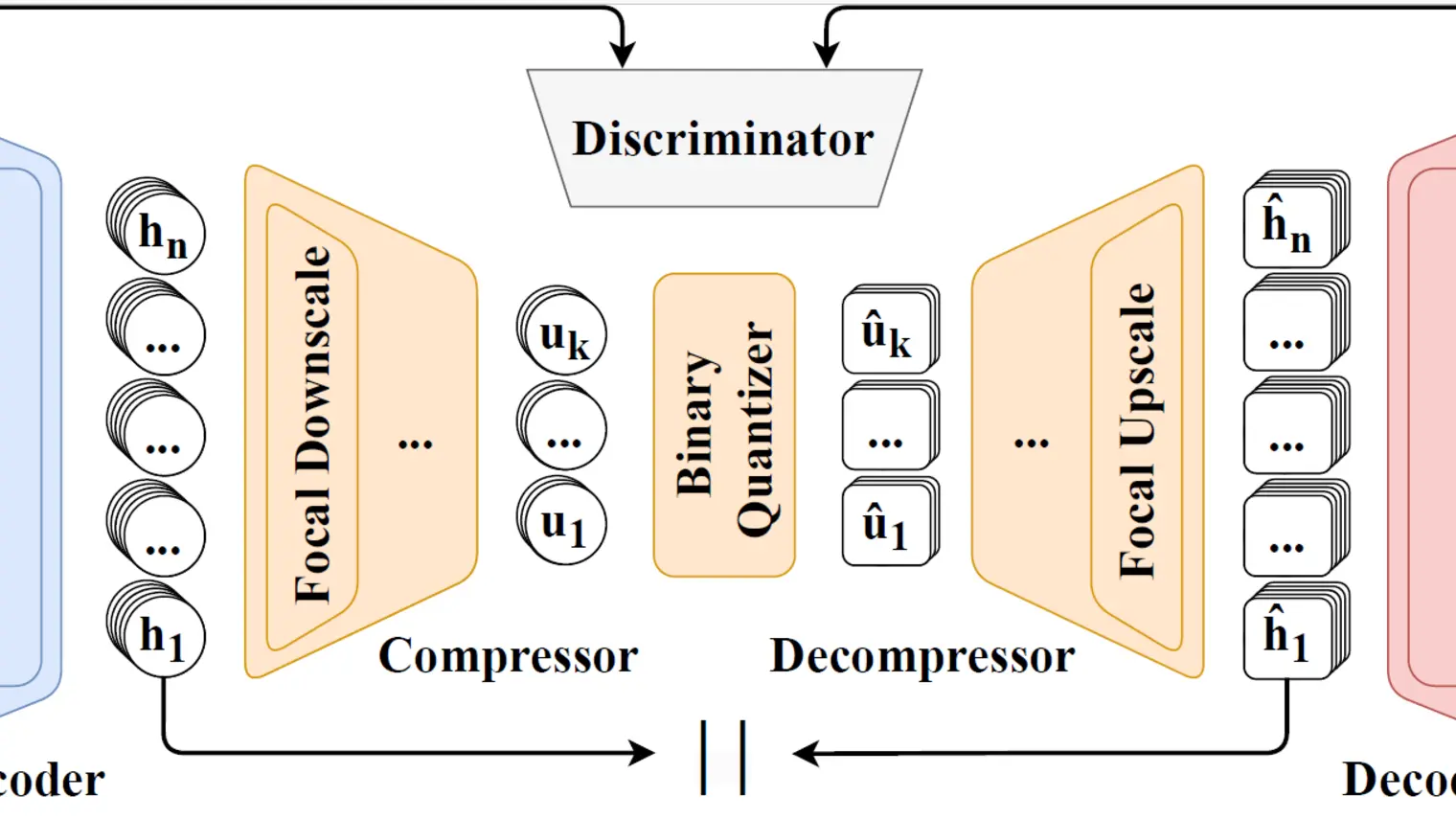
The increasing success of deep neural networks has raised concerns about their inherent black-box nature, posing challenges related to inter… (voir plus)pretability and trust. While there has been extensive exploration of interpretation techniques in vision and language, interpretability in the audio domain has received limited attention, primarily focusing on post-hoc explanations. This paper addresses the problem of interpretability by-design in the audio domain by utilizing the recently proposed attention-free focal modulation networks (FocalNets). We apply FocalNets to the task of environmental sound classification for the first time and evaluate their interpretability properties on the popular ESC-50 dataset. Our method outperforms a similarly sized vision transformer both in terms of accuracy and interpretability. Furthermore, it is competitive against PIQ, a method specifically designed for post-hoc interpretation in the audio domain.
2024-04-13
2024 IEEE International Conference on Acoustics, Speech, and Signal Processing Workshops (ICASSPW) (publié)
Transformers have recently achieved state-of-the-art performance in speech separation. These models, however, are computationally demanding … (voir plus)and require a lot of learnable parameters. This paper explores Transformer-based speech separation with a reduced computational cost. Our main contribution is the development of the Resource-Efficient Separation Transformer (RE-SepFormer), a self-attention-based architecture that reduces the computational burden in two ways. First, it uses non-overlapping blocks in the latent space. Second, it operates on compact latent summaries calculated from each chunk. The RE-SepFormer reaches a competitive performance on the popular WSJ0-2Mix and WHAM! datasets in both causal and non-causal settings. Remarkably, it scales significantly better than the previous Transformer-based architectures in terms of memory and inference time, making it more suitable for processing long mixtures.
2024-04-13
ICASSP 2024 - 2024 IEEE International Conference on Acoustics, Speech and Signal Processing (ICASSP) (publié)