
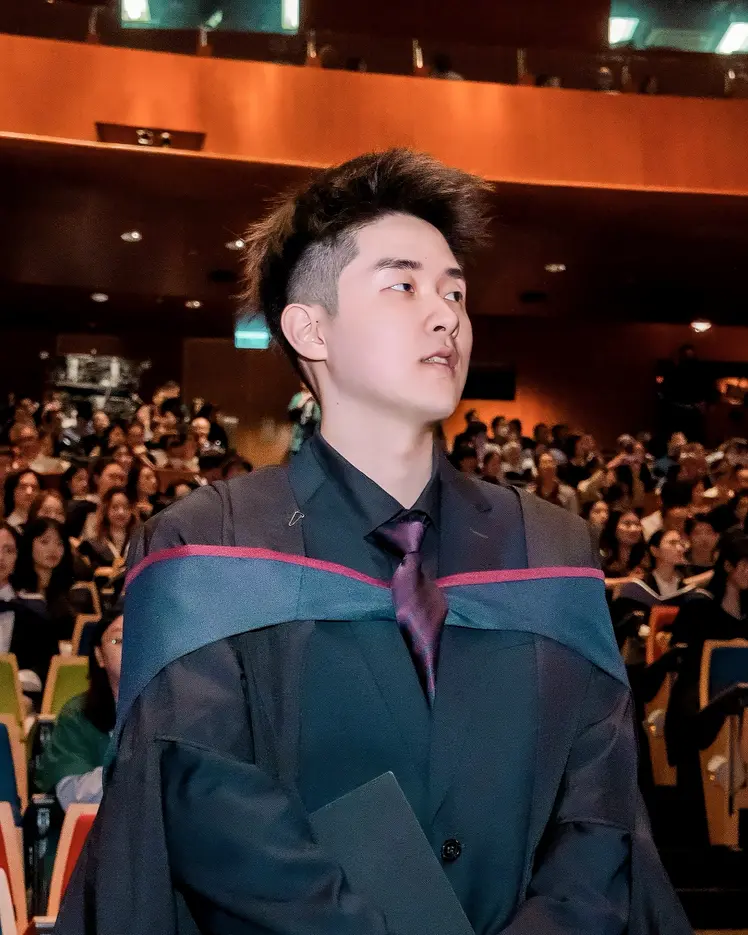
Portrait de Yihong Tang

Yihong Tang

Doctorat - McGill
Superviseur⋅e principal⋅e
Sujets de recherche
Agent basé sur un LLM
Apprentissage par renforcement
Apprentissage profond
Grands modèles de langage (LLM)
IAG (Intelligence Artificielle Générale)
Modèles génératifs
Systèmes multi-agents

Publications

World Models as Adversaries: Multi-Agent Self-Play Fine-Tuning for Robust Motion Planning
Tong Nie
Yuewen Mei
Junlin He
Jian Sun
Wei Ma
Robust motion planning in dense traffic requires autonomous vehicles to interact in rare and safety-critical scenarios that are underreprese… (voir plus)nted in naturalistic driving data. Although adversarial training offers a feasible solution, existing methods often rely on external scenario generators, heuristic perturbations, or simulator-heavy rollouts, which makes them difficult to integrate with modern autoregressive planners. Here, we cast adversarially robust planner learning as a constrained min-max game and propose Adversarial World Modeling (AWM), a theoretically grounded multi-agent self-play fine-tuning framework. Since solving the exact game is intractable, AWM introduces a principled decoupled solver. In the inner minimization, the planner's predictive world model is converted into a role-conditioned adversary that learns sparse, scene-adaptive attack coalitions via counterfactual credit assignment. In the outer maximization, the ego planner optimizes a regret-aware robust best response against the frozen AWM, utilizing tail-risk weighting and reference-anchored trust regions to improve hard-case recovery while preserving nominal driving behavior. Experiments on the nuPlan and InterPlan benchmarks demonstrate that our method generates transferable adversarial interactions and yields a robust planner that achieves competitive closed-loop performance in both nominal and highly interactive long-tail scenarios. Theoretical analysis justifies the decoupled solver and the main optimization components.
EvoDrive: Pareto Evolution for Safety-Critical Autonomous Driving via Self-Improving LLM Agents
Tong Nie
Yuewen Mei
Junlin He
Jie Deng
Jian Sun
Wei Ma
Generating safety-critical scenarios is essential for validating and improving autonomous driving systems, yet it inherently requires maximi… (voir plus)zing adversariality to expose failures while preserving realism. Existing methods usually manage this trade-off with handcrafted heuristics, confining generation to known priors and overlooking underexplored patterns. While recent open-ended agentic evolution can push this limit, unconstrained general agents lack strict simulator grounding and tend to collapse the multi-objective tension into single-scalar maximization. Here we present EvoDrive, the first automated, LLM-based agentic evolution framework for multi-objective scenario generation. EvoDrive employs a simulator-grounded actor-critic architecture where a memory-driven actor iteratively proposes improvements to the generators and critics filter out implausible candidates, and a self-evolving world evaluator routes promising proposals to optimize simulation budgets. EvoDrive further maintains a Pareto archive of evaluated candidates to preserve diverse attack-realism trade-offs and guide future evolution via simulation feedback. Benchmark results on MetaDrive and CARLA show that EvoDrive not only significantly expands the Pareto frontier across various generators, but also produces valuable scenarios for policy training.
MobEvolve: An Agentic Self-Evolving Heuristic System for Interpretable Human Mobility Generation
Junlin He
Tong Nie
Ao Qu
Yuebing Liang
Hamzeh Alizadeh
Wei Ma
Lijun Sun
Human mobility generation aims to synthesize realistic trip chains for target populations based on individual features. Existing paradigms, … (voir plus)including deep generative models, LLM-based methods, and traditional heuristics, struggle to satisfy the complex demands of this task while simultaneously maintaining interpretability, behavioral plausibility, population-level distributional alignment, and inference efficiency. To bridge this gap, we introduce MobEvolve, the first agentic self-evolving heuristic framework for human mobility generation. MobEvolve initializes a behavior-inspired heuristic system and employs an LLM agent to iteratively evolve its internal logic. By diagnosing empirical misalignments and failure cases on a validation set, the agent proposes targeted updates and accumulates evolution memory for cumulative self-improvement. Extensive evaluations on the Singapore and Montreal benchmarks demonstrate that MobEvolve significantly outperforms state-of-the-art deep generative and LLM-based methods in individual trajectory fidelity, population-level distribution alignment, and behavioral plausibility, while preserving interpretability and high inference efficiency.
Dr-CiK: A Testbed for Foresight-Driven Agents
Vincent Zhihao Zheng
Lijun Sun
Issam H. Laradji
Étienne Marcotte
Time series forecasting in real-world settings often depends not only on historical observations, but also on external context that must be … (voir plus)actively discovered from noisy, heterogeneous information sources. Yet existing context-aided forecasting benchmarks typically assume that the supporting context is already provided, leaving open whether agents can identify it on their own. Therefore, we introduce Dr-CiK, a benchmark for evaluating whether agents can retrieve forecasting-relevant supporting context from a document corpus, filter out distractors, distill the retrieved context into forecast-useful evidence, and generate forecasts supported by that evidence. Through context ablations and evaluations of state-of-the-art deep research and forecasting methods paired together, we show that high-quality context substantially improves forecasting performance in Dr-CiK. However, most existing DR agents recover only a small fraction of the ground-truth supporting evidence (usually <5%), are frequently misled by distractors (>80% distractor citations), and can cause forecasters to perform worse with retrieved context than without context. Our results motivate research on foresight-driven agents that search for the right context to predict the future.
Preference-Guided Adversarial Policy Optimization for Long-Tail Robust Driving
Tong Nie
Junlin He
Yuewen Mei
Jie Sun
Lijun Sun
Wei Ma
Jian Sun