

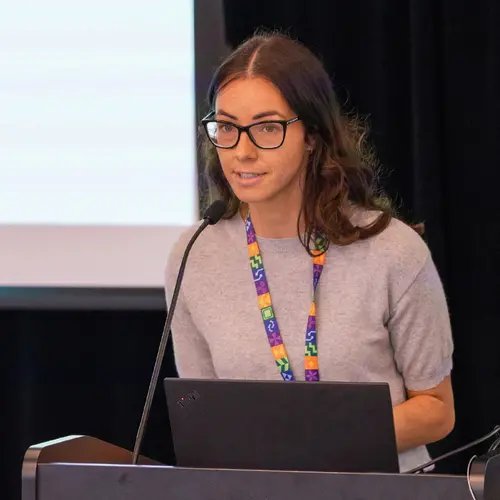


Portrait de David Buckeridge

David Buckeridge

Membre académique associé
Professeur titulaire, McGill University, Département d'épidémiologie, biostatistique et santé au travail
Sujets de recherche
Apprentissage automatique médical

Biographie

David Buckeridge est professeur titulaire à l'École de santé des populations et de santé mondiale de l'Université McGill, responsable de la santé numérique au Centre universitaire de santé McGill et directeur scientifique exécutif pour l'Agence de la santé publique du Canada. Titulaire d'une chaire de recherche du Canada (niveau 1) en informatique de la santé et en science des données, il a établi les projections concernant la demande dans le système de santé du Québec, dirigé la gestion des données et l'analyse pour le groupe de travail sur l'immunité canadienne et aidé l'Organisation mondiale de la santé à surveiller l'immunité mondiale contre le SRAS-CoV-2. Il est titulaire d'un doctorat en médecine (Université Queen's), d'une maîtrise en épidémiologie (Université de Toronto) et d'un doctorat en informatique biomédicale (Université Stanford), et est membre du Collège royal des médecins du Canada.

Étudiants actuels

Doctorat - McGill
Maîtrise recherche - McGill

Publications

Canada's approach to SARS-CoV-2 sero-surveillance: Lessons learned for routine surveillance and future pandemics.
Sheila F. O’Brien
Michael Asamoah-Boaheng
Brian Grunau
Mel Krajden
David M. Goldfarb
Maureen Anderson
Marc Germain
Patrick Brown
Derek R. Stein
Kami Kandola
Graham Tipples
Philip Awadalla
Amanda Lang
Lesley Behl
Tiffany Fitzpatrick
Steven J. Drews
SETTING In Canada's federated healthcare system, 13 provincial and territorial jurisdictions have independent responsibility to collect data… (voir plus) to inform health policies. During the COVID-19 pandemic (2020-2023), national and regional sero-surveys mostly drew upon existing infrastructure to quickly test specimens and collect data but required cross-jurisdiction coordination and communication. INTERVENTION There were 4 national and 7 regional general population SARS-CoV-2 sero-surveys. Survey methodologies varied by participant selection approaches, assay choices, and reporting structures. We analyzed Canadian pandemic sero-surveillance initiatives to identify key learnings to inform future pandemic planning. OUTCOMES Over a million samples were tested for SARS-CoV-2 antibodies from 2020 to 2023 but siloed in 11 distinct datasets. Most national sero-surveys had insufficient sample size to estimate regional prevalence; differences in methodology hampered cross-regional comparisons of regional sero-surveys. Only four sero-surveys included questionnaires. Sero-surveys were not directly comparable due to different assays, sampling methodologies, and time-frames. Linkage to health records occurred in three provinces only. Dried blood spots permitted sample collection in remote populations and during stay-at-home orders. IMPLICATIONS To provide timely, high-quality information for public health decision-making, routine sero-surveillance systems must be adaptable, flexible, and scalable. National capability planning should include consortiums for assay design and validation, defined mechanisms to improve test capacity, base documents for data linkage and material transfer across jurisdictions, and mechanisms for real-time communication of data. Lessons learned will inform incorporation of a robust sero-survey program into routine surveillance with strategic sampling and capacity to adapt and scale rapidly as a part of a comprehensive national pandemic response plan.
A Bayesian Non-Stationary Heteroskedastic Time Series Model for Multivariate Critical Care Data
Zayd Omar
David A. Stephens
Alexandra M. Schmidt
Economic evaluation of the effect of needle and syringe programs on skin, soft tissue, and vascular infections in people who inject drugs: a microsimulation modelling approach
Jihoon Lim
W Alton Russell
Mariam El-Sheikh
Dimitra Panagiotoglou
Temporal trends in disparities in COVID-19 seropositivity among Canadian blood donors
Yuan Yu
Matthew J Knight
Diana Gibson
Sheila F O’Brien
W Alton Russell
Abstract Background In Canada’s largest COVID-19 serological study, SARS-CoV-2 antibodies in blood donors have been monitored since 2020. … (voir plus)No study has analysed changes in the association between anti-N seropositivity (a marker of recent infection) and geographic and sociodemographic characteristics over the pandemic. Methods Using Bayesian multi-level models with spatial effects at the census division level, we analysed changes in correlates of SARS-CoV-2 anti-N seropositivity across three periods in which different variants predominated (pre-Delta, Delta and Omicron). We analysed disparities by geographic area, individual traits (age, sex, race) and neighbourhood factors (urbanicity, material deprivation and social deprivation). Data were from 420 319 blood donations across four regions (Ontario, British Columbia [BC], the Prairies and the Atlantic region) from December 2020 to November 2022. Results Seropositivity was higher for racialized minorities, males and individuals in more materially deprived neighbourhoods in the pre-Delta and Delta waves. These subgroup differences dissipated in the Omicron wave as large swaths of the population became infected. Across all waves, seropositivity was higher in younger individuals and those with lower neighbourhood social deprivation. Rural residents had high seropositivity in the Prairies, but not other regions. Compared to generalized linear models, multi-level models with spatial effects had better fit and lower error when predicting SARS-CoV-2 anti-N seropositivity by geographic region. Conclusions Correlates of recent COVID-19 infection have evolved over the pandemic. Many disparities lessened during the Omicron wave, but public health intervention may be warranted to address persistently higher burden among young people and those with less social deprivation.
Temporal trends in disparities in COVID-19 seropositivity among Canadian blood donors
Yuan Yu
Matthew J Knight
Diana Gibson
Sheila F O’Brien
W Alton Russell
Abstract Background In Canada’s largest COVID-19 serological study, SARS-CoV-2 antibodies in blood donors have been monitored since 2020. … (voir plus)No study has analysed changes in the association between anti-N seropositivity (a marker of recent infection) and geographic and sociodemographic characteristics over the pandemic. Methods Using Bayesian multi-level models with spatial effects at the census division level, we analysed changes in correlates of SARS-CoV-2 anti-N seropositivity across three periods in which different variants predominated (pre-Delta, Delta and Omicron). We analysed disparities by geographic area, individual traits (age, sex, race) and neighbourhood factors (urbanicity, material deprivation and social deprivation). Data were from 420 319 blood donations across four regions (Ontario, British Columbia [BC], the Prairies and the Atlantic region) from December 2020 to November 2022. Results Seropositivity was higher for racialized minorities, males and individuals in more materially deprived neighbourhoods in the pre-Delta and Delta waves. These subgroup differences dissipated in the Omicron wave as large swaths of the population became infected. Across all waves, seropositivity was higher in younger individuals and those with lower neighbourhood social deprivation. Rural residents had high seropositivity in the Prairies, but not other regions. Compared to generalized linear models, multi-level models with spatial effects had better fit and lower error when predicting SARS-CoV-2 anti-N seropositivity by geographic region. Conclusions Correlates of recent COVID-19 infection have evolved over the pandemic. Many disparities lessened during the Omicron wave, but public health intervention may be warranted to address persistently higher burden among young people and those with less social deprivation.
Bidirectional Generative Pre-training for Improving Healthcare Time-series Representation Learning
Ziyang Song
Qincheng Lu
Learning time-series representations for discriminative tasks, such as classification and regression, has been a long-standing challenge in … (voir plus)the healthcare domain. Current pre-training methods are limited in either unidirectional next-token prediction or randomly masked token prediction. We propose a novel architecture called Bidirectional Timely Generative Pre-trained Transformer (BiTimelyGPT), which pre-trains on biosignals and longitudinal clinical records by both next-token and previous-token prediction in alternating transformer layers. This pre-training task preserves original distribution and data shapes of the time-series. Additionally, the full-rank forward and backward attention matrices exhibit more expressive representation capabilities. Using biosignals and longitudinal clinical records, BiTimelyGPT demonstrates superior performance in predicting neurological functionality, disease diagnosis, and physiological signs. By visualizing the attention heatmap, we observe that the pre-trained BiTimelyGPT can identify discriminative segments from biosignal time-series sequences, even more so after fine-tuning on the task.
Machine Learning Informed Diagnosis for Congenital Heart Disease in Large Claims Data Source
Ariane Marelli
Chao Li
Aihua Liu
Hanh Nguyen
Harry Moroz
James M. Brophy
Liming Guo
BAND: Biomedical Alert News Dataset
Zihao Fu
Meiru Zhang
Zaiqiao Meng
Anya Okhmatovskaia
Nigel Collier
Bidirectional Generative Pre-training for Improving Time Series Representation Learning
Ziyang Song
Qincheng Lu
Mike He Zhu
Bidirectional Generative Pre-training for Improving Healthcare Time-series Representation Learning
Ziyang Song
Qincheng Lu
Mike He Zhu
CODA: an open-source platform for federated analysis and machine learning on distributed healthcare data
Louis Mullie
Jonathan Afilalo
Patrick Archambault
Rima Bouchakri
Kip Brown
Yiorgos Alexandros Cavayas
Alexis F Turgeon
Denis Martineau
François Lamontagne
Martine Lebrasseur
Renald Lemieux
Jeffrey Li
Michaël Sauthier
Pascal St-Onge
An Tang
William Witteman
Michael Chassé
CODA: an open-source platform for federated analysis and machine learning on distributed healthcare data
Louis Mullie
Jonathan Afilalo
Patrick Archambault
Rima Bouchakri
Kip Brown
Yiorgos Alexandros Cavayas
Alexis F Turgeon
Denis Martineau
François Lamontagne
Martine Lebrasseur
Renald Lemieux
Jeffrey Li
Michaël Sauthier
Pascal St-Onge
An Tang
William Witteman
Michael Chassé
Abstract Objectives Distributed computations facilitate multi-institutional data analysis while avoiding the costs and complexity of data po… (voir plus)oling. Existing approaches lack crucial features, such as built-in medical standards and terminologies, no-code data visualizations, explicit disclosure control mechanisms, and support for basic statistical computations, in addition to gradient-based optimization capabilities. Materials and methods We describe the development of the Collaborative Data Analysis (CODA) platform, and the design choices undertaken to address the key needs identified during our survey of stakeholders. We use a public dataset (MIMIC-IV) to demonstrate end-to-end multi-modal FL using CODA. We assessed the technical feasibility of deploying the CODA platform at 9 hospitals in Canada, describe implementation challenges, and evaluate its scalability on large patient populations. Results The CODA platform was designed, developed, and deployed between January 2020 and January 2023. Software code, documentation, and technical documents were released under an open-source license. Multi-modal federated averaging is illustrated using the MIMIC-IV and MIMIC-CXR datasets. To date, 8 out of the 9 participating sites have successfully deployed the platform, with a total enrolment of >1M patients. Mapping data from legacy systems to FHIR was the biggest barrier to implementation. Discussion and conclusion The CODA platform was developed and successfully deployed in a public healthcare setting in Canada, with heterogeneous information technology systems and capabilities. Ongoing efforts will use the platform to develop and prospectively validate models for risk assessment, proactive monitoring, and resource usage. Further work will also make tools available to facilitate migration from legacy formats to FHIR and DICOM.