Portrait of Yoshua Bengio

Yoshua Bengio

Core Academic Member
Canada CIFAR AI Chair
Full Professor, Université de Montréal, Department of Computer Science and Operations Research Department
Founder and Scientific Advisor, Leadership Team
Research Topics
Causality
Computational Neuroscience
Deep Learning
Generative Models
Graph Neural Networks
Machine Learning Theory
Medical Machine Learning
Molecular Modeling
Natural Language Processing
Probabilistic Models
Reasoning
Recurrent Neural Networks
Reinforcement Learning
Representation Learning

Biography

*For media requests, please write to medias@mila.quebec.

For more information please contact Cassidy MacNeil, Senior Assistant and Operation Lead at cassidy.macneil@mila.quebec.

Yoshua Bengio is recognized worldwide as a leading expert in AI. He is most known for his pioneering work in deep learning, which earned him the 2018 A.M. Turing Award, “the Nobel Prize of computing,” with Geoffrey Hinton and Yann LeCun.

Bengio is a full professor at Université de Montréal, and the founder and scientific advisor of Mila – Quebec Artificial Intelligence Institute. He is also a senior fellow at CIFAR and co-directs its Learning in Machines & Brains program, serves as special advisor and founding scientific director of IVADO, and holds a Canada CIFAR AI Chair.

In 2019, Bengio was awarded the prestigious Killam Prize and in 2022, he was the most cited computer scientist in the world by h-index. He is a Fellow of the Royal Society of London, Fellow of the Royal Society of Canada, Knight of the Legion of Honor of France and Officer of the Order of Canada. In 2023, he was appointed to the UN’s Scientific Advisory Board for Independent Advice on Breakthroughs in Science and Technology.

Concerned about the social impact of AI, Bengio helped draft the Montréal Declaration for the Responsible Development of Artificial Intelligence and continues to raise awareness about the importance of mitigating the potentially catastrophic risks associated with future AI systems.

Current Students

Collaborating Alumni - McGill University
Collaborating researcher - Cambridge University
Principal supervisor :
PhD - Université de Montréal
Independent visiting researcher
Co-supervisor :
Collaborating researcher - N/A
Principal supervisor :
PhD - Université de Montréal
Collaborating researcher - KAIST
PhD - Université de Montréal
Collaborating Alumni - Université de Montréal
Co-supervisor :
Independent visiting researcher
Principal supervisor :
PhD - Université de Montréal
Co-supervisor :
PhD - Université de Montréal
Principal supervisor :
Collaborating Alumni - Université de Montréal
Postdoctorate - Université de Montréal
Principal supervisor :
Postdoctorate - Université de Montréal
Principal supervisor :
Collaborating Alumni
Collaborating Alumni - Université de Montréal
PhD - Université de Montréal
Co-supervisor :
PhD - Université de Montréal
Principal supervisor :
PhD - Université de Montréal
Principal supervisor :
Independent visiting researcher - Université de Montréal
PhD - Université de Montréal
Principal supervisor :
Collaborating researcher - Ying Wu Coll of Computing
Collaborating researcher - University of Waterloo
Principal supervisor :
Collaborating Alumni - Max-Planck-Institute for Intelligent Systems
Collaborating researcher - Université de Montréal
Co-supervisor :
PhD - Université de Montréal
Postdoctorate - Université de Montréal
Independent visiting researcher - Université de Montréal
Postdoctorate - Université de Montréal
PhD - Université de Montréal
Principal supervisor :
Collaborating Alumni - Université de Montréal
Postdoctorate
Co-supervisor :
Collaborating Alumni - Polytechnique Montréal
Co-supervisor :
PhD - Université de Montréal
Co-supervisor :
Collaborating researcher
Principal supervisor :
Collaborating Alumni - Université de Montréal
Co-supervisor :
PhD - Université de Montréal
Principal supervisor :
Collaborating researcher
Collaborating researcher - Université de Montréal
PhD - Université de Montréal
PhD - McGill University
Principal supervisor :
PhD - Université de Montréal
Principal supervisor :
Collaborating Alumni - McGill University
Principal supervisor :

Publications

Active Attacks: Red-teaming LLMs via Adaptive Environments
Pierre-Luc St-Charles
Jinkyoo Park
We address the challenge of generating diverse attack prompts for large language models (LLMs) that elicit harmful behaviors (e.g., insults,… (see more) sexual content) and are used for safety fine-tuning. Rather than relying on manual prompt engineering, attacker LLMs can be trained with reinforcement learning (RL) to automatically generate such prompts using only a toxicity classifier as a reward. However, capturing a wide range of harmful behaviors is a significant challenge that requires explicit diversity objectives. Existing diversity-seeking RL methods often collapse to limited modes: once high-reward prompts are found, exploration of new regions is discouraged. Inspired by the active learning paradigm that encourages adaptive exploration, we introduce \textit{Active Attacks}, a novel RL-based red-teaming algorithm that adapts its attacks as the victim evolves. By periodically safety fine-tuning the victim LLM with collected attack prompts, rewards in exploited regions diminish, which forces the attacker to seek unexplored vulnerabilities. This process naturally induces an easy-to-hard exploration curriculum, where the attacker progresses beyond easy modes toward increasingly difficult ones. As a result, Active Attacks uncovers a wide range of local attack modes step by step, and their combination achieves wide coverage of the multi-mode distribution. Active Attacks, a simple plug-and-play module that seamlessly integrates into existing RL objectives, unexpectedly outperformed prior RL-based methods -- including GFlowNets, PPO, and REINFORCE -- by improving cross-attack success rates against GFlowNets, the previous state-of-the-art, from 0.07% to 31.28% (a relative gain greater than
Active Attacks: Red-teaming LLMs via Adaptive Environments
Pierre-Luc St-Charles
Jinkyoo Park
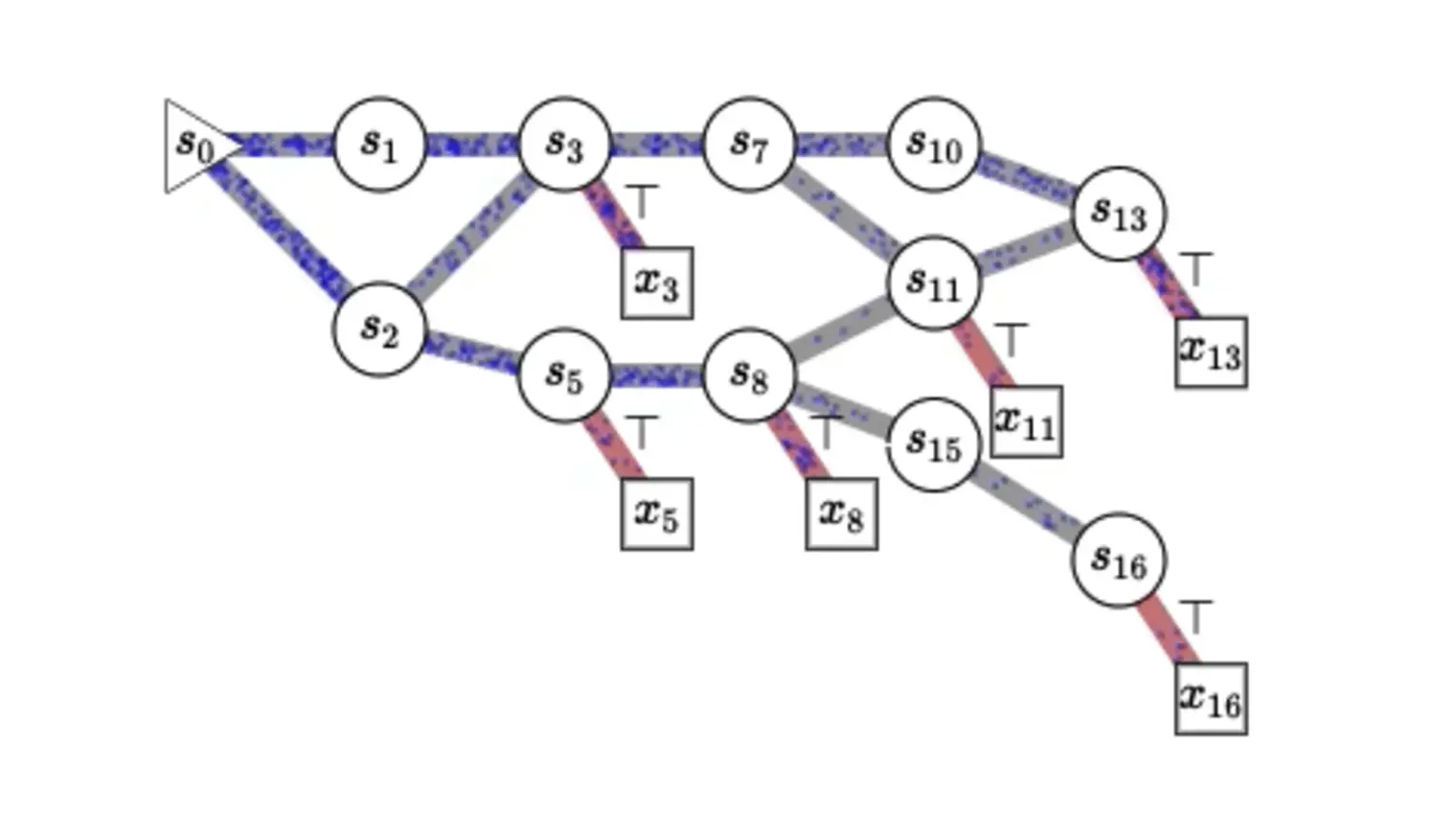
Graph Dreamer: Temporal Graph World Models for Sample-Efficient and Generalisable Reinforcement Learning
Bringing SAM to new heights: Leveraging elevation data for tree crown segmentation from drone imagery
Information on trees at the individual level is crucial for monitoring forest ecosystems and planning forest management. Current monitoring … (see more)methods involve ground measurements, requiring extensive cost, time and labor. Advances in drone remote sensing and computer vision offer great potential for mapping individual trees from aerial imagery at broad-scale. Large pre-trained vision models, such as the Segment Anything Model (SAM), represent a particularly compelling choice given limited labeled data. In this work, we compare methods leveraging SAM for the task of automatic tree crown instance segmentation in high resolution drone imagery in three use cases: 1) boreal plantations, 2) temperate forests and 3) tropical forests. We also study the integration of elevation data into models, in the form of Digital Surface Model (DSM) information, which can readily be obtained at no additional cost from RGB drone imagery. We present BalSAM, a model leveraging SAM and DSM information, which shows potential over other methods, particularly in the context of plantations. We find that methods using SAM out-of-the-box do not outperform a custom Mask R-CNN, even with well-designed prompts. However, efficiently tuning SAM end-to-end and integrating DSM information are both promising avenues for tree crown instance segmentation models.
Fast Monte Carlo Tree Diffusion: 100× Speedup via Parallel and Sparse Planning
Jaesik Yoon
Hyeonseo Cho
Diffusion models have recently emerged as a powerful approach for trajectory planning. However, their inherently non-sequential nature limit… (see more)s their effectiveness in long-horizon reasoning tasks at test time. The recently proposed Monte Carlo Tree Diffusion (MCTD) offers a promising solution by combining diffusion with tree-based search, achieving state-of-the-art performance on complex planning problems. Despite its strengths, our analysis shows that MCTD incurs substantial computational overhead due to the sequential nature of tree search and the cost of iterative denoising. To address this, we propose Fast-MCTD, a more efficient variant that preserves the strengths of MCTD while significantly improving its speed and scalability. Fast-MCTD integrates two techniques: Parallel MCTD, which enables parallel rollouts via delayed tree updates and redundancy-aware selection; and Sparse MCTD, which reduces rollout length through trajectory coarsening. Experiments show that Fast-MCTD achieves up to 100× speedup over standard MCTD while maintaining or improving planning performance. Remarkably, it even outperforms Diffuser in inference speed on some tasks, despite Diffuser requiring no search and yielding weaker solutions. These results position Fast-MCTD as a practical and scalable solution for diffusion-based inference-time reasoning.
Trajectory Balance with Asynchrony: Decoupling Exploration and Learning for Fast, Scalable LLM Post-Training
Brian Bartoldson
James Diffenderfer
Tal Ben-Nun
Johan Obando-Ceron
Bhavya Kailkhura
Reinforcement learning (RL) is a critical component of large language model (LLM) post-training. However, on-policy algorithms used for post… (see more)-training are not naturally robust to a diversified content of experience replay buffers, which asynchronous off-policy actors can efficiently populate in parallel to training. We propose efficiently learning on such off-policy data via Trajectory Balance with Asynchrony (TBA), an approach to asynchronous RL for LLMs that leverages the principled off-policy TB objective. On math, preference-tuning, and automated red-teaming tasks, we post-train models ranging from Pythia 410M to Qwen 2.5 7B, finding TBA offers speed and performance boosts over strong baselines like Online DPO and Dr. GRPO. Beyond TBA's performance benefits (high accuracy even as asynchrony grows) and speedups (
Low Compute Unlearning via Sparse Representations
Ashish Malik
Michael Curtis Mozer
Sanjeev Arora
Machine unlearning, which involves erasing knowledge about a \emph{forget set} from a trained model, can prove to be costly and infeasible … (see more)using existing techniques. We propose a low-compute unlearning technique based on a discrete representational bottleneck. We show that the proposed technique efficiently unlearns the forget set and incurs negligible damage to the model's performance on the rest of the dataset. We evaluate the proposed technique on the problem of class unlearning using four datasets: CIFAR-10, CIFAR-100, LACUNA-100 and ImageNet-1k. We compare the proposed technique to SCRUB, a state-of-the-art approach which uses knowledge distillation for unlearning. Across all four datasets, the proposed technique performs as well as, if not better than SCRUB while incurring almost no computational cost.
Relative Trajectory Balance is equivalent to Trust-PCL
Recent progress in generative modeling has highlighted the importance of Reinforcement Learning (RL) for fine-tuning, with KL-regularized me… (see more)thods in particular proving to be highly effective for both autoregressive and diffusion models. Complementing this line of work, the Relative Trajectory Balance (RTB) objective was recently introduced in the context of Generative Flow Networks (GFlowNets) to serve the same role of improving fine-tuning in sequential generative models. Building on prior work linking GFlowNets and maximum-entropy RL, we establish in this paper an equivalence between RTB and Trust-PCL, an off-policy RL method with KL regularization. This equivalence situates RTB within the broader theoretical landscape of KL-regularized RL, and clarifies its relationship to earlier methods. Leveraging this insight, we revisit an illustrative example from the RTB paper and show that KL-regularized RL methods achieve comparable performance, offering an alternative perspective to what was previously reported.
Relative Trajectory Balance is equivalent to Trust-PCL
Recent progress in generative modeling has highlighted the importance of Reinforcement Learning (RL) for fine-tuning, with KL-regularized me… (see more)thods in particular proving to be highly effective for both autoregressive and diffusion models. Complementing this line of work, the Relative Trajectory Balance (RTB) objective was recently introduced in the context of Generative Flow Networks (GFlowNets) to serve the same role of improving fine-tuning in sequential generative models. Building on prior work linking GFlowNets and maximum-entropy RL, we establish in this paper an equivalence between RTB and Trust-PCL, an off-policy RL method with KL regularization. This equivalence situates RTB within the broader theoretical landscape of KL-regularized RL, and clarifies its relationship to earlier methods. Leveraging this insight, we revisit an illustrative example from the RTB paper and show that KL-regularized RL methods achieve comparable performance, offering an alternative perspective to what was previously reported.
Torsional-GFN: a conditional conformation generator for small molecules
Generating stable molecular conformations is crucial in several drug discovery applications, such as estimating the binding affinity of a mo… (see more)lecule to a target. Recently, generative machine learning methods have emerged as a promising, more efficient method than molecular dynamics for sampling of conformations from the Boltzmann distribution. In this paper, we introduce Torsional-GFN, a conditional GFlowNet specifically designed to sample conformations of molecules proportionally to their Boltzmann distribution, using only a reward function as training signal. Conditioned on a molecular graph and its local structure (bond lengths and angles), Torsional-GFN samples rotations of its torsion angles. Our results demonstrate that Torsional-GFN is able to sample conformations approximately proportional to the Boltzmann distribution for multiple molecules with a single model, and allows for zero-shot generalization to unseen bond lengths and angles coming from the MD simulations for such molecules. Our work presents a promising avenue for scaling the proposed approach to larger molecular systems, achieving zero-shot generalization to unseen molecules, and including the generation of the local structure into the GFlowNet model.
RL, but don’t do anything I wouldn’t do
Michael K. Cohen
Marcus Hutter
Stuart Russell
In reinforcement learning (RL), if the agent’s reward differs from the designers’ true utility, even only rarely, the state distribution… (see more) resulting from the agent’s policy can be very bad, in theory and in practice. When RL policies would devolve into undesired behavior, a common countermeasure is KL regularization to a trusted policy ("Don’t do anything I wouldn’t do"). All current cutting-edge language models are RL agents that are KL-regularized to a "base policy" that is purely predictive. Unfortunately, we demonstrate that when this base policy is a Bayesian predictive model of a trusted policy, the KL constraint is no longer reliable for controlling the behavior of an advanced RL agent. We demonstrate this theoretically using algorithmic information theory, and while systems today are too weak to exhibit this theorized failure precisely, we RL-finetune a language model and find evidence that our formal results are plausibly relevant in practice. We also propose a theoretical alternative that avoids this problem by replacing the "Don’t do anything I wouldn’t do" principle with "Don’t do anything I mightn’t do".