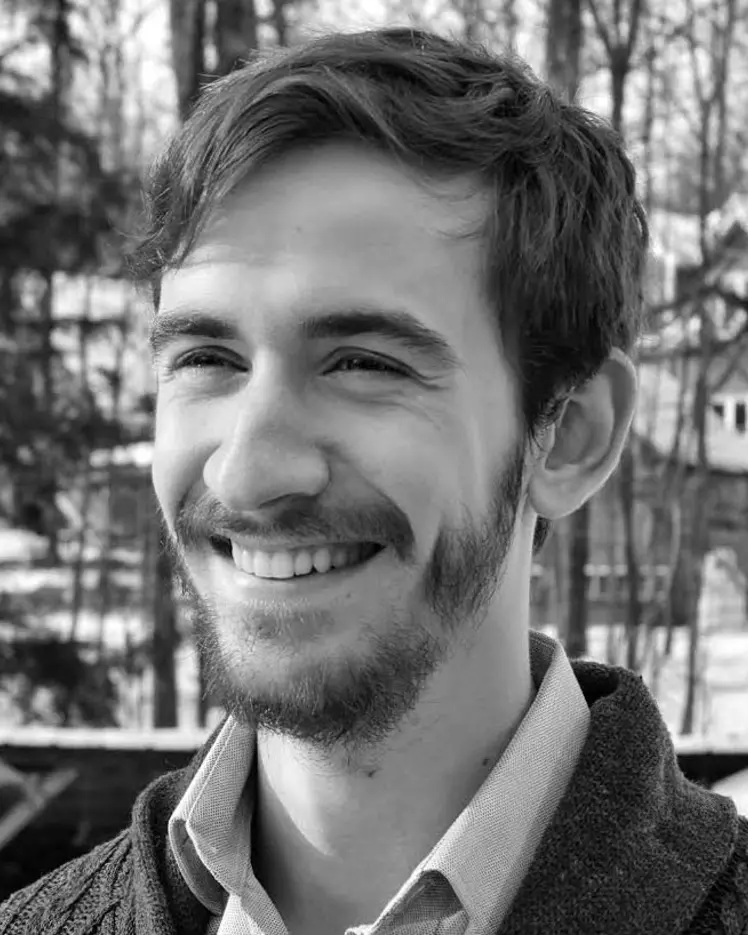
Portrait de Ronan Legin

Ronan Legin

Doctorat - UdeM
Superviseur⋅e principal⋅e
Sujets de recherche
Modèles génératifs

Publications

Mind the Information Gap: Unveiling Detailed Morphologies of z 0.5-1.0 Galaxies with SLACS Strong Lenses and Data-Driven Analysis
Pixellated Posterior Sampling of Point Spread Functions in Astronomical Images
We introduce a novel framework for upsampled Point Spread Function (PSF) modeling using pixel-level Bayesian inference. Accurate PSF charact… (voir plus)erization is critical for precision measurements in many fields including: weak lensing, astrometry, and photometry. Our method defines the posterior distribution of the pixelized PSF model through the combination of an analytic Gaussian likelihood and a highly expressive generative diffusion model prior, trained on a library of HST ePSF templates. Compared to traditional methods (parametric Moffat, ePSF template-based, and regularized likelihood), we demonstrate that our PSF models achieve orders of magnitude higher likelihood and residuals consistent with noise, all while remaining visually realistic. Further, the method applies even for faint and heavily masked point sources, merely producing a broader posterior. By recovering a realistic, pixel-level posterior distribution, our technique enables the first meaningful propagation of detailed PSF morphological uncertainty in downstream analysis. An implementation of our posterior sampling procedure is available on GitHub.
Blind Strong Gravitational Lensing Inversion: Joint Inference of Source and Lens Mass with Score-Based Models
Gravitational-Wave Parameter Estimation in non-Gaussian noise using Score-Based Likelihood Characterization
Maximiliano Isi
Kaze W. K. Wong
Gravitational-wave (GW) parameter estimation typically assumes that instrumental noise is Gaussian and stationary. Obvious departures from t… (voir plus)his idealization are typically handled on a case-by-case basis, e.g., through bespoke procedures to ``clean'' non-Gaussian noise transients (glitches), as was famously the case for the GW170817 neutron-star binary. Although effective, manipulating the data in this way can introduce biases in the inference of key astrophysical properties, like binary precession, and compound in unpredictable ways when combining multiple observations; alternative procedures free of the same biases, like joint inference of noise and signal properties, have so far proved too computationally expensive to execute at scale. Here we take a different approach: rather than explicitly modeling individual non-Gaussianities to then apply the traditional GW likelihood, we seek to learn the true distribution of instrumental noise without presuming Gaussianity and stationarity in the first place. Assuming only noise additivity, we employ score-based diffusion models to learn an empirical noise distribution directly from detector data and then combine it with a deterministic waveform model to provide an unbiased estimate of the likelihood function. We validate the method by performing inference on a subset of GW parameters from 400 mock observations, containing real LIGO noise from either the Livingston or Hanford detectors. We show that the proposed method can recover the true parameters even in the presence of loud glitches, and that the inference is unbiased over a population of signals without applying any cleaning to the data. This work provides a promising avenue for extracting unbiased source properties in future GW observations over the coming decade.
The CASTOR mission
Patrick Côté
T. Woods
John Hutchings
J. Rhodes
R. Sánchez-Janssen
Alan D. Scott
J. Pazder
Melissa Amenouche
Michael Balogh
Simon Blouin
Alain Cournoyer
M. Drout
Nick Kuzmin
Katherine J. Mack
Laura Ferrarese
Wesley C. Fraser
S. Gallagher
Frederic J. Grandmont
Daryl Haggard
P. Harrison … (voir 160 de plus)
V. Hénault-Brunet
J. Kavelaars
V. Khatu
J. Roediger
J. Rowe
Marcin Sawicki
Jesper Skottfelt
Matt Taylor
L. van Waerbeke
Laurie Amen
Dhananjhay Bansal
Martin Bergeron
Toby Brown
Greg Burley
Hum Chand
Isaac Cheng
Ryan Cloutier
N. Dickson
Oleg Djazovski
Ivana Damjanov
James Doherty
K. Finner
Macarena García Del Valle Espinosa
Jennifer Glover
A. I. Gómez de Castro
Or Graur
Tim Hardy
Michelle Kao
D A Leahy
Deborah Lokhorst
A. I. Malz
Allison Man
Madeline A. Marshall
Sean McGee
Ryan McKenzie
Kai Michaud
Surhud S. More
David Morris
Patrick W. Morris
T. Moutard
Wasi Naqvi
Matthew Nicholl
G. Noirot
M. S. Oey
C. Opitom
Samir Salim
Bryan R. Scott
Charles Shapiro
Daniel Stern
Ashwin Subramaniam
David Thilke
I. Wevers
Dmitri Vorobiev
L. Y. Aaron Yung
Frédéric Zamkotsian
S. Aigrain
A. Alavi
Martin Barstow
Peter Bartosik
H. Bluhm
J. Bovy
Peter Cameron
R. Carlberg
J. Christiansen
Yuyang Chen
P. Crowther
Kristen Dage
Aaron Dotter
Patrick Dufour
Jean Dupuis
B. Dryer
A. Duara
Gwendolyn M. Eadie
Marielle R. Eduardo
V. Estrada-Carpenter
Sébastien Fabbro
A. Faisst
N. M. Ford
M. Fraser
Boris T. Gaensicke
Shashkiran Ganesh
Poshak Gandhi
Melissa L. Graham
R. Hamel
Martin Hellmich
John J. Hennessy
Kaitlyn Hessel
J. Heyl
Catherine Heymans
Renée Hložek
Michael Hoenk
Andrew Holland
Eric Huff
Ian Hutchinson
I. Iwata
April D. Jewell
Doug Johnstone
Maia Jones
Todd J. Jones
D. Lang
J. Lapington
Justin Larivière
C. Lawlor-Forsyth
Denis Laurin
Charles Lee
Ting S. Li
S. Lim
B. Ludwig
Matt Kozun
V. M
Robert Mann
Alan McConnachie
Evan McDonough
S. Metchev
David R. Miller
Takashi Moriya
Cameron Morgan
Julio F. Navarro
Y. Nazé
Shouleh Nikzad
Vivek Oad
N. N.-Q. Ouellette
E. Pass
Will J. Percival
Joe Postma
Nayyer Raza
G. T. Richards
Harvey Richer
Carmelle Robert
Erik Rosolowsky
J. Ruan
Sarah Rugheimer
S. Safi-Harb
Kanak Saha
Vicky Scowcroft
F. Sestito
Himanshu Sharma
James Sikora
G. Sivakoff
T. S. Sivarani
Patrick Smith
Warren Soh
R. Sorba
S. Subramanian
Hossen Teimoorinia
H. Teplitz
Shaylin Thadani
Shavon Thadani
Aaron Tohuvavohu
K. Venn
Nicholas Vieira
Jeremy J. Webb
P. Wiegert
Ryan Wierckx
Yanqin Wu
J. Yeung
S. K. Yi
Echoes in the Noise: Posterior Samples of Faint Galaxy Surface Brightness Profiles with Score-based Likelihoods and Priors
Connor Bottrell
Laurence Perreaul-Levasseur
Examining the detailed structure of galaxy populations provides valuable insights into their formation and evolution mechanisms. Significant… (voir plus) barriers to such analysis are the nontrivial noise properties of real astronomical images and the point-spread function, which blurs structure. Here we present a framework which combines recent advances in score-based likelihood characterization and diffusion model priors to perform a Bayesian analysis of image deconvolution. The method, when applied to minimally processed Hubble Space Telescope data, recovers structures which have otherwise only become visible in next-generation James Webb Space Telescope imaging.
Inpainting Galaxy Counts onto N-Body Simulations over Multiple Cosmologies and Astrophysics
Caustics: A Python Package for Accelerated Strong Gravitational Lensing Simulations
M. J. Yantovski-Barth
Landung Setiawan
Cordero Core
Charles Wilson
Gabriel Missael Barco
Score-Based Likelihood Characterization for Inverse Problems in the Presence of Non-Gaussian Noise
Likelihood analysis is typically limited to normally distributed noise due to the difficulty of determining the probability density function… (voir plus) of complex, high-dimensional, non-Gaussian, and anisotropic noise. This work presents Score-based LIkelihood Characterization (SLIC), a framework that resolves this issue by building a data-driven noise model using a set of noise realizations from observations. We show that the approach produces unbiased and precise likelihoods even in the presence of highly non-Gaussian correlated and spatially varying noise. We use diffusion generative models to estimate the gradient of the probability density of noise with respect to data elements. In combination with the Jacobian of the physical model of the signal, we use Langevin sampling to produce independent samples from the unbiased likelihood. We demonstrate the effectiveness of the method using real data from the Hubble Space Telescope and James Webb Space Telescope.
Posterior Sampling of the Initial Conditions of the Universe from Non-linear Large Scale Structures using Score-Based Generative Models
Matthew Ho
Shirley Ho
Benjamin Wandelt
Reconstructing the initial conditions of the universe is a key problem in cosmology. Methods based on simulating the forward evolution of th… (voir plus)e universe have provided a way to infer initial conditions consistent with present-day observations. However, due to the high complexity of the inference problem, these methods either fail to sample a distribution of possible initial density fields or require significant approximations in the simulation model to be tractable, potentially leading to biased results. In this work, we propose the use of score-based generative models to sample realizations of the early universe given present-day observations. We infer the initial density field of full high-resolution dark matter N-body simulations from the present-day density field and verify the quality of produced samples compared to the ground truth based on summary statistics. The proposed method is capable of providing plausible realizations of the early universe density field from the initial conditions posterior distribution marginalized over cosmological parameters and can sample orders of magnitude faster than current state-of-the-art methods.
Spatial variations in aromatic hydrocarbon emission in a dust-rich galaxy
Justin S. Spilker
Kedar A. Phadke
Manuel Aravena
Melanie Archipley
Matthew B. Bayliss
Jack E. Birkin
Matthieu Béthermin
James Burgoyne
Jared Cathey
Scott C. Chapman
Håkon Dahle
Anthony H. Gonzalez
Gayathri Gururajan
Christopher C. Hayward
Yashar D. Hezaveh
Ryley Hill
Taylor A. Hutchison
Keunho J. Kim
Seonwoo Kim
David Law … (voir 19 de plus)
Matthew A. Malkan
Daniel P. Marrone
Eric J. Murphy
Desika Narayanan
Alex Navarre
Grace M. Olivier
Jeffrey A. Rich
Jane R. Rigby
Cassie Reuter
James E. Rhoads
Keren Sharon
J.D. T. Smith
Manuel Solimano
Nikolaus Sulzenauer
Joaquin D. Vieira
David Law
Axel Weiß
Katherine E. Whitaker
Dust grains absorb half of the radiation emitted by stars throughout the history of the universe, re-emitting this energy at infrared wavele… (voir plus)ngths. Polycyclic aromatic hydrocarbons (PAHs) are large organic molecules that trace millimeter-size dust grains and regulate the cooling of the interstellar gas within galaxies. Observations of PAH features in very distant galaxies have been difficult due to the limited sensitivity and wavelength coverage of previous infrared telescopes. Here we present JWST observations that detect the 3.3um PAH feature in a galaxy observed less than 1.5 billion years after the Big Bang. The high equivalent width of the PAH feature indicates that star formation, rather than black hole accretion, dominates the infrared emission throughout the galaxy. The light from PAH molecules, large dust grains, and stars and hot dust are spatially distinct from one another, leading to order-of-magnitude variations in the PAH equivalent width and the ratio of PAH to total infrared luminosity across the galaxy. The spatial variations we observe suggest either a physical offset between the PAHs and large dust grains or wide variations in the local ultraviolet radiation field. Our observations demonstrate that differences in the emission from PAH molecules and large dust grains are a complex result of localized processes within early galaxies.
Beyond Gaussian Noise: A Generalized Approach to Likelihood Analysis with non-Gaussian Noise
Laurence Perreault Levasseur
Likelihood analysis is typically limited to normally distributed noise due to the difficulty of determining the probability density function… (voir plus) of complex, high-dimensional, non-Gaussian, and anisotropic noise. This is a major limitation for precision measurements in many domains of science, including astrophysics, for example, for the analysis of the Cosmic Microwave Background, gravitational waves, gravitational lensing, and exoplanets. This work presents Score-based LIkelihood Characterization (SLIC), a framework that resolves this issue by building a data-driven noise model using a set of noise realizations from observations. We show that the approach produces unbiased and precise likelihoods even in the presence of highly non-Gaussian correlated and spatially varying noise. We use diffusion generative models to estimate the gradient of the probability density of noise with respect to data elements. In combination with the Jacobian of the physical model of the signal, we use Langevin sampling to produce independent samples from the unbiased likelihood. We demonstrate the effectiveness of the method using real data from the Hubble Space Telescope and James Webb Space Telescope.