



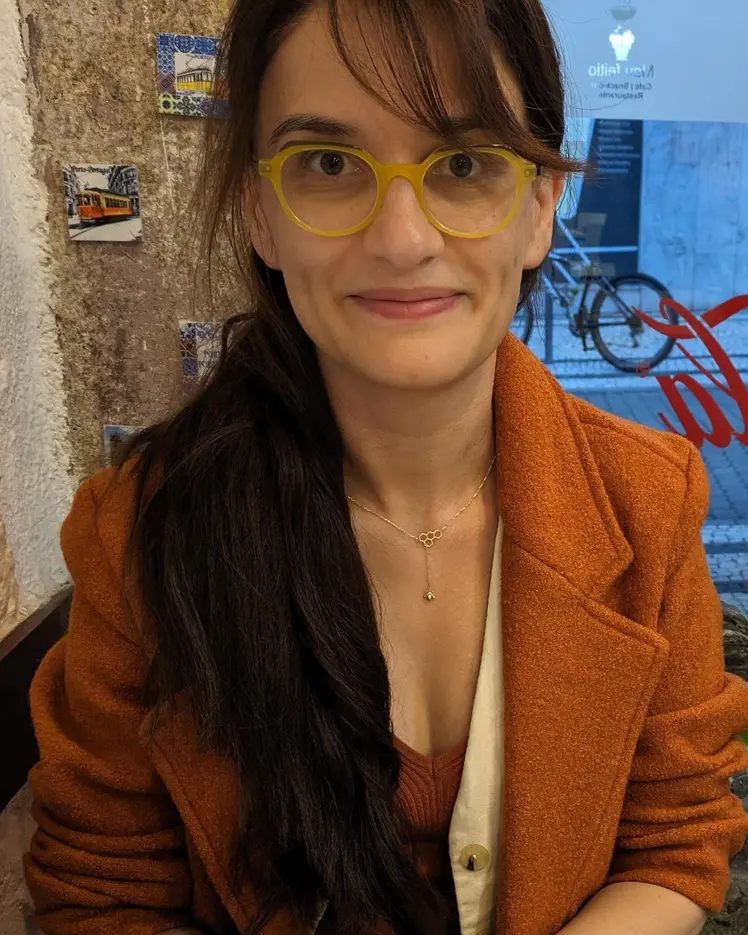
Portrait de Alexandra Olteanu

Alexandra Olteanu

Membre industriel associé
Chercheuse principale et co-fondatrice de l'équipe FATE, apprentissage profond et automatisé, Microsoft Research, Montréal
Sujets de recherche
Recherche d'information
Traitement du langage naturel

Publications

AI <i>Automatons:</i> AI Systems Intended to Imitate Humans
Alicia DeVrio
Solon Barocas
Lisa Egede
Myra Cheng
On Defining Erasure Harms for NLP
Arnav Goel
Jackie Chi Kit Cheung
Ziang Xiao
The deployment of NLP systems has raised concerns about harms they might produce, including representational harms. Recent literature has be… (voir plus)gun to conceptualize and measure one such harm, the harm of erasure. Nevertheless, the field lacks a clear and cohesive conceptual foundation for identifying and measuring erasure. Existing conceptualizations of erasure are often broad -- making it difficult to identify what is needed to establish and measure erasure -- or else specific to particular settings -- facilitating measurement for those settings but potentially challenging to adapt to other settings. To address this gap, we develop and propose a structured definition of erasure that clarifies what components are necessary for establishing whether erasure has occurred, which practitioners need to explicitly articulate and operationalize in order to measure erasure.
From Use to Oversight: How Mental Models Influence User Behavior and Output in AI Writing Assistants
AI-based writing assistants are ubiquitous, yet little is known about how users' mental models shape their use. We examine two types of ment… (voir plus)al models -- functional or related to what the system does, and structural or related to how the system works -- and how they affect control behavior -- how users request, accept, or edit AI suggestions as they write -- and writing outcomes. We primed participants (
“I Was a Young AI”: On Probing the Effectiveness of Intervening on Anthropomorphic AI System Outputs
We see growing concerns about how the increasingly pervasive deployment of AI systems whose outputs appear human-like might impact people.Th… (voir plus)ese concerns have already motivated work both examining what makes such outputs appear human-like, as well as developing interventions to help reduce perceptions of human-likeness or mitigate adverse impacts.In this paper, we report on an exploratory crowd study we designed to examine challenges for assessing the effectiveness of interventions, including whether interventions intended to minimize perceptions of human-likeness also mitigate adverse impacts.We find variations both in what kinds of outputs different participants deem more human-like, as well as in their preferences for human-like outputs.Even when participants seem to prefer the outputs they deem more human-like, many of them also recognize that such outputs can have adverse impacts.Drawing on these results and prior work, we discuss challenges to and considerations for assessing the effectiveness of interventions.
The KITMUS Test: Evaluating Knowledge Integration from Multiple Sources
Akshatha Arodi
Kaheer Suleman
Adam Trischler
Jackie Chi Kit Cheung
Akshatha Arodi, Martin Pömsl, Kaheer Suleman, Adam Trischler, Alexandra Olteanu, Jackie Chi Kit Cheung. Proceedings of the 61st Annual Meet… (voir plus)ing of the Association for Computational Linguistics (Volume 1: Long Papers). 2023.