

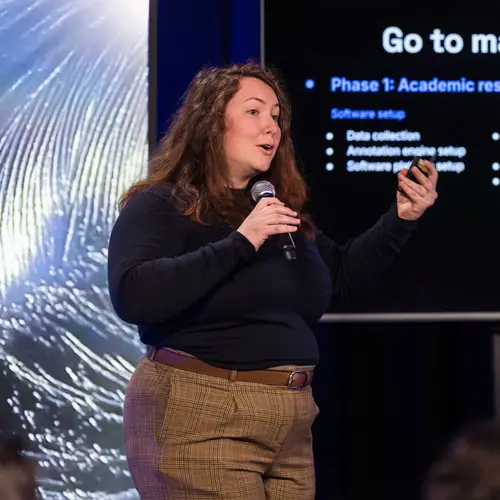

Portrait de Paul François

Paul François

Membre académique associé
Professeur titulaire, Université de Montréal, Département de biochimie et de médecine moléculaire
Professeur associé, McGill University, Département de physique
Sujets de recherche
Biologie computationnelle
Systèmes dynamiques
Théorie de l'apprentissage automatique
Théorie de l'information

Biographie

Paul François est professeur titulaire de bio-informatique au Département de biochimie et médecine moléculaire de la Faculté de médecine de l'Université de Montréal, et professeur adjoint au Département de physique de l'Université McGill. Il est biophysicien et se concentre sur l'application de méthodes informatiques (y compris l'apprentissage automatique) à l'évolution, au développement embryonnaire et à l'immunologie. Il est membre associé de Mila – Institut québécois d'intelligence artificielle.

Postes antérieurs :

- Professeur agrégé de physique, Université McGill (2016-2023)

- Professeur adjoint de physique, Université McGill (2010-2016)

Éducation et formation :

- Postdoctorat, Siggia Lab, Université Rockefeller, États-Unis (2005-2010)

- Doctorat en physique théorique, Laboratoire Hakim, École normale supérieure/Université Paris VII, France (2002-2005)

- M. Sc. en physique théorique, École normale supérieure/École polytechnique, France (2001-2002)

- Diplôme d'ingénieur, majeure en physique, École polytechnique, France (1998-2001), promotion X 98

Quelques récompenses :

- 2019 : Médaille commémorative Rutherford en physique, Société royale du Canada

- 2017 : Médaille CAP Herzberg, Association canadienne des physiciens et physiciennes

- 2015 : Prix du recteur de McGill décerné à des chercheurs émergents exceptionnels

- 2014 : Chercheur Simons en modélisation mathématique des systèmes vivants

- 2007 : Bourse postdoctorale Lavoisier (ministère français des Affaires étrangères)

- 2007 : Prix Le Monde pour la recherche scientifique

Étudiants actuels

Maîtrise recherche - UdeM
Doctorat - UdeM
Superviseur⋅e principal⋅e :
Doctorat - McGill

Publications

Learning the Principles of T Cell Antigen Discernment
François X. P. Bourassa
Sooraj Achar
Grégoire Altan-Bonnet
T cells are central to the adaptive immune response, capable of detecting pathogenic antigens while ignoring healthy tissues with remarkable… (voir plus) specificity and sensitivity. Quantitatively understanding how T cell receptors discern among antigens requires biophysical models and theoretical analyses of signaling networks. Here, we review current theoretical frameworks of antigen recognition in the context of modern experimental and computational advances. Antigen potency spans a continuum and exhibits nonlinear effects within complex mixtures, challenging discrete classification and simple threshold-based models. This complexity motivates the development of models, such as adaptive kinetic proofreading, that integrate both activating and inhibitory signals. Advances in high-throughput technologies now generate large-scale, quantitative data sets, enabling the refinement of such models through statistical and machine learning approaches. This convergence of theory, data, and computation promises deeper insights into immune decision-making and opens new avenues for rational immunotherapy design.
Foci, waves, excitability: Self-organization of phase waves in a model of asymmetrically coupled embryonic oscillators
Anonymous
Kaushik Roy
The segmentation clock is an emergent embryonic oscillator that controls the periodic formation of vertebrae precursors (or somites). It rel… (voir plus)ies on the self-organization at the presomitic mesoderm (PSM) level of multiple coupled cellular oscillators. Dissociation-reaggregation experiments have further revealed that ensembles made of such cellular oscillators self-organize into an oscillatory bidimensional system, showing concentric waves around multiple foci. Here, we systematically study the dynamics of a two-dimensional lattice of phase oscillators locally coupled to their nearest neighbors through a biharmonic coupling function of the form sinθ+Λsin^{2}θ. This coupling was inferred from the phase response curve of entrainment experiments on cell cultures, leading to the formulation of a minimal Elliptic Radial Isochron Cycle (ERIC) phase model. We show that such ERIC-based coupling parsimoniously explains the emergence of self-organized concentric phase wave patterns around multiple foci for a range of weak couplings and wide distributions of initial random phases, closely mimicking experimental conditions. We further study extended modalities of this problem to derive an atlas of possible behaviors. In particular, we predict the dominant observation of spirals over target wave patterns for initial phase distributions wider than approximately π. Since PSM cells further display properties of an excitable system, we also introduce excitability into our simple model and show that it also supports the observation of concentric phase waves for the conditions of the experiment. Our work suggests important modifications that can be made to the simple phase model with Kuramoto coupling, which can provide further layers of complexity and aid in the explanation of the spatial aspects of self-organization in the segmentation clock.
Generative epigenetic landscapes map the topology and topography of cell fates.
Epigenetic landscapes were proposed by Waddington as the central concept to describe cell fate dynamics in a locally low-dimensional space. … (voir plus)In modern landscape models, attractors represent cell types, and stochastic jumps and bifurcations drive cellular decisions, allowing for quantitative and predictive descriptions. However, given a biological problem of interest, we still lack tools to infer and build possible Waddington landscapes systematically. In this study, we propose a generative model for deriving epigenetic landscapes compatible with data. To build the landscapes, we combine gradient and rotational vector fields composed of locally weighted elements that encode ‘valleys’ of the Waddington landscape, resulting in interpretable models. We optimize landscapes through computational evolution and illustrate our approach with two developmental examples: metazoan segmentation and neuromesoderm differentiation. In both cases, we obtain ensembles of solutions that reveal both known and novel landscapes in terms of topology and bifurcations. Conversely, topographic features appear strongly constrained by dynamical data, which suggests that our approach can generically derive interpretable and predictive epigenetic landscapes.
Dynamical model and geometric insights in the discontinuity theory of immunity
Christian Mauffette Denis
Maya Dagher
Vincent Verbavatz
François X.P. Bourassa
Grégoire Altan-Bonnet
The immune system’s most basic task is to decide what is “self” and “non-self”, but a precise definition of self versus non-self r… (voir plus)emains challenging. According to the discontinuity theory of immunity, effector responses depend on how quickly an antigenic stimulus changes: rapid change triggers an immune response, whereas gradual change fosters tolerance. We present a model of adaptive immune dynamics including T cells, Tregs and cytokines that reproduces the hallmarks of the discontinuity theory. The model allows for sharp discrimination between acute and chronic infections based on the growth rate of the immune challenge, and vaccination-like acute dynamics upon presentation of a bolus of immune challenge. We further show that the model behavior only depends on a handful of testable assumptions that we map to geometric constraints in phase space. This suggests that the model properties are generic and robust across alternative mechanistic details. We also examine the impact of multiple concurrent immune challenges in this model, and demonstrate the occurrence of dynamical antagonism, wherein, in some parameter regimes, slow-growing challenges hinder acute responses to fast-growing ones, with further counter-intuitive behaviors for sequential co-infections. Together, these results place the discontinuity theory on firm mathematical footing and encourage further investigation of interferences of multi-agent immune challenges, from chronic viral co-infections to cancer immunoediting.
Manifold Learning for Olfactory Habituation to Strongly Fluctuating Backgrounds
François X. P. Bourassa
Gautam Reddy
Massimo Vergassola
Animals rely on their sense of smell to survive, but important olfactory cues are mixed with confounding background odors that fluctuate due… (voir plus) to atmospheric turbulence. It is unclear how the olfactory system habituates to such stochastic backgrounds to detect behaviorally important odors. Here, we explicitly consider the high-dimensional nature of odor coding, the natural statistics of odor fluctuations, and the architecture of the early olfactory pathway. We show that their combination favors a manifold learning mechanism for olfactory habituation over alternatives based on predictive filtering. Manifold learning is implemented in our model by a biologically plausible network of inhibitory interneurons in the early olfactory pathway. We demonstrate that plasticity rules based on the Intrator, Bienenstock, Cooper, and Munro (IBCM) model or an online principal components analysis algorithm are effective at implementing this mechanism in turbulent conditions and outperform previous models relying on mean background subtraction. Interneurons with an IBCM plasticity rule acquire selectivity to independently varying odors. This manifold learning mechanism offers a path toward distinguishing plasticity rules in experiments and could be leveraged by other biological circuits facing fluctuating environments.
Engineering TCR-controlled fuzzy logic into CAR T cells enhances therapeutic specificity
Taisuke Kondo
François X.P. Bourassa
Sooraj Achar
MyLinh T. Duong
Anirvan Ghosh
Jérémy Biton
Grégoire Altan-Bonnet
Naomi Taylor
Unclocklike biological oscillators with frequency memory
Christian Mauffette Denis
Entrainment experiments on the vertebrate segmentation clock have revealed that embryonic oscillators actively change their internal frequen… (voir plus)cy to adapt to the driving signal. This is not consistent with either a one-dimensional clock model or a limit-cycle model, but rather it suggests a new “unclocklike” behavior. In this work, we propose simple, biologically realistic descriptions of such internal frequency adaptation, where a phase oscillator activates a memory variable controlling the oscillator's frequency. We study two opposite limits for the control of the memory variable, one with a smooth phase-averaging memory field, and the other with a pulsatile, phase-dependent activation. Both models recapitulate intriguing properties of the entrained segmentation clock, such as very broad Arnold tongues and an entrainment phase plateauing with detuning. We compute analytically multiple properties of such systems, such as entrainment phases and cycle shapes. We further describe new phenomena, including hysteresis in entrainment, bistability in the frequency of the entrained oscillator, and probabilistic entrainment. Our work shows that oscillators with frequency memory can exhibit new classes of unclocklike properties that can be tested through experimental entrainment. Published by the American Physical Society 2024
A Waddington landscape for prototype learning in generalized Hopfield networks
Nacer Eddine Boukacem
Allen Leary
Robin Theriault
Felix Gottlieb
Madhav Mani
Networks in machine learning offer examples of complex high-dimensional dynamical systems reminiscent of biological systems. Here, we study … (voir plus)the learning dynamics of Generalized Hopfield networks, which permit a visualization of internal memories. These networks have been shown to proceed through a 'feature-to-prototype' transition, as the strength of network nonlinearity is increased, wherein the learned, or terminal, states of internal memories transition from mixed to pure states. Focusing on the prototype learning dynamics of the internal memories we observe a strong resemblance to the canalized, or low-dimensional, dynamics of cells as they differentiate within a Waddingtonian landscape. Dynamically, we demonstrate that learning in a Generalized Hopfield Network proceeds through sequential 'splits' in memory space. Furthermore, order of splitting is interpretable and reproducible. The dynamics between the splits are canalized in the Waddington sense -- robust to variations in detailed aspects of the system. In attempting to make the analogy a rigorous equivalence, we study smaller subsystems that exhibit similar properties to the full system. We combine analytical calculations with numerical simulations to study the dynamical emergence of the feature-to-prototype transition, and the behaviour of splits in the landscape, saddles points, visited during learning. We exhibit regimes where saddles appear and disappear through saddle-node bifurcations, qualitatively changing the distribution of learned memories as the strength of the nonlinearity is varied -- allowing us to systematically investigate the mechanisms that underlie the emergence of Waddingtonian dynamics. Memories can thus differentiate in a predictive and controlled way, revealing new bridges between experimental biology, dynamical systems theory, and machine learning.
Abstract 6324: Antagonism-enforced braking system to enhance CAR T cell therapeutic specificity
Taisuke Kondo
François X. P. Bourassa
Sooraj R. Achar
Justyn DuSold
Pablo Cespedes
Madison Wahlsten
Audun Kvalvaag
Guillaume Gaud
Paul E. Love
Michael Dustin
Grégoire Altan-Bonnet
Naomi Taylor
Chimeric Antigen Receptor (CAR) T cell immunotherapy represents a breakthrough in the treatment of hematological malignancies. However, the … (voir plus)rarity of cell surface protein targets that are specific to cancerous but not vital healthy tissue has hindered its broad application to solid tumor treatment. While new logic-gated CAR designs have shown reduced toxicity against healthy tissues, the generalizability of such approaches across tumors remains unclear. Here, we harness a universal characteristic of endogenous T cell receptors (TCRs), their ability to discriminate between self and non-self ligands through inhibition of response against self (weak) antigens, to develop a broadly applicable method of enhancing immunotherapeutic precision. We hypothesized that this discriminatory mechanism, known as antagonism, would apply across receptors, allowing for a transfer of specificity from TCRs onto CARs. We therefore systematically mapped out the responses of CAR T cells to joint TCR and CAR stimulations. We first engineered murine T cells with an ovalbumin-specific TCR to express a CAR targeting murine CD19 and discovered that the expression of a strong TCR antigen on CD19+ leukemia enhanced CAR T killing. Importantly though, the presence of a weak TCR antigen antagonized CAR T responses, assessed by in vitro multiplexed dynamic profiling as well as in vivo cytotoxicity. We developed a mathematical model based on cross-receptor inhibitory coupling that accurately predicted the extent of TCR/CAR antagonism across a wide range of immunological settings. This model was validated in a CD19+ B16 mouse melanoma model showing that TCR/CAR antagonism decreased the infiltration of a tumor-reactive T cell cluster, while TCR/CAR agonism enhanced infiltration of this T cell cluster. We then applied our quantitative knowledge of TCR/CAR crosstalk to design an Antagonism-Enforced Braking System (AEBS) for CAR T cell therapy. This was assessed in a model system using a CAR targeting the tyrosine-protein kinase erbB-2 (HER2) together with a hedgehog acyltransferase (HHAT) peptide-specific TCR that binds strongly to mutated tumor neoantigen while retaining weak affinity for the wild-type self-antigen on healthy tissue. We established a humanized in vivo model of CAR T function and found that AEBS CAR T cells maintained high anti-tumor activity against a human lung adenocarcinoma (PC9) but notably, their anti-tissue cytotoxicity against human bronchial epithelial cells (BEAS-2B) was minimized. AEBS CAR T cells therefore sharpen the discriminatory power of synthetic anti-tumor lymphocytes. Our work highlights a novel mechanism by which TCRs can enforce CAR T cell specificity, with practical implications for the rational design of future anti-leukemia immunotherapies. Citation Format: Taisuke Kondo, François X. Bourassa, Sooraj Achar, Justyn DuSold, Pablo Cespedes, Madison Wahlsten, Audun Kvalvaag, Guillaume Gaud, Paul Love, Michael Dustin, Gregoire Altan-Bonnet, Paul François, Naomi Taylor. Antagonism-enforced braking system to enhance CAR T cell therapeutic specificity [abstract]. In: Proceedings of the American Association for Cancer Research Annual Meeting 2024; Part 1 (Regular Abstracts); 2024 Apr 5-10; San Diego, CA. Philadelphia (PA): AACR; Cancer Res 2024;84(6_Suppl):Abstract nr 6324.
Nonreciprocal synchronization in embryonic oscillator ensembles
Christine Ho
Laurent Jutras-Dubé
Michael L. Zhao
Gregor Mönke
István Z. Kiss
Alexander Aulehla
Synchronization of coupled oscillators is a universal phenomenon encountered across different scales and contexts e.g., chemical wave patter… (voir plus)ns, superconductors and the unison applause we witness in concert halls. The existence of common underlying coupling rules define universality classes, revealing a fundamental sameness between seemingly distinct systems. Identifying rules of synchronization in any particular setting is hence of paramount relevance. Here, we address the coupling rules within an embryonic oscillator ensemble linked to vertebrate embryo body axis segmentation. In vertebrates, the periodic segmentation of the body axis involves synchronized signaling oscillations in cells within the presomitic mesoderm (PSM), from which somites, the pre-vertebrae, form. At the molecular level, it is known that intact Notch-signaling and cell-to-cell contact is required for synchronization between PSM cells. However, an understanding of the coupling rules is still lacking. To identify these, we develop a novel experimental assay that enables direct quantification of synchronization dynamics within mixtures of oscillating cell ensembles, for which the initial input frequency and phase distribution are known. Our results reveal a “winner-takes-it-all” synchronization outcome i.e., the emerging collective rhythm matches one of the input rhythms. Using a combination of theory and experimental validation, we develop a new coupling model, the “Rectified Kuramoto” (ReKu) model, characterized by a phase-dependent, non-reciprocal interaction in the coupling of oscillatory cells. Such non-reciprocal synchronization rules reveal fundamental similarities between embryonic oscillators and a class of collective behaviours seen in neurons and fireflies, where higher level computations are performed and linked to non-reciprocal synchronization.
Harnessing TCR/CAR Antagonism to Enhance Immunotherapeutic Precision
Taisuke Kondo
François X. P. Bourassa
Sooraj R. Achar
Justyn DuSold
Pablo Cespedes
Madison Wahlsten
Audun Kvalvaag
Guillaume Gaud
Paul E. Love
Michael Dustin
Grégoire Altan-Bonnet
Naomi Taylor
CD3ζ ITAMs enable ligand discrimination and antagonism by inhibiting TCR signaling in response to low-affinity peptides
Guillaume Gaud
Sooraj Achar
François X. P. Bourassa
John Davies
Teri Hatzihristidis
Seeyoung Choi
Taisuke Kondo
Selamawit Gossa
Jan Lee
Paul Juneau
Naomi Taylor
Christian S. Hinrichs
Dorian B. McGavern
Grégoire Altan‐Bonnet
Paul E. Love