


Portrait of David Rolnick

David Rolnick

Core Academic Member
Canada CIFAR AI Chair
Assistant Professor, McGill University, School of Computer Science
Adjunct Professor, Université de Montréal, Department of Computer Science and Operations Research
Research Topics
AI and Sustainability
AI for Science
Applied Machine Learning
Biodiversity
Building Energy Management Systems
Climate
Climate Change
Climate Change AI
Climate Modeling
Climate Science
Climate Variable Downscaling
Computer Vision
Conservation Technology
Energy Systems
Forest Monitoring
Machine Learning and Climate Change
Machine Learning for Physical Sciences
Machine Learning in Climate Modeling
Machine Learning Theory
Out-of-Distribution (OOD) Detection
Remote Sensing
Satellite Remote Sensing
Time Series Forecasting
Vegetation

Biography

David Rolnick is an assistant professor at McGill University’s School of Computer Science, a core academic member of Mila – Quebec Artificial Intelligence Institute and holds a Canada CIFAR AI Chair. Rolnick’s work focuses on applications of machine learning to help address climate change. He is the co-founder and chair of Climate Change AI, and scientific co-director of Sustainability in the Digital Age. After completing his PhD in applied mathematics at the Massachusetts Institute of Technology (MIT), he was a NSF Mathematical Sciences Postdoctoral Research Fellow, an NSF Graduate Research Fellow and a Fulbright Scholar. He was named to MIT Technology Review’s “35 Innovators Under 35” in 2021.
Current Students

Collaborating researcher
Collaborating Alumni - McGill University
Collaborating researcher - Cambridge University
Co-supervisor :
Postdoctorate - McGill University
Collaborating researcher - McGill University
Collaborating researcher - N/A
Co-supervisor :
PhD - McGill University
Collaborating researcher - Leipzig University
Master's Research - McGill University
Collaborating researcher
Independent visiting researcher - Politecnico di Milano
Independent visiting researcher
Collaborating researcher - Johannes Kepler University
Collaborating researcher - University of Amsterdam
Master's Research - McGill University
PhD - McGill University
Independent visiting researcher - Université de Montréal
Collaborating researcher - Polytechnique Montréal Montréal
Collaborating researcher - University of East Anglia
Collaborating researcher
Collaborating researcher - Columbia university
Postdoctorate - McGill University
Collaborating researcher - University of Waterloo
Co-supervisor :
Collaborating Alumni - Université de Montréal
Master's Research - McGill University
Collaborating researcher - Columbia university
Master's Research - McGill University
Collaborating researcher - University of Tübingen
Independent visiting researcher - Karlsruhe Institute of Technology
Independent visiting researcher
Collaborating researcher - Karlsruhe Institute of Technology
PhD - McGill University
Collaborating Alumni - Université de Montréal
Principal supervisor :
Collaborating researcher
PhD - McGill University
Collaborating researcher - Technical University of Munich

Publications

Estimating Individual Tree Height and Species from UAV Imagery
Accurate estimation of forest biomass, a major carbon sink, relies heavily on tree-level traits such as height and species. Unoccupied Aeria… (see more)l Vehicles (UAVs) capturing high-resolution imagery from a single RGB camera offer a cost-effective and scalable approach for mapping and measuring individual trees. We introduce BIRCH-Trees, the first benchmark for individual tree height and species estimation from tree-centered UAV images, spanning three datasets: temperate forests, tropical forests, and boreal plantations. We also present DINOvTree, a unified approach using a Vision Foundation Model (VFM) backbone with task-specific heads for simultaneous height and species prediction. Through extensive evaluations on BIRCH-Trees, we compare DINOvTree against commonly used vision methods, including VFMs, as well as biological allometric equations. We find that DINOvTree achieves top overall results with accurate height predictions and competitive classification accuracy while using only 54% to 58% of the parameters of the second-best approach.
BATIS: Bayesian Approaches for Targeted Improvement of Species Distribution Models
Benjamin Akera
Mélisande Teng
Species distribution models (SDMs), which aim to predict species occurrence based on environmental variables, are widely used to monitor and… (see more) respond to biodiversity change. Recent deep learning advances for SDMs have been shown to perform well on complex and heterogeneous datasets, but their effectiveness remains limited by spatial biases in the data. In this paper, we revisit deep SDMs from a Bayesian perspective and introduce BATIS, a novel and practical framework wherein prior predictions are updated iteratively using limited observational data. Models must appropriately capture both aleatoric and epistemic uncertainty to effectively combine fine-grained local insights with broader ecological patterns. We benchmark an extensive set of uncertainty quantification approaches on a novel dataset including citizen science observations from the eBird platform. Our empirical study shows how Bayesian deep learning approaches can greatly improve the reliability of SDMs in data-scarce locations, which can contribute to ecological understanding and conservation efforts.
Understanding Representation Gaps across Scales in Tropical Tree Species Classification from Drone Imagery
Sulagna Saha
Evan M. Gora
Adriane Esquivel Muelbert
Ian R. McGregor
Cesar Gutierrez
Vanessa E. Rubio
Accurate classification of tropical tree species from unoccupied aerial vehicle (UAV) imagery remains challenging due to high species divers… (see more)ity and strong visual similarity among species at typical image resolutions (centimeters per pixel). In contrast, models trained on close-up citizen science photographs captured with smartphones achieve strong plant species classification performance. Recent advances in UAV data acquisition now enable the collection of close-up images that are spatially registered with top-view aerial imagery and approach the level of visual detail found in smartphone photographs, with the trade-off that such high-resolution photos cannot be acquired for many trees. In this work, we evaluate the performance of existing methods using paired top-view and close-up UAV imagery collected in a species-rich tropical forest. Through fine-tuning experiments, we quantify the performance gap between vision foundation models and in-domain generalist plant recognition models across both image types (high-resolution close-up versus coarser-resolution top-view imagery). We show that classification performance is consistently higher on close-up images than on top-view aerial imagery, and that this performance gap widens for rare species. Finally, we propose that self-supervised representation alignment across these two spatial scales offers a promising approach for integrating fine-grained visual information into canopy-level species classification models based on top-view UAV imagery. Leveraging high-resolution close-up UAV imagery to enhance canopy-level species classification could substantially improve large-scale monitoring of tropical forest biodiversity.
Localized, High-resolution Geographic Representations with Slepian Functions
Arjun Rao
Ruth Crasto
Tessa Ooms
Konstantin Klemmer
Marc Rußwurm
Geographic data is fundamentally local. Disease outbreaks cluster in population centers, ecological patterns emerge along coastlines, and ec… (see more)onomic activity concentrates within country borders. Machine learning models that encode geographic location, however, distribute representational capacity uniformly across the globe, struggling at the fine-grained resolutions that localized applications require. We propose a geographic location encoder built from spherical Slepian functions that concentrate representational capacity inside a region-of-interest and scale to high resolutions without extensive computational demands. For settings requiring global context, we present a hybrid Slepian-Spherical Harmonic encoder that efficiently bridges the tradeoff between local-global performance, while retaining desirable properties such as pole-safety and spherical-surface-distance preservation. Across five tasks spanning classification, regression, and image-augmented prediction, Slepian encodings outperform baselines and retain performance advantages across a wide range of neural network architectures.
Benchmarking the geographic generalization of deep learning models for precipitation downscaling
Luca Schmidt
Nicole Ludwig
Matthew Chantry
Christian Lessig
Earth System Models (ESM) are our main tool for projecting the impacts of climate change. However, running these models at sufficient resolu… (see more)tion for local-scale risk-assessments is not computationally feasible. Deep learning-based super-resolution models offer a promising solution to downscale ESM outputs to higher resolutions by learning from data. Yet, due to regional variations in climatic processes, these models typically require retraining for each geographical area–demanding high-resolution observational data, which is unevenly available across the globe. This highlights the need to assess how well these models generalize across geographic regions. To address this, we introduce RainShift, a dataset and benchmark for evaluating downscaling under geographic distribution shifts. We evaluate state-of-the-art downscaling approaches including GANs and diffusion models in generalizing across data gaps between the Global North and Global South. Our findings reveal substantial performance drops in out-of-distribution regions, depending on model and geographic area. While expanding the training domain generally improves generalization, it is insufficient to overcome shifts between geographically distinct regions. We show that addressing these shifts through, for example, domain adaptation can improve spatial generalization. Our work advances the global applicability of downscaling methods and represents a step toward reducing inequities in access to high-resolution climate information.
In-Context Reinforcement Learning through Bayesian Fusion of Context and Value Prior
In-context reinforcement learning (ICRL) promises fast adaptation to unseen environments without parameter updates, but current methods eith… (see more)er cannot improve beyond the training distribution or require near-optimal data, limiting practical adoption. We introduce SPICE, a Bayesian ICRL method that learns a prior over Q-values via deep ensemble and updates this prior at test-time using in-context information through Bayesian updates. To recover from poor priors resulting from training on sub-optimal data, our online inference follows an Upper-Confidence Bound rule that favours exploration and adaptation. We prove that SPICE achieves regret-optimal behaviour in both stochastic bandits and finite-horizon MDPs, even when pretrained only on suboptimal trajectories. We validate these findings empirically across bandit and control benchmarks. SPICE achieves near-optimal decisions on unseen tasks, substantially reduces regret compared to prior ICRL and meta-RL approaches while rapidly adapting to unseen tasks and remaining robust under distribution shift.
Adsorption energies are necessary but not sufficient to identify good catalysts
Alexander Davis
Alexandre AGM Duval
Oleksandr Voznyy
Alex Hern'andez-Garcia
Deploying Geospatial Foundation Models in the Real World: Lessons from WorldCereal
Christina Butsko
Kristof Van Tricht
Giorgia Milli
Inbal Becker Reshef
Zoltan Szantoi
Hannah Kerner
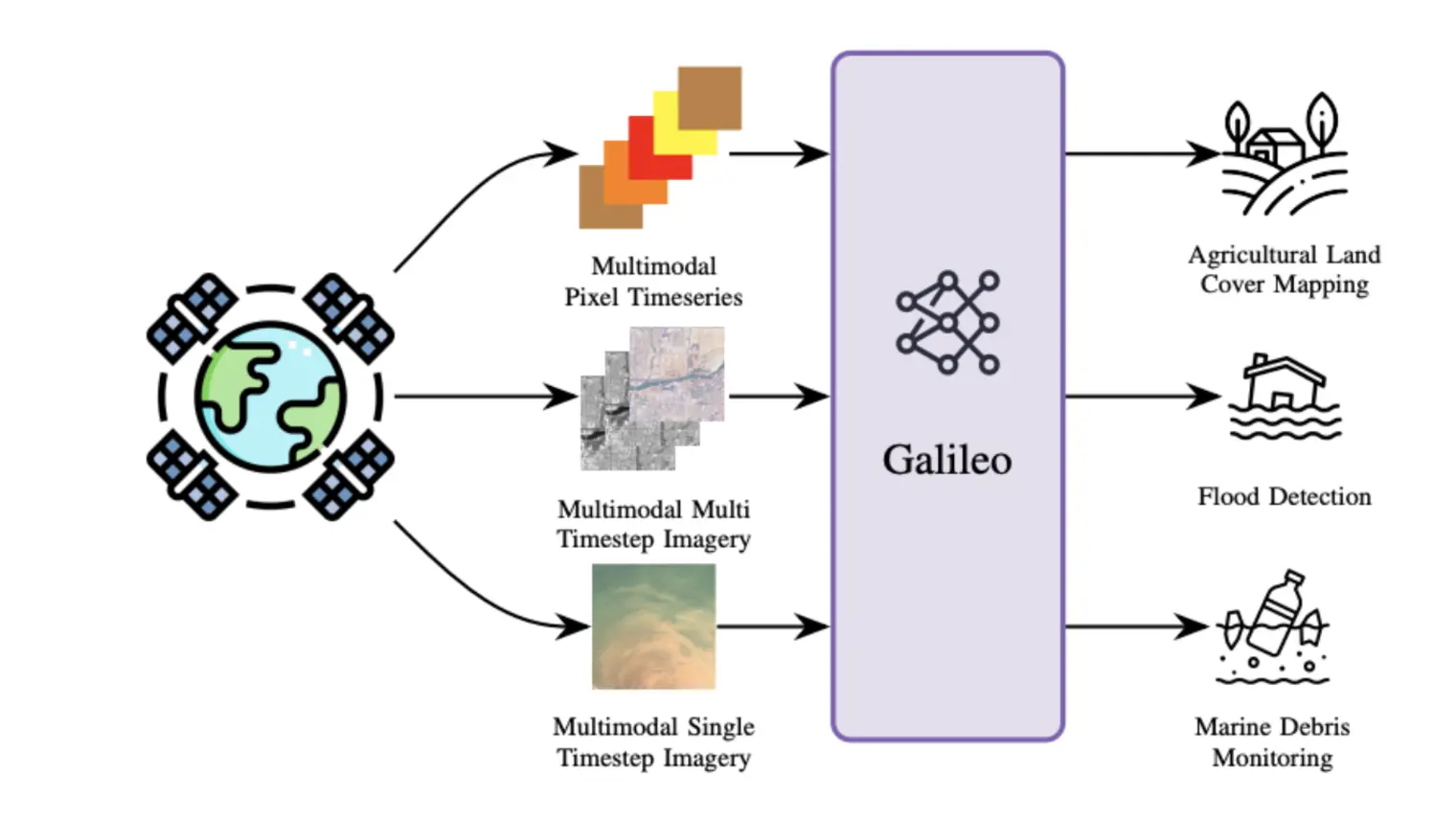
The increasing availability of geospatial foundation models has the potential to transform remote sensing applications such as land cover cl… (see more)assification, environmental monitoring, and change detection. Despite promising benchmark results, the deployment of these models in operational settings is challenging and rare. Standardized evaluation tasks often fail to capture real-world complexities relevant for end-user adoption such as data heterogeneity, resource constraints, and application-specific requirements. This paper presents a structured approach to integrate geospatial foundation models into operational mapping systems. Our protocol has three key steps: defining application requirements, adapting the model to domain-specific data and conducting rigorous empirical testing. Using the Presto model in a case study for crop mapping, we demonstrate that fine-tuning a pre-trained model significantly improves performance over conventional supervised methods. Our results highlight the model’s strong spatial and temporal generalization capabilities. Our protocol provides a replicable blueprint for practitioners and lays the groundwork for future research to operationalize foundation models in diverse remote sensing applications. Application of the protocol to the WorldCereal global crop-mapping system showcases the framework’s scalability.
On Global Applicability and Location Transferability of Generative Deep Learning Models for Precipitation Downscaling
Christian Lessig
Matthew Chantry
A HOT Dataset: 150,000 Buildings for HVAC Operations Transfer Research
About 12% of global energy consumption is attributable to heating, ventilation, and air conditioning (HVAC) systems in buildings [11]. Machi… (see more)ne learning-based intelligent HVAC control offers significant energy efficiency potential, but progress is constrained by limited data for training and evaluating performance across different kinds of buildings. Existing datasets primarily target energy prediction rather than control applications, forcing studies to rely on limited building sets or single-variable perturbations that fail to capture real-world complexity. We present HOT (HVAC Operations Transfer), the first large-scale open-source dataset purpose-built for research into transfer learning in building control. HOT contains 159,744 unique building-weather combinations with systematic variations across envelope properties, occupancy patterns, and climate conditions spanning all 19 ASHRAE climate zones across 76 global locations. We formalise a comprehensive similarity-based framework with quantitative metrics for assessing transfer feasibility between source and target buildings across multiple context dimensions. Our key contributions: (1) a large-scale, open dataset and tooling enabling systematic, multi-variable transfer studies across 19 climate zones; (2) a quantitative similarity framework spanning geometry, thermal, climate, and function; and (3) zero-shot climate transfer experiments showing why realistic context variation matters for HVAC control.
Alberta Wells Dataset: Pinpointing Oil and Gas Wells from Satellite Imagery
Brefo Dwamena Yaw
Jade Boutot
Mary Kang
Millions of abandoned oil and gas wells are scattered across the world, leaching methane into the atmosphere and toxic compounds into the gr… (see more)oundwater. Many of these locations are unknown, preventing the wells from being plugged and their polluting effects averted. Remote sensing is a relatively unexplored tool for pinpointing abandoned wells at scale. We introduce the first large-scale benchmark dataset for this problem, leveraging medium-resolution multi-spectral satellite imagery from Planet Labs. Our curated dataset comprises over 213,000 wells (abandoned, suspended, and active) from Alberta, a region with especially high well density, sourced from the Alberta Energy Regulator and verified by domain experts. We evaluate baseline algorithms for well detection and segmentation, showing the promise of computer vision approaches but also significant room for improvement.