

Portrait of Pierre-Luc Bacon

Pierre-Luc Bacon

Core Academic Member
Canada CIFAR AI Chair
Assistant Professor, Université de Montréal, Department of Computer Science and Operations Research
Research Topics
Reinforcement Learning

Biography

Pierre-Luc Bacon is an assistant professor at Université de Montréal in the Department of Computer Science and Operations Research (DIRO). He is also a core academic member of Mila – Quebec Artificial Intelligence Institute and IVADO, and holds a Facebook CIFAR AI Chair. Bacon leads a research group that investigates the challenges posed by the curse of the horizon in reinforcement learning and optimal control.
Current Students

Collaborating researcher - Concordia University
Collaborating researcher - ÉTS
PhD - Université de Montréal
Professional Master's - Université de Montréal
Collaborating Alumni - Université de Montréal
Co-supervisor :
Master's Research - Polytechnique Montréal
Principal supervisor :
Master's Research - Université de Montréal
Collaborating Alumni - Université de Montréal
PhD - Université de Montréal
Collaborating Alumni
PhD - Université de Montréal
Postdoctorate - McGill University
Principal supervisor :
Master's Research - Université de Montréal
Principal supervisor :
PhD - Université de Montréal
Master's Research - Université de Montréal
PhD - Université de Montréal
Master's Research - Université de Montréal
PhD - Université de Montréal
Postdoctorate - Université de Montréal
PhD - Université de Montréal
Collaborating Alumni - Polytechnique Montréal
Principal supervisor :
Postdoctorate - Université de Montréal
Principal supervisor :
Master's Research - Université de Montréal

Publications

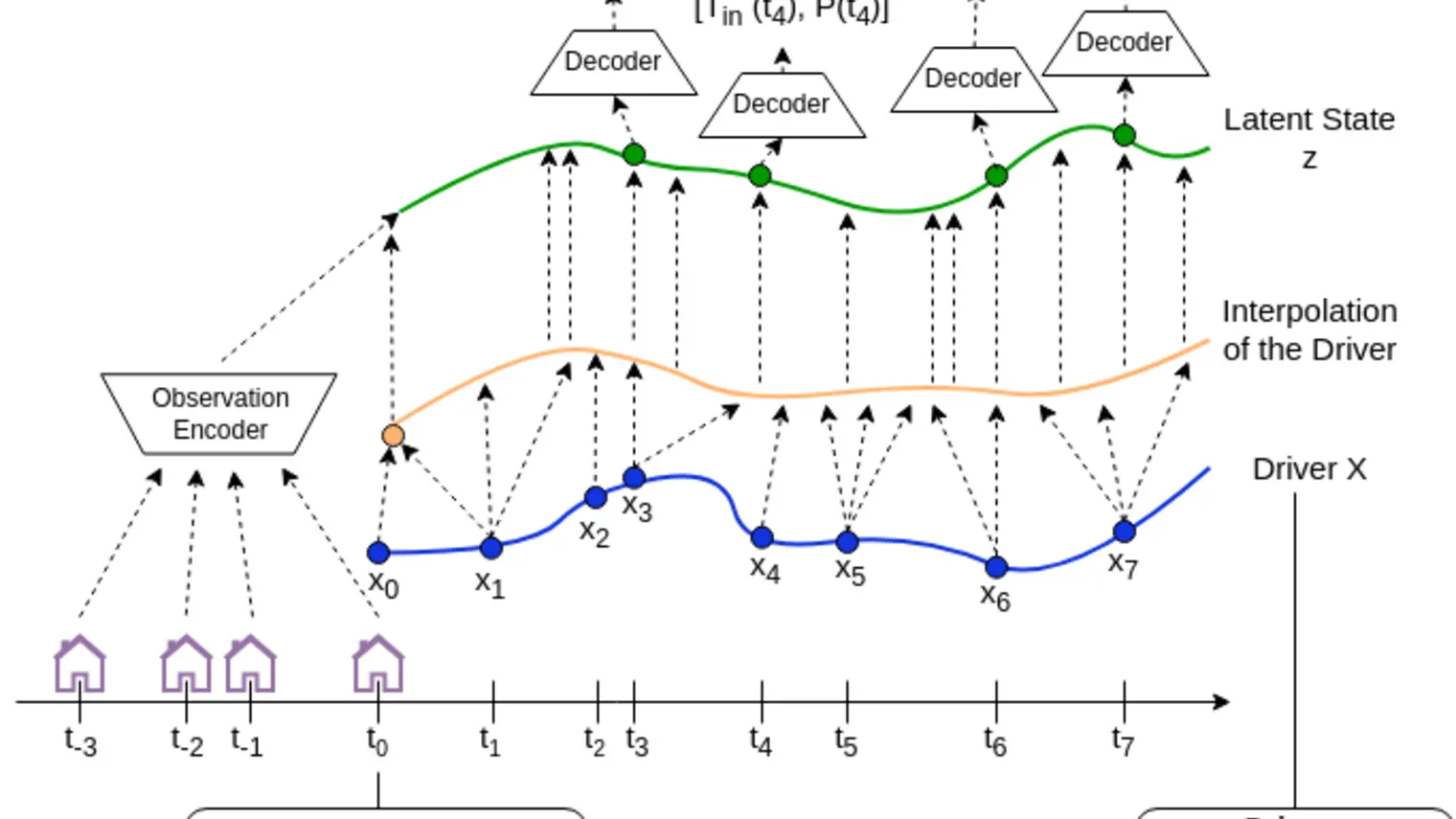
Neural differential equations for temperature control in buildings under demand response programs
Effects of Scale on Language Model Robustness
Nikolaus H. R. Howe
Ian R. McKenzie
Oskar John Hollinsworth
Michał Zając
Tom Tseng
Aaron David Tucker
Adam Gleave
Language models exhibit scaling laws, whereby increasing model and dataset size yields predictable decreases in negative log likelihood, unl… (see more)ocking a dazzling array of capabilities. This phenomenon spurs many companies to train ever larger models in pursuit of ever improved performance. Yet, these models are vulnerable to adversarial inputs such as ``jailbreaks'' and prompt injections that induce models to perform undesired behaviors, posing a growing risk as models become more capable. Prior work indicates that computer vision models become more robust with model and data scaling, raising the question: does language model robustness also improve with scale? We study this question empirically in the classification setting, finding that without explicit defense training, larger models tend to be modestly more robust on most tasks, though the effect is not reliable. Even with the advantage conferred by scale, undefended models remain easy to attack in absolute terms, and we thus turn our attention to explicitly training models for adversarial robustness, which we show to be a much more compute-efficient defense than scaling model size alone. In this setting, we also observe that adversarially trained larger models generalize faster and better to modified attacks not seen during training when compared with smaller models. Finally, we analyze the offense/defense balance of increasing compute, finding parity in some settings and an advantage for offense in others, suggesting that adversarial training alone is not sufficient to solve robustness, even at greater model scales.
Scaling Trends in Language Model Robustness
Nikolaus H. R. Howe
Ian R. McKenzie
Oskar John Hollinsworth
Michał Zając
Tom Tseng
Aaron David Tucker
Adam Gleave
Do Transformer World Models Give Better Policy Gradients?
Exploring Scaling Trends in LLM Robustness
Nikolaus H. R. Howe
Michał Zając
Ian R. McKenzie
Oskar John Hollinsworth
Tom Tseng
Aaron David Tucker
Adam Gleave
Language model capabilities predictably improve from scaling a model's size and training data. Motivated by this, increasingly large languag… (see more)e models have been trained, yielding an array of impressive capabilities. Yet these models are vulnerable to adversarial prompts, such as"jailbreaks"that hijack models to perform undesired behaviors, posing a significant risk of misuse. Prior work indicates that computer vision models become more robust with model and data scaling, raising the question: does language model robustness also improve with scale? We study this question empirically, finding that larger models respond substantially better to adversarial training, but there is little to no benefit from model scale in the absence of explicit defenses.
Generative Active Learning for the Search of Small-molecule Protein Binders
Cheng-Hao Liu
Moksh J. Jain
Almer M. van der Sloot
Eric Jolicoeur
Edward Ruediger
Daniel St-Cyr
Doris Alexandra Schuetz
Victor I Butoi
Simon R. Blackburn
Sai Krishna Gottipati
Prateek Gupta
Sasikanth Avancha
William L. Hamilton
Brooks Paige
Sanchit Misra
Stanisław Jastrzębski
Bharat Kaul
José Miguel Hernández-Lobato
Marwin Segler
Michael M. Bronstein
Anne Marinier
Mike Tyers
Despite substantial progress in machine learning for scientific discovery in recent years, truly de novo design of small molecules which exh… (see more)ibit a property of interest remains a significant challenge. We introduce LambdaZero, a generative active learning approach to search for synthesizable molecules. Powered by deep reinforcement learning, LambdaZero learns to search over the vast space of molecules to discover candidates with a desired property. We apply LambdaZero with molecular docking to design novel small molecules that inhibit the enzyme soluble Epoxide Hydrolase 2 (sEH), while enforcing constraints on synthesizability and drug-likeliness. LambdaZero provides an exponential speedup in terms of the number of calls to the expensive molecular docking oracle, and LambdaZero de novo designed molecules reach docking scores that would otherwise require the virtual screening of a hundred billion molecules. Importantly, LambdaZero discovers novel scaffolds of synthesizable, drug-like inhibitors for sEH. In in vitro experimental validation, a series of ligands from a generated quinazoline-based scaffold were synthesized, and the lead inhibitor N-(4,6-di(pyrrolidin-1-yl)quinazolin-2-yl)-N-methylbenzamide (UM0152893) displayed sub-micromolar enzyme inhibition of sEH.
Bridging State and History Representations: Understanding Self-Predictive RL
Representations are at the core of all deep reinforcement learning (RL) methods for both Markov decision processes (MDPs) and partially obse… (see more)rvable Markov decision processes (POMDPs). Many representation learning methods and theoretical frameworks have been developed to understand what constitutes an effective representation. However, the relationships between these methods and the shared properties among them remain unclear. In this paper, we show that many of these seemingly distinct methods and frameworks for state and history abstractions are, in fact, based on a common idea of self-predictive abstraction. Furthermore, we provide theoretical insights into the widely adopted objectives and optimization, such as the stop-gradient technique, in learning self-predictive representations. These findings together yield a minimalist algorithm to learn self-predictive representations for states and histories. We validate our theories by applying our algorithm to standard MDPs, MDPs with distractors, and POMDPs with sparse rewards. These findings culminate in a set of preliminary guidelines for RL practitioners.
Bridging State and History Representations: Understanding Self-Predictive RL
Representations are at the core of all deep reinforcement learning (RL) methods for both Markov decision processes (MDPs) and partially obse… (see more)rvable Markov decision processes (POMDPs). Many representation learning methods and theoretical frameworks have been developed to understand what constitutes an effective representation. However, the relationships between these methods and the shared properties among them remain unclear. In this paper, we show that many of these seemingly distinct methods and frameworks for state and history abstractions are, in fact, based on a common idea of self-predictive abstraction. Furthermore, we provide theoretical insights into the widely adopted objectives and optimization, such as the stop-gradient technique, in learning self-predictive representations. These findings together yield a minimalist algorithm to learn self-predictive representations for states and histories. We validate our theories by applying our algorithm to standard MDPs, MDPs with distractors, and POMDPs with sparse rewards. These findings culminate in a set of preliminary guidelines for RL practitioners.
Bridging State and History Representations: Understanding Self-Predictive RL
Representations are at the core of all deep reinforcement learning (RL) methods for both Markov decision processes (MDPs) and partially obse… (see more)rvable Markov decision processes (POMDPs). Many representation learning methods and theoretical frameworks have been developed to understand what constitutes an effective representation. However, the relationships between these methods and the shared properties among them remain unclear. In this paper, we show that many of these seemingly distinct methods and frameworks for state and history abstractions are, in fact, based on a common idea of self-predictive abstraction. Furthermore, we provide theoretical insights into the widely adopted objectives and optimization, such as the stop-gradient technique, in learning self-predictive representations. These findings together yield a minimalist algorithm to learn self-predictive representations for states and histories. We validate our theories by applying our algorithm to standard MDPs, MDPs with distractors, and POMDPs with sparse rewards. These findings culminate in a set of preliminary guidelines for RL practitioners.
Bridging State and History Representations: Understanding Self-Predictive RL
Representations are at the core of all deep reinforcement learning (RL) methods for both Markov decision processes (MDPs) and partially obse… (see more)rvable Markov decision processes (POMDPs). Many representation learning methods and theoretical frameworks have been developed to understand what constitutes an effective representation. However, the relationships between these methods and the shared properties among them remain unclear. In this paper, we show that many of these seemingly distinct methods and frameworks for state and history abstractions are, in fact, based on a common idea of self-predictive abstraction. Furthermore, we provide theoretical insights into the widely adopted objectives and optimization, such as the stop-gradient technique, in learning self-predictive representations. These findings together yield a minimalist algorithm to learn self-predictive representations for states and histories. We validate our theories by applying our algorithm to standard MDPs, MDPs with distractors, and POMDPs with sparse rewards. These findings culminate in a set of preliminary guidelines for RL practitioners.
Course Correcting Koopman Representations