


Today, an AI-generated image or video can go viral in an instant. Beyond the impact on victims, these vehicles of disinformation raise pressing questions: how can we avoid falling into the trap of fake news? Is the number of conspiracy theorists increasing, and should we be worried?
On the occasion of the first “After Mila” citizen meeting on AI, researcher Jean-François Godbout and journalist Pascal Lapointe combined their expertise to dissect the impact of this new generation of disinformation.
From Artisanal Fakes to Industrial Production
False statements, rumors, and propaganda did not wait for algorithms to exist; they have been an integral part of society for hundreds of years. Even before the invention of deepfakes, audiovisual manipulations generated by AI, editing software already allowed for the modification of images.
The novelty of AI is not the ability to create fakes, but rather the cost of production and the speed of execution. “Today, for 10 US dollars, you can create a high-quality deepfake” points out Jean-François Godbout, professor of political science at the Université de Montréal and associate academic member of Mila.
However, the engine of virality lies in social media algorithms, which target our vulnerabilities. Fake news is specifically designed to trigger an instant emotional reaction in the user.
“Boring information will never be shared massively. These algorithms target our beliefs to make us react in a fraction of a second, before our critical thinking even kicks in” warns Pascal Lapointe, editor-in-chief of Agence Science-Presse.
Have We Become Desensitized to Fakes?
Does the abundance of deepfakes create new conspiracy theorists? Not really. Although it may feel like we are living in the golden age of conspiracism, an article from Agence Science-Presse’s Détecteur de rumeurs column reports that belief in such theories has remained surprisingly stable throughout history.
If the phenomenon seems to be exploding, it is primarily because algorithms make it more visible. In reality, fake content persuades few new followers; instead, it serves mainly to reinforce the convictions of those who already believe. “A person who firmly believes in these conspiracies will not be the one to go and verify their sources” says Jean-François Godbout.
This does not mean the rest of the population is immune to deepfakes: “Many highly educated people are convinced they are more cautious than average and think they are immune to these traps. Yet, if the headline of an article or an image confirms their opinions, they will fall for it and share it” observes Pascal Lapointe.
Should we therefore get used to this fake news? Absolutely not. The consequences are devastating. While the vast majority of deepfakes do little to shift public opinion, they are frequently used to commit financial fraud or to distribute non-consensual sexual content.
Furthermore, this digital pollution breeds a toxic cynicism known as the “liar’s dividend.” By being constantly flooded with fake images, the public eventually begins to doubt everything, to the point of rejecting real events by dismissing them as fakes.
Equipping the Public
As AI becomes more sophisticated, scrutinizing an image for algorithm-generated flaws is becoming a waste of time. “Before sharing shocking content, take three seconds to check the source. If the information comes from an obscure account, that simple doubt is often enough to break the chain of virality” advises Pascal Lapointe.
This is one of the core missions of the Détecteur de rumeur column. Beyond debunking falsehoods, the journalistic team explains how to spot deception yourself.
When doubt persists, the research teams of Jean-François Godbout and Reihaneh Rabbany develop defensive AI systems. The tool OpenFake, developed notably by PhD student Victor Livernoche, allows the public to submit a photo or video to detect deepfakes.
Veracity is a virtual agent that evaluates the credibility of online claims by suggesting reliable sources. Far from seeking to dictate an absolute truth, Veracity is primarily educational: “The system is designed to guide people and encourage them to think a little more. By reading the explanations provided, the user understands for themselves why the post represents an attempt at disinformation” explains Jean-François Godbout.
The event ended with a message of hope: by combining education in source verification and defensive AI, society has the power to regain control over its information.
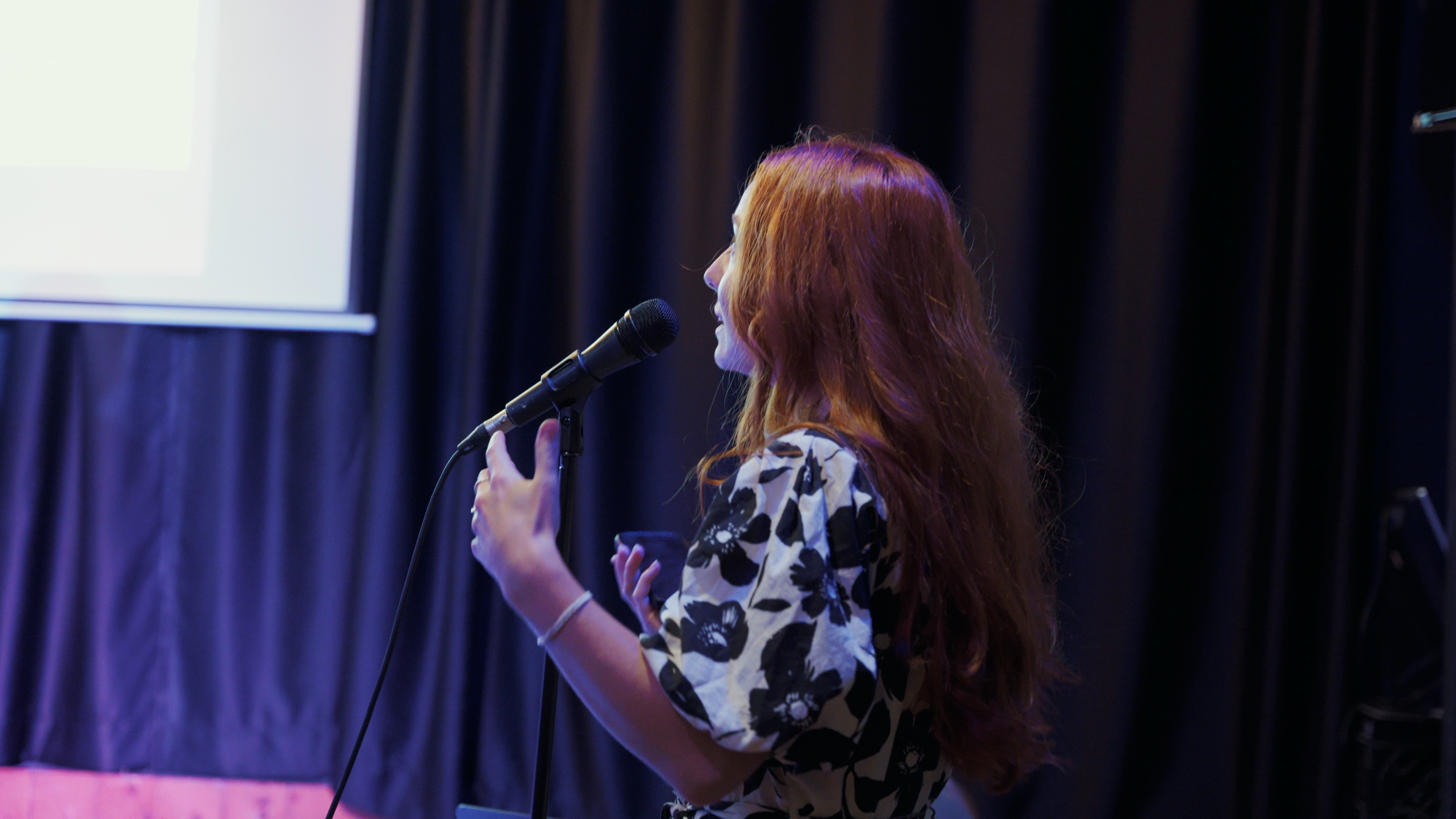
This discussion, “Désinformation 2.0: quand l’IA brouille les ondes” (in french only) took place on June 10, 2026, and inaugurated the brand-new event series: After Mila. Since AI is progressing at lightning speed and sparking as much fascination as concern, these meetings aim to demystify current events to move from mistrust to informed vigilance. At each meeting, the public engages with a Mila researcher and a field expert on the concrete impact of this technology on our lives.
Further Reading
- Read the blog post on OpenFake: https://mila.quebec/en/article/unmasking-deepfakes-with-ai
- Read the perspectives article on measures that should regulate deepfakes: https://mila.quebec/en/insight/protecting-humans-in-the-age-of-deepfakes