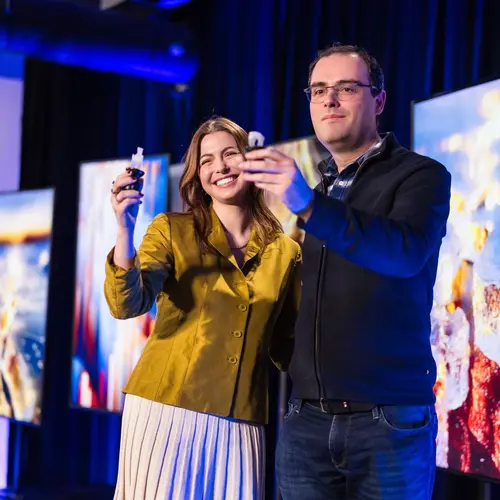
Join us on the Venture Scientist Bootcamp, a full time, 4-month incubator at Mila, built specifically for deep tech founders with elite STEM backgrounds. You have until November 21, 2026 to apply!
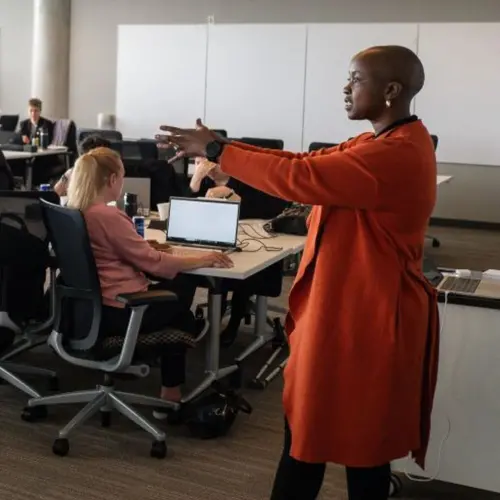
Offered by Mila and the Public Policy Forum, this program is designed to equip policy and decision makers with the tools to navigate the opportunities and risks of AI. The next cohort will be held in English on November 5-6, 2026, in Ottawa.

We use cookies to analyze the browsing and usage of our website and to personalize your experience. You can disable these technologies at any time, but this may limit certain functionalities of the site. Read our Privacy Policy for more information.
Setting cookies
You can enable and disable the types of cookies you wish to accept. However certain choices you make could affect the services offered on our sites (e.g. suggestions, personalised ads, etc.).
Essential cookies
These cookies are necessary for the operation of the site and cannot be deactivated. (Still active)
Analytics cookies
Do you accept the use of cookies to measure the audience of our sites?
Multimedia Player
Do you accept the use of cookies to display and allow you to watch the video content hosted by our partners (YouTube, etc.)?
Foundation models are beginning to reshape brain-signal analysis by moving the field beyond task-specific decoding pipelines toward reusable… (see more) models pretrained on broad neural datasets. Magnetoencephalography (MEG) is a compelling but still underdeveloped target for this shift: it captures human cortical dynamics at millisecond resolution while offering stronger spatial interpretability than EEG, making it especially valuable for source-resolved studies of perception, language, cognition, and clinical brain function. Yet MEG foundation models remain at an early stage, with only a small number of MEG-specific and MEG-inclusive multi-modal models, modest pretraining corpora, and emerging but still limited benchmarks. This perspective lays down the basic concepts needed to understand MEG foundation models and provides a didactic overview of the field's key design choices, including tokenization, sensor- versus source-space representations, sensor-geometry encoding, backbone architectures, self-supervised objectives, and pretraining data. We then offer a roadmap for future development, organized around native MEG pretraining, adaptation of EEG foundation models, transfer from generic time-series models, and multi-modal integration with EEG, fMRI, MRI, behaviour, and stimulus features. We highlight the need for coordinated infrastructure, including diverse and reusable MEG datasets, rigorous evaluation across subjects, sites, tasks, and clinical settings, and responsible data-sharing practices that address consent, privacy, access, and governance.