Portrait of Divyat Mahajan is unavailable

Divyat Mahajan

PhD - Université de Montréal
Supervisor
Research Topics
Causality
Computer Vision
Deep Learning
Machine Learning Theory
Representation Learning


Publications

Beyond Multi-Token Prediction: Pretraining LLMs with Future Summaries
Sachin Goyal
Badr Youbi Idrissi
David Lopez-Paz
Next-token prediction (NTP) has driven the success of large language models (LLMs), but it struggles with long-horizon reasoning, planning, … (see more)and creative writing, with these limitations largely attributed to teacher-forced training. Multi-token prediction (MTP) partially mitigates these issues by predicting several future tokens at once, but it mostly captures short-range dependencies and offers limited improvement. We propose future summary prediction (FSP), which trains an auxiliary head to predict a compact representation of the long-term future, preserving information relevant for long-form generations. We explore two variants of FSP: handcrafted summaries, for example, a bag of words summary of the future of the sequence, and learned summaries, which use embeddings produced by a reverse language model trained from right to left. Large-scale pretraining experiments (3B and 8B-parameter models) demonstrate that FSP provides improvements over both NTP and MTP across math, reasoning, and coding benchmarks.
Iterative Amortized Inference: Unifying In-Context Learning and Learned Optimizers
Compositional Risk Minimization
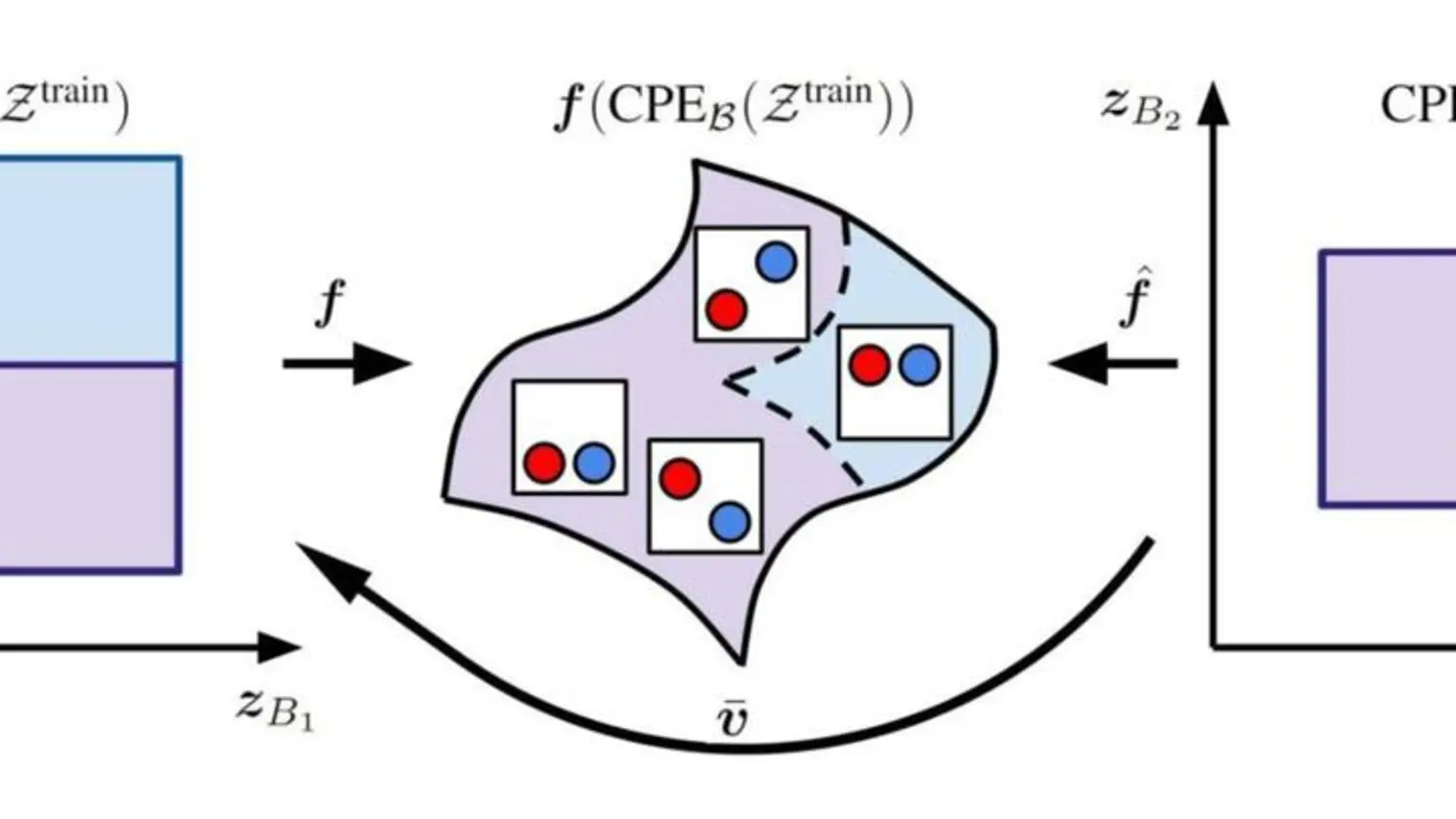
Compositional generalization is a crucial step towards developing data-efficient intelligent machines that generalize in human-like ways. In… (see more) this work, we tackle a challenging form of distribution shift, termed compositional shift, where some attribute combinations are completely absent at training but present in the test distribution. This shift tests the model's ability to generalize compositionally to novel attribute combinations in discriminative tasks. We model the data with flexible additive energy distributions, where each energy term represents an attribute, and derive a simple alternative to empirical risk minimization termed compositional risk minimization (CRM). We first train an additive energy classifier to predict the multiple attributes and then adjust this classifier to tackle compositional shifts. We provide an extensive theoretical analysis of CRM, where we show that our proposal extrapolates to special affine hulls of seen attribute combinations. Empirical evaluations on benchmark datasets confirms the improved robustness of CRM compared to other methods from the literature designed to tackle various forms of subpopulation shifts.
Learning to Defer for Causal Discovery with Imperfect Experts
Integrating expert knowledge, e.g. from large language models, into causal discovery algorithms can be challenging when the knowledge is not… (see more) guaranteed to be correct. Expert recommendations may contradict data-driven results, and their reliability can vary significantly depending on the domain or specific query. Existing methods based on soft constraints or inconsistencies in predicted causal relationships fail to account for these variations in expertise. To remedy this, we propose L2D-CD, a method for gauging the correctness of expert recommendations and optimally combining them with data-driven causal discovery results. By adapting learning-to-defer (L2D) algorithms for pairwise causal discovery (CD), we learn a deferral function that selects whether to rely on classical causal discovery methods using numerical data or expert recommendations based on textual meta-data. We evaluate L2D-CD on the canonical Tübingen pairs dataset and demonstrate its superior performance compared to both the causal discovery method and the expert used in isolation. Moreover, our approach identifies domains where the expert's performance is strong or weak. Finally, we outline a strategy for generalizing this approach to causal discovery on graphs with more than two variables, paving the way for further research in this area.
Evaluating Interventional Reasoning Capabilities of Large Language Models
Numerous decision-making tasks require estimating causal effects under interventions on different parts of a system. As practitioners consid… (see more)er using large language models (LLMs) to automate decisions, studying their causal reasoning capabilities becomes crucial. A recent line of work evaluates LLMs ability to retrieve commonsense causal facts, but these evaluations do not sufficiently assess how LLMs reason about interventions. Motivated by the role that interventions play in causal inference, in this paper, we conduct empirical analyses to evaluate whether LLMs can accurately update their knowledge of a data-generating process in response to an intervention. We create benchmarks that span diverse causal graphs (e.g., confounding, mediation) and variable types, and enable a study of intervention-based reasoning. These benchmarks allow us to isolate the ability of LLMs to accurately predict changes resulting from their ability to memorize facts or find other shortcuts. We evaluate six LLMs on the benchmarks, finding that GPT models show promising accuracy at predicting the intervention effects.
Empirical Analysis of Model Selection for Heterogeneous Causal Effect Estimation
Brady Neal
Vasilis Syrgkanis
Empirical Analysis of Model Selection for Heterogenous Causal Effect Estimation
Brady Neal
Vasilis Syrgkanis
We study the problem of model selection in causal inference, specifically for the case of conditional average treatment effect (CATE) estima… (see more)tion under binary treatments. Unlike model selection in machine learning, there is no perfect analogue of cross-validation as we do not observe the counterfactual potential outcome for any data point. Towards this, there have been a variety of proxy metrics proposed in the literature, that depend on auxiliary nuisance models estimated from the observed data (propensity score model, outcome regression model). However, the effectiveness of these metrics has only been studied on synthetic datasets as we can access the counterfactual data for them. We conduct an extensive empirical analysis to judge the performance of these metrics introduced in the literature, and novel ones introduced in this work, where we utilize the latest advances in generative modeling to incorporate multiple realistic datasets. Our analysis suggests novel model selection strategies based on careful hyperparameter tuning of CATE estimators and causal ensembling.
Additive Decoders for Latent Variables Identification and Cartesian-Product Extrapolation
We tackle the problems of latent variables identification and ``out-of-support'' image generation in representation learning. We show that b… (see more)oth are possible for a class of decoders that we call additive, which are reminiscent of decoders used for object-centric representation learning (OCRL) and well suited for images that can be decomposed as a sum of object-specific images. We provide conditions under which exactly solving the reconstruction problem using an additive decoder is guaranteed to identify the blocks of latent variables up to permutation and block-wise invertible transformations. This guarantee relies only on very weak assumptions about the distribution of the latent factors, which might present statistical dependencies and have an almost arbitrarily shaped support. Our result provides a new setting where nonlinear independent component analysis (ICA) is possible and adds to our theoretical understanding of OCRL methods. We also show theoretically that additive decoders can generate novel images by recombining observed factors of variations in novel ways, an ability we refer to as Cartesian-product extrapolation. We show empirically that additivity is crucial for both identifiability and extrapolation on simulated data.
Interventional Causal Representation Learning
Causal representation learning seeks to extract high-level latent factors from low-level sensory data. Most existing methods rely on observa… (see more)tional data and structural assumptions (e.g., conditional independence) to identify the latent factors. However, interventional data is prevalent across applications. Can interventional data facilitate causal representation learning? We explore this question in this paper. The key observation is that interventional data often carries geometric signatures of the latent factors' support (i.e. what values each latent can possibly take). For example, when the latent factors are causally connected, interventions can break the dependency between the intervened latents' support and their ancestors'. Leveraging this fact, we prove that the latent causal factors can be identified up to permutation and scaling given data from perfect
Synergies between Disentanglement and Sparsity: Generalization and Identifiability in Multi-Task Learning
Although disentangled representations are often said to be beneficial for downstream tasks, current empirical and theoretical understanding … (see more)is limited. In this work, we provide evidence that disentangled representations coupled with sparse base-predictors improve generalization. In the context of multi-task learning, we prove a new identifiability result that provides conditions under which maximally sparse base-predictors yield disentangled representations. Motivated by this theoretical result, we propose a practical approach to learn disentangled representations based on a sparsity-promoting bi-level optimization problem. Finally, we explore a meta-learning version of this algorithm based on group Lasso multiclass SVM base-predictors, for which we derive a tractable dual formulation. It obtains competitive results on standard few-shot classification benchmarks, while each task is using only a fraction of the learned representations.
Towards efficient representation identification in supervised learning
Humans have a remarkable ability to disentangle complex sensory inputs (e.g., image, text) into simple factors of variation (e.g., shape, co… (see more)lor) without much supervision. This ability has inspired many works that attempt to solve the following question: how do we invert the data generation process to extract those factors with minimal or no supervision? Several works in the literature on non-linear independent component analysis have established this negative result; without some knowledge of the data generation process or appropriate inductive biases, it is impossible to perform this inversion. In recent years, a lot of progress has been made on disentanglement under structural assumptions, e.g., when we have access to auxiliary information that makes the factors of variation conditionally independent. However, existing work requires a lot of auxiliary information, e.g., in supervised classification, it prescribes that the number of label classes should be at least equal to the total dimension of all factors of variation. In this work, we depart from these assumptions and ask: a) How can we get disentanglement when the auxiliary information does not provide conditional independence over the factors of variation? b) Can we reduce the amount of auxiliary information required for disentanglement? For a class of models where auxiliary information does not ensure conditional independence, we show theoretically and experimentally that disentanglement (to a large extent) is possible even when the auxiliary information dimension is much less than the dimension of the true latent representation.