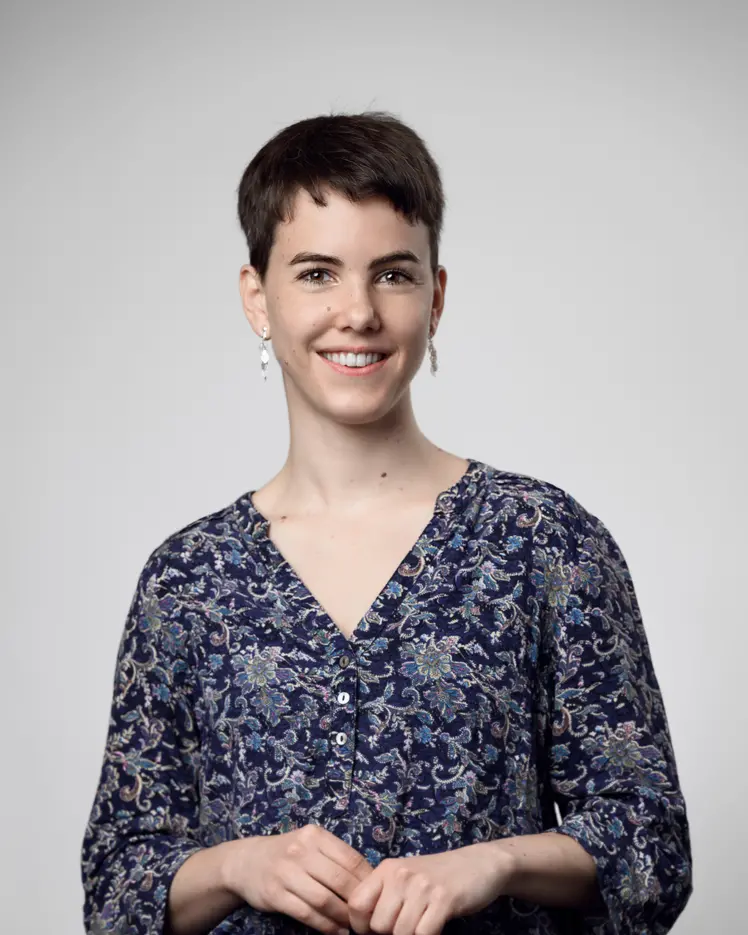
Portrait of Léa Kaufmann

Léa Kaufmann

Master's Research - Université de Montréal
Supervisor
Research Topics
AI and Healthcare

Publications

A biological-response compound representation allows chemical perturbation prediction across cell lines
Elise Carraz-Billat
Quentin Fournier
Abstract Accurately predicting cellular responses to drugs remains a challenge with the potential to reduce experimental screening costs and… (see more) accelerate drug discovery. Current computational approaches represent compounds through chemical structures, which carry little information regarding their activity within biological systems. We show that gene expression responses, measured in a reference cell line, can instead serve as transferable representations of chemical perturbations. The proposed framework, BioPert, uses biological representations with a small neural network to predict transcriptional delta responses in cell lines of different lineages. Across the Tahoe-100M and LINCS L1000 datasets, BioPert outperforms molecular fingerprints and embeddings learned from chemical structure, which provide limited improvements over random controls. BioPert’s prediction correlations reach 0.79 on Tahoe-100M, corresponding to an improvement of 0.34 over the next-best representation. On LINCS, performance varies with the experimental reproducibility of the test conditions, highlighting the impact of batch effects. Notably, BioPert considerably surpasses predictions obtained by copying the reference response, demonstrating that it captures context-dependent effects. Further analysis of a C32-cobimetinib case shows pathway-level accuracy of the predictions, including when the reference and target responses differ. These results open a new path for chemical perturbation prediction and could ultimately reduce the burden of phenotypic screening.
Patient health records and whole viral genomes from an early SARS-CoV-2 outbreak in a Quebec hospital reveal features associated with favorable outcomes
Bastien Paré
Marieke Rozendaal
Raphaël Poujol
Shawn M. Simpson
Jean-Christophe Grenier
Henry Xing
Miguelle Sanchez
Ariane Yechouron
Ronald Racette
Julie G. Hussin
Ivan Pavlov
Martin A. Smith
The first confirmed case of COVID-19 in Quebec, Canada, occurred at Verdun Hospital on February 25, 2020. A month later, a localized outbrea… (see more)k was observed at this hospital. We performed tiled amplicon whole genome nanopore sequencing on nasopharyngeal swabs from all SARS-CoV-2 positive samples from 31 March to 17 April 2020 in 2 local hospitals to assess the viral diversity of the outbreak. We report 264 viral genomes from 242 individuals (both staff and patients) with associated clinical features and outcomes, as well as longitudinal samples, technical replicates and the first publicly disseminated SARS-CoV-2 genomes in Quebec. Viral lineage assessment identified multiple subclades in both hospitals, with a predominant subclade in the Verdun outbreak, indicative of hospital-acquired transmission. Dimensionality reduction identified two subclades that evaded supervised lineage assignment methods, including Pangolin, and identified certain symptoms (headache, myalgia and sore throat) that are significantly associated with favorable patient outcomes. We also address certain limitations of standard SARS-CoV-2 bioinformatics procedures, notably when presented with multiple viral haplotypes.