Portrait of Can (Sam) Chen

Can (Sam) Chen

Collaborating Alumni - McGill University
Supervisor
Co-supervisor
Research Topics
AI for Science
Diffusion Models
Large Language Models (LLM)
Multimodal Learning
Neural Scaling Laws
Reinforcement Learning

Publications

MiRformer: a dual-transformer-encoder framework for predicting microRNA-mRNA interactions from paired sequences
MicroRNAs (miRNAs) are small non-coding RNAs that regulate genes by binding to target messenger RNAs (mRNAs), causing them to degrade or sup… (see more)pressing their translation. Accurate prediction of miRNA–mRNA interactions is crucial for RNA therapeutics. Existing methods rely on handcrafted features, struggle to scale to kilobase-long mRNA sequences, or lack interpretability. We introduce MiRformer , a transformer framework designed to predict not only the binary miRNA–mRNA interaction but also the start and end location of the miRNA binding site in the mRNA sequence. MiRformer employs a dual-transformer encoder architecture to learn interaction patterns directly from raw miRNA-mRNA sequence pairs via the cross-attention between the miRNA-encoder and mRNA-encoder. To scale to long mRNA sequences, we leverage sliding-window attention mechanism. MiR-former achieves state-of-the-art performance across diverse miRNA–mRNA tasks, including binding prediction, target-site localization, and cleavage-site identification from Degradome sequencing data. The learned transformer attention are highly interpretable and reveals highly contrasting signals for the miRNA seed regions in 500-nt long mRNA sequences. We used MiRformer to simultaneously predict novel binding sites and cleavage sites in 13k miRNA-mRNA pairs and observed that the two types of sites tend to be close to each other, supporting miRNA-mediated degradation mechanism. Our code is available at https://github.com/li-lab-mcgill/miRformer .
3DMolFormer: A Dual-Channel Framework for Structure-Based Drug Discovery
Xiuyuan Hu
Guoqing Liu
Yang Zhao
Hao Zhang
Xue Liu
Structure-based drug discovery, encompassing the tasks of protein-ligand docking and pocket-aware 3D drug design, represents a core challeng… (see more)e in drug discovery. However, no existing work can deal with both tasks to effectively leverage the duality between them, and current methods for each task are hindered by challenges in modeling 3D information and the limitations of available data. To address these issues, we propose 3DMolFormer, a unified dual-channel transformer-based framework applicable to both docking and 3D drug design tasks, which exploits their duality by utilizing docking functionalities within the drug design process. Specifically, we represent 3D pocket-ligand complexes using parallel sequences of discrete tokens and continuous numbers, and we design a corresponding dual-channel transformer model to handle this format, thereby overcoming the challenges of 3D information modeling. Additionally, we alleviate data limitations through large-scale pre-training on a mixed dataset, followed by supervised and reinforcement learning fine-tuning techniques respectively tailored for the two tasks. Experimental results demonstrate that 3DMolFormer outperforms previous approaches in both protein-ligand docking and pocket-aware 3D drug design, highlighting its promising application in structure-based drug discovery. The code is available at: https://github.com/HXYfighter/3DMolFormer .
Paretodlow: Guided Flows in Multi-Objective Optimization
Christopher Pal
Xue Liu
In offline multi-objective optimization (MOO), we leverage an offline dataset of designs and their associated labels to simultaneously minim… (see more)ize multiple objectives. This setting more closely mirrors complex real-world problems compared to single-objective optimization. Recent works mainly employ evolutionary algorithms and Bayesian optimization, with limited attention given to the generative modeling capabilities inherent in such data. In this study, we explore generative modeling in offline MOO through flow matching, noted for its effectiveness and efficiency. We introduce ParetoFlow, specifically designed to guide flow sampling to approximate the Pareto front. Traditional predictor (classifier) guidance is inadequate for this purpose because it models only a single objective. In response, we propose a multi-objective predictor guidance module that assigns each sample a weight vector, representing a weighted distribution across multiple objective predictions. A local filtering scheme is introduced to address non-convex Pareto fronts. These weights uniformly cover the entire objective space, effectively directing sample generation towards the Pareto front. Since distributions with similar weights tend to generate similar samples, we introduce a neighboring evolution module to foster knowledge sharing among neighboring distributions. This module generates offspring from these distributions, and selects the most promising one for the next iteration. Our method achieves state-of-the-art performance across various tasks.
Parallel-mentoring for Offline Model-based Optimization
Zixuan Liu
Xue Liu
Christopher Pal
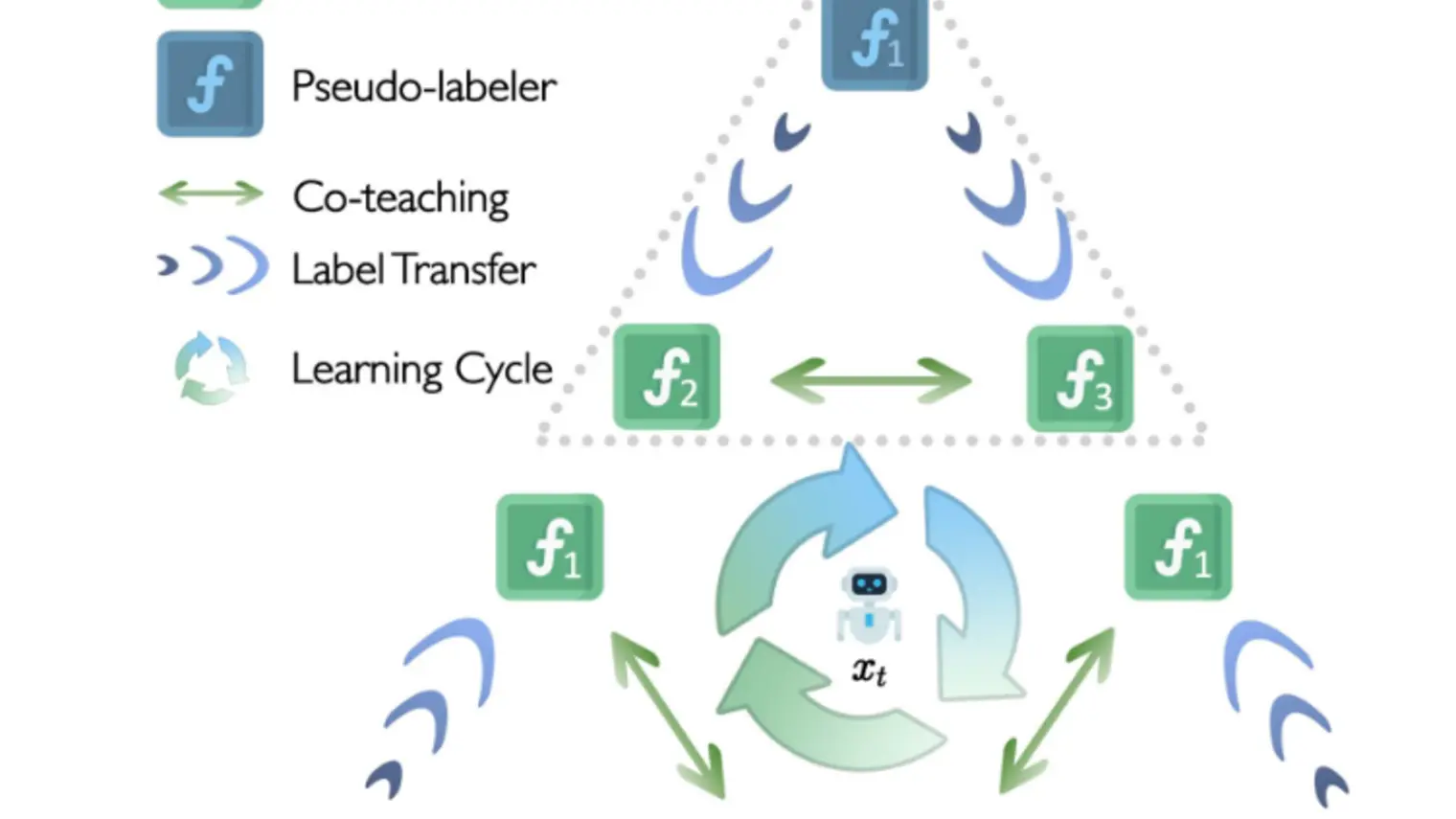
We study offline model-based optimization to maximize a black-box objective function with a static dataset of designs and scores. These desi… (see more)gns encompass a variety of domains, including materials, robots and DNA sequences. A common approach trains a proxy on the static dataset to approximate the black-box objective function and performs gradient ascent to obtain new designs. However, this often results in poor designs due to the proxy inaccuracies for out-of-distribution designs. Recent studies indicate that: (a) gradient ascent with a mean ensemble of proxies generally outperforms simple gradient ascent, and (b) a trained proxy provides weak ranking supervision signals for design selection. Motivated by (a) and (b), we propose \textit{parallel-mentoring} as an effective and novel method that facilitates mentoring among parallel proxies, creating a more robust ensemble to mitigate the out-of-distribution issue. We focus on the three-proxy case and our method consists of two modules. The first module, \textit{voting-based pairwise supervision}, operates on three parallel proxies and captures their ranking supervision signals as pairwise comparison labels. These labels are combined through majority voting to generate consensus labels, which incorporate ranking supervision signals from all proxies and enable mutual mentoring. However, label noise arises due to possible incorrect consensus. To alleviate this, we introduce an \textit{adaptive soft-labeling} module with soft-labels initialized as consensus labels. Based on bi-level optimization, this module fine-tunes proxies in the inner level and learns more accurate labels in the outer level to adaptively mentor proxies, resulting in a more robust ensemble. Experiments validate the effectiveness of our method. Our code is available here.
Bidirectional Learning for Offline Model-based Biological Sequence Design
Yingxue Zhang
Xue Liu
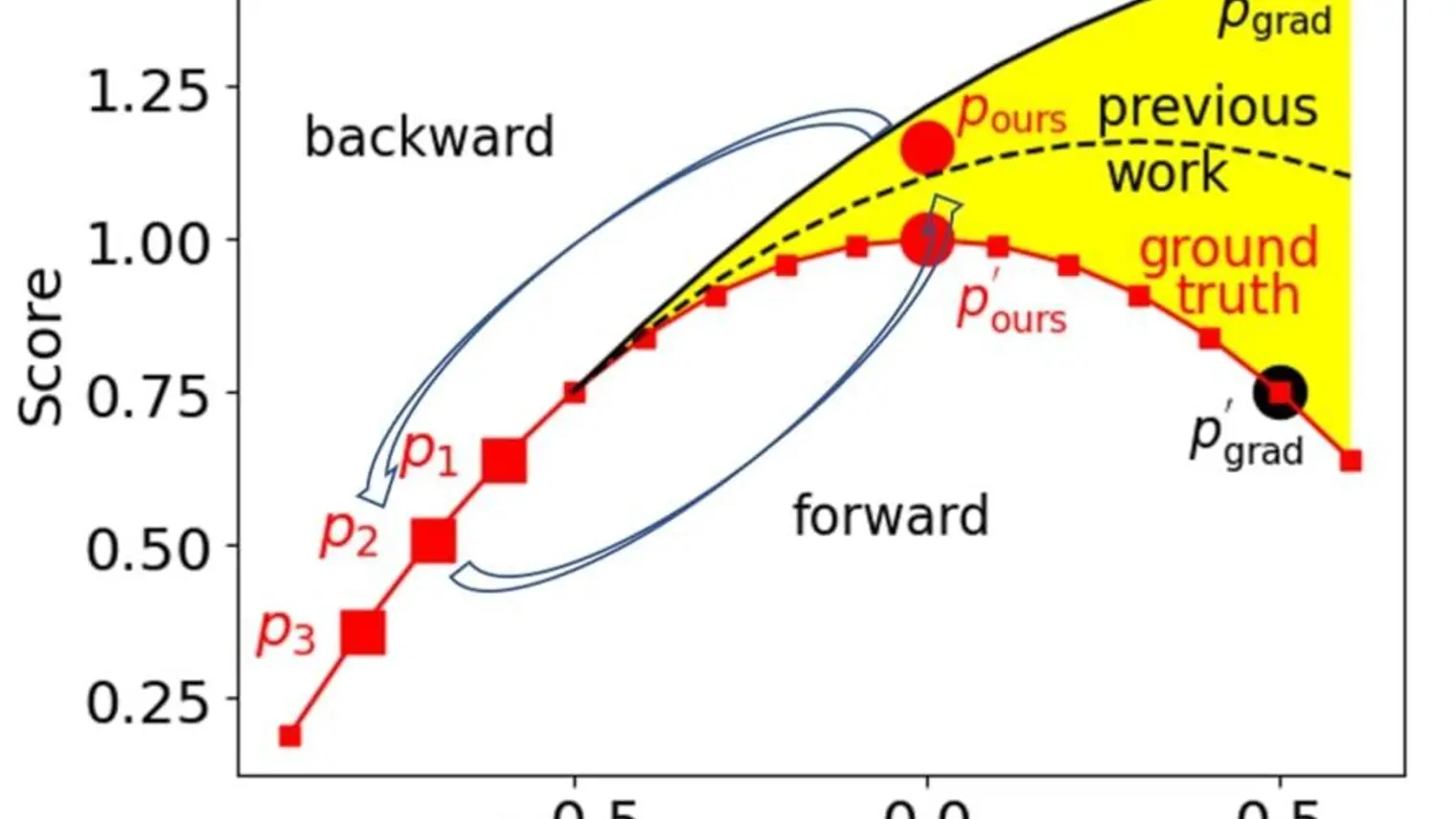
Offline model-based optimization aims to maximize a black-box objective function with a static dataset of designs and their scores. In this … (see more)paper, we focus on biological sequence design to maximize some sequence score. A recent approach employs bidirectional learning, combining a forward mapping for exploitation and a backward mapping for constraint, and it relies on the neural tangent kernel (NTK) of an infinitely wide network to build a proxy model. Though effective, the NTK cannot learn features because of its parametrization, and its use prevents the incorporation of powerful pre-trained Language Models (LMs) that can capture the rich biophysical information in millions of biological sequences. We adopt an alternative proxy model, adding a linear head to a pre-trained LM, and propose a linearization scheme. This yields a closed-form loss and also takes into account the biophysical information in the pre-trained LM. In addition, the forward mapping and the backward mapping play different roles and thus deserve different weights during sequence optimization. To achieve this, we train an auxiliary model and leverage its weak supervision signal via a bi-level optimization framework to effectively learn how to balance the two mappings. Further, by extending the framework, we develop the first learning rate adaptation module \textit{Adaptive}-
Structure-aware Protein Self-supervised Learning
Jingbo Zhou
Fan Wang
Xue Liu
Dejing Dou
Protein representation learning methods have shown great potential to yield useful representation for many downstream tasks, especially on p… (see more)rotein classification. Moreover, a few recent studies have shown great promise in addressing insufficient labels of proteins with self-supervised learning methods. However, existing protein language models are usually pretrained on protein sequences without considering the important protein structural information. To this end, we propose a novel structure-aware protein self-supervised learning method to effectively capture structural information of proteins. In particular, a well-designed graph neural network (GNN) model is pretrained to preserve the protein structural information with self-supervised tasks from a pairwise residue distance perspective and a dihedral angle perspective, respectively. Furthermore, we propose to leverage the available protein language model pretrained on protein sequences to enhance the self-supervised learning. Specifically, we identify the relation between the sequential information in the protein language model and the structural information in the specially designed GNN model via a novel pseudo bi-level optimization scheme. Experiments on several supervised downstream tasks verify the effectiveness of our proposed method.The code of the proposed method is available in https://github.com/GGchen1997/STEPS_Bioinformatics.