Future Students Welcome Page
Welcome to the Mila Community, the global hub of artificial intelligence (AI) excellence for scientific breakthroughs and social impact.

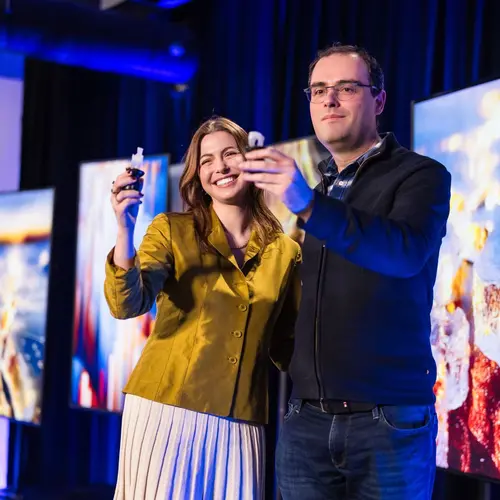
Join us on the Venture Scientist Bootcamp, a full time, 4-month incubator at Mila, built specifically for deep tech founders with elite STEM backgrounds. You have until November 21, 2026 to apply!

Offered by Mila and the Public Policy Forum, this program is designed to equip policy and decision makers with the tools to navigate the opportunities and risks of AI. The next cohort will be held in English on November 5-6, 2026, in Ottawa.
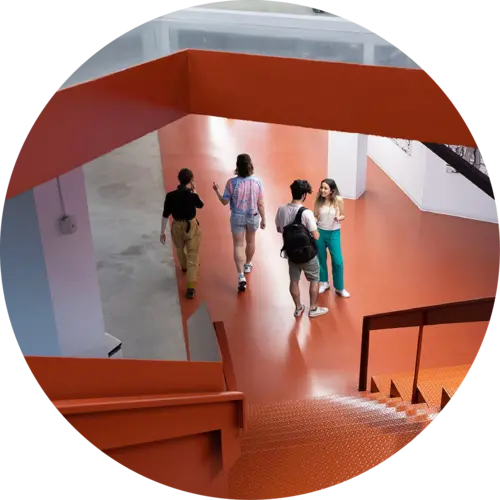
Mila's annual supervision request process is now open to receive MSc and PhD applications for Fall 2027 admission! Deadline : December 1, 2026.
Welcome to the Mila Community, the global hub of artificial intelligence (AI) excellence for scientific breakthroughs and social impact.
If you are a future student-researcher looking to push the boundaries of AI, you have found your community.
Based in vibrant Montreal, Canada, we are a unique community dedicated to open science, deep learning innovation, and the development of safe, responsible AI for the benefit of all.

Mila - Quebec AI Institute, is a recognized worldwide for its major contributions to AI. Today, the Mila community boasts the largest concentration of deep learning academic researchers globally. The institute is recognized for its expertise and significant contributions in areas such as modeling language, machine translation, object recognition and generative models.

Step 1: Choose Your Pathway
Whether you want to pursue a fully funded research thesis, land a professional master's degree, or join us for an internship, we have a pathway for you:
Step 2: Create Your Profile to Apply for Research Positions
Go to the MyMila Portal and set up your applicant profile.
Indaba Applicants: When prompted, enter the keywords "Indaba 2026". Doing this ensures you will be offered guidance from Mila throughout the application process. Your application will also be directly shared with participating professors during the Supervision Request Processs (SRP) for MSc and PhD.
Step 3: Identify and Select Potential Supervisors
When applying, you must select your preferred faculty advisors. Choosing the right professors to work with is critical to a successful application. Please note that while you must indicate your preferences, all Mila participating professors will have access to your application.
Because Mila frequently welcomes new faculty members—particularly in September—we highly recommend reviewing the faculty list right before you submit for the most up-to-date options.
Mila Faculty Directory (Academic & Industrial members): Filter and search for professors using keywords. Each profile includes contact information and links to personal websites or social media channels.
Mila Publications List: Review papers under the "Research" page. Mila members are underlined in the author lists—clicking their names will take you directly to their profile pages.
Browse Mila's publications list here
Mila Strategic Priorities: Look at Mila’s core research priority areas to find dedicated lists of professors working in those specific AI domains.

A common point of confusion for international students is the relationship between Mila and our partner institutions. Mila is a world-class research center, not a university. Mila does not grant degrees. If accepted, you will enjoy a dual affiliation—gaining the massive advantages of both a world-class research ecosystem and a major academic institution.
The University: Your Academic Home Base
Your University is the institution where you are enrolled as a student and that grants you your degree. It provides the formal academic framework for your studies.
Mila: Your Research and Collaboration Ecosystem
Mila is a research center focusing in the specific field of AI. It is the environment where you will conduct your research, collaborate and benefit from resources to help you excel in your academic program. Mila does not grant degrees.




Each year, some 320,000 students, including 40,000 international students from over 150 countries, make Montreal their home base for their post-secondary studies. Montreal has the highest concentration of post-secondary students per capita in North America.
Regularly ranked as the top student city in North America.
Montreal is a welcoming, vibrant, and deeply multicultural metropolis that feels like home from day one. The city hosts a thriving global community of students, making it an incredibly diverse, inclusive, and friendly place to live and network. With a world-renowned arts scene, an endless calendar of cultural festivals, and a safe, highly accessible urban design, Montreal offers an inspiring backdrop to your studies.
Cost of living: Average rent for a one-bedroom apartment in Montreal is almost 40% lower than in Toronto and more than 50% lower than in Boston or New York City. Excluding rent, Montreal’s cost of living index is 10% to 15% lower than Toronto.
Montreal’s transit network (STM) is one of the most efficient and cost-effective for the student community. Unlike many cities where discounts end at age 19 or 21, Montreal offers a reduced fare to all full-time students, regardless of age. Students can access practically unlimited travel on the island of Montréal (Zone A) for about $60/month.
International students and exchange students are temporary residents in Canada. It is important to know the procedures and documents you need to enter and study in Canada. For more information on immigration, please visit the international students page of the university or school affiliated with your supervisor.
Frequently Asked Questions (FAQ)