

This early version from Mila and ROOST gives developers a practical new safeguard to help reduce suicide-related harm in AI chatbots.
Montreal, July 9, 2026 – Mila and Robust Open Online Safety Tools (ROOST) today announced an early version of Mila’s Suicide Prevention Guardrail, a real-time, open source safety model that prevents artificial intelligence (AI) chatbots from encouraging or directing youth suicide.
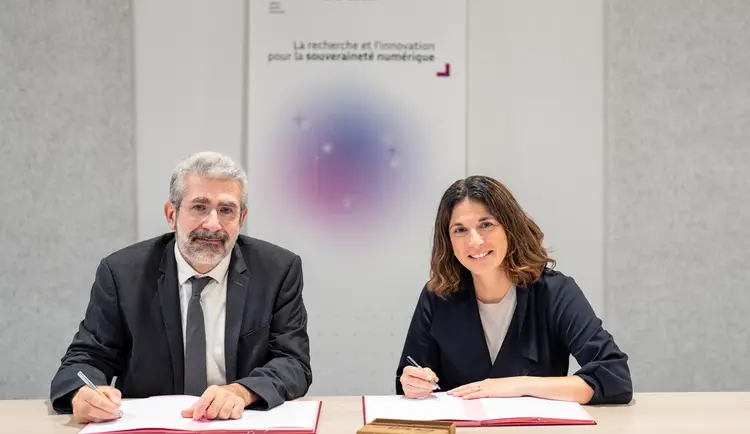
This is the first concrete tool to come out of the partnership announced by Mila and ROOST in June during the 2026 G7 Digital Ministers’ Meeting in Paris. That partnership was created to advance open-source AI safety tools, beginning with youth safety and the need to better protect young people in their interactions with conversational AI.
Today’s general-purpose content filters are not enough on their own. Most are built to catch broad categories of harmful content, while suicide-related risk can be harder to identify, especially when users test boundaries, use coded language or try to work around existing safeguards. As more young people use AI chatbots for information, support or companionship, AI developers need tools built for the specific risks that can emerge in these conversations.
Mila’s Suicide Prevention Guardrail was created to help address that gap in a simple, targeted and accessible way that developers can add to an AI chatbot. Its role is to help detect and flag chatbot responses that could provide harmful suicide-related guidance or fail to handle youth mental health risk with appropriate care. It does not replace crisis support, professional care or human review. It is meant to give developers one more practical safeguard to help make AI systems safer for young people.
This pilot initiative is part of a broader effort by Mila and ROOST to make AI safety tools more open, transparent and easier for developers to adopt. It is also the first in a planned series of guardrails from Mila’s AI Safety Studio, aimed at helping developers add stronger protections across different types of AI-related harm.
“Mila’s Suicide Prevention Guardrail is deliberately focused on a high-risk area where developers need practical support,” said Simona Gandrabur, AI Safety Studio Lead at Mila. “Our goal is to offer a targeted, lightweight and adaptable tool that can be tested, improved and used alongside other safeguards. This beta release is not a finished answer, but it is a meaningful step toward building safer AI systems in the open.”
The tool is being released as an early version and will be available to developers through the ROOST tools ecosystem. At this stage, it reviews chatbot responses one at a time to help identify unsafe outputs. Future work is expected to expand toward more contextual safeguards, including tools that can better assess longer conversations and user inputs.
"Safety tooling needs are evolving and it's more important than ever that critical safeguards are available to platforms and organizations of any size. ROOST was created to make safety technology public by default. We are proud to bring this model into the open, alongside Mila, where people can study and build with it." Juliet Shen, Head of Product, ROOST.
Mila and ROOST will continue working with developers, researchers and safety practitioners to improve the guardrail and support the development of additional tools focused on youth safety and mental resilience.
About Mila – Quebec Artificial Intelligence Institute
Founded by Professor Yoshua Bengio, Mila – Quebec Artificial Intelligence Institute is the world’s largest academic AI research center specialized in deep learning, home to a community over 1500 strong. Based in Montreal, Mila was created out of a unique partnership between Université de Montréal and McGill University, dedicated to advancing scientific breakthroughs that drive innovation and ensure AI benefits everyone. A non-profit organization, Mila is strongly supported by the Government of Canada and by the Government of Quebec. Internationally recognized for its influential research, global innovation partnerships, and leadership in multilateral efforts on responsible AI, Mila continues to shape the future of AI worldwide. For more information, visit mila.quebec.
About ROOST (Robust Open Online Safety Tools)
ROOST (Robust Open Online Safety Tools) is an independent, global technology nonprofit building open source safety infrastructure, the essential building blocks that let organizations and platforms of every size protect their communities. ROOST makes digital safety open, shared, and auditable for everyone. Learn more at roost.tools.
-30-
Source: ROOST & Mila
Media contacts:
For ROOST: jacqueline@roost.tools
For Mila: medias@mila.quebec