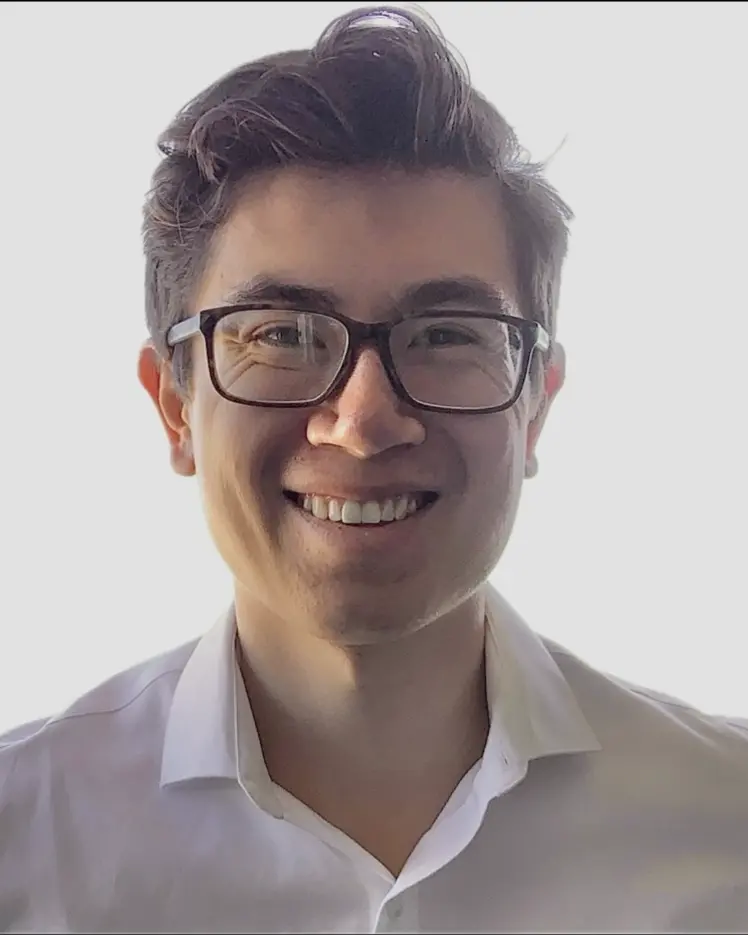
Portrait of Luke Rowe

Luke Rowe

PhD - Université de Montréal
Supervisor
Co-supervisor
Research Topics
Computer Vision
Deep Learning


Publications

Constrained Group Relative Policy Optimization
Azal'ee Robitaille
Christopher Pal
Poutine: Vision-Language-Trajectory Pre-Training and Reinforcement Learning Post-Training Enable Robust End-to-End Autonomous Driving
We present Poutine, a 3B-parameter vision-language model (VLM) tailored for end-to-end autonomous driving in long-tail driving scenarios. Po… (see more)utine is trained in two stages. To obtain strong base driving capabilities, we train Poutine-Base in a self-supervised vision-language-trajectory (VLT) next-token prediction fashion on 83 hours of CoVLA nominal driving and 11 hours of Waymo long-tail driving. Accompanying language annotations are auto-generated with a 72B-parameter VLM. Poutine is obtained by fine-tuning Poutine-Base with Group Relative Policy Optimization (GRPO) using less than 500 preference-labeled frames from the Waymo validation set. We show that both VLT pretraining and RL fine-tuning are critical to attain strong driving performance in the long-tail. Poutine-Base achieves a rater-feedback score (RFS) of 8.12 on the validation set, nearly matching Waymo's expert ground-truth RFS. The final Poutine model achieves an RFS of 7.99 on the official Waymo test set, placing 1st in the 2025 Waymo Vision-Based End-to-End Driving Challenge by a significant margin. These results highlight the promise of scalable VLT pre-training and lightweight RL fine-tuning to enable robust and generalizable autonomy.
Solving Bayesian Inverse Problems with Diffusion Priors and Off-Policy RL
This paper presents a practical application of Relative Trajectory Balance (RTB), a recently introduced off-policy reinforcement learning (R… (see more)L) objective that can asymptotically solve Bayesian inverse problems optimally. We extend the original work by using RTB to train conditional diffusion model posteriors from pretrained unconditional priors for challenging linear and non-linear inverse problems in vision, and science. We use the objective alongside techniques such as off-policy backtracking exploration to improve training. Importantly, our results show that existing training-free diffusion posterior methods struggle to perform effective posterior inference in latent space due to inherent biases.
Scenario Dreamer: Vectorized Latent Diffusion for Generating Driving Simulation Environments
Christopher Pal
Felix Heide
We introduce Scenario Dreamer, a fully data-driven generative simulator for autonomous vehicle planning that generates both the initial traf… (see more)fic scene - comprising a lane graph and agent bounding boxes - and closed-loop agent behaviours. Existing methods for generating driving simulation environments encode the initial traffic scene as a rasterized image and, as such, require parameter-heavy networks that perform unnecessary computation due to many empty pixels in the rasterized scene. Moreover, we find that existing methods that employ rule-based agent behaviours lack diversity and realism. Scenario Dreamer instead employs a novel vectorized latent diffusion model for initial scene generation that directly operates on the vectorized scene elements and an autoregressive Transformer for data-driven agent behaviour simulation. Scenario Dreamer additionally supports scene extrapolation via diffusion inpainting, enabling the generation of unbounded simulation environments. Extensive experiments show that Scenario Dreamer outperforms existing generative simulators in realism and efficiency: the vectorized scene-generation base model achieves superior generation quality with around 2x fewer parameters, 6x lower generation latency, and 10x fewer GPU training hours compared to the strongest baseline. We confirm its practical utility by showing that reinforcement learning planning agents are more challenged in Scenario Dreamer environments than traditional non-generative simulation environments, especially on long and adversarial driving environments.
Amortizing intractable inference in diffusion models for vision, language, and control
Diffusion models have emerged as effective distribution estimators in vision, language, and reinforcement learning, but their use as priors … (see more)in downstream tasks poses an intractable posterior inference problem. This paper studies amortized sampling of the posterior over data,
CtRL-Sim: Reactive and Controllable Driving Agents with Offline Reinforcement Learning
Evaluating autonomous vehicle stacks (AVs) in simulation typically involves replaying driving logs from real-world recorded traffic. However… (see more), agents replayed from offline data do not react to the actions of the AV, and their behaviour cannot be easily controlled to simulate counterfactual scenarios. Existing approaches have attempted to address these shortcomings by proposing methods that rely on heuristics or learned generative models of real-world data but these approaches either lack realism or necessitate costly iterative sampling procedures to control the generated behaviours. In this work, we take an alternative approach and propose CtRL-Sim, a method that leverages return-conditioned offline reinforcement learning within a physics-enhanced Nocturne simulator to efficiently generate reactive and controllable traffic agents. Specifically, we process real-world driving data through the Nocturne simulator to generate a diverse offline reinforcement learning dataset, annotated with various reward terms. With this dataset, we train a return-conditioned multi-agent behaviour model that allows for fine-grained manipulation of agent behaviours by modifying the desired returns for the various reward components. This capability enables the generation of a wide range of driving behaviours beyond the scope of the initial dataset, including those representing adversarial behaviours. We demonstrate that CtRL-Sim can efficiently generate diverse and realistic safety-critical scenarios while providing fine-grained control over agent behaviours. Further, we show that fine-tuning our model on simulated safety-critical scenarios generated by our model enhances this controllability.

