

Montreal, May 26, 2026 — Mila – Quebec Artificial Intelligence Institute and the Canadian Institute for Advanced Research (CIFAR) are proud to announce the creation of the Indigenous AI Advisory Circle, a new advisory body dedicated to ensuring Indigenous voices, values and priorities are embedded in Canada's AI ecosystem at every level.
The Circle will provide culturally grounded, community-connected guidance to support the expansion of Indigenous participation in AI, including research, training, education, and broader community engagement. Insights and recommendations from the group will directly inform the planning, development and implementation of Indigenous AI initiatives across CIFAR and Canada’s three national AI institutes, Mila, Amii and Vector Institute, while creating opportunities for new relationships, collaborations and shared learning.
Bringing together leaders from education, research, technology and community organizations, the Indigenous AI Advisory Circle will help ensure that AI solutions are developed in ways that are ethically aligned and reflective of Indigenous priorities and values from the outset. Members will provide early guidance on emerging programs, identify areas where deeper engagement is needed, and help ensure that institutional commitments translate into meaningful action.
''The Indigenous AI Advisory Circle represents a meaningful step toward building an AI ecosystem that is genuinely reflective of communities across Canada. We are committed to ensuring that Indigenous voices are not a footnote but a foundation of how we develop, deploy and govern AI,'' said Lynnsey Chartrand, Head of Indigenous Initiatives at Mila and Citizen of the Manitoba Métis Federation.
''The Circle reflects our shared belief that building equitable AI requires deep partnership with Indigenous communities. CIFAR is proud to work alongside Mila and the AI institutes to make space for Indigenous leadership, knowledge and self-determination at every stage of the AI journey,'' added Elissa Strome, Executive Director of the Pan-Canadian AI Strategy, CIFAR.
Meet the Circle Members
The Indigenous AI Advisory Circle brings together six distinguished Indigenous leaders whose expertise spans data sovereignty, technology, language revitalization, governance and community development.

Natiea Vinson
Natiea Vinson is the CEO of the First Nations Technology Council, where she guides the organization’s strategic direction as it supports First Nations communities across British Columbia to thrive in the digital age. With over a decade of experience across academia and the public and private sectors, she has advocated for institutional innovation and Indigenous renewal throughout her career. She has held senior positions at Indigenous-led organizations, including as a Director at the Canadian Council for Indigenous Business and as the Founder of Makook, an Indigenous content discovery service. Natiea serves on the Government of Canada’s Advisory Council on Artificial Intelligence, focusing on AI for Nation-building. She is a member of Tk̓emlúps te Secwépemc.
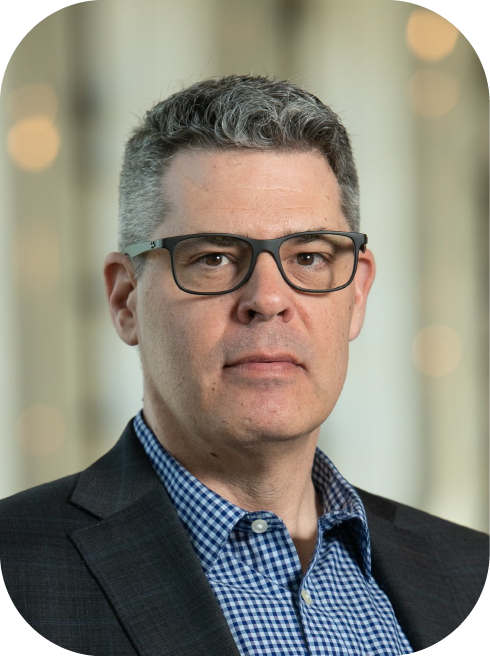
Jonathan Dewar, PhD
Dr. Jonathan Dewar is the Chief Executive Officer of the First Nations Information Governance Centre (FNIGC), which leads national-level research and information initiatives, including the First Nations Regional Health Survey, and champions data sovereignty, information governance and OCAP® education. Jonathan’s career has focused on governance, health and wellbeing, research ethics, data sovereignty, and truth, healing and reconciliation. He previously served as Director General and Vice President, Collections, Research, Exhibitions and Repatriation at the Canadian Museum of History and Director of Research at the Aboriginal Healing Foundation. He holds a doctorate from Carleton University and serves on the inaugural Board of Directors for the National Council for Reconciliation. Jonathan is a member of the Huron Wendat Nation.

Jeff Ward
Jeff Ward is the founder and CEO of Animikii Indigenous Technology, a values-driven B Corp building ethical technology for a more equitable world. Since 2003, he has grown Animikii into the company behind Niiwin, one of the world's first data platforms built with Indigenous-first design and envisioned as an ethical data store in the AI ecosystem, grounded in principles of Indigenous data sovereignty including OCAP® and CARE. Jeff is chair of APTN's corporate subsidiaries, a founding board member of the Indigenous Tech Circle, and a member of the OECD Global Partnership on AI (GPAI) Experts Working Group on Responsible AI. Jeff is Ojibwe and Métis, originally from Manitoba.

Dr. Natasha Ita MacDonald
Dr. Natasha Ita MacDonald is an Inuk from Nunavik and a consultant specializing in Inuit-led decolonization and Inuktut language preservation. Through Silattusarniq Community Solutions Consulting, she advances Inuit knowledge-based policy and systems change and supports the co-development of Inuit Nunangat University. She also serves as Vice-President of Heritage Lab, providing strategic, governance, and operational leadership for Inuit-led artificial intelligence and language technology initiatives, including the Ai! Project in Nunavik. Her work ensures digital tools uphold Inuit data sovereignty, cultural protocols and community control while strengthening partnerships with funders and building pathways into language technology for Inuit communities.

Caroline Running Wolf
Caroline Running Wolf, born Old Coyote (Crow), is a language activist and XR producer dedicated to supporting Indigenous languages and data sovereignty. Caroline co-founded First Languages AI Reality (FLAIR) and serves on multiple advisory boards where she champions the inclusion of Indigenous knowledges. Caroline is an advocate for Indigenous data sovereignty, data justice, and AI ethics.
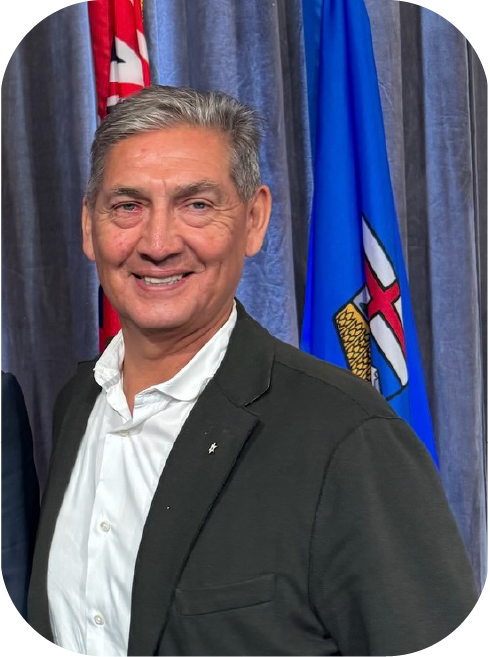
George Lafond
Over a 45-year public service career, George Lafond has held many leadership positions in business and community development. A former Tribal Chief, he was appointed by the Government of Canada as the Treaty Commissioner of Saskatchewan, a role involving public education, neutral convening and dialogue with Treaty parties, and durable resolution of conflict relating to Treaty rights and responsibilities. He currently advises the Saskatchewan Indian Institute of Technology and is a recipient of the Saskatchewan Order of Merit. George is a citizen of the Saskatchewan Muskeg Lake Cree Nation in Treaty Six territory.
About Mila – Quebec Artificial Intelligence Institute
Founded by Professor Yoshua Bengio, Mila – Quebec Artificial Intelligence Institute is the world’s largest academic AI research center specialized in deep learning, home to a community of over 1,500 members. Based in Montreal, Mila was created out of a unique partnership between Université de Montréal and McGill University, dedicated to advancing scientific breakthroughs that drive innovation and ensure AI benefits everyone. A non-profit organization, Mila is strongly supported by the Government of Canada through the Pan-Canadian AI Strategy and by the Government of Quebec. Internationally recognized for its influential research, global innovation partnerships, and leadership in multilateral efforts on responsible AI, Mila continues to shape the future of AI worldwide. For more information, visit mila.quebec.
About CIFAR
The Canadian Institute for Advanced Research (CIFAR) is a globally influential research organization proudly based in Canada. We mobilize the world’s most brilliant people across disciplines and at all career stages to advance transformative knowledge and solve humanity’s biggest problems, together. The Pan-Canadian AI Strategy is a national initiative, funded by the Government of Canada and led by CIFAR since 2017, to establish and sustain Canada’s global leadership in AI research and talent. As the national facilitator, CIFAR aligns the strengths of the three national AI institutes: Amii (Edmonton), Mila (Montreal), and the Vector Institute (Toronto).