




The AI Policy Frontline: Driving Evidence-Based Solutions
The inaugural Mila AI Policy Conference 2026, The AI Policy Frontline: Driving Evidence-Based Solutions, gathers leading researchers, policymakers, government officials, and industry experts to address the most critical challenges and opportunities at the intersection of Artificial Intelligence and public policy today.
Effective AI policy in a period of rapid innovation requires more than technical knowledge—it demands interdisciplinary collaboration and a commitment to evidence-based solutions. The conference is designed to be the nexus where diverse global perspectives converge to forge actionable and informed AI policy pathways. It centers critical AI policy issues and propels collaboration for scientifically informed solutions.
The Mila AI Policy Conference provides:
- Access to world-class expertise: Participants engage with a distinguished lineup of diverse voices from a global AI research community, governmental bodies, industry, and civil society.
- Insights to drive informed policy: Participants gain insights into the latest research and policy discussions, ensuring their decisions are grounded in robust evidence and a holistic understanding of AI's societal impacts.
- Collaboration on effective solutions: Participants join interactive sessions and breakout groups designed to turn complex, theoretical challenges into concrete, sector-specific solutions.
The Mila AI Policy Conference is an imperative stop for policymakers, researchers, and thought leaders dedicated to driving collaborative and evidence-based solutions on the AI Policy Frontline.
See the full program below.
Pre-Conference Events such as Mental Health & AI Chatbots: From Silos to Safeguards and the AI for Courts and Tribunals: Expert Panel provide unique opportunities to dive deeper into key AI policy issues and engage with a range of experts leading up to the Mila AI Policy Conference. Read more here.
The Mila AI Policy Conference takes place during the Mila AI Policy Week, a week of programming part of the in-person component of the Mila AI Policy Fellowship. Read more about the Mila AI Policy Fellowship.
Conference Agenda
Conference Agenda
8:30 AM COFFEE & REGISTRATIONS
The AI Policy Frontline: Driving Evidence-Based Solutions
9:00 AM l Inauguration of the Mila AI Policy Conference - Opening Remarks
Master of Ceremony
- Sally Guy, Head of Government Relations, Mila
Online Moderator
- Henri Vilandre, Policy Advisor, Mila
Opening Remarks
- Benjamin Prud’homme, Vice President, Public Policy and Global Affairs, Mila
- Isadora Hellegren, Mila AI Policy Fellowship Lead, Mila
9:15 AM l Opening Keynote
- Hugo Larochelle, Scientific Director, Mila
9:30 AM l Mobilizing Intelligence: Setting the Stage for Informed AI Policy
- Virginia Dignum, Professor, Responsible Artificial Intelligence and Director of the AI Policy Lab, Umeå University
Panel
The inaugural panel of the conference will tackle the foundational challenge of effective AI policy-making. Drawing on a diverse set of perspectives—from research infrastructure to civil society advocacy and government—this discussion will emphasize the need for holistic, interdisciplinary approaches to complex socio-technical problems. The panelists will address how to build robust knowledge and collaboration infrastructure to bridge the gap between scientific advancement and policy implementation, framing both the challenges and the opportunities presented by modern AI.
- Elissa Strome, Executive Director, Pan-Canadian AI Strategy, CIFAR
- Karim Bardeesy, Parliamentary Secretary to the Minister of Industry
- Chinasa T. Okolo, Founder and Scientific Director, Technecultura; AI Policy Specialist, United Nations
- Moderator: Benjamin Prud’homme, Vice President, Policy and Global Affairs, Mila
10:15 AM l Shaping (with) the Next Generation: Building for the Future
Lightning Talks
- Elyas Felfoul, WISE Partnerships & EdTech Accelerator, Brain Trust XPRIZE, Strategic Committee UM6P DeepTech Summit, Mila AI Policy Fellow
AI for Learning in MENA - Christopher Wegemer, Postdoctoral Scholar, University of California, Mila AI Policy Fellow
Adaptive AI, Youth Political Development, and Democracy: The Governance Challenges of Personalized Content Generation - Helen Hayes, Associate Director, Policy, The Centre for Media, Technology, and Democracy, Doctoral Candidate in Communication Studies at McGill University, Mila AI Policy Fellow
Designing AI Safer Chatbots: Policy Pathways to Protect Young People in Conversational AI Ecosystems
10:30 AM l COFFEE BREAK
Addressing Governance Challenges of Frontier AI
10:45 AM l Shaping (with) the Next Generation: Building for the Future
Panel
This panel focuses on the dual challenge of protecting and preparing youth in an AI-infused world. The discussion will cover the immediate governance needs surrounding emerging technologies like chatbots and their impact on youth mental health. Simultaneously, panelists will explore the long-term imperative of building for the future through strategic innovation, education reform, and the development of inclusive AI infrastructures.
- Shingai Manjengwa, Senior Director, Education and Development, Mila
- Laurent Charlin, Associate Professor, HEC Montréal, Department of Decision Sciences, Mila Core Academic Member and Fellowship AI Advisor
- Namir Anani, President and CEO, ICTC - CTIC
- André Coté, Interim Executive Director, The Dais
- Moderator: Justin Hendrix, CEO and Editor of Tech Policy Press
11:30 AM l Trust, Agency, & Democracy: Maintaining the Social Contract in an AI Era
Lightning Talks
- Hause Lin, Computational Social Scientist, MIT, Mila AI Policy Fellow
AI Political Persuasion: Translating Evidence into Democratic Governance Policy - Maartje Nugteren, Responsible AI Manager, Microsoft AI, Mila AI Policy Fellow
Governing Multi-Agent AI Interaction: Addressing EU AI Act Implementation Gaps - Zhongtian Sun, AI Lecturer, University of Kent, Co-founder and CTO of an AI-for-finance startup, Mila AI Policy Fellow
Detecting Infrastructure-Level Risks in Agentic AI: Unsafe Delegation, Emergent Deception, and Goal Misalignment
11:45 AM l Trust, Agency, & Democracy: Maintaining the Social Contract in an AI Era
Panel
As AI becomes an increasingly powerful force shaping society, questions of trust, human agency, and democratic governance take on new urgency. This panel explores how social institutions, norms, and decision-making processes can adapt in the face of rapid technological change, and what it will take to maintain a healthy social contract in an AI-driven world.
Panelists will reflect on the roles of responsibility, accountability, and inclusion as AI systems continue to evolve, as well as the challenges of aligning fast-moving technologies with institutions operating on longer timelines. The conversation will consider how to foster public trust, protect democratic values, and ensure that a wide range of perspectives help shape the future of AI.
- The Honourable Senator Rosemary Moodie, Senate of Canada
- Anna Jahn, Executive Director, Centre for Media, Technology, and Democracy, McGill
- Sam Ramadori, Co-President and Executive Director, LawZero
- Moderator: Sally Guy, Head of Government Relations, Mila
12:30 PM l LUNCH
Harnessing Opportunities
1:15 PM l Expanding Expertise for Effective Policy Solutions
Lightning Talk
- Adio-Adet Dinika, Research Fellow, The Distributed AI Research Institute, Mila AI Policy Fellow
Governing AI From Below: Worker-Centred Frameworks for Global Algorithmic Safety and Accountability
Panel
Effective policy-making demands a broad and inclusive understanding of expertise. This panel will address how to move beyond traditional boundaries to expand the notion of expertise—integrating diverse knowledge systems, perspectives, and lived experiences (both local and global) into the policy-making pipeline. The session will feature short, focused presentations, followed by a discussion on practical mechanisms for effectively integrating this expanded expertise into AI governance processes.
- Adio-Adet Dinika, Research Fellow, The Distributed AI Research Institute, Mila AI Policy Fellow
- Fergus Linley-Mota, Founder and Director, SFU Dialogue on Technology Project
- Lynnsey Chartrand, Head of Indigenous Initiatives, Mila
- Alejandro Mayoral Banos, Executive Director, Access Now
- Moderator: Alice Marwick, Director of Research at the Data & Society Research Institute
2:00 PM l Modernizing Infrastructures of Governance and Justice
Lightning Talks
- Sarah Bérubé, Policy Analyst - M.A. in Public Management Candidate, Johns Hopkins University, Mila AI Policy Fellow
Exploring the Use of AI to Design and Develop More Efficiently Digital User-Centred Public Services - Moritz von Knebel, Chief of Staff, Institute for Law & AI, Mila AI Policy Fellow
Future-Proof and Democratic: Designing Institutions for Governing Artificial Intelligence - Noah Favel, Legal Professional and Sr AI Advisor to the National Chief of Canada, Mila AI Policy Fellow
Mandating Indigenous AI Firms for Indigenous Law in Canada
Sector Adoption Panel Breakout Sessions
2:30 PM l AI Adoption in Public Administration
Lightning Talk
- Alesia Zhuk, Researcher, The Hague Academy’s Centre for Studies and Research, Legal Scholar on Law and Emerging Technologies Intersection, Mila AI Policy Fellow
The Use of Artificial Intelligence by and Before International Courts and Tribunals
Panel
Focusing on the operational realities of government and judiciary systems, this session will examine the challenges and opportunities of implementing AI within public administration. It will address areas such as user experience (UX) for digital government services and effective use and implementation of AI in international courts and tribunals.
- Alesia Zhuk, Researcher, The Hague Academy’s Centre for Studies and Research, Legal Scholar on Law and Emerging Technologies Intersection, Mila AI Policy Fellow
- Sarah Bérubé, Policy Analyst, M.A. in Public Management Candidate, Johns Hopkins University, Mila AI Policy Fellow
- Michael Karlin, Senior Advisor, AI, Safety, and Governance, Service Canada
- Prateek Sibal, Programme Specialist, Digital Policies and Digital Transformation, UNESCO
- Jake Hirsch-Allen, Director Partnerships and Advocacy, The Dais and Canadian Public AI Fellow
- Moderator: Anna Jahn, Executive Director, Centre for Media, Technology, and Democracy, McGill
2:30 PM l Unlocking Potential in Critical Minerals and Resources
Lightning Talk
- Lisa Mah, Action Canada Fellow, Previously Director of Ventures, Creative Destruction Lab, Mila AI Policy Fellow
AI Policy for Critical Mineral Recovery and Circular Economy in Mine Tailings
Panel
This discussion explores the transformative potential of AI for critical minerals and resources. Panelists, including industry leaders, public officials, and researchers, will delve into the application of AI to improve efficiency, safety, and environmental stewardship, while considering the policy and technical requirements for responsible adoption.
- Geneviève Marquis, Executive Director, Central Division, Geological Survey of Canada, Natural Resources Canada
- Loubna Benabbou, Chair professor of AI for Supply chains at Université du Québec à Rimouski (UQAR) and Affiliated Professor at Mila and Université de Montréal
- Alain Thivierge, VP, Global Outreach, Centre for Excellence in Mining Innovation (CEMI-MICA)
- Moderator: Lisa Mah, Action Canada Fellow, Previously Director of Ventures, Creative Destruction Lab, Mila AI Policy Fellow
2:30 PM l AI, Climate and Humanitarian Responses
Lightning Talk
- Nancy Kimayo, Evaluation Specialist, World Food Programme in Dadaab Refugee Camp, Kenya - Mila AI Policy Fellow
Harnessing AI-Driven Data for Climate-Resilient Humanitarian Decision-Making in Eastern Africa
Panel
This session will focus on how AI can be effectively harnessed to address two of the world’s most pressing challenges: climate change and humanitarian responses. The discussion will feature experts examining the policy frameworks, research, and practical applications necessary to leverage AI as a tool for environmental monitoring, disaster relief coordination, and building global resilience.
- Nancy Kimayo, Evaluation Specialist, World Food Programme in Dadaab Refugee Camp, Kenya - Mila AI Policy Fellow
- Sonja Solomun, Deputy Director, Centre for Media, Technology, and Democracy, McGill
- Alex Garcia-Hernandez, Assistant Professor, Université de Montréal
- Somya Joshi, Research Director, Stockholm Environment Institute
- Moderator: Josée Poirier, AI for Climate Studio Lead, Mila
3:30 PM l Closing Keynote
Ambassador Audrey Tang, Cyber Ambassador and former Minister of Digital Affairs, Government of Taiwan
4:15 PM l Closing Remarks
Benjamin Prud'homme, VP, Policy and Global Affairs, Mila
4:30 PM l Networking Reception
Speakers
Speakers

Sally Guy
Master of Ceremony
Head of Government Relations at Mila
Head of Government Relations at Mila
Sally is the Head of Government Relations at Mila, where she builds relationships with governments in Canada and abroad, while advising the organization’s leadership on strategy and public affairs. She plays a central role in external relations and is proud to support Mila’s mission to ensure the development of AI serves the public good.
Prior to joining Mila, Sally was the Director of Policy and Strategy at the Canadian Association of Social Workers (CASW) for a decade, where she played a leadership role shaping policy around critical social and economic issues. There, she successfully advanced key policy initiatives and built strong ties with governments, academic communities, and NGOs.
She has also served on the National Guidance and Implementation Committee for the VEGA Project, the Government of Canada's 10 year, $100 million investment to support victims of family and intimate partner violence, and on the Board of the Canadian Alliance on Mental Illness and Mental Health. Sally holds degrees from Queen’s University and St. Thomas University, and is an Action Canada Fellow.

Namir Anani
President and CEO, ICTC - CTIC
Namir Anani is the President and CEO of the Information and Communications Technology Council (ICTC), leading its national mandate to shape Canada’s digital advantage. A recognized strategist in digital economy policy and innovation, Namir previously headed Policy Development & Research at the CRTC and has held executive roles with Canadian Heritage, CGI, Nortel, and Novartis (Switzerland). He is a frequent speaker on digital transformation and holds a B.Sc. (Hons) in Electrical Engineering from the University of Salford (UK) and a P.Eng. designation in Ontario.
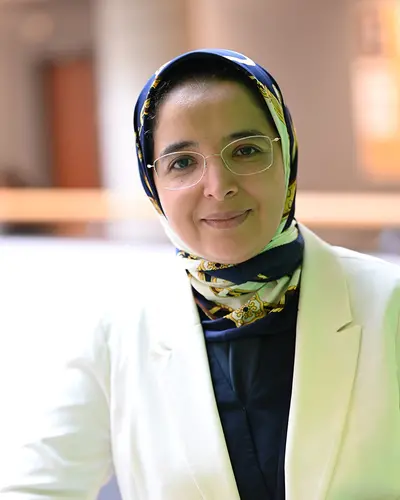
Loubna Benabbou
Chair professor of AI for Supply chains at Université du Québec à Rimouski (UQAR) and Affiliated Professor at Mila and Université de Montréal
Dr. Benabbou is a Full Professor and holds the Research Chair in Artificial Intelligence for Supply Chains in the Department of Management Sciences at Université du Québec à Rimouski (UQAR). She is also an Affiliated Professor at Mila and Université de Montréal. Her research focuses on developing and applying machine learning and operations research methods to support data-driven decision-making, with a particular emphasis on supply chain decarbonization and resilience.
Prof. Benabbou actively collaborates with Canadian and international industry partners across sectors including forestry, mining, energy, and maritime transport. She holds an industrial engineering degree from École Mohammadia d'Ingénieurs in Morocco, as well as an MBA and a Ph.D. in Machine Learning and Optimization from Université Laval in Québec.

Karim Bardeesy
Parliamentary Secretary to the Minister of Industry, Co-founder of the Dais at Toronto Metropolitan University
Karim Bardeesy was elected in April 2025 as the Member of Parliament for Taiaiako’n–Parkdale–High Park, representing the Liberal Party. He serves as Parliamentary Secretary to the Minister of Industry, advancing innovation and economic growth. A lifelong public servant, Karim co-founded the Dais at Toronto Metropolitan University — a public policy think tank focused on technology, education, and democratic renewal. He previously served as Deputy Principal Secretary to Premier Kathleen Wynne and Executive Director of Policy under Premiers Wynne and Dalton McGuinty, where he led transformative initiatives to improve infrastructure, expand student support, and give Ontarians better and bigger pensions.
Karim began his career in journalism, writing for The Toronto Star, The Globe and Mail, and Slate. He holds degrees from McGill University and Harvard Kennedy School, and has taught courses on public policy and leadership at Toronto Metropolitan University and the University of Toronto. Karim’s dedication has earned him two teaching awards and, recently, the King Charles III Coronation Medal for strengthening Canada’s democracy. Raised in Bathurst, New Brunswick, Karim lives in Toronto’s Roncesvalles Village with his wife and two children. He is the son of immigrants from Egypt and England.

Sarah Bérubé
Policy Analyst - M.A. in Public Management Candidate, Johns Hopkins University, Mila AI Policy Fellow
Sarah Bérubé is a policy analyst focused on technology policy, public governance, and international relations. A 2025–2026 Fulbright Student, she is pursuing an M.A. in Public Management at Johns Hopkins University. She has worked for the OECD AI team and spent seven years with the Government of Canada. Sarah began her career in the Advanced Policy Analysts Program and holds degrees in international relations (B.A. and M.A.) from Laval University.

Laurent Charlin
Associate Professor, HEC Montréal, Department of Decision Sciences, Mila Core Academic Member and Fellowship AI Advisor
Laurent Charlin is a Core Academic Member of Mila – Quebec Artificial Intelligence Institute, a Canada CIFAR AI Chair, as well as an Associate Professor at HEC Montréal, the business school affiliated with Université de Montréal. Charlin’s research focuses on developing novel machine learning models to aid in decision-making.
His recent work has focused on learning from data that changes over time, and on applications in fields such as recommender systems and optimization. He has a number of highly cited publications on dialogue systems (chatbots). He co-developed the Toronto Paper Matching System (TPMS), which has been widely used by computer science conferences for matching reviewers to papers. He has also given MOOCs, introductory talks and media interviews to contribute to knowledge transfer and improve AI literacy.

Lynnsey Chartrand
Head of Indigenous Initiatives, Mila
Lynnsey holds the role of Head of Indigenous Initiatives at Mila — Quebec Artificial Intelligence Institute, where she is dedicated to weaving Indigenous Knowledges, talent, voices, and perspectives into the very fabric of the AI landscape through collaborative initiatives.
Before joining Mila, Lynnsey played a key role in managing Indigenous programming and outreach at McGill University. With a robust six-year history in policy work within the innovation sector, she is deeply passionate about promoting equal opportunities across all sectors of the Canadian economic ecosystem. Lynnsey's academic foundation is in Sociology. On a personal level, Lynnsey, a mother of three young boys, was born and raised in Treaty 4 and proudly embraces her Red River Métis heritage through her father's family.

André Coté
Interim Executive Director, The Dais
André (he/him) has worked in a variety of roles at the intersection of policy, higher education and tech. As mission-driven consultant, offering strategic advice, research and other services to a range of clients. As senior advisor to Ontario’s deputy premier and minister of advanced education and skills development, and for digital government services. As chief operating & strategy officer with NEXT Canada, a national non-profit incubator for entrepreneurs and start-ups. As ed tech innovator, developing the Dive: Student Aid digital case learning model with TMU’s Leadership Lab and other partners. And as a director on the Board of eCampus Ontario.
He’s published many papers, reports and articles, including in other past roles with IMFG, a cities-focused research institute at the University of Toronto’s Munk School of Global Affairs and Public Policy; and with the Public Policy Forum.
André is a graduate of the Munk School’s Master of Public Policy (MPP) program and Queen’s University, and grew up in Ottawa.

Virginia Dignum
Professor, Responsible Artificial Intelligence and Director of the AI Policy Lab, Umeå University
Virginia Dignum is Professor of Responsible Artificial Intelligence at Umeå University, Sweden, where she leads the AI Policy Lab. She is a leading voice in global AI policy, chairing the ACM Technology Policy Council , co-chairing the IEEE Global Initiative on the Ethics of Autonomous Systems, and advising the Wallenberg Foundations in Sweden.
She is a member of expert groups at UNESCO, OECD, and was part of the EU’s High-Level Expert Group on AI, the UN’s High Level Advisory Body on AI, and World Economic Forum Global Future Council on Artificial Intelligence. She also founded ALLAI, the Dutch AI Alliance. As part of her work for UNESCO’s AI Ethics Experts Without Borders, she is advising governments around the world on the development and operationalization of their national AI strategies. Her forthcoming book, The AI Paradox, will be published by Princeton University Press in February 2026.

Adio-Adet Dinika
Research Fellow, The Distributed AI Research Institute, Mila AI Policy Fellow
Dr. Adio-Adet Dinika is a political scientist and AI researcher co-leading the Data Workers Inquiry at the Distributed AI Research Institute (DAIR). His research focuses on AI labour, digital colonialism, and epistemic justice from a worker-centred perspective. He holds a PhD in Political Science from the Bremen International Graduate School of Social Sciences. A former platform worker, he combines activism and scholarship, with writing featured in Noema Magazine, Africa in Fact, and peer-reviewed journals.

Noah Favel
Legal Professional and Sr AI Advisor to the National Chief of Canada, Mila AI Policy Fellow
Noah Favel is a legal professional and Senior AI Advisor to the National Chief of Canada. He holds a PhD at McGill University researching AI-driven learning systems to improve education. With a background in law and education, he designs adaptive tools for youth and explores AI's ethical impacts. He also serves as Senior Advisor in AI to the National Chief of Canada, studying and designing AI systems for legal and education institutions. Originally from Saskatchewan, Noah is a status member of Poundmaker Cree Nation, Treaty 6, with family roots in Britain.
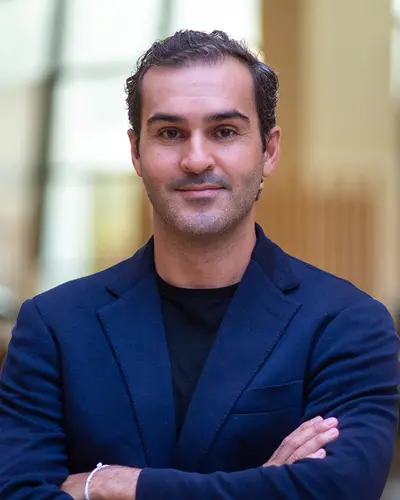
Elyas Felfoul
WISE Partnerships & EdTech Accelerator, Brain Trust XPRIZE, Strategic Committee UM6P DeepTech Summit, Mila AI Policy Fellow
Elyas Felfoul is a global leader in education technology, innovation and policy. He directs the WISE Summit and leads partnerships for the WISE EdTech Accelerator. With expertise in EdTech, public policy, M&A, and international partnerships, he has supported over 50 ventures and advised global leaders. Elyas is part of XPRIZE’s Brain Trust, UM6P’s Deep Tech Platform, and World in 2050. He holds degrees from the University of Sherbrooke and NUS’ Lee Kuan Yew School.

Helen Hayes
Associate Director, Policy, The Centre for Media, Technology, and Democracy, Doctoral Candidate in Communication Studies at McGill University, Mila AI Policy Fellow
Associate Director of Policy at the Centre for Media, Technology and Democracy, Helen Hayes is a Doctoral Candidate in Communication Studies at McGill University, researching the governance of AI and digital technologies. A Senior Fellow at the Centre for Media, Technology, and Democracy, she focuses on tech policy, online harms, social media regulation and AI governance. Her work appears in top journals and edited volumes. She holds an Honours B.A. from the University of Toronto and an M.A. in Communication Studies from McGill University.

Isadora Hellegren
Mila AI Policy Fellowship Lead, Mila
Isadora Hellegren heads the Mila AI Policy Fellowship and AI Policy Research at Mila — Quebec AI Institute. She is dedicated to bridging the gap between cutting-edge AI expertise and policy by advancing responsible, collaborative, and evidence-based AI policy research and practice. Her commitment to fostering equity and meaningful participation in AI is informed by an extensive background in internet governance, social change, and policy development.
Prior to joining Mila, Isadora served as Senior Policy Specialist for internet freedom and democratic governance at the Swedish International Development Cooperation Agency (Sida). Her past leadership in the field includes organizing the multi-stakeholder Stockholm Internet Forum (SIF) and heading GOTO 10, a center for knowledge exchange at the Swedish Internet Foundation.
A graduate of McGill University and Gothenburg University, Isadora currently chairs the Global AI Policy Research Network (GlobAIpol) and is a former member of the GIGANET Steering Committee. Her scholarly work on technology and policy development has been published in the Oxford University Press Research Encyclopedia of Communication and Internet Histories: Digital Technology, Culture and Society.

Justin Hendrix
CEO and Editor of Tech Policy Press
Justin Hendrix is CEO and Editor of Tech Policy Press, a nonprofit media venture concerned with the intersection of technology and democracy. Previously, he was Executive Director of NYC Media Lab. He spent over a decade at The Economist in roles including Vice President of Business Development & Innovation. He is an adjunct professor at NYU Tandon School of Engineering and a lecturer at Cornell Tech, and serves on the editorial board at Just Security. Opinions expressed here are his own.

Alex Hernandez-Garcia
Assistant Professor, Université de Montréal
Alex Hernandez-Garcia is an assistant professor at the Université de Montréal, a core academic member at Mila, IVADO professor and member of the Institut Courtois. His machine learning research is motivated by scientific applications to tackle the climate crisis and other societal challenges. In particular, a current focus of his work is active and generative machine learning to facilitate scientific discoveries, such as new materials and antibiotics. He also advocates for a critical examination of the impacts of artificial intelligence, is a strong proponent of open science and is active in initiatives about making science more inclusive, equitable, open, reproducible, transparent and environmentally conscious.
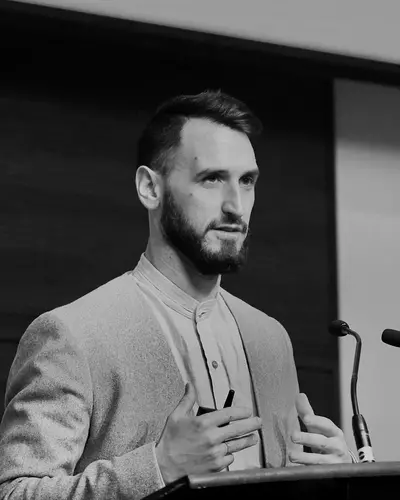
Jake Hirsch-Allen
Head of Partnerships at The Dais
Jake Hirsch-Allen is the head of Partnerships at The Dais, Canada’s leading think tank. Current foci include “Kids and Tech”, “Renewing Democracy” and “AI and the Innovation Economy.” Jake previously built public-private partnerships in workforce development and higher education for LinkedIn.
Jake advises impact investors, public sector leaders and start-ups, including on edTech, responsible tech, ethical data and Public AI. He co-founded Lighthouse Labs and has acted as a director on many boards. A former intellectual property and international criminal lawyer, Jake was also chair of the Technology Committee of the Global Education Platform, taught Global Health at McMaster University and clerked at the Supreme Court of Israel.

Anna Jahn
Executive Director, Centre for Media, Technology, and Democracy, McGill
Anna Jahn is the Executive Director of the Centre for Media, Technology and Democracy at McGill University, where she also serves as Associate Professor (Research) at the Max Bell School of Public Policy. She leads research and policy initiatives at the intersection of artificial intelligence, democratic governance, and public policy.
Previously, as Senior Director of Public Policy and Inclusion at Mila, the world's largest AI research institute in deep learning, Anna contributed to UN AI governance discussions, including recommendations for the UN's Independent International Scientific Panel on Artificial Intelligence. She launched the Mila AI Policy Fellowship, connecting researchers and practitioners to produce evidence-based policy briefs, and directed the Indigenous Pathfinders in AI program, fostering AI solutions for Indigenous communities.
Before joining Mila in 2022, Anna served as Executive Director of the Action Canada Fellowship Program at the Public Policy Forum, where she designed leadership development programs for policymakers. Anna's expertise bridges the science-policy gap, translating complex AI research into actionable solutions for governments and international organizations.
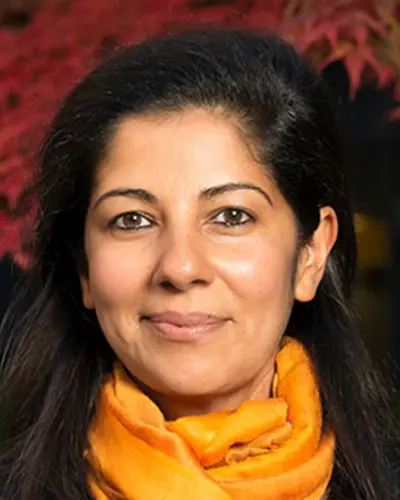
Dr. Somya Joshi
Research Director, Stockholm Environment Institute
Somya Joshi is Research Director at SEI and chairs the AI Task Force. She previously had the position of Head of Division – Global Agendas, Climate and Systems. She is Docent (Associate Professor) at Stockholm University in Technology & Governance.
Somya’s research has been situated between cognitive sciences and technology design, particularly in how data and systems translate into transparency and accountability in governance. She has over fifteen years of experience bridging science and policy for sustainable development and challenging entrenched narratives of extractivism within technology disruption.
Somya has held leadership roles in science-policy frontiers with a strong focus on decarbonisation, industry transition, climate governance and using futures thinking to bring about systemic change that is aligned with planetary limits.
After being awarded her doctoral degree from Manchester, UK, in decision science, Somya was offered a post doctoral position at Cambridge University, UK, in Information Systems, applying a critical lens on the efficacy of Global Development Organisations. This experience allowed her to participate in international development cooperation and methods development related to multi-level governance, with particular focus on global goals.
Today Somya leads global voices in the field of Sustainable AI, delivering keynote talks at international fora, whilst also leading academic research, supervision and mentoring of PhD and post doctoral researchers. She manages a dynamic division of experts in fields as diverse as energy and industry transition, international climate risk and adaptation, supply chain transparency and global goals – leading the leaders of the future.

Michael Karlin
Senior Advisor, AI, Safety, and Governance, Service Canada
Michael Karlin is a Senior Advisor at the Canadian Digital Service, where he specializes in public policy considerations of deploying public technology products. He has worked in AI policy since 2017, advising the government in the safe deployment of this technology at numerous federal departments, including the creation of the federal Directive on Automated Decision-Making, the Algorithmic Impact Assessment, and more recently, federal chatbot deployment.

Nancy Kimayo
Evaluation Specialist, World Food Programme in Dadaab Refugee Camp, Kenya - Mila AI Policy Fellow
Nancy Kimaiyo is a Monitoring and Evaluation Specialist with over seven years of experience across humanitarian and development programs in Eastern Africa. She currently supports the World Food Programme in Dadaab Refugee Camp, Kenya, focusing on food security, resilience, and data systems. Nancy emphasizes ethical, community-led data practices in fragile contexts. She holds a Master’s in Monitoring and Evaluation and has led evaluations on climate adaptation, forest restoration, and livelihoods, bridging data, technology, and inclusive policy.

Hugo Larochelle
Scientific Director, Mila
Hugo Larochelle, Scientific Director at Mila, is a highly influential deep learning researcher and industry leader. He studied under AI "Godfathers" Yoshua Bengio and Geoffrey Hinton, and his pioneering research laid key foundations for how modern AI systems learn. He has since held key leadership roles, including leading Google's AI research lab in Montreal and co-founding the startup Whetlab, which was acquired by Twitter.

Hause Lin
Computational Social Scientist, MIT, Mila AI Policy Fellow
Hause Lin is a computational social scientist at MIT who investigates how AI systems shape information ecosystems and human decision making. Through large-scale experiments and collaborations with industry partners like Google, Meta, the World Bank Group, and the UK AI Safety Institute, he develops and tests solutions to promote healthier online environments.
His interdisciplinary research translates scientific insights into actionable solutions that improve decision-making and address critical societal issues arising from new technologies.

Fergus Linley-Mota
Founder and Director, SFU Dialogue on Technology Project
Fergus is Founder and Director of the Dialogue on Technology Project, housed at Simon Fraser University’s Wosk Centre for Dialogue. Both nationally and globally, Fergus has designed and led youth assemblies, convened and contributed to expert roundtables on AI and society, and facilitated conversations across government, academia, civil society, and industry. He is also Senior Fellow at the Centre for Media, Technology and Democracy at McGill University, where he leads work on participatory AI governance. Fergus has degrees from SFU and the University of Oxford, and is a Fellow of the International Strategy Forum and Action Canada.

Lisa Mah
Action Canada Fellow, Previously Director of Ventures, Creative Destruction Lab, Mila AI Policy Fellow
Lisa (Yeon-Ju) Mah is an entrepreneur and artist. She brings over six years of experience with deep-tech and science startups and was Director of Ventures at the Creative Destruction Lab, helping commercialize research into scalable ventures. An Action Canada Fellow, she co-authored a report on the opportunities to recover critical minerals from mine tailings. Having studied business (UBC), neuroscience (KCL), and fashion (Istituto Marangoni), Lisa's diversified path reflects her commitment to interdisciplinary work.
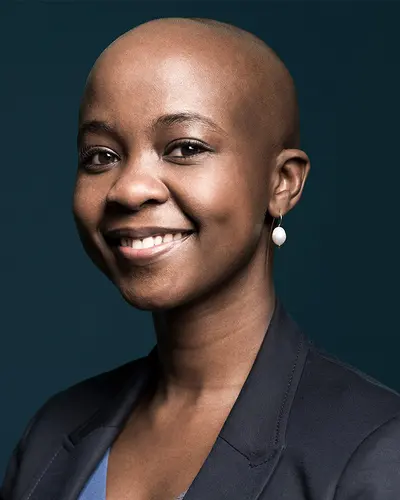
Shingai Manjengwa
Senior Director, Education and Development, Mila
Shingai Manjengwa leads AI Education and Development, Talent & Ecosystem at Mila, a world-leading AI research institute. A data scientist and leader in agentic artificial intelligence, she transforms complex AI research into practical educational programs and innovative solutions. Shingai previously led Technical Education at the Vector Institute and founded Fireside Analytics Inc., a data science education company. Her online courses have reached over 500,000 learners, and she authored "The Computer and the Cancelled Music Lessons".
Recognized with the 2023 Womxn in Data Science Guiding Light Award, Shingai is a Public Policy Forum Fellow and serves on several advisory boards and councils focused on AI safety, productivity, and governance.

Dr. Geneviève Marquis
Executive at the Geological Survey of Canada
Dr. Geneviève Marquis is an Executive at the Geological Survey of Canada, where she spearheads an esteemed team of geoscientists at Natural Resources Canada. With a passion for innovation, she leads groundbreaking mineral research programs, having successfully launched a signature initiative that leverages artificial intelligence to advance critical minerals in geoscience. Holding two M.Sc. degrees in addition to her Ph.D., Dr. Marquis has made significant strides in the field of mineral research, driving forward-thinking solutions that integrate cutting-edge technology with resource exploration

Dr. Alice Marwick
Director of Research at the Data & Society Research Institute, Research Associate Professor in the Department of Communication, and Senior Faculty Researcher at the Center for Information,Technology and Public Life
Alice E. Marwick is the Director of Research at the Data & Society Research Institute, a Research Associate Professor in the Department of Communication, and Senior Faculty Researcher at the Center for Information,Technology and Public Life, which she co-founded, at the University of North Carolina at Chapel Hill. She researches the social, political, and cultural implications of popular social media technologies. Her award-winning 2023 book, The Private is Political: Networked Privacy on Social Media (Yale), examines how the networked nature of online privacy disproportionately impacts marginalized individuals in terms of gender identity, race, sexuality, and socio-economic status. She is currently working on a book project tentatively titled Down the Rabbit Hole: The Intellectual Journey of Violent Racists, Conspiracy Theorists, Flat Earthers, and Other Americans on the Fringe, which uses digital ethnography, interviews, and qualitative content and discourse analysis to understand how people come to believe fringe, extremist, and conspiratorial disinformation they encounter on social platforms.
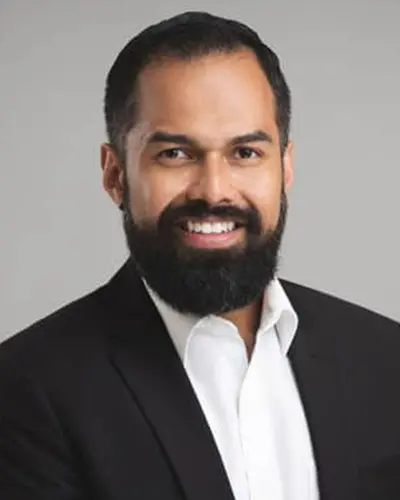
Alejandro Mayoral Banos
Executive Director, Access Now
Alejandro Mayoral Baños is the Executive Director of the global organization Access Now, where he leads the mission of extending and defending the digital rights of people and communities at risk. A dedicated activist and academic, he is passionate about bridging Indigenous Peoples and digital technologies. As a Mixtec/mestizo (Indigenous to Mexico) immigrant in Canada and a proud member of the 2SLGBTQIA+ community, Dr. Mayoral Baños is driven by a commitment to inclusivity and equity through technology.
He founded the Indigenous Friends Association (IFA) in Canada and Magtayaní in Mexico, giving him extensive experience in driving organizational growth across various socio-economic contexts and fostering environments where Indigenous perspectives and digital innovation converge. With a strong background in volunteering and social action, his work has spanned Canada, Mexico, Peru, Guatemala, Chile, Bolivia, and the United Nations. In 2023, Dr. Mayoral Baños was named an Ashoka Fellow in recognition of his impactful work. He holds a Bachelor's degree in Computer Science, a Master's degree in Interdisciplinary Studies from York University, and a Ph.D. in Communication and Culture from York University, emphasizing decolonial computing and Indigenous media.

The Honourable Senator Rosemary Moodie
Independent Senator for Ontario, Chair of the Standing Committee on Social Affairs, Science and Technology, Member of the Standing Committee on Internal Economy, Budgets and Administration
The Honourable Rosemary Moodie is an independent Senator for Ontario and serves as Chair of the Standing Committee on Social Affairs, Science and Technology, as well as a member of the Standing Committee on Internal Economy, Budgets and Administration. A respected voice on emerging technologies, she is a leading advocate in the Senate on issues related to Artificial Intelligence, having launched an inquiry to explore its implications.
Senator Moodie is a distinguished pediatrician, senior neonatologist, and Professor of Paediatrics at the University of Toronto. She holds both a Master of Business Administration and a Master of Public Administration, underscoring her deep commitment to leadership in both health and public policy.

Maartje Nugteren
Responsible AI Manager, Microsoft AI, Mila AI Policy Fellow
Maartje Nugteren is an AI policy expert with deep experience in AI governance, international engagement, and policy development across government and industry. She led global AI policy initiatives at Meta and previously served as Head of International at the UK’s Centre for Data Ethics and Innovation, representing the UK at the OECD and Council of Europe. Maartje holds an MSc in Human Rights from the London School of Economics and Political Science.

Dr. Chinasa Okolo
Founder and Scientific Director, Technecultura; AI Policy Specialist, United Nations
Chinasa T. Okolo, Ph.D., is the Founder of Technecultura, a Policy Specialist at the United Nations Office for Digital and Emerging Technologies (ODET), and a recent Computer Science Ph.D. graduate from Cornell University. Her research focuses on AI governance and safety for the Global Majority, datafication and algorithmic marginalization, and the geopolitical impacts of AI. Dr. Okolo has been recognized as one of the world’s most influential people in AI by TIME, honored in the inaugural Forbes 30 Under 30 AI list, and advises numerous multilateral institutions, national governments, corporations, and nonprofits. She is a former Fellow at the Brookings Institution and has worked in research-based roles at Apple and Microsoft. Her research has been covered widely in media outlets and published at top-tier venues in human-computer interaction and sociotechnical computing.

Josée Poirier
AI for Climate Studio Lead at Mila
Dr. Poirier’s career is dedicated to building bridges to accelerate innovation and ensure a positive impact on humanity, transforming ideas into results. She currently serves as the AI for Climate Studio Lead at Mila where she collaboratively builds high-impact AI tools to help climate practitioners and decision-makers better understand and address climate change.
Prior to this, Josée was the Senior Data Scientist, Anticipatory Action Lead and Climate Programme Lead at the United Nations OCHA Centre for Humanitarian Data. There, she spearheaded a program to make climate data more accessible and build capacity to act on it, effectively bridging climate science and humanitarian affairs to incorporate climate risk into humanitarian planning. She was a 2023 Inaugural Global Futures Fellow at the UN University Centre for Policy Research.

Benjamin Prud'homme
Vice President, Policy and Global Affairs, Mila
Benjamin Prud'homme is Vice-President of Policy, Safety and Global Affairs at Mila - Quebec AI Institute, where his work focuses on AI Governance, Safety and Human Rights, with a focus on multilateral forums. He is an appointed expert of the OECD.AI Network, the United Nations Consultative Network of Experts, and UNESCO's AI Ethics Experts Without Borders. He also is involved in the International Scientific Report on the Safety of Advanced AI. In 2023, he co-edited the Mila-UNESCO publication "Missing Links in AI Governance". Benjamin is a lawyer and former Advisor to the Minister of Foreign Affairs of Canada on Human Rights and Multilateralism.

Sam Ramadori
Co-President and Executive Director, LawZero
Sam Ramadori is an entrepreneur in the field of AI. Prior to joining LawZero, he was the CEO of BrainBox AI, where he led the innovative team that sought to apply cutting edge AI to the challenge of decarbonizing the built environment – one of the largest GHG emitting sectors in the world. In addition to managing the day-to-day execution of the company’s growth plan, Sam was responsible for fundraising and promoting the positive impact that AI technology can have on the global climate issue.
Earlier in his career, Sam dedicated 15 years to private equity investing, holding leadership roles within the private equity platforms of institutional asset managers, such as Brookfield Asset Management, and family offices. He is a graduate of the MBA program at the Richard Ivey School of Business and completed Civil and Common Law degrees at the University of Ottawa.
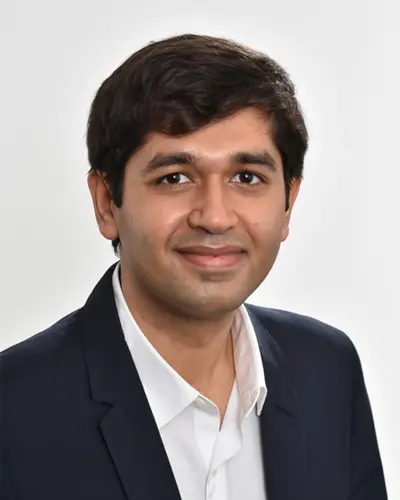
Prateek Sibal
Program Specialist, Digital Policies and Digital Transformation, UNESCO
Prateek Sibal is a Programme Specialist at the Digital Policies and Digital Transformation Section of the Communication and Information Sector at UNESCO Headquarters in Paris, France. In this framework, he leads the Sector’s work on artificial intelligence and digital transformation with a focus on capacity building for the executive, legislative and the judicial branches of government. His work spans research, advocacy, policy advice and capacity building for the governance of digital technologies.
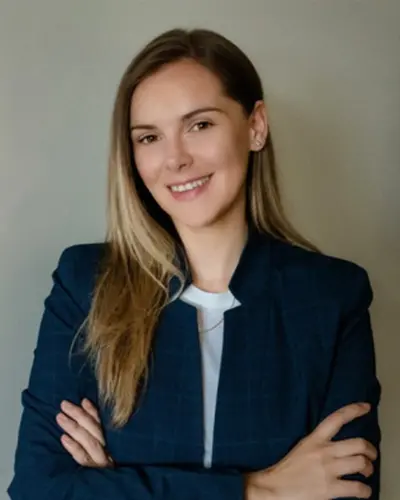
Sonja Solomun
Deputy Director, Centre for Media, Technology, and Democracy, McGill
Sonja Solomun is an Assistant Professor (Research) at the Max Bell School of Public Policy at McGill University and Deputy Director of the Centre for Media, Technology and Democracy. Her work examines tech policy and the environmental impacts of AI and digital systems. She has published in leading academic outlets including the Harvard Journal of Law and Technology and First Monday.
Sonja is a Fellow at the Center for Democracy & Technology in Washington, DC, a Research Affiliate at Data & Society and at the Climate Social Science Network at Brown University, and is the Canadian representative to the Forum on Information & Democracy’s Observatory. Her research has been featured in Nature, The Financial Times, BBC News, MIT Technology Review, Wired, The Globe & Mail, CTV and CBC News, among others.

Elissa Strome
Executive Director, Pan-Canadian AI Strategy, CIFAR
Elissa Strome is the Executive Director of the Pan-Canadian Artificial Intelligence Strategy at CIFAR. She works with leaders at Canada’s three National AI Institutes in Edmonton (Amii), Montreal (Mila), and Toronto (Vector Institute) and across the country to advance Canada’s leadership in AI research, training and innovation. She is a champion of equity, diversity and inclusion in science, and an ambassador for Canada’s position in AI research, innovation, and policy internationally.
Elissa is a member of the federal government’s AI Advisory Council, a member of the OECD’s Network of Experts on AI and Expert Group on AI in Health, a member of the Health Canada Expert Advisory Committee for AI in Health, and sits on the Advisory Board of York University’s Centre for AI & Society. Her strong leadership and support of women and gender-diverse people in STEM has been recognized by a Special Jury Recognition at the Women in AI Awards North America (2023) and the Womxn in Data Science Lifetime Achievement Award (2022).
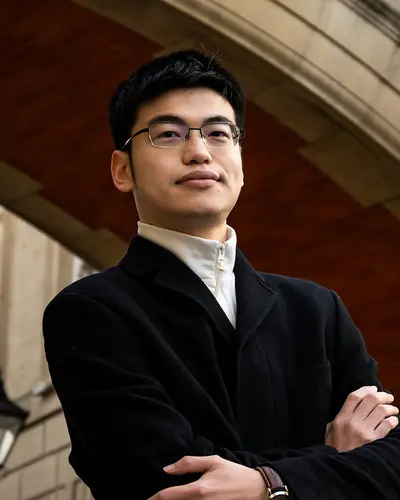
Zhongtian Sun
AI Lecturer, University of Kent, Co-founder and CTO of an AI-for-finance startup, Mila AI Policy Fellow
Dr. Zhongtian Sun is a Lecturer in AI at the University of Kent, specializing in graph representation learning, explainable AI, and LLMs. His research enhances deep learning reasoning for applications in healthcare, finance, and education.
He holds a PhD from Durham University and has conducted research at Cambridge, Oxford, and the Alan Turing Institute. Dr. Sun is Co-founder and CTO of an AI-for-finance startup and serves in leadership roles at conferences like ECAI and ICLR.

Audrey Tang
Right Livelihood Award Winner, Taiwan's Cyber Ambassador
Audrey Tang, the Right Livelihood Award Winner, is Taiwan's Cyber Ambassador and served as Taiwan's 1st digital minister and the world's 1st nonbinary cabinet minister (2016-2024).
As a child, Tang practiced Taoism to moderate all strong emotions to survive a cardiac condition. After attending 10 educational institutions in 10 years, she left formal schooling to pursue self-education at age 14. In her 20s, Tang rose to prominence as a leader in free and open-source software, revitalizing the Haskell and Perl programming languages.
During her 30s, Tang played a crucial role in shaping g0v (gov-zero), one of the most prominent civic tech movements worldwide. In 2014, she helped broadcast the demands of Sunflower Movement activists and worked to resolve conflicts during a three-week occupation of Taiwan's Legislature. Tang became a reverse mentor to the minister in charge of digital participation, before holding the role in 2016.
Tang helped develop participatory democracy platforms such as vTaiwan and Join, bringing civic innovation into the public sector through initiatives like the Presidential Hackathon and Ideathon.
Other accomplishments for Tang include shaping Taiwan's internationally acclaimed COVID-19 response and safeguarding the country's 2024 presidential and legislative elections from cyber interference.

Alain Thivierge
VP, Global Outreach, Centre for Excellence in Mining Innovation (CEMI-MICA)
Alain Thivierge, CEMI-MICA , VP- Global Outreach, is responsible for advancing international partnerships and expanding the global reach of Canadian mining technologies, focusing on sustainable mining practices and innovation. With extensive experience in international business development, he has organized and led over 50 missions and pavilions across five continents, collaborating with government authorities from Ontario, Quebec, Canada, and beyond. Alain holds a BBA in international management and is a Chartered Administrator in Quebec.
He has completed specialized training with the UN/WTO in Geneva, the University of Lyon in France, and Florida International University, focusing on export strategy, regional internationalization, and NAFTA. Alain is fluent in French, English, Spanish, Portuguese, and German and leverages his global expertise to promote Canadian mining innovation worldwide.

Moritz von Knebel
Chief of Staff, Institute for Law & AI, Mila AI Policy Fellow
Moritz von Knebel works at the intersection of technology, policy, and geopolitics. He is Chief of Staff at the Institute for Law and AI and a non-resident Fellow at fp21, the Portulans Institute, and the Oxford China Policy Lab. His research has been recognized by the UN Foundation, DAAD and the Mercator Fellowship. Moritz has worked across four continents and consults for the OECD. His work has been published in peer-reviewed journals and featured at global conferences.

Christopher Wegemer
Postdoctoral Scholar, University of California, Mila AI Policy Fellow
Dr. Christopher Wegemer is a Postdoctoral Researcher at UCLA’s Luskin School of Public Affairs, advancing democratic resilience through AI governance frameworks that address civic risks of personalized political content. His work builds on research designing digital tools to reduce polarization in education. With a PhD in Education and earlier degrees in Engineering and Applied Physics, he has presented electoral reforms to California lawmakers and teaches UCLA courses on data science, social networks, and global movements.

Hannah Yakobi
Vice-President of Communications at the Canadian Institute for Advanced Research (CIFAR)
Hannah Yakobi is an award-winning executive, who has spent the last 25 years driving change at organizations in Canada and abroad. Her specialties include transformational leadership, disruptive innovation and strategic planning that is KPI-driven. She is currently the Vice-President of Communications at the Canadian Institute for Advanced Research (CIFAR).
Hannah speaks four languages and has lived in six countries. Throughout her career, she has worked in the media, agency, not-for-profit and corporate sectors. Prior to CIFAR, Hannah was the Vice-President of Marketing, Communications and Events at the Public Policy Forum. Other career highlights include the Canadian Cancer Society, Plan International Canada, Postmedia and Estee Lauder.
Hannah's work has changed legislation, won awards, and supported leaders across Canada during the challenging times of work-to-rule and the pandemic. Over the years, Hannah has also led many campaigns that went viral on social media and directly oversaw large-scale multi-sector events around the world.
She has served on several boards, including the Canadian Association of Journalists and the Society for International Development. She is a former photojournalist and founder of Canada’s first digital fashion magazine, FAJO. Hannah graduated with highest honours from Carleton University’s school of journalism, and has professional and executive certifications from Harvard, Oxford and Queen’s universities.

Alesia Zhuk
Researcher, The Hague Academy’s Centre for Studies and Research, Legal Scholar on Law and Emerging Technologies Intersection, Mila AI Policy Fellow
Dr. Alesia Zhuk is a legal scholar focused on the intersection of law and emerging technologies. She holds a PhD from Universitat Pompeu Fabra, where she researched blockchain regulation and its legal implications. A former research fellow at Kleros, she explored NLP for online dispute resolution. As a fellow of The Hague Academy, she studies AI in international courts. Her broader interests include AI governance, environmental impacts, and the use of AI for social good.
Pre-Conference Events
Pre-Conference Events - Wednesday, January 14, 2026
Mental Health & AI Chatbots: From Silos to Safeguards
9:30 AM - 12:00 PM, The Agora
Co-organized by the Mila AI Safety Studio and the Mila AI Policy Fellowship, this livestreamed hybrid pre-conference event brings together cross-cutting expertise from technology, mental health, education, and public policy to address the risks posed by AI chatbots as an interconnected challenge.
AI for International Courts and Tribunals - Expert Panel
9:00 AM - 11:00 AM, The Coworking Space
The integration of Artificial Intelligence (AI) into judicial and quasi-judicial processes holds significant promise for transforming how justice is administered worldwide. This hybrid event with expert panel presenters will discuss how AI can support international adjudication, from automating administrative and procedural tasks to assisting in evidence collection, translation, and legal analysis.
Ecological AI Safety
1:00 PM - 2:30 PM, The Coworking Space
This roundtable session will explore how environmental impacts can be meaningfully integrated into AI safety and governance frameworks. Building on emerging debates around AI safety—which currently emphasize long-term, catastrophic risks from frontier models—the session will focus on the immediate ecological harms of AI systems, including energy use, water consumption, resource extraction, and data-center expansion.
The Mila AI Policy Conference takes place during the Mila AI Policy Week, a week of programming part of the in-person component of the Mila AI Policy Fellowship.
Read more about the Mila AI Policy Fellowship.