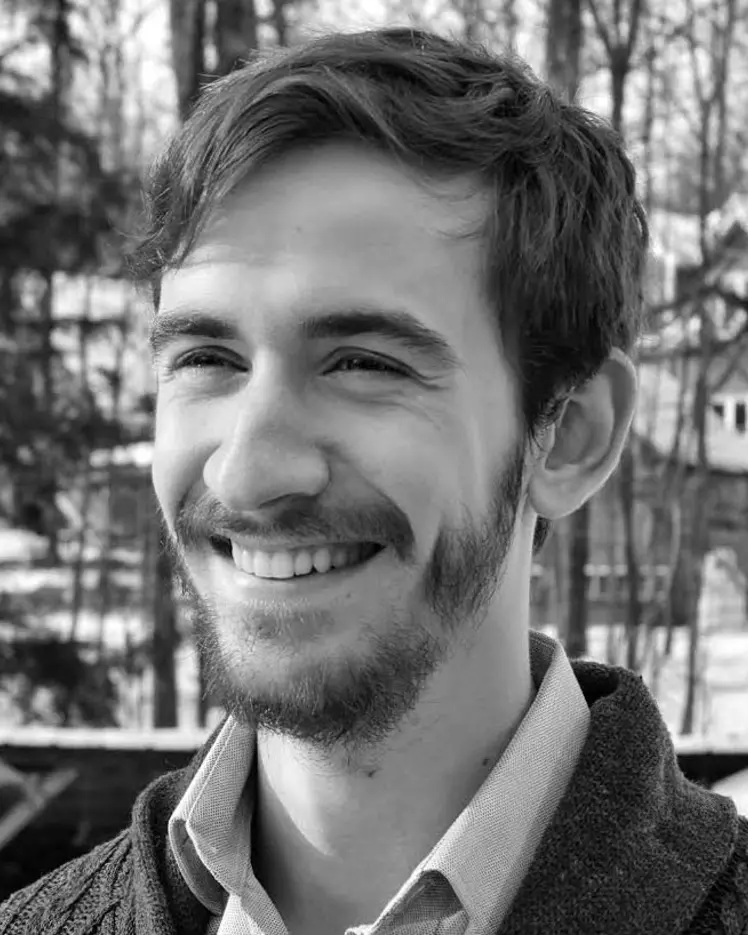
Portrait of Ronan Legin

Ronan Legin

PhD - Université de Montréal
Supervisor
Research Topics
Generative Models

Publications

A Framework for Obtaining Accurate Posteriors of Strong Gravitational Lensing Parameters with Flexible Priors and Implicit Likelihoods using Density Estimation
We report the application of implicit likelihood inference to the prediction of the macro-parameters of strong lensing systems with neural n… (see more)etworks. This allows us to perform deep learning analysis of lensing systems within a well-defined Bayesian statistical framework to explicitly impose desired priors on lensing variables, to obtain accurate posteriors, and to guarantee convergence to the optimal posterior in the limit of perfect performance. We train neural networks to perform a regression task to produce point estimates of lensing parameters. We then interpret these estimates as compressed statistics in our inference setup and model their likelihood function using mixture density networks. We compare our results with those of approximate Bayesian neural networks, discuss their significance, and point to future directions. Based on a test set of 100,000 strong lensing simulations, our amortized model produces accurate posteriors for any arbitrary confidence interval, with a maximum percentage deviation of
Posterior samples of source galaxies in strong gravitational lenses with score-based priors
Inferring accurate posteriors for high-dimensional representations of the brightness of gravitationally-lensed sources is a major challenge,… (see more) in part due to the difficulties of accurately quantifying the priors. Here, we report the use of a score-based model to encode the prior for the inference of undistorted images of background galaxies. This model is trained on a set of high-resolution images of undistorted galaxies. By adding the likelihood score to the prior score and using a reverse-time stochastic differential equation solver, we obtain samples from the posterior. Our method produces independent posterior samples and models the data almost down to the noise level. We show how the balance between the likelihood and the prior meet our expectations in an experiment with out-of-distribution data.


