



Building on the success of the inaugural edition hosted by the OECD in its Paris HQ, the Digital Trust Convention returns for its second edition—this time held at renowned AI research institute Mila in Montreal, on November 6 and 7, 2025.
The Digital Trust Convention explores how we can “upgrade” our digital environment to make it resilient against AI-automated bots, fakes and slop that distort democratic discourse, impede transparent markets and hijack human attention. Against a backdrop of authoritarian divisiveness, the Digital Trust Convention aims at a courageous, positive, even joyful digital future for shared humanity.
Specifically, the Digital Trust Convention 2025 will consider questions such as:
- How can we (re-)establish trust in people and information?
What approaches, instruments and measures might be effective and sustainable? - How can we reliably recognise real human beings in the digital space without compromising privacy?
- How can we ensure that every citizen/consumer has a fair chance to be heard and have an impact?
- What incentive structures and commercial models are needed to favour constructive, compassionate and consensus-building discourse?
The Digital Trust Convention brings together a unique combination of leading thinkers and experts from the public and private sectors and a broad range of disciplines to connect, share, learn, and engage. The two-day event is dedicated to a number of sessions in a range of formats to build a multistakeholder community and to initiate a positive transformation of our digital environment.
*Ticket purchases help cover part of the conference costs and support its organization; this is not a commercial venture.
Reserve your spot now
- General Admission: 150$
- Students and Non-Profit: 25$
Speakers

Jakub Szymik
Founder, CEE Digital Democracy Watch
Jakub Szymik is a lawyer specialising in digital and EU policy, with over a decade of experience in policy development and communications for non-profits, trade associations, and consumer groups. As the founder of CEE Digital Democracy Watch, he leads the organisation’s efforts on election integrity and technology regulation.
Jakub’s expertise is recognised internationally; he was a 2024 Fellow at the Institute of Technology and Society in Rio de Janeiro and a participant in the “Recharging Advocacy for Rights” program at the Hertie School of Governance. His work focuses on crafting policies that balance technological innovation with democratic values and human rights.

Andrew Wyckoff
Part-time Professor at the European University Institute’s School of Transnational Governance
Andrew Wyckoff is a Part-time Professor at the European University Institute’s School of Transnational Governance, a nonresident Senior Fellow at The Brookings Institution supporting the Forum for Cooperation on AI and an adjunct professor at Georgetown’s Walsh School of Foreign Service.In July 2023, he retired from the OECD where for more than a decade he was the Director of the OECD’s Directorate for Science, Technology and Innovation (STI). As Director, he represented the OECD in relationships with international organizations, including participating in G-7 and G-20 work on innovation, digital policy and excess steel capacity. Prior to being Director, he worked as the Head of STI's Digital Economy Policy division.
His experience prior to joining the OECD in 1995 includes positions at the US Congressional Office of Technology Assessment as the Program Manager of the IT and Commerce program, the US National Science Foundation (NSF) and The Brookings Institution.
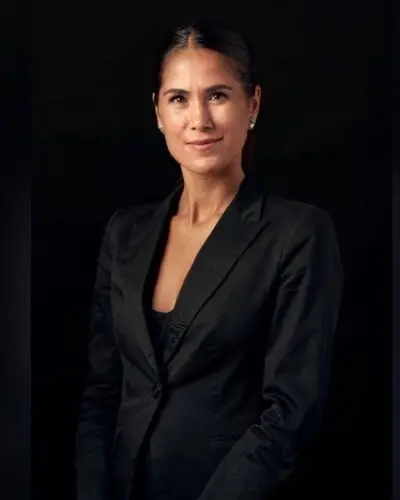
Francesca Bosco
Chief Strategy Officer, CyberPeace Institute
Francesca Bosco is Chief Strategy Officer at the CyberPeace Institute, where she shapes global strategies to reduce cyber harms and build resilience across sectors. With more than 18 years of experience at the intersection of cybersecurity, human rights, and international law, she has held senior positions at the United Nations and the World Economic Forum, driving initiatives on cybercrime, terrorist use of the internet, critical infrastructure protection, and emerging technology risks.
At the CyberPeace Institute, Francesca leads interdisciplinary programs that connect technology, policy, and governance to deliver practical cybersecurity support, foster international cooperation, and promote responsible behavior in cyberspace. She spearheads foresight on the transformative impact of AI, quantum technologies, and data-driven systems, advancing approaches that anticipate systemic risks and enable innovation to strengthen security, trust, and human dignity. She works with decision makers to translate technological developments into concrete, resilient, and inclusive digital solutions.
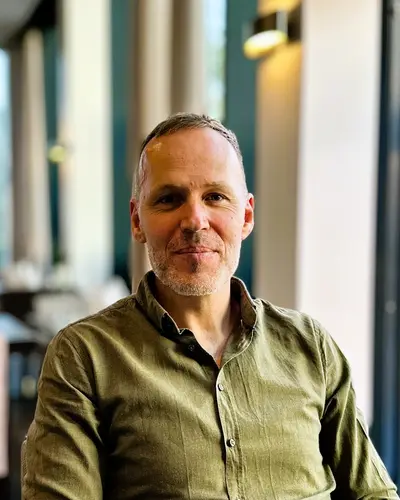
Andreas Kaminski
TU Darmstadt, Institute for Philosophy ; High-Performance Computing Center of the Universität Stuttgart (HLRS)
Andreas Kaminski is a professor of philosophy of science and technology at Technische Universität Darmstadt. His research areas include social epistemology (philosophy of trust and testimony), technical epistemology (the role of technology in science) and politics of technology (modeling for policy). He is a senior scientist at the federal High-Performance Computing Center of the Universität Stuttgart (HLRS) and editor in chief of Jahrbuch Technikphilosophie/Yearbook Philosophy of Technology.

Katherine Evans
Assistant Professor, Sorbonne Université, Paris
Dr. Katie (Katherine) Evans is an assistant professor in the ethics of artificial intelligence and cognitive science at Sorbonne University. She holds a PhD in moral philosophy and AI ethics, and a Masters degree in Moral and Political Philosophy from Sorbonne University. She is also co-Section Editor of Oxford University Press’ Expert Essentials series on Technology, Associate Editor of Springer Nature’s AI and Society Journal, and the author of UNESCO’s graphic novel for AI literacy. Katie is also an active expert and consultant in the AI governance ecosystem. Notably, she is the chief representative of the IEEE to the United Nations Economic Commission for Europe (UNECE), where she serves as co-secretary of the Informal Working Group on Artificial Intelligence (under WP.29). She is also the technical editor of IEEE’s P8000 series on the trustworthiness of AI systems.
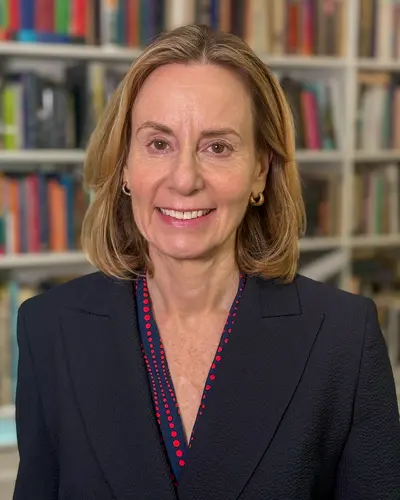
Rebecca Finlay
Chief Executive Officer, Partnership on AI
With an influential career at the intersection of technology and society, Rebecca now leads the Partnership on AI. As head of this global nonprofit, her mission is to bring together over 120 partners in 17 countries to ensure developments in AI advance positive outcomes for people and society. Prior to PAI, she held leadership roles in civil society, industry and research, and founded one of the first international, multistakeholder initiatives on the impact of AI in society at the Canadian Institute for Advanced Research.
Her insights have been featured in books, media and venues including The Financial Times, The Guardian, Nature Machine Intelligence, SXSW, the Wall Street Journal, the OECD and FTC. She is a Fellow of the American Association for the Advancement of Sciences and sits on expert advisory bodies in Canada, Europe and the U.S. Rebecca lives in Toronto, Canada and holds degrees from McGill University and the University of Cambridge.
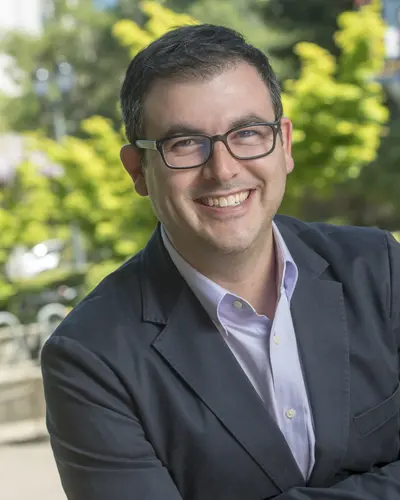
David Evan Harris
Chancellor’s Public Scholar at University of California, Berkeley
David Evan Harris is a Chancellor’s Public Scholar at UC Berkeley and faculty member at the Haas School of Business. He teaches courses including Tech Policy Design, AI Ethics, AI Law & Governance, Social Movements & Social Media, Civic Technology, and Scenario Planning. At Berkeley, he is affiliated with CITRIS, the Center for Latin American Studies, EGAL, and the Haas Business and Public Policy Group. He is Senior Policy Advisor at the California Initiative for Technology and Democracy, Senior Advisor on AI & Elections at the Brennan Center for Justice, Senior Research Fellow at the International Computer Science Institute, and Senior Fellow at the Centre for International Governance Innovation. In 2023, he was named to Business Insider’s AI 100. Previously at Meta/Facebook, Harris managed research teams on responsible AI, social impact, and civic integrity. From 2008–2018 he was Research Director at the Institute for the Future. Earlier in his career he interned at the White House Council on Environmental Quality. He holds degrees from UC Berkeley (BA) and the University of São Paulo (MS).

Sebastian Bücker
Scientific researcher at the Institute of Philosophy, TU Darmstadt
Sebastian Bücker works as a scientific researcher at the Institute of Philosophy, TU Darmstadt. Using both his backgrounds in computer science (M.Sc.) and philosophy of technology (M.A.), his research focusses on how current developments in AI can be connected to philosophy, especially regarding the ascription of capabilities associated with autonomy.

Arnaud Taddei
Global Security Strategist | Broadcom Enterprise Security Group | ITU-T SG17 chair
M. Arnaud Taddei is a Global Security Strategist at Symantec/Carbon Black Division by Broadcom. M. Taddei works in International Standards Defining Organizations and was elected chair of ITU-T SG17 for the UK end 2024.
He started in 1993 at CERN. In 2000, he joined Sun Microsystems and became Principle Engineer. In 2007 he joined Symantec and ended as Director of Research as direct report to the CTO.
Graduated as Telecom Engineer from the ENSTb, France, M. Taddei owns a DEA with INRIA, which led him to the Institute of Control Sciences, Russian Academy of Sciences, Moscow in 1992.

Romilla Syed
University of Massachusetts Boston, Associate Professor, Information Technology and Analytics
Romilla Syed is an Associate Professor of Computer Information Systems and Analytics at the University of Massachusetts Boston. Her research examines advances in digital technology, with the goal of monitoring and protecting the digital information space. She employs computational methods and open-source, artificial intelligence–based approaches to pursue an interdisciplinary research agenda. Her work spans themes such as cyber threat monitoring, value-sensitive design, privacy and identity management, and the dynamics of digital organizing, including incivility and fabricated dissent, and their implications on society at large.
Her recent projects, funded by multiple organizations, explore AI-driven solutions to counter disinformation campaigns while safeguarding democratic values. Romilla’s research has been published or is forthcoming in leading journals, including MIS Quarterly, Journal of the Association for Information Systems, and Decision Sciences, among others. Her work has received multiple awards at major academic conferences, and she serves on the editorial boards of several leading journals. She holds a Ph.D. in Information Technology from Virginia Commonwealth University and was the Fulbright Canada Research Chair in Cybersecurity in 2024-2025. Outside academia, she is a dog lover, avid runner, and yogi-in-training.
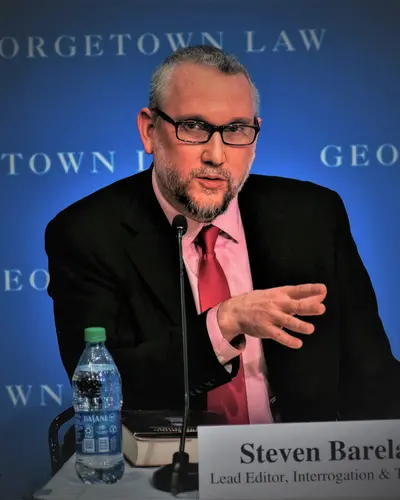
Steven James Barela
Senior Research Fellow, Geneva Academy of International Humanitarian Law and Human Rights (University of Geneva)
Steven J. Barela is a Senior Research Fellow at the Geneva Academy of International Humanitarian Law and Human Rights (University of Geneva). His work explores the intersection of international law, science, and ethics, with a particular focus on disinformation in the online space. In 2024, he convened an expert meeting in Geneva that brought together scholars, practitioners, and industry representatives to address challenges of data access, digital literacy, and anonymity.
He has also contributed to advancing non-coercive interviewing as editor of the Principles on Effective Interviewing for Investigations and Information Gathering (Méndez Principles). Dr. Barela is the author of a monograph and co-editor of two volumes on international security—covering counterterrorism, armed drones, and interrogation—as well as multiple articles and book chapters.