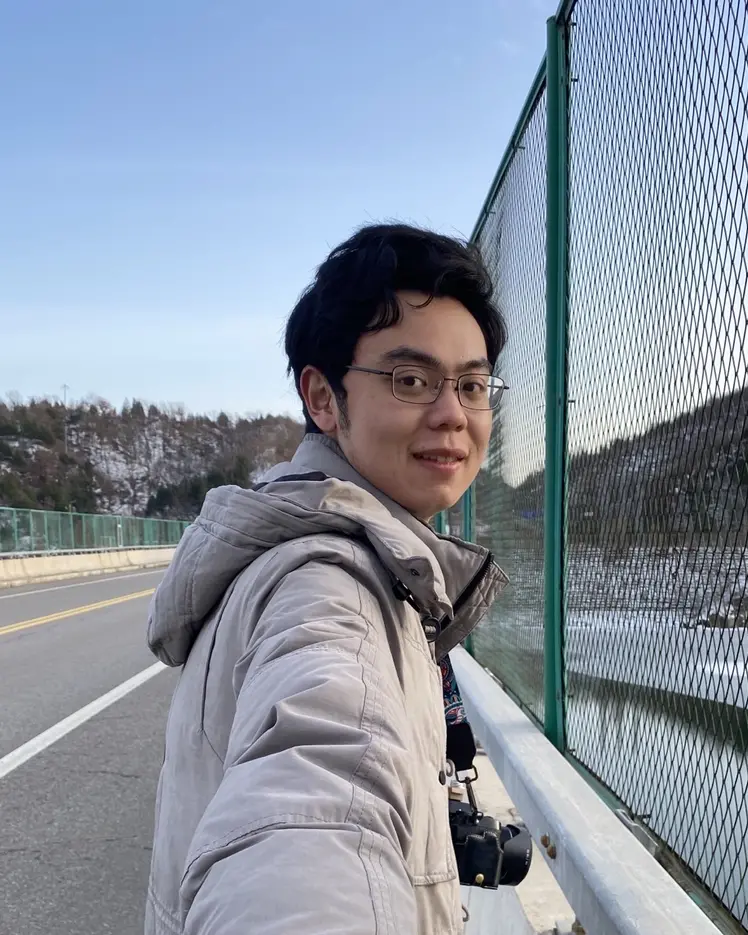
Portrait of Yijie Zhang

Yijie Zhang

PhD - McGill University
Supervisor
Research Topics
Computational Biology
Deep Learning
Representation Learning


Publications

h-MINT: Modeling Pocket-Ligand Binding with Hierarchical Molecular Interaction Network
Yanru Qu
Wenjuan Tan
Xiangzhe Kong
Xiangxin Zhou
Chaoran Cheng
Jiaxuan You
Ge Liu
Accurate molecular representations are critical for drug discovery, and a central challenge lies in capturing the chemical environment of mo… (see more)lecular fragments, as key interactions, such as H-bond and π stacking—occur only under specific local conditions. Most existing approaches represent molecules as atom-level graphs; however, individual atoms cannot express stereochemistry, lone pairs, conjugation, and other complex features. Fragment-based methods (e.g., principal subgraph or functional group libraries) fail to preserve essential information such as chirality, aromatic bond integrity, and ionic states. This work addresses these limitations from two aspects. (i) **OverlapBPE tokenization**. We propose a novel data-driven molecule tokenization method. Unlike existing approaches, our method allows overlapping fragments, reflecting the inherently fuzzy boundaries of small-molecule substructures and, together with enriched chemical information at the token level, thereby preserving a more complete chemical context. (ii) **h- MINT model**. We develop a hierarchical molecular interaction network capable of jointly modeling drug–target interactions at both atom and fragment levels. By supporting fragment overlaps, the model naturally accommodates the many-to- many atom–fragment mappings introduced by the OverlapBPE scheme. Extensive evaluation against state-of-the-art methods shows our method improves binding affinity prediction by 2-4% Pearson/Spearman correlation on PDBBind and LBA, enhances virtual screening by 1-3% in key metrics on DUD-E and LIT-PCBA, and achieves the best overall HTS performance on PubChem assays. Further analysis demonstrates that our method effectively captures interactive information while maintaining good generalization.
dyAb: Flow Matching for Flexible Antibody Design with AlphaFold-driven Pre-binding Antigen
Cheng Tan
Zhangyang Gao
Yufei Huang
Haitao Lin
Lirong Wu
Fandi Wu
Stan Z. Li
The development of therapeutic antibodies heavily relies on accurate predictions of how antigens will interact with antibodies. Existing com… (see more)putational methods in antibody design often overlook crucial conformational changes that antigens undergo during the binding process, significantly impacting the reliability of the resulting antibodies. To bridge this gap, we introduce dyAb, a flexible framework that incorporates AlphaFold2-driven predictions to model pre-binding antigen structures and specifically addresses the dynamic nature of antigen conformation changes. Our dyAb model leverages a unique combination of coarse-grained interface alignment and fine-grained flow matching techniques to simulate the interaction dynamics and structural evolution of the antigen-antibody complex, providing a realistic representation of the binding process. Extensive experiments show that dyAb significantly outperforms existing models in antibody design involving changing antigen conformations. These results highlight dyAb's potential to streamline the design process for therapeutic antibodies, promising more efficient development cycles and improved outcomes in clinical applications.
R3Design: deep tertiary structure-based RNA sequence design and beyond
Cheng Tan
Zhangyang Gao
Hanqun Cao
Siyuan Li
Siqi Ma
Stan Z. Li
The rational design of Ribonucleic acid (RNA) molecules is crucial for advancing therapeutic applications, synthetic biology, and understand… (see more)ing the fundamental principles of life. Traditional RNA design methods have predominantly focused on secondary structure-based sequence design, often neglecting the intricate and essential tertiary interactions. We introduce R3Design, a tertiary structure-based RNA sequence design method that shifts the paradigm to prioritize tertiary structure in the RNA sequence design. R3Design significantly enhances sequence design on native RNA backbones, achieving high sequence recovery and Macro-F1 score, and outperforming traditional secondary structure-based approaches by substantial margins. We demonstrate that R3Design can design RNA sequences that fold into the desired tertiary structures by validating these predictions using advanced structure prediction models. This method, which is available through standalone software, provides a comprehensive toolkit for designing, folding, and evaluating RNA at the tertiary level. Our findings demonstrate R3Design’s superior capability in designing RNA sequences, which achieves around \documentclass[12pt]{minimal} \usepackage{amsmath} \usepackage{wasysym} \usepackage{amsfonts} \usepackage{amssymb} \usepackage{amsbsy} \usepackage{upgreek} \usepackage{mathrsfs} \setlength{\oddsidemargin}{-69pt} \begin{document}