Opening Conference | Building Safer AI for Youth Mental Health
On March 16, starting at 9 AM, join leading AI researchers, clinical experts, and voices from the ground for an event exploring the frameworks needed to design AI that is not only powerful, but also safe for mental health.

TRAIL: Responsible AI for Professionals and Leaders
Learn how to integrate responsible AI practices into your organization with TRAIL. Join our information session on March 12, where you’ll discover the program in detail and have the chance to ask all your questions.

We use cookies to analyze the browsing and usage of our website and to personalize your experience. You can disable these technologies at any time, but this may limit certain functionalities of the site. Read our Privacy Policy for more information.
Setting cookies
You can enable and disable the types of cookies you wish to accept. However certain choices you make could affect the services offered on our sites (e.g. suggestions, personalised ads, etc.).
Essential cookies
These cookies are necessary for the operation of the site and cannot be deactivated. (Still active)
Analytics cookies
Do you accept the use of cookies to measure the audience of our sites?
Multimedia Player
Do you accept the use of cookies to display and allow you to watch the video content hosted by our partners (YouTube, etc.)?
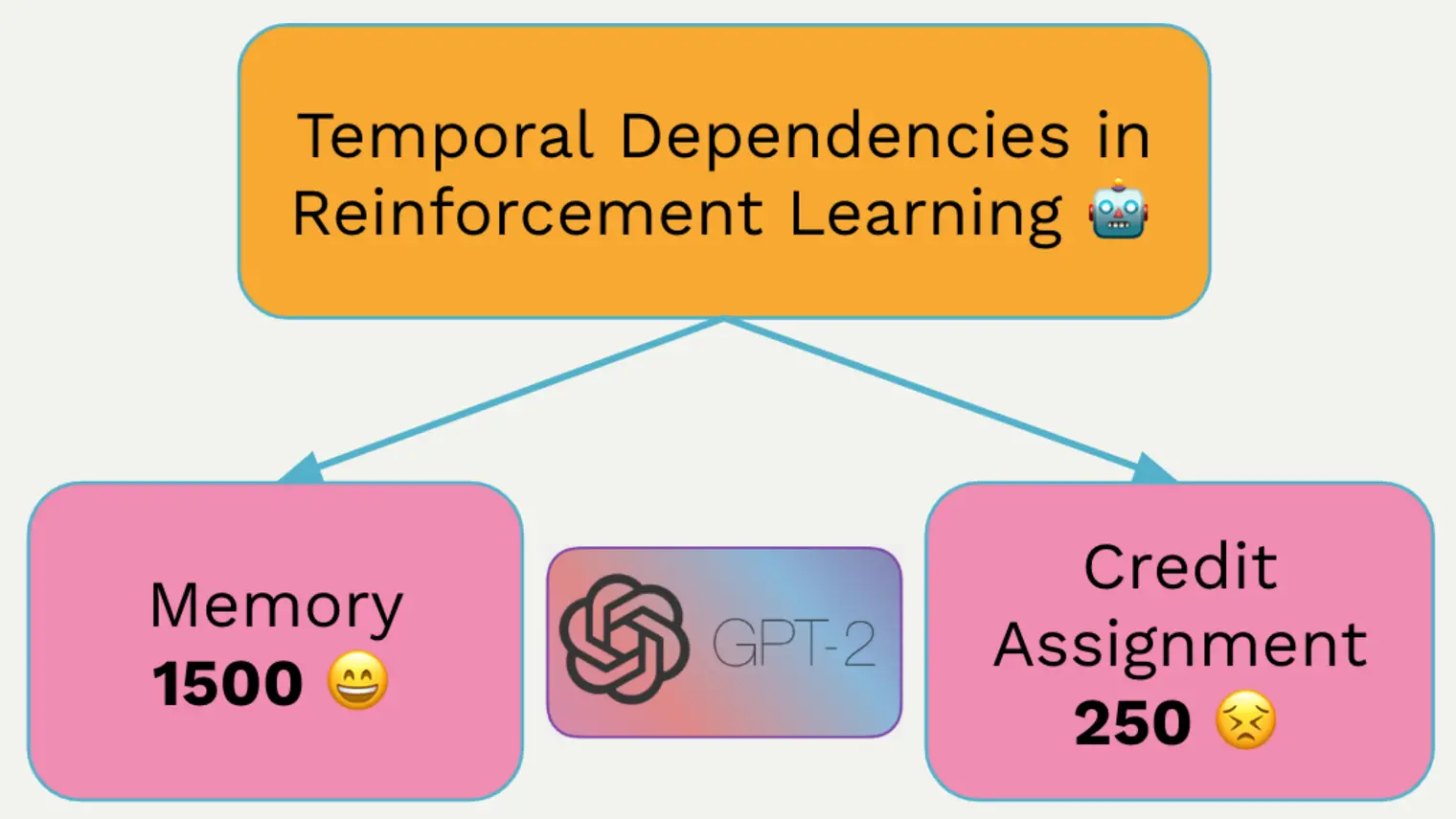
Reinforcement learning (RL) algorithms face two distinct challenges: learning effective representations of past and present observations, an… (see more)d determining how actions influence future returns. Both challenges involve modeling long-term dependencies. The Transformer architecture has been very successful to solve problems that involve long-term dependencies, including in the RL domain. However, the underlying reason for the strong performance of Transformer-based RL methods remains unclear: is it because they learn effective memory, or because they perform effective credit assignment? After introducing formal definitions of memory length and credit assignment length, we design simple configurable tasks to measure these distinct quantities. Our empirical results reveal that Transformers can enhance the memory capability of RL algorithms, scaling up to tasks that require memorizing observations