



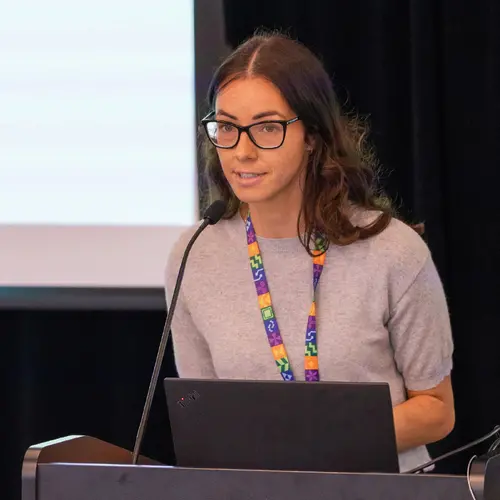
Portrait of Samira Abbasgholizadeh-Rahimi

Samira Abbasgholizadeh-Rahimi

Associate Academic Member
Assistant Professor, McGill University, Department of Dental Medicine
Research Topics
AI and Healthcare
AI in Health
Data Mining
Medical Machine Learning
Optimization

Biography

Dr. Samira A. Rahimi, B.Eng, PhD, is a Canada Research Chair (Tier II) in AI and Advanced Digital Primary Health Care. She is an assistant professor at the Faculty of Dental Medicine and Oral Health Sciences at McGill University, Co-Director of McGill’s Collaborative for AI and Society (McCAIS), and an Associate Academic Member of Mila – Quebec AI Institute. She also serves as Research Co-Director of the General Practice Residency (GPR) program in dentistry at the Jewish General Hospital.

With an interdisciplinary background, her research, supported by national and international funding, focuses on developing and implementing advanced digital health technologies—including AI-enabled tools—to improve primary health care. She is particularly committed to improving care for vulnerable and underserved populations, ensuring that innovation benefits everyone.

Her work as Principal Investigator has been funded by the Fonds de recherche du Québec – Santé (FRQS), Natural Sciences and Engineering Research Council (NSERC), Roche Canada, Brocher Foundation (Switzerland), and the Canadian Institutes of Health Research (CIHR).

She is the recipient of numerous awards, including the 2022 Marjorie Bowman and Robert Choplin New Investigator Award, an award that recognizes exceptional contributions by emerging investigators in the field of primary care research.

Current Students

Master's Research - McGill University
Postdoctorate - McGill University
PhD - McGill University

Publications

Suitable e-Health Solutions for Older Adults with Dementia or Mild Cognitive Impairment: Perceptions of Health and Social Care Providers in Quebec City
Marie-Pierre Gagnon
Mame Ndiaye
Mylène Boucher
Samantha Dequanter
Ronald Buyl
Ellen Gorus
Anne Bourbonnais
Anik Giguère
: e-Health solutions offer a potential to improve the quality of life and safety of older adults with dementia or mild cognitive impairment … (see more)(MCI). In making better decisions for using eHealth technologies, health professionals should be aware and well informed about existing tools. Recent research shows the lack of knowledge on these technologies for older adults with dementia. In Quebec, current market offer for these technologies is supply-based, and not need-based. This study is part of a larger project and aims to understand the perceptions and needs of health and social care providers regarding e-health technologies for older adults with dementia or MCI. One focus group was carried out with six health and social care professionals at the St-Sacrement Hospital in Quebec City, Canada. The focus group enquired about the use of Information and Communication Technology (ICT) with older adults with cognitive impairment. Relevant examples of ICTs were presented to assess their knowledge level. The discussion was tape-recorded and transcripts were coded using the Nvivo software. Results revealed that aside from fall safety technologies, there is a lack of knowledge about other e-Health technologies for this population. Respondents acknowledged the value of ICTs and were willing to recommend some of them. Economic reasons, blind trust on ICTs and lack of confidence in patients’ capacity to use the solutions were the major limitations identified.