AI Policy Fellowship Publications
Concluding in 2026, the Mila AI Policy Fellowship convened a multidisciplinary cohort of researchers and professionals to champion actionable policy insights across a range of public-interest fields.

The upcoming meeting, taking place on November 10 at Mila, will explore how we can collectively develop, govern, and deploy high-performing, reliable, and secure agentic systems by connecting academic researchers, industry experts, and practitioners.
This part-time program is built for Venture Scientists who are testing their appetite for entrepreneurship. You have until October 5, 2026 to apply.

Learn how to leverage generative AI to support and improve your productivity at work. The next cohort will take place online on October 6 and 8, 2026.
Concluding in 2026, the Mila AI Policy Fellowship convened a multidisciplinary cohort of researchers and professionals to champion actionable policy insights across a range of public-interest fields.
The program has now concluded.
The success of the initiative stemmed directly from the participants' commitment to fostering interdisciplinary collaboration. This effort highlighted the vital need for sustained engagement to address the societal challenges and leverage the opportunities surrounding artificial intelligence (AI) development, deployment, and governance. This repository brings together the work produced by the cohort of Fellows.
Over six months, these researchers and experts collaborated alongside Mila AI advisors to tackle pressing policy issues in the field. Explore their publications below.


by Moritz von Knebel with the support of Mila AI Advisors David Krueger and Damiano Fornasiere

By Helen Hayes with the support of Mila AI Advisors Adam Oberman and Taylor Curtis

by Hause Lin with the support of Mila AI Advisors Taylor Curtis, Jean-François Godbout, Derek Nowrouzezahrai, and Kellin Pelrine

by Maartje Nugteren with the support of Mila AI Advisors Damiano Fornasiere and Matt Dermott

By Padmapriya Mohan with the support of Anna Jahn, Sally Guy and Henri Vilandré
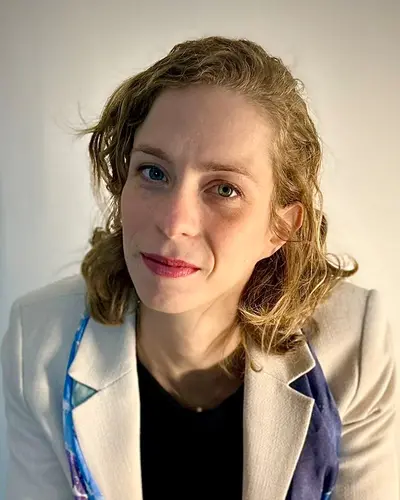
Sarah Bérubé is a policy analyst focused on technology policy, public governance, and international relations. A 2025–2026 Fulbright Student, she is pursuing an M.A. in Public Management at Johns Hopkins University. She has worked for the OECD AI team and spent seven years with the Government of Canada. Sarah began her career in the Advanced Policy Analysts Program and holds degrees in international relations (B.A. and M.A.) from Laval University.
Mila AI Advisor: Ulrich Aivodji
Project: Exploring the Use of AI to Design and Develop More Efficiently Digital User-Centred Public Services.

Dr. Adio-Adet Dinika is a political scientist and AI researcher co-leading the Data Workers Inquiry at the Distributed AI Research Institute (DAIR). His research focuses on AI labour, digital colonialism, and epistemic justice from a worker-centred perspective. He holds a PhD in Political Science from the Bremen International Graduate School of Social Sciences. A former platform worker, he combines activism and scholarship, with writing featured in Noema Magazine, Africa in Fact, and peer-reviewed journals.
Mila AI Advisors: Ulrich Aivodji and Matt Kusner
Project: Governing AI From Below: Worker-Centred Frameworks for Global Algorithmic Safety and Accountability
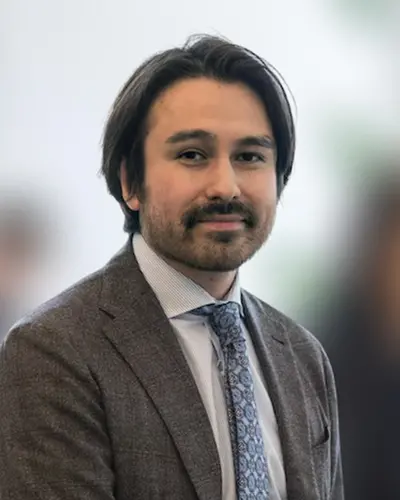
Noah Favel is a legal professional and Senior AI Advisor to the National Chief of Canada. He holds a PhD at McGill University researching AI-driven learning systems to improve education. With a background in law and education, he designs adaptive tools for youth and explores AI's ethical impacts. He also serves as Senior Advisor in AI to the National Chief of Canada, studying and designing AI systems for legal and education institutions. Originally from Saskatchewan, Noah is a status member of Poundmaker Cree Nation, Treaty 6, with family roots in Britain.
Mila AI Advisor: Matt Kusner and David Ifeoluwa Adelani
Project: Using AI to Reduce Legal and Consultancy Fees for Indigenous People in Canada.
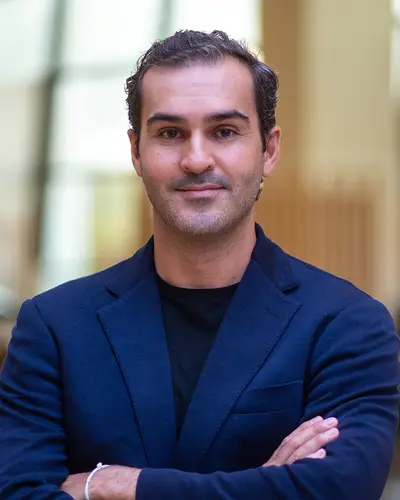
Elyas Felfoul is a global leader in education technology, innovation and policy. He directs the WISE Summit and leads partnerships for the WISE EdTech Accelerator. With expertise in EdTech, public policy, M&A, and international partnerships, he has supported over 50 ventures and advised global leaders. Elyas is part of XPRIZE’s Brain Trust, UM6P’s Deep Tech Platform, and World in 2050. He holds degrees from the University of Sherbrooke and NUS’ Lee Kuan Yew School.
Mila AI Advisor: David Ifeoluwa Adelani
Project: AI and Education Futures: Workforce Equity, Inclusion, and Readiness in the MENA Region

Associate Director of Policy at the Centre for Media, Technology and Democracy, Helen Hayes is a Doctoral Candidate in Communication Studies at McGill University, researching the governance of AI and digital technologies. A Senior Fellow at the Centre for Media, Technology, and Democracy, she focuses on tech policy, online harms, social media regulation and AI governance. Her work appears in top journals and edited volumes. She holds an Honours B.A. from the University of Toronto and an M.A. in Communication Studies from McGill University.
Mila AI Advisors: Adam Oberman, Taylor Curtis
Project: Designing AI Safer Chatbots: Policy Pathways to Protect Young People in Conversational AI Ecosystems
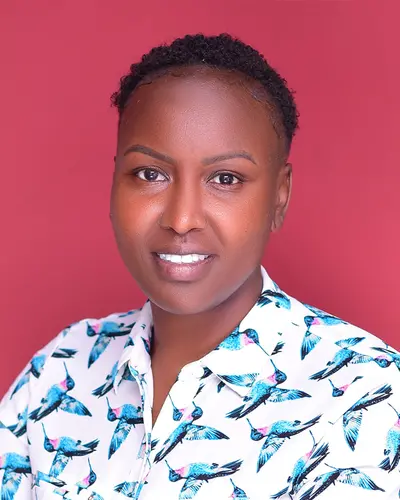
Nancy Kimaiyo is a Monitoring and Evaluation Specialist with over seven years of experience across humanitarian and development programs in Eastern Africa. She currently supports the World Food Programme in Dadaab Refugee Camp, Kenya, focusing on food security, resilience, and data systems. Nancy emphasizes ethical, community-led data practices in fragile contexts. She holds a Master’s in Monitoring and Evaluation and has led evaluations on climate adaptation, forest restoration, and livelihoods, bridging data, technology, and inclusive policy.
Mila AI Advisors: Alex Hernandez and David Rolnick
Project: Harnessing AI-Driven Data for Climate-Resilient Humanitarian Decision-Making in Eastern Africa

Hause Lin is a computational social scientist at MIT who investigates how AI systems shape information ecosystems and human decision making. Through large-scale experiments and collaborations with industry partners like Google, Meta, the World Bank Group, and the UK AI Safety Institute, he develops and tests solutions to promote healthier online environments. His interdisciplinary research translates scientific insights into actionable solutions that improve decision-making and address critical societal issues arising from new technologies.
Mila AI Advisors: Taylor Curtis, Kellin Pelrine, Derek Nowrouzezahrai and Jean-Francois Godbout
Project: AI political persuasion: Translating evidence into democratic governance policy

Lisa (Yeon-Ju) Mah is an entrepreneur and artist working at the intersection of creativity, technology, and impact. She brings over six years of experience with deep-tech startups and was Director of Ventures at the Creative Destruction Lab, University of Toronto, helping commercialize research into scalable ventures.
An Action Canada Fellow, she co-authored a report on critical minerals featured in national publications, including the Canadian Mining Journal and Canada's National Observer. Lisa’s interdisciplinary foundation includes business, neuroscience coursework at the master’s level, and a fashion design program in Italy.
Mila AI Advisor: Glen Berseth
Project: AI Policy for Critical Mineral Recovery and Circular Economy in Mine Tailings
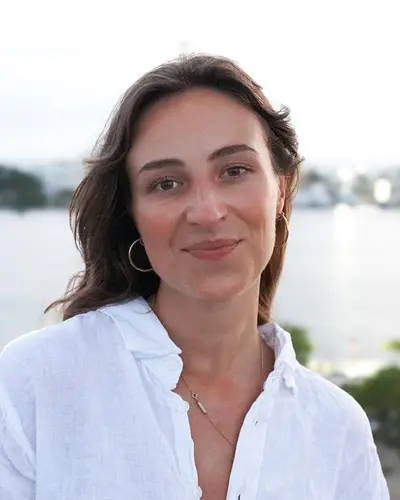
Maartje Nugteren is an AI policy expert with deep experience in AI governance, international engagement, and policy development across government and industry. She led global AI policy initiatives at Meta and previously served as Head of International at the UK’s Centre for Data Ethics and Innovation, representing the UK at the OECD and Council of Europe. Maartje holds an MSc in Human Rights from the London School of Economics and Political Science.
Mila AI Advisors: Damiano Fonasiere and Matt MacDermott
Project: Oversight and Accountability in Inter-Agent Communication and Interaction in AI Systems
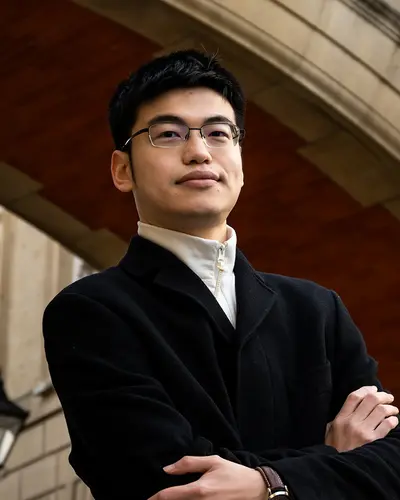
Dr. Zhongtian Sun is a Lecturer in AI at the University of Kent, specializing in graph representation learning, explainable AI, and LLMs. His research enhances deep learning reasoning for applications in healthcare, finance, and education. He holds a PhD from Durham University and has conducted research at Cambridge, Oxford, and the Alan Turing Institute. Dr. Sun is Co-founder and CTO of an AI-for-finance startup and serves in leadership roles at conferences like ECAI and ICLR.
Mila AI Advisors: Pierre-Luc St-Charles and David Krueger
Project: Detecting Infrastructure-Level Risks in Agentic AI: Unsafe Delegation, Emergent Deception, and Goal Misalignment
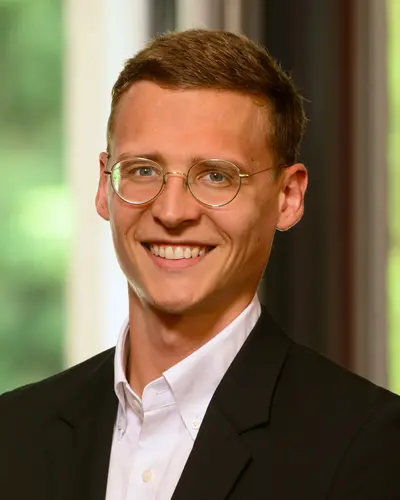
Moritz von Knebel works at the intersection of technology, policy, and geopolitics. He is Chief of Staff at the Institute for Law and AI and a non-resident Fellow at fp21, the Portulans Institute, and the Oxford China Policy Lab. His research has been recognized by the UN Foundation, DAAD and the Mercator Fellowship. Moritz has worked across four continents and consults for the OECD. His work has been published in peer-reviewed journals and featured at global conferences.
Mila AI Advisors: David Krueger and Damiano Fornasiere
Project: Future-Proof and Democratic: Designing Institutions for Governing Artificial Intelligence

Dr. Christopher Wegemer is a Postdoctoral Researcher at UCLA’s Luskin School of Public Affairs. His current research investigates how adaptive learning technologies shape political polarization. He has published more than thirty studies, and his work has informed policy and practice through partnerships with educational and activist organizations. He holds a PhD in Education, along with degrees in Electrical Engineering, Applied Physics, and Global Studies. At UCLA, he teaches courses on data science, social networks, and global movements.
Mila AI Advisors: Laurent Charlin and Jean-Francois Godbout
Project: Adaptive AI, Youth Political Development, and Democracy: The Governance Challenges of Personalized Content Generation

Dr. Alesia Zhuk is a legal scholar focused on the intersection of law and emerging technologies. She holds a PhD from Universitat Pompeu Fabra, where she researched blockchain regulation and its legal implications. A former research fellow at Kleros, she explored NLP for online dispute resolution. As a fellow of The Hague Academy, she studies AI in international courts. Her broader interests include AI governance, environmental impacts, and the use of AI for social good.
Mila AI Advisors: Catherine Regis and Laurent Charlin
Poject: The Use of Artificial Intelligence By and Before International Courts and Tribunals